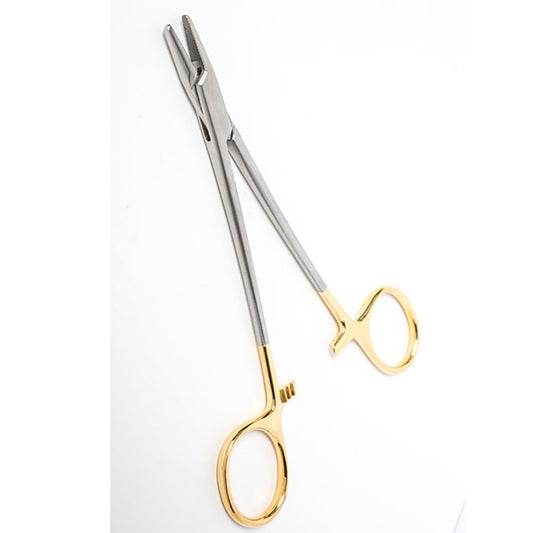
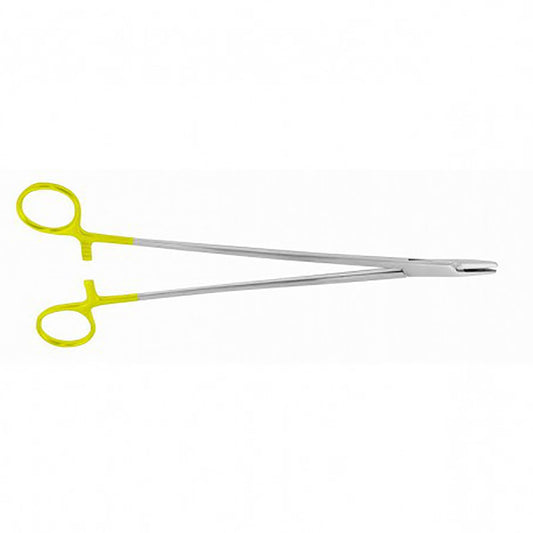
TC Needle Holders, Wire Twisters and Forceps
TC stands for tungsten carbide. TC instruments have hard, wear-resistant tungsten carbide inserts in the jaws, which grip a suture needle securely and hold their surface longer than plain steel serrations. This collection is mostly needle holders, along with wire twisters and a few forceps. Check each product page to confirm the inserts.
What’s in This Collection
General needle holders. The Mayo-Hegar (15.9cm to 41cm), Crile-Wood, Halsey, Webster, Ryder, Rochester, Julian and Baumgartner patterns cover routine suturing. The Olsen-Hegar (14.6cm to 18.4cm) has integrated scissor jaws, so it can cut the suture without a second instrument. The New Orleans (17.8cm, serrated jaw) and Wangensteen patterns suit deeper work.
Deep and long needle holders. The Masson (26.7cm to 27cm, TC jaws), Heaney (20.3cm to 35.6cm, curved jaw, pelvic suturing), Finochietto (20.3cm to 26.7cm) and French Eye (13cm to 26cm) reach into deep fields.
Microvascular. The Microvascular Needle Holders and Cooley Microvascular Needle Holders (15.2cm to 20.3cm, smooth and serrated inserts) are for fine suture work.
Wire twisters. The Rubio Wire Twister, Wire Twisters Forceps and the Cooley Baumgarten Wire Twister (20cm, sternotomy wire closure) twist and tighten surgical wire.
Forceps. The TC Babcock Forceps (16.5cm to 20.9cm, curved atraumatic jaw) and the Duval Intestinal Forceps (23cm, triangular jaw) hold delicate tissue and bowel.
Choosing a Needle Holder
Choose length by depth, with longer patterns for deep fields. Match the holder to the needle, because a holder too large for a fine needle can damage it and one too small can let it slip. Use microvascular holders for fine suture. An integrated-scissor pattern like the Olsen-Hegar saves a step but needs care not to cut the suture by accident.
Care
Inspect the jaw inserts for chips and wear, because worn inserts let the needle rotate. Check that the ratchet locks and releases cleanly and that the jaws close evenly. Clean the jaws of debris and sterilize according to your facility’s protocol.
Related Instruments
For other TC and suturing instruments, see Needle Holder, TC Dissecting Forceps, TC Scissors and TC Instruments. For specialty holders, see Cardiovascular Needle Holder, Ophthalmic Needle Holders and Veterinary Needle Holder Tungsten Carbide. For closure, see Scissors, Forceps and Hemostats. For wire, see Wire and Band Tightening Instruments and Bone Wire Cutter. For complete trays, see Basic Surgery Sets and Sterilization Baskets, or browse all Surgical Instruments.
Ordering
Peak Surgicals supplies surgical instruments in bulk to hospitals, clinics and distributors worldwide, with international shipping. Contact our team for current stock and wholesale pricing.
Frequently Asked Questions
What does TC mean on surgical instruments?
TC stands for tungsten carbide, a hard, wear-resistant insert in the jaws that grips the needle securely.
What’s the difference between Mayo-Hegar and Olsen-Hegar needle holders?
Both are general suturing holders. The Olsen-Hegar has integrated scissor jaws that cut the suture.
How do I choose a needle holder?
Match length to the depth of the field and jaw size to the needle. Use microvascular holders for fine suture.
What are wire twisters used for?
They twist and tighten surgical wire, for example in sternotomy closure.
What is a Duval intestinal forceps used for?
It holds bowel with a triangular jaw during intestinal surgery.
How should TC instruments be cared for?
Inspect jaw inserts for chips and wear, check ratchets, clean the jaws and sterilize according to your facility’s protocol.