Mini Fragment Implants
Mini fragment implants use smaller screw and plate sizes — typically 2.0mm to 2.7mm, with specialized systems down to 0.8mm — for fixation of smaller bones and bone fragments: the hand, wrist, foot, and fracture sites too small for a 3.5mm small fragment or 4.5mm large fragment construct.
What's in This Collection
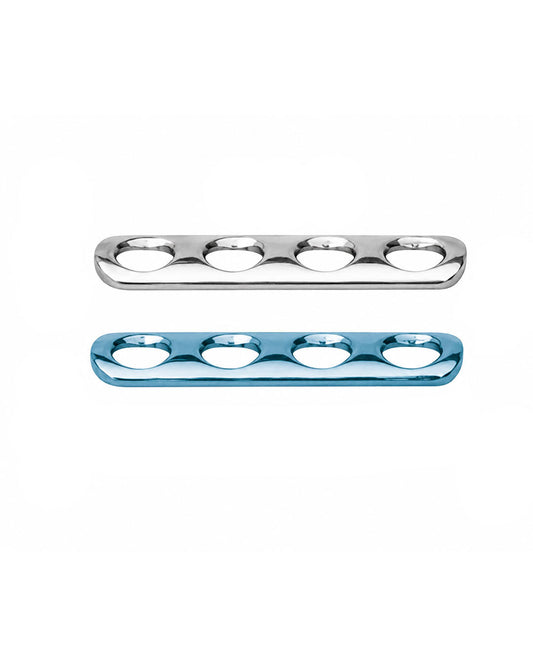
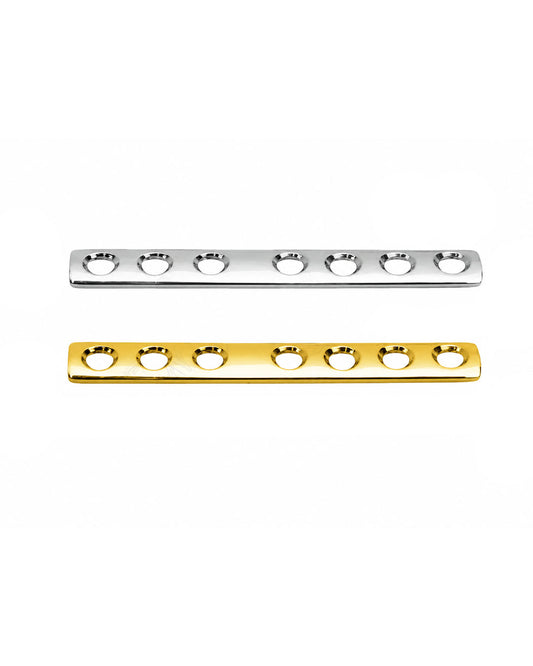
The general mini fragment range includes standard plate shapes in 2.0mm and 2.7mm: Straight Plates, T-Plates, L-Plates, and Quarter Tubular Plates, covering routine shaft and junction fixation at this smaller scale, fixed with the Safety Lock Screw (Ø2.4mm, Star-Like, Self-Tapping).
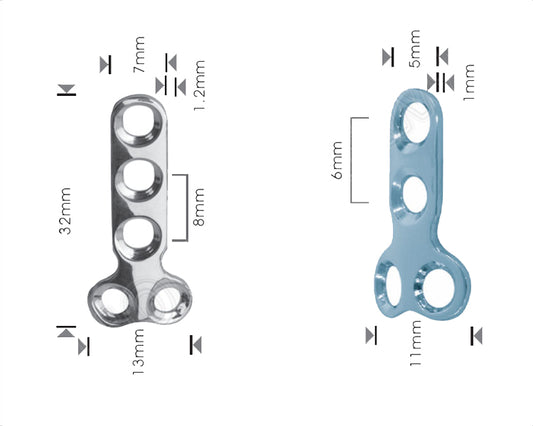
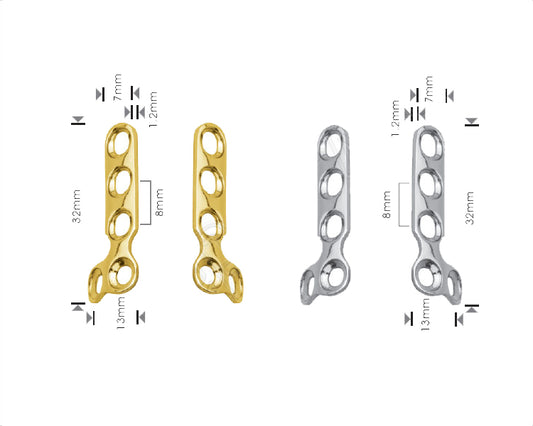
For hand surgery specifically, the Low Profile Phalanges Safety Lock Plate System (0.8mm–1.3mm) covers highly specialized finger and metacarpal fixation. This includes the Rolando Fracture Hook Plate, purpose-built for Rolando fractures (a specific thumb metacarpal base fracture pattern), the Metacarpal Neck Plate for metacarpal neck fractures, and a range of phalangeal-specific designs: T-Plate, Offset Plate, Curved Medial-Lateral Plate, and Avulsion Fracture Plate — each shaped for a specific finger fracture pattern rather than general use.
A broader Safety Lock Plate range at 1.5mm–2.7mm extends mini fragment fixation beyond the hand: Condylar Safety Lock Plates (2.7mm titanium and 2mm pin variants) for condylar fractures, the Safety Lock Strut Plate and Safety Lock Adaption T-Plate (1.5mm) for smaller long bone support, and the Safety Lock Y-Adaption, Mini H-Plate, and Rotation Correction Plate (2.0mm) for junction and rotational correction needs.
Choosing the Right Plate
Selection follows fracture location and pattern at a very granular level in this size range: a general straight, T-, or L-plate suits routine mini-bone fixation, while the phalangeal-specific plates (Rolando, Metacarpal Neck, Avulsion) should only be used for their named fracture pattern, since their shape is purpose-built rather than general-purpose. The broader Safety Lock range at 1.5–2.7mm bridges mini fragment fixation into slightly larger applications like condylar and junction fractures.
Related Products
Pair these implants with Small Fragment Standard for adjacent fixation sizes, and with Screw Holding Forceps, Taps & Countersinks and Bone Drills for placement. For broader hand and foot procedure needs, see Hand and Foot Surgery Instrument Set. Browse the full Orthopedic Implants catalog for the complete fixation range.
Ordering
Peak Surgicals manufactures mini fragment implants for hospitals and distributors worldwide, with international shipping — contact our team for current stock and wholesale pricing.
Frequently Asked Questions
What's the difference between mini fragment and small fragment plating?
Mini fragment covers smaller screw sizes (2.0–2.7mm, with specialized systems down to 0.8mm) for hand, wrist, and small bone fixation, while small fragment (3.5mm) is used for larger bones or thicker cortical regions.
What is a Rolando fracture hook plate used for?
It's a specialized plate shaped specifically for Rolando fractures — a comminuted fracture at the base of the thumb metacarpal — and isn't a general-purpose hand plate.
What is the Low Profile Phalanges Safety Lock Plate System?
It's a range of ultra-small (0.8–1.3mm) plates purpose-built for specific finger fracture patterns, including phalangeal shaft, avulsion, and rotational correction injuries.
What does "safety lock" mean on these plates?
A safety lock plate threads screws directly into the plate itself, creating a fixed-angle construct that doesn't rely on compressing the plate against bone, useful in smaller or more fragile bone where standard screw purchase may be weaker.
Is a condylar plate the same as a straight mini fragment plate?
No — a condylar plate is shaped specifically for fixation near a condyle (joint-adjacent bone), while a straight plate is a general-purpose shaft fixation plate without that specific anatomical shaping.