Large Fragment — Standard
Large fragment refers to the 4.5mm and 6.5mm screw-and-plate category in the AO/ASIF fixation system, used for larger long bones — femur, tibia, and humerus shaft fractures — where the bone is substantial enough to need a larger screw diameter than the 3.5mm "small fragment" or smaller "mini fragment" systems handle. Plate and screw choice within this category comes down to bone shape and fracture pattern more than bone identity alone.
What's in This Collection
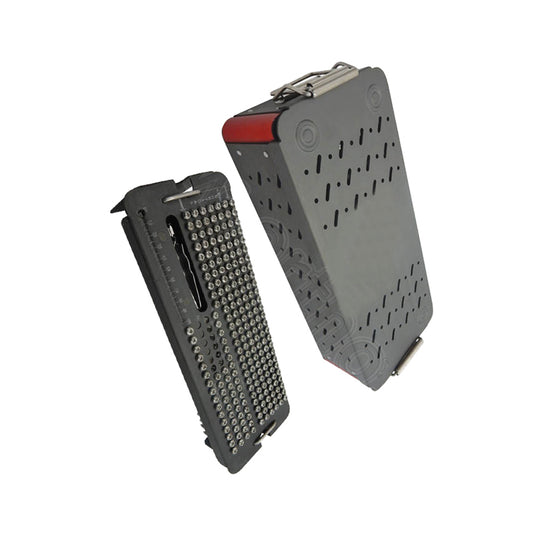
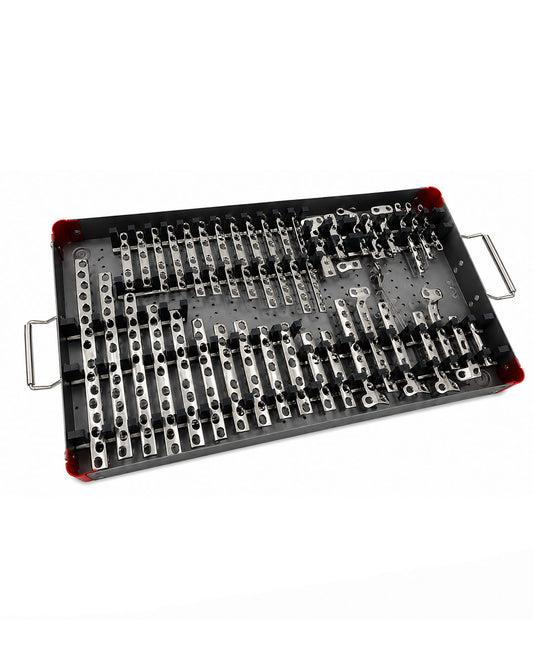
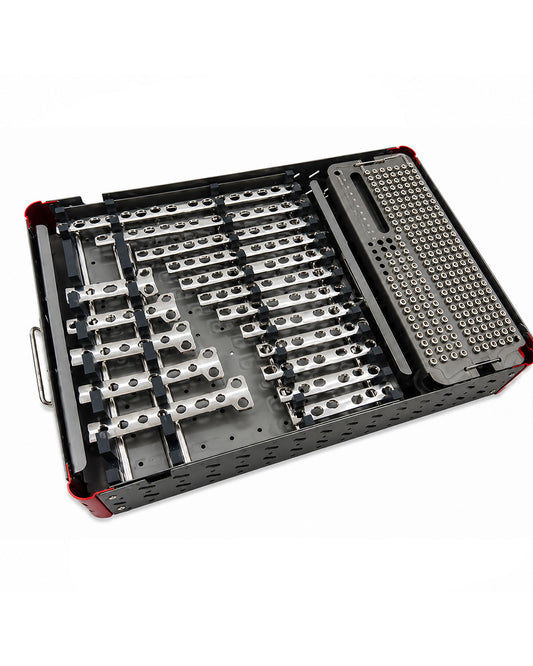
For straight shaft fixation, the range includes the Broad and Narrow Dynamic Compression Plate (DCP/LC-DCP, 4.5mm), the Sherman Plate, and the Semi-Tubular Plate (4.5mm) — differing mainly in width and hole spacing to match bone diameter and fixation length needed. For irregular or metaphyseal bone shapes, the T-Plate and T-Buttress Plate provide a cross-bar for fixation near a joint, the Spoon Plate offers a shaped end for cancellous bone, and the Reconstruction Plate (4.5mm) can be contoured in multiple planes for curved anatomy. Site-specific plates include the Proximal Tibia Plate (with round holes), the Lateral Tibial Head Buttress Plate, and the Calcaneal Plate, each shaped for its specific anatomical location.
Screw options include the Cortex Screw (Ø4.5mm, self-tapping and standard) for dense cortical bone, and the Cancellous Bone Screw (Ø6.5mm and Ø4.5mm, in full, short, 16mm, and 32mm thread lengths) for softer cancellous bone where partial threading allows compression. The Malleolar Screw (Ø4.5mm) and Cancellous Traction Screw (Ø6.5mm) cover specific fixation needs at the ankle and for fragment compression respectively, and the Cortex Cannulated Screw (Ø4.5mm, Short Thread) allows guide-wire-assisted placement. Washers are included for use under screw heads in softer bone, where they help distribute load and prevent the screw head from sinking into the bone surface.
Choosing the Right Plate and Screw
Plate selection follows bone shape and fracture location: straight shaft fractures suit a standard DCP or Sherman plate, while metaphyseal or irregular bone shapes near a joint call for a T-plate, buttress plate, or site-specific pattern like the calcaneal or proximal tibia plate. Screw type follows bone density: cortex screws for dense shaft bone, cancellous screws where compression across softer bone matters, with thread length and full-vs-short options chosen based on how much of the screw needs to cross versus anchor beyond the fracture line.
Related Products
Pair these implants with Locking Screws Self Tapping and Small Fragment Standard for adjacent fixation sizes, and with Screw Holding Forceps, Taps & Countersinks and Bone Drills for placement. For related plating systems, see Large Fragment Safety Locking and Rib, Pelvic & Foot Implants. Browse the full Orthopedic Implants catalog for the complete range.
Ordering
Peak Surgicals manufactures large fragment plates and screws for hospitals and distributors worldwide, with international shipping — contact our team for current stock on bundled sets and wholesale pricing.
Frequently Asked Questions
What's the difference between large fragment and small fragment plating?
Large fragment refers to the 4.5mm/6.5mm screw-and-plate size category used for larger long bones like the femur and tibia, while small fragment (3.5mm) is used for smaller bones or thinner cortical regions.
What's the difference between a cortex and a cancellous screw?
A cortex screw is designed for dense cortical bone and is typically fully threaded. A cancellous screw uses a partial thread for softer cancellous bone, allowing the screw to compress the fracture as it seats.
What is a buttress plate used for?
A buttress plate, such as the T-Buttress or Lateral Tibial Head Buttress plate, supports and prevents collapse of a fractured bone segment near a joint, commonly used at the proximal tibia.
Why use a washer with a bone screw?
A washer helps distribute load under the screw head, reducing the risk of the screw sinking into softer or thinner bone as it's tightened.
What is a Sherman plate?
A Sherman plate is a straight fixation plate used for shaft fractures, similar in application to a DCP plate, differing mainly in hole spacing and profile.