Featured Collection
Your cart
Featured Collection

PEAK SURGICALS
SKU:
Couldn't load pickup availability
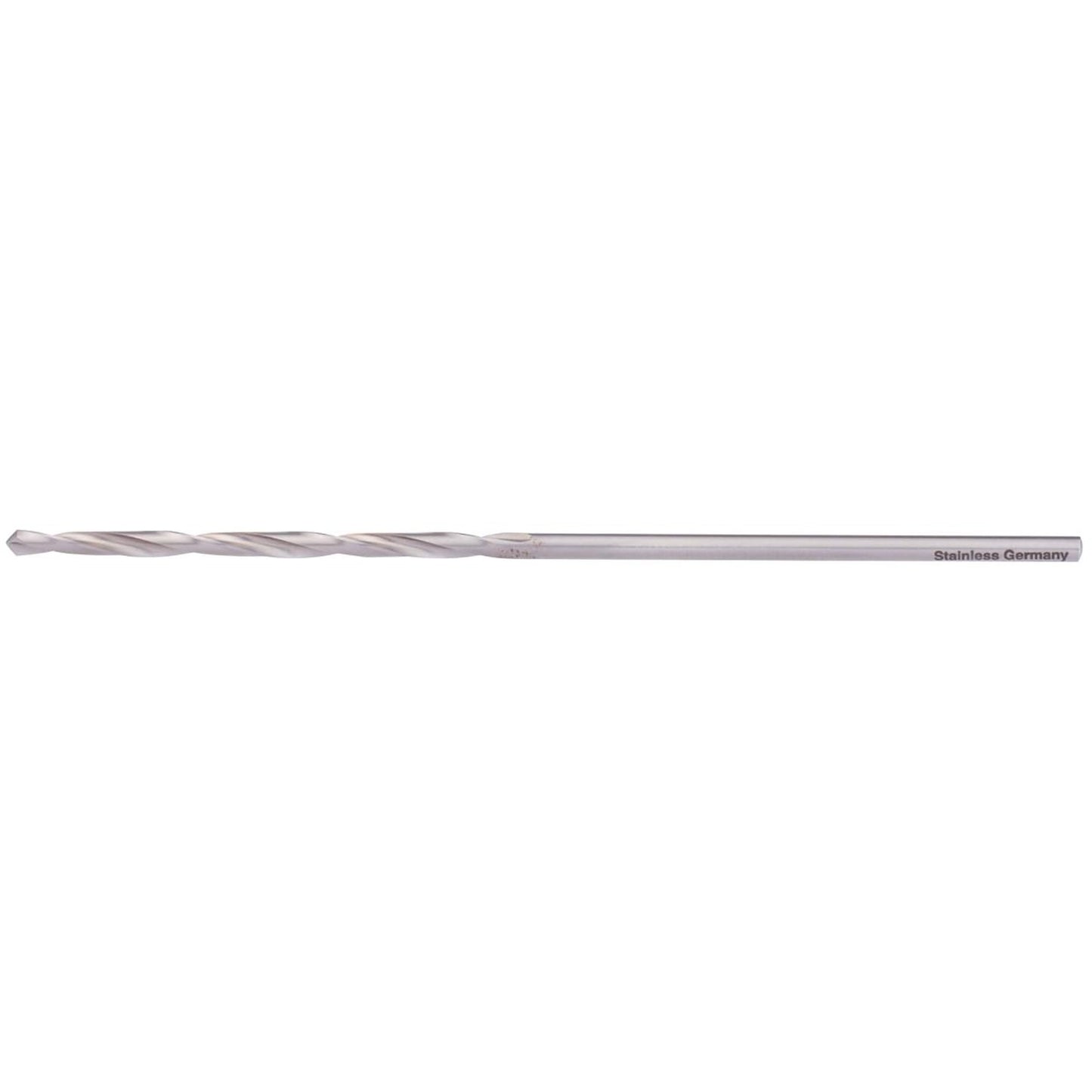
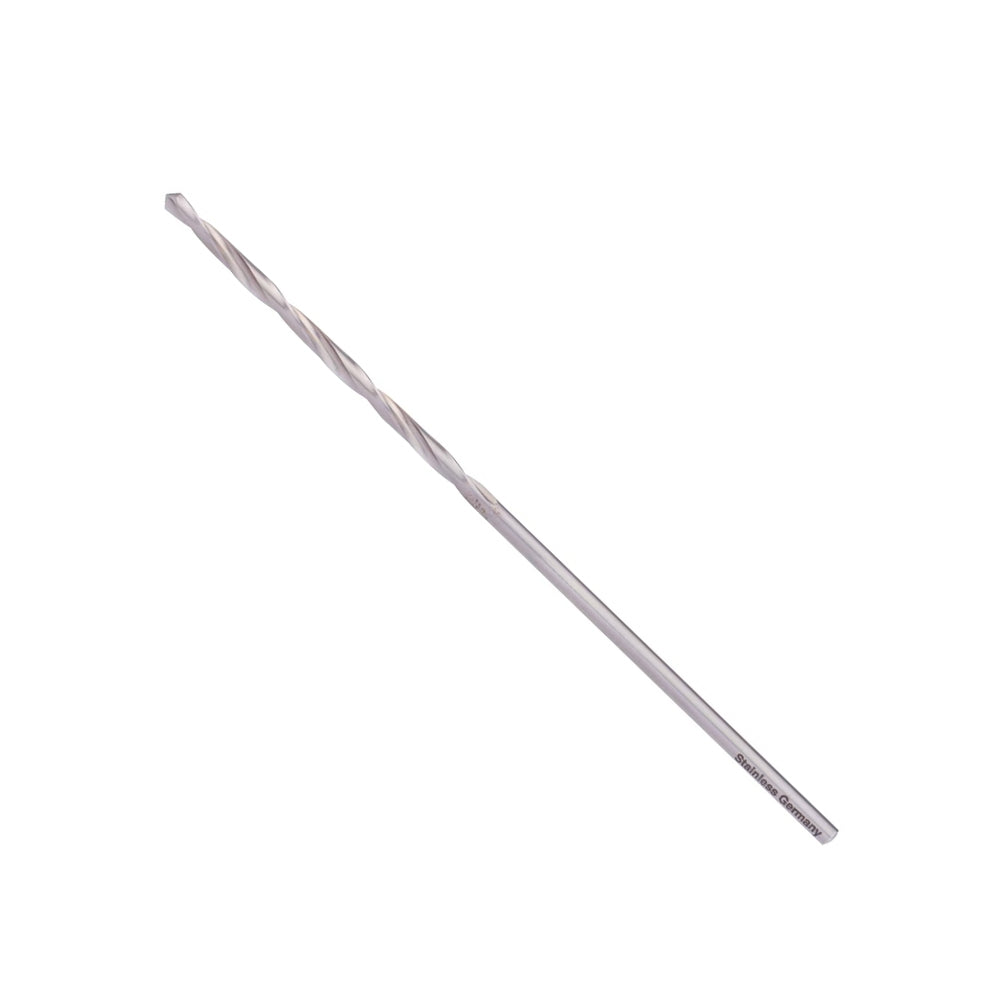
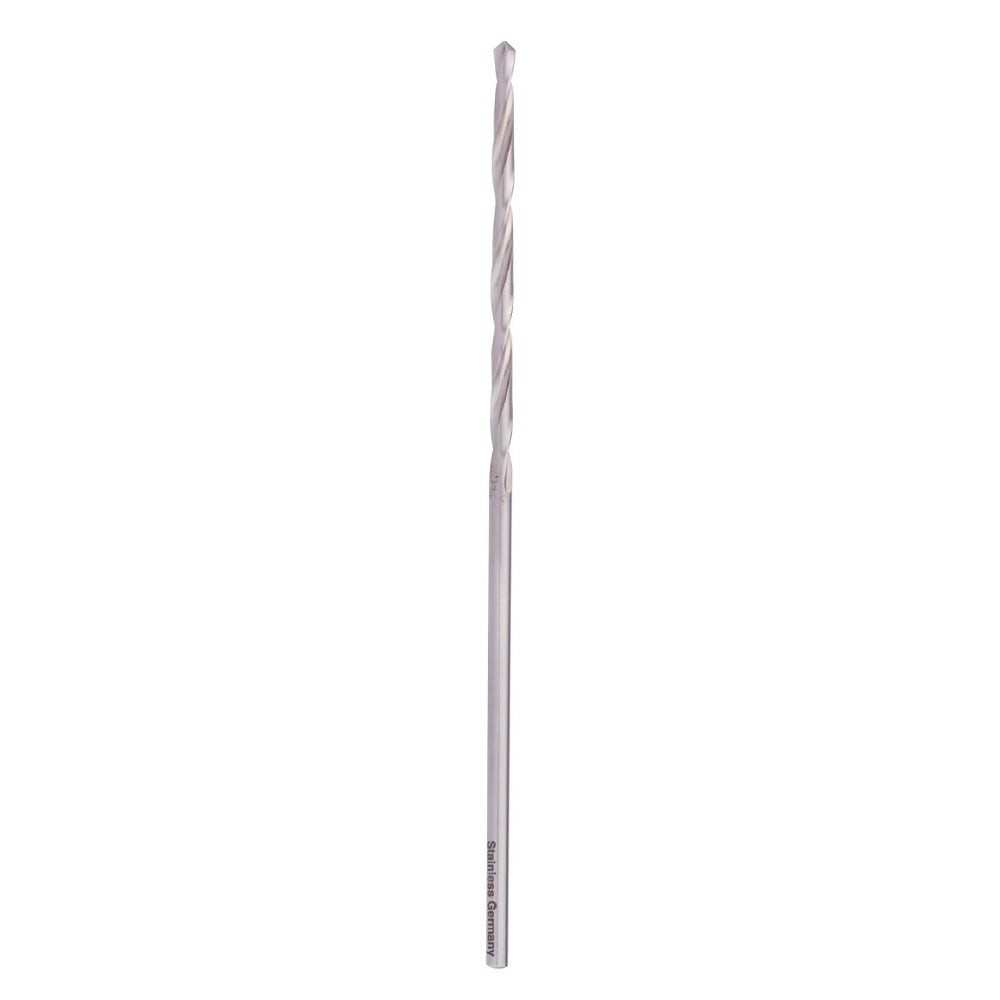
Drill Bit Jacobs Drill Chuck, model series PS-5717 to PS-5727, is a reusable orthopedic twist drill manufactured from German stainless steel for bone drilling with a compatible Jacobs-type drill chuck. The range includes PS-5717 at 1.1 mm diameter and 45 mm overall length, PS-5718 at 1.5 mm × 70 mm, PS-5719 at 2.0 mm × 100 mm, PS-5720 at 2.5 mm × 95 mm, PS-5721 at 2.7 mm × 85 mm, PS-5722 at 3.2 mm × 180 mm, PS-5723 at 3.2 mm × 130 mm, PS-5724 at 3.5 mm × 95 mm, PS-5725 at 3.5 mm × 180 mm, PS-5726 at 4.5 mm × 180 mm, and PS-5727 at 6.0 mm × 195 mm. Each bit combines a pointed cutting tip, helical flutes, and a plain cylindrical shank intended to be gripped concentrically by the jaws of a Jacobs chuck. The series is used for pilot-hole preparation, bicortical drilling, plate osteosynthesis, lag-screw technique, small-fragment fixation, osteotomy fixation, and other orthopedic bone preparation steps when the selected implant system specifies the corresponding drill diameter. Orthopedic trauma, hand, foot and ankle, reconstructive, and general orthopedic surgeons can use the range in hospital operating rooms and ambulatory orthopedic surgical settings.
The working mechanism is based on conventional twist-drill geometry. A pointed distal tip initiates contact with cortical bone, while the helical cutting flutes remove bone progressively as the drill rotates and provide channels for debris evacuation away from the cutting interface. The diameter of the fluted section determines the bore created in bone, so selection must follow the fixation system's operative technique rather than visual estimation. Proximal to the cutting portion, the smooth cylindrical shank is designed for insertion into a Jacobs chuck. A Jacobs chuck uses multiple converging jaws that close around the round shank; tightening the chuck centers and grips the bit so rotational torque from the handpiece is transmitted to the cutting end. Before drilling, the shank should be seated sufficiently within the chuck and secured evenly to reduce eccentric rotation or slippage. During use, the surgeon advances the rotating tip along the trajectory established by the drill guide or intended screw path. The flute geometry cuts and clears bone as forward pressure is applied. Unlike AO, J-latch, or other quick-coupling bits, this pattern does not rely on a shaped locking shank. Its retention therefore depends on correct chuck engagement, concentric tightening, and an undamaged cylindrical shaft.
In fracture fixation, these drill bits are used after reduction and plate positioning when a pilot hole or screw channel must be created through cortical or cancellous bone. A drill guide is positioned in the selected plate hole or directly over the planned trajectory, and the chosen diameter is advanced through the guide to control alignment and protect adjacent soft tissue. In lag-screw technique, the drilling sequence can include preparation of a gliding hole in the near cortex and a smaller threaded pilot hole in the far fragment, with exact diameters determined by the screw system being implanted. In hand and foot fixation, the 1.1 mm, 1.5 mm, and 2.0 mm options provide fine drilling capability for small osseous segments where narrow pilot channels are required. Intermediate diameters such as 2.5 mm, 2.7 mm, 3.2 mm, and 3.5 mm support common trauma and reconstructive workflows involving plate fixation, osteotomy stabilization, and screw preparation across larger cortical segments. The 4.5 mm and 6.0 mm variants provide larger cutting diameters for procedures or implant systems that specify wider osseous channels. Longer 180–195 mm configurations provide additional reach for deeper exposures, whereas shorter versions improve control when the operative field is superficial or anatomically confined.
PS-5717 combines a 1.1 mm diameter with a 45 mm overall length for fine, shallow drilling in small-bone work. PS-5718 increases to 1.5 mm × 70 mm, providing a narrow pilot-hole option with greater reach. PS-5719 is 2.0 mm × 100 mm and can be selected for small-fragment fixation where the operative technique specifies a 2.0 mm drill. PS-5720 measures 2.5 mm × 95 mm, while PS-5721 is 2.7 mm × 85 mm; both provide intermediate diameters for controlled cortical preparation. Two 3.2 mm configurations are supplied: PS-5722 at 180 mm and PS-5723 at 130 mm. Their identical diameter produces the same nominal bore, while the different shaft lengths allow selection according to surgical depth and handpiece clearance. The 3.5 mm options follow the same principle: PS-5724 is 95 mm long for shallower access, and PS-5725 is 180 mm for deeper approaches. PS-5726 provides a 4.5 mm diameter at 180 mm overall length for larger-bore drilling specified by the fixation construct. PS-5727 is the largest and longest option at 6.0 mm × 195 mm. Across the range, diameter governs the prepared channel, while total length primarily affects reach, visibility, and clearance around retractors, guides, and the powered drill.
German stainless steel provides the hardness, torsional strength, corrosion resistance, and dimensional stability required for a reusable orthopedic cutting instrument that must maintain a defined tip and flute geometry. Peak Surgicals lists satin, dull, and mirror finish options for this product line. The cutting surfaces should remain free from impact damage, edge rounding, corrosion, or retained bone debris because defects can alter drilling efficiency and increase heat generation. Reprocessing should begin promptly after use, with particular attention to the helical grooves where blood and bone particles can remain trapped. Cleaning is followed by thorough rinsing, drying, visual inspection, and functional assessment of the tip, flutes, and straightness of the shank. A bent shaft should not be returned to service because eccentric rotation can compromise drilling accuracy and chuck stability. The instrument is reusable and can be steam sterilized within a validated healthcare-facility cycle compatible with stainless steel surgical instrumentation and the applicable reprocessing instructions. Peak Surgicals lists the device as Class I with CE, ISO 13485, and FDA-related certification information, together with a one-year warranty, MOQ of one piece, OEM availability, and return-and-replacement service. Procurement teams should treat regulatory references as documentation for supplier qualification and device-market compliance, not as an unsupported statement that an individual drill bit is FDA approved.
| SKU | PS-5717 to PS-5727 size-specific model series |
|---|---|
| Product Name | Drill Bit Jacobs Drill Chuck |
| Price | $3.03 USD |
| Size/Gauge Variants | PS-5717: 1.1 mm × 45 mm; PS-5718: 1.5 mm × 70 mm; PS-5719: 2.0 mm × 100 mm; PS-5720: 2.5 mm × 95 mm; PS-5721: 2.7 mm × 85 mm; PS-5722: 3.2 mm × 180 mm; PS-5723: 3.2 mm × 130 mm; PS-5724: 3.5 mm × 95 mm; PS-5725: 3.5 mm × 180 mm; PS-5726: 4.5 mm × 180 mm; PS-5727: 6.0 mm × 195 mm |
| Instrument Category | Orthopedic Drill Bit for Jacobs Chuck |
| Procedure | Pilot-hole preparation, fracture fixation, plate osteosynthesis, lag-screw drilling, osteotomy fixation, and orthopedic bone preparation |
| Material | German Stainless Steel |
| Finish | Satin, Dull, Mirror |
| Sterilization | Reusable; steam sterilization following validated cleaning and healthcare-facility reprocessing protocols |
| Instrument Classification | Class I Reusable Orthopedic Cutting Instrument |
| Reusable | Yes |
| Certifications | CE, ISO 13485, FDA-related procurement documentation |
| Warranty | 1 Year |
| MOQ | 1 Piece |
| OEM / Custom Orders | Available |
| After-Sale Service | Return and Replacement |
How does a drill bit for a Jacobs chuck differ from an AO quick-coupling drill bit?
Drill Bit for Jacobs Drill Chuck uses a plain cylindrical shank that is mechanically gripped by the jaws of a compatible Jacobs chuck. An AO quick-coupling drill bit uses a purpose-shaped coupling end that locks into an AO-style quick-release interface instead of being tightened by chuck jaws. The Jacobs system allows the handpiece to clamp round-shank bits across its supported capacity, while the AO interface is dependent on the corresponding coupling geometry. During setup, the Jacobs pattern requires deliberate insertion and tightening so the bit runs concentrically without slipping. An AO quick-coupling design is inserted and locked through its dedicated release mechanism, which can shorten bit changes when the system is already configured for that interface. The cutting diameter still has to match the fixation technique regardless of which proximal connection is used. Selection therefore depends on handpiece compatibility, required bit diameter, operative workflow, and the coupling specified in the instrument set.
Which drill diameter and length should be selected for orthopedic fixation?
Drill Bit for Jacobs Drill Chuck is offered from 1.1 mm to 6.0 mm, so diameter selection should follow the screw or implant system's surgical technique. The 1.1 mm and 1.5 mm versions provide fine pilot-hole preparation for small osseous anatomy encountered in hand, wrist, foot, and ankle fixation when the chosen construct calls for those diameters. The 2.0 mm, 2.5 mm, and 2.7 mm options cover progressively larger channels used in small-fragment and reconstructive workflows. The 3.2 mm and 3.5 mm models are available in more than one overall length, allowing the same bore diameter to be used through either shallower or deeper surgical approaches. The 4.5 mm and 6.0 mm bits are reserved for fixation or bone-preparation steps that specifically require those larger channels. A surgeon should not infer screw compatibility from diameter alone because pilot-hole, glide-hole, tapping, and implant dimensions differ between systems. The operative technique guide for the selected plate, screw, or implant determines the final drill choice.
What do CE, ISO 13485 and FDA references mean for procurement?
Peak Surgicals lists CE, ISO 13485, and FDA information for the Drill Bit for Jacobs Drill Chuck product line. ISO 13485 concerns the medical-device quality-management system governing controlled manufacturing and related quality processes. CE documentation is relevant to conformity requirements for applicable markets and should be reviewed with the device documentation supplied for procurement. United States buyers should assess FDA status according to the instrument category, establishment responsibilities, listing requirements, and records required by their organization. The words FDA approved should not be substituted for the actual regulatory status of a reusable orthopedic drill bit unless that specific claim is supported by the applicable record. Hospitals and distributors should retain supplier certificates, model identification, purchase documentation, and any market-specific regulatory records within their vendor files. This approach keeps procurement language aligned with documented status rather than using a broad marketing claim.
How does the Jacobs chuck control and retain the drill bit intraoperatively?
The principal control interface for the Drill Bit for Jacobs Drill Chuck is the chuck itself rather than a mechanism built into the bit. When the smooth round shank is inserted, the Jacobs chuck jaws advance inward and clamp the shaft concentrically as the chuck is tightened. Proper seating allows torque from the powered or manual drill to pass through the shank to the fluted cutting section. Before bone contact, the operator should confirm that the bit is secure and rotates without visible eccentricity. During drilling, the handpiece controls rotational speed while the surgeon controls trajectory, axial pressure, and advancement through the drill guide or exposed bone. If the jaws are not tightened evenly, the shaft can slip or run off-center, reducing precision and potentially damaging the bit or prepared hole. The chuck should be released only after rotation has stopped and the handpiece is in its appropriate safe state.
How should hospitals order, inspect and reprocess this drill-bit range?
Hospitals should order the Drill Bit for Jacobs Drill Chuck by the individual model number, diameter, and overall length rather than by product title alone. Peak Surgicals lists eleven configurations from PS-5717 through PS-5727, so receiving and sterile-processing teams can distinguish bits that share a diameter but differ in length. The current product price starts at $3.03, with a one-piece MOQ, one-year warranty, OEM availability, and return-and-replacement service listed on the product page. After use, bone debris and blood should be removed promptly from the helical flutes before residue dries within the cutting geometry. The bit should then be rinsed, dried, and inspected for edge damage, corrosion, bending, or shank distortion before packaging. Steam sterilization should follow the facility's validated cycle and the applicable reprocessing instructions for reusable stainless steel orthopedic instruments. Inventory control should preserve model identification so the correct diameter and length return to the appropriate orthopedic tray.