Featured Collection
Your cart
Featured Collection

PEAK SURGICAL
SKU:PS-2931-1
Couldn't load pickup availability
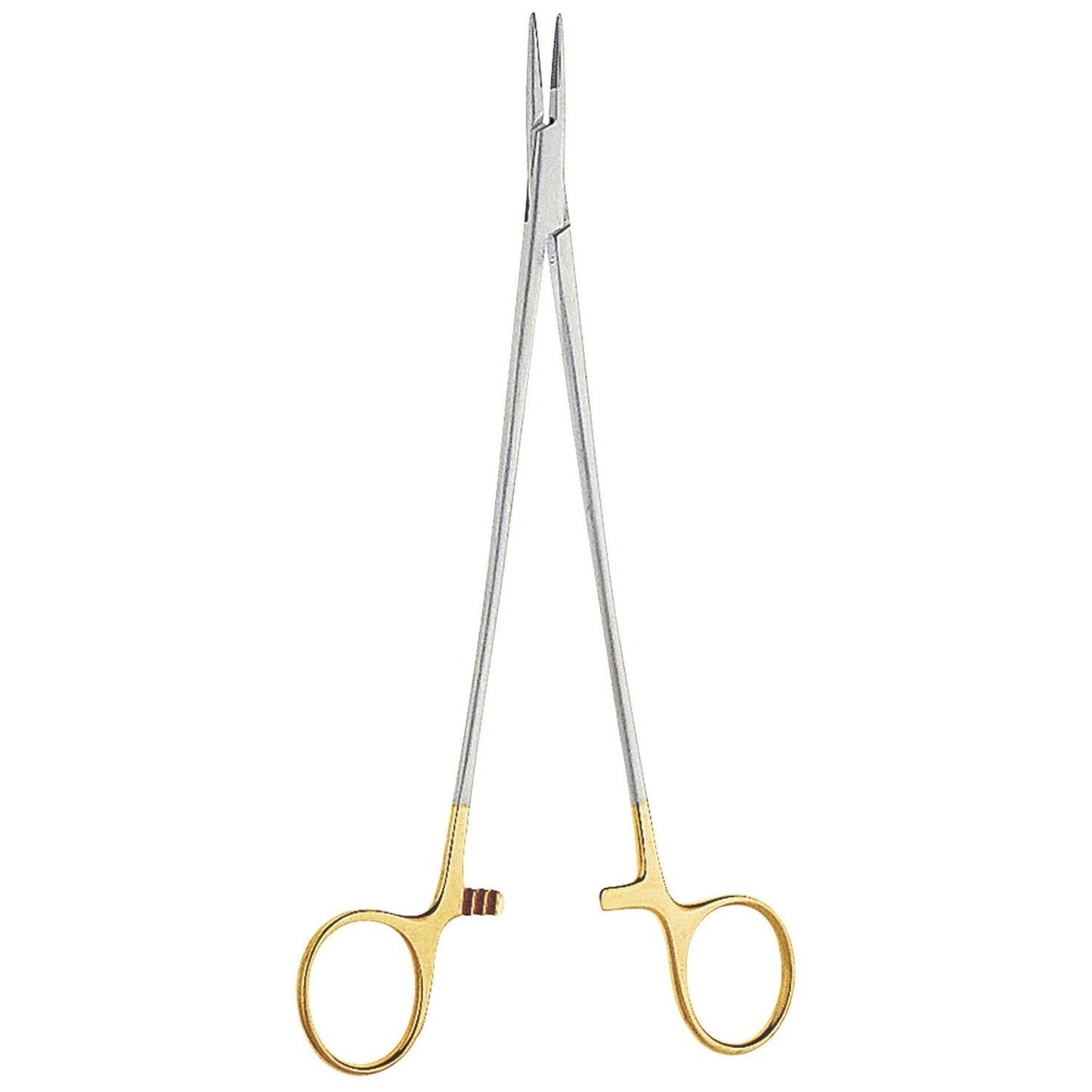
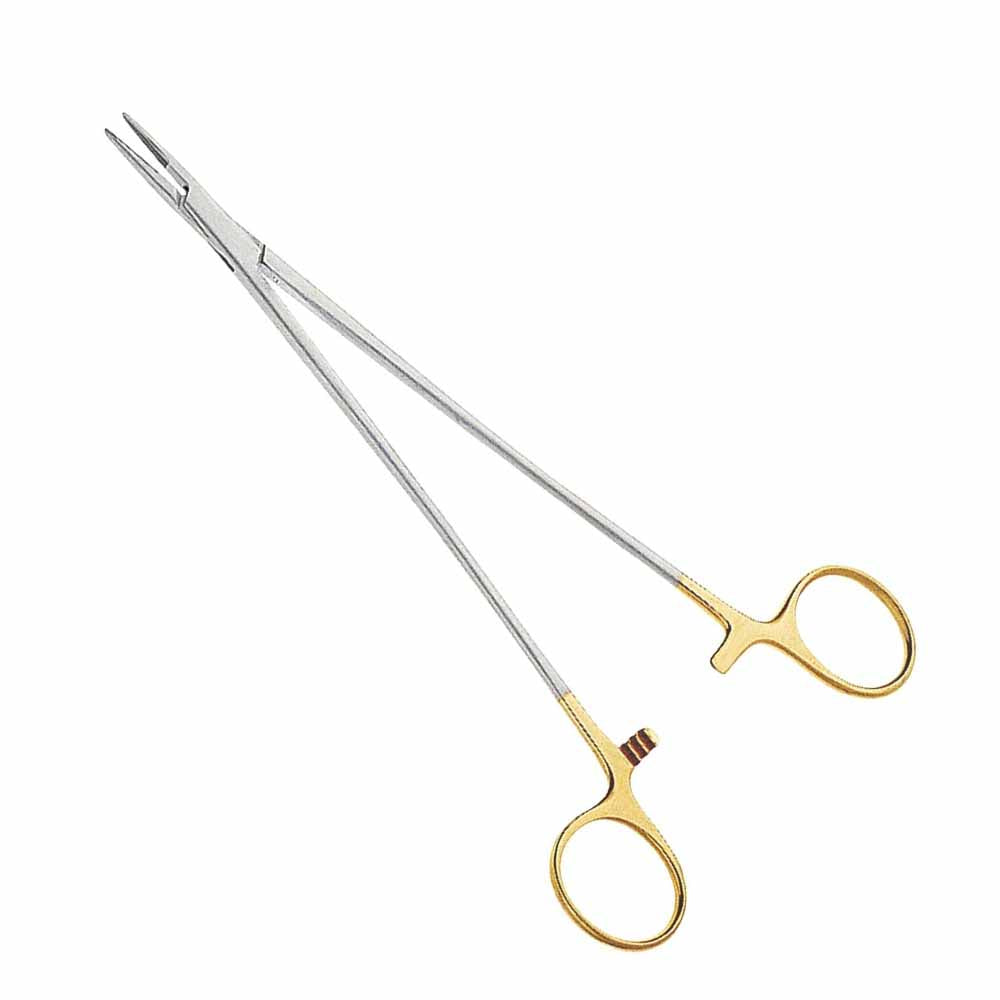
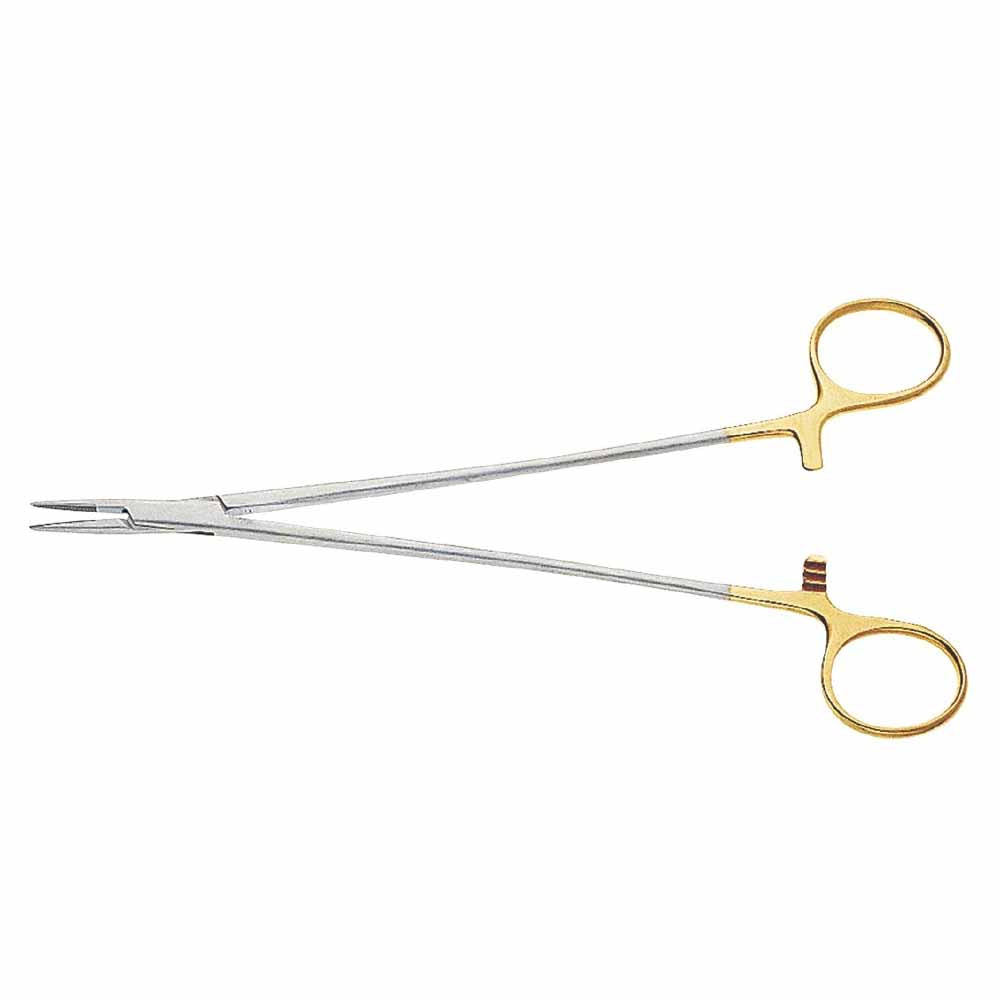
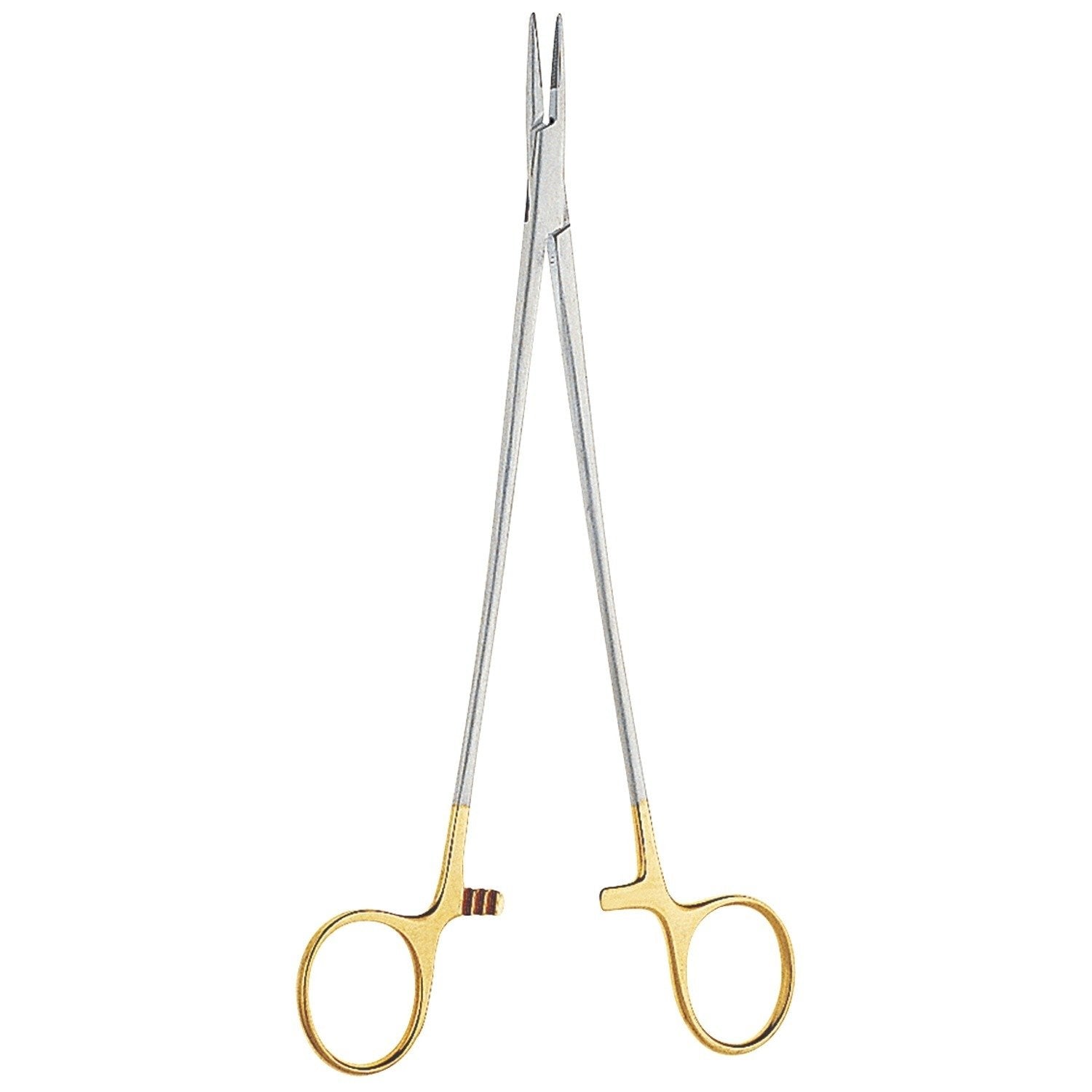
Julian Needle Holders, SKU PS-2931-1, are reusable surgical needle-holding forceps manufactured from German stainless steel for controlled placement of curved suture needles in abdominal, gynecology, thoracic, orthopedic, oral, and veterinary procedures. The available variants are straight jaw model PS-2931-1 and curved jaw model PS-2931-1, giving surgical teams two approach profiles for mid-depth closure, recessed suturing, and controlled needle rotation. The instrument pattern includes serrated jaws, straight shanks, a box-lock pivot, ring handles, gold-tone handle finish, and a ratchet locking mechanism. The straight configuration supports direct needle passage during fascial closure, tendon repair, capsular suturing, and routine soft tissue approximation. The curved configuration improves access when the suture line is angled, deep, or partly obscured by retractors. Julian Needle Holders are used during laparotomy closure, hysterectomy pedicle suturing, vaginal cuff closure, thoracotomy layer approximation, tendon sheath repair, oral mucosal closure, and veterinary abdominal surgery. General surgeons, gynecologic surgeons, thoracic surgeons, orthopedic surgeons, oral surgeons, veterinary surgeons, hospitals, clinics, distributors, and procurement teams use this pattern where secure needle control is required.
The Julian pattern works through a ring-handle frame that transfers closing force to a serrated distal jaw designed to stabilize the needle shaft during loading, rotation, and passage. The straight jaw configuration keeps the needle aligned with the long axis of the shanks, which is useful when the surgeon needs direct forward control through fascia, tendon, capsule, mucosa, or abdominal wall layers. The curved option changes the approach angle at the distal end, helping the operator reach recessed suture lines without excessive wrist rotation. Serrated contact faces increase purchase on curved needles and reduce roll during firm tissue passage. The box-lock pivot keeps both arms aligned so the jaw surfaces meet consistently during repeated loading and release. Ring handles provide controlled finger placement, while the ratchet allows staged locking when the needle must remain fixed during deep passage or hand repositioning. The gold-tone handle area helps identify the instrument within mixed needle holder trays and supports organized operating room counts.
During laparotomy closure, Julian Needle Holders support controlled passage of curved needles through fascia when the surgeon is placing interrupted or continuous sutures under direct exposure. In abdominal hysterectomy, the curved version can assist with suturing uterine pedicles, cardinal ligament tissue, and the vaginal cuff when the working angle is recessed within the pelvis. In thoracic closure, the holder supports layer approximation around intercostal soft tissue and chest wall planes where hand clearance is limited by retractors. Orthopedic teams can select the straight jaw for tendon repair, capsular closure, and ligament-adjacent soft tissue fixation when a secure ratcheted grip is preferred. Oral surgeons may use the shorter working control of the same pattern during mucosal closure, flap repositioning, and intraoral wound repair. Veterinary surgeons use the straight or curved configuration during abdominal closure, soft tissue reconstruction, reproductive procedures, and orthopedic adjunctive suturing. The ratchet is useful when exposure, suction, and tissue handling occur simultaneously during multi-instrument workflow.
The straight PS-2931-1 variant is selected when the surgeon needs a direct needle path with predictable alignment from hand to jaw. This configuration is practical for abdominal wall closure, tendon sheath repair, capsular approximation, oral mucosal suturing, and general soft tissue work where the suture line is accessible. The curved PS-2931-1 variant is selected when the needle must approach tissue from an angled trajectory, especially in pelvic, thoracic, or recessed abdominal fields. During hysterectomy closure, the curved jaw helps direct the needle around deep pedicles and cuff tissue without forcing the handle into the operative corridor. In thoracotomy, the same geometry assists with rib-adjacent layer closure when straight instruments create an awkward hand position. For veterinary surgery, straight jaws support routine closure, while curved jaws help reach deeper abdominal and reproductive fields. Hospitals can stock both options to cover general surgery, gynecology, thoracic, orthopedic, oral surgery, and veterinary tray requirements under one product family.
German stainless steel provides the rigidity, corrosion resistance, and dimensional stability required for reusable needle-holding instruments exposed to repeated loading at the jaws, shanks, pivot, and ratchet. The satin steel surface reduces glare under operating room lighting and allows visual inspection of serrated jaw faces, box-lock alignment, ring handles, and lock teeth before sterile packaging. Reprocessing follows standard central sterile workflows, including point-of-use preparation, manual brushing of jaw serrations and hinge surfaces, ultrasonic cleaning where used, washer-disinfector processing, drying, inspection, packaging, and steam autoclave sterilization. The jaw and ratchet require focused cleaning because suture material, blood, and protein residue can remain in fine contact interfaces after deep suturing. CE marking and ISO 13485 alignment support regulated purchasing documentation for hospitals, clinics, distributors, and international healthcare supply channels. FDA-compliant procurement support helps United States buyers maintain records for reusable non-powered surgical instruments. The PS-2931-1 straight and curved options support replacement ordering, custom procedural sets, and multi-department instrument standardization.
| SKU | PS-2931-1 |
|---|---|
| Product Name | Julian Needle Holders |
| Price | $13.75 |
| Size/Gauge Variants | Straight and curved jaw configurations under model PS-2931-1 |
| Instrument Category | Surgical needle holder |
| Procedure | Laparotomy closure, abdominal hysterectomy, vaginal cuff closure, thoracotomy layer approximation, tendon repair, capsular closure, oral mucosal closure, veterinary abdominal surgery |
| Material | German stainless steel |
| Finish | Satin steel with gold-tone ring handle finish |
| Sterilization | Reusable and autoclavable after cleaning, drying, inspection, and sterile packaging |
| Instrument Classification | Reusable non-powered surgical needle-holding forceps |
| Reusable | Yes |
| Certifications | CE & ISO 13485 with FDA-compliant procurement support |
| Warranty | 30-day money-back support for eligible non-personalized orders |
| MOQ | 1 unit |
| OEM / Custom Orders | Available for distributor, hospital, clinic, and institutional purchasing programs |
| After-Sale Service | Order support, dispatch tracking, replacement assistance, and procurement documentation support |
How do Julian Needle Holders differ from Mayo-Hegar Needle Holders?
Julian Needle Holders are offered in straight and curved jaw configurations for controlled suturing in standard and angled operative fields. Mayo-Hegar Needle Holders are general-purpose instruments commonly used for routine superficial and mid-depth closure. The Julian curved option improves access when the suture line is recessed or angled in pelvic, thoracic, or abdominal surgery. The straight option provides direct needle alignment for fascia, tendon, capsule, and oral mucosal closure. Julian Needle Holders also use a ratcheted ring-handle pattern for stable needle holding during hand repositioning. This makes them suitable when surgical teams need both direct and angled needle control within one product family.
Which Julian Needle Holder configuration should be selected?
The straight Julian Needle Holders configuration is selected when the surgeon needs direct needle passage through accessible tissue planes. It is suitable for abdominal wall closure, tendon repair, capsular suturing, oral mucosal closure, and routine soft tissue approximation. The curved configuration is selected when the suture line is deep, angled, or partly hidden by retractors. In gynecology, the curved jaw helps approach uterine pedicles, vaginal cuff tissue, and pelvic reconstructive planes. In thoracic work, it assists with layer approximation around rib-adjacent soft tissue. Selection depends on working angle, field depth, needle size, tissue density, and the surgeon’s preferred hand position.
What do CE, ISO 13485, and FDA-compliant procurement mean for this product?
Julian Needle Holders are supplied for healthcare purchasing workflows that require traceable instrument documentation. CE marking supports regulated distribution where European conformity documentation is required. ISO 13485 alignment indicates that the manufacturing quality system follows a recognized medical device framework. FDA-compliant procurement support helps buyers serving United States healthcare channels maintain records for reusable surgical instruments. Hospitals can use these references during vendor onboarding, internal product review, and recurring supply approval. Distributors can include the PS-2931-1 straight and curved options in general surgery, gynecology, thoracic, orthopedic, oral surgery, and veterinary supply programs.
How is the ratchet and box-lock mechanism used during suturing?
The ratchet on Julian Needle Holders provides staged closure after the curved needle is positioned between the serrated jaw faces. The surgeon closes the ring handles until the needle is held with the grip required for the tissue being sutured. The lock maintains needle orientation during passage through fascia, tendon, capsule, mucosa, pedicle tissue, or dense soft tissue. The box-lock pivot keeps the arms aligned so the jaw faces meet consistently during repeated loading and release. This alignment is important when suturing at depth because small handle movement can change the distal needle path. The ratchet is disengaged before needle repositioning or before the instrument is returned to the scrub team.
How should hospitals, clinics, and distributors manage sterilization and supply?
Julian Needle Holders are reusable instruments suited for standard central sterile processing workflows. After surgery, the serrated jaw faces, box lock, ratchet teeth, shanks, and ring handles require prompt cleaning preparation. The instruments can then be processed through validated cleaning, drying, inspection, sterile packaging, and steam autoclave cycles. Hospitals can stock straight and curved configurations for general surgery, gynecology, thoracic, orthopedic, oral surgery, and veterinary trays. Clinics and distributors can order single replacement units or include selected configurations in custom procedural sets. Procurement teams receive order support, tracking assistance, replacement handling, and documentation support for institutional purchasing.