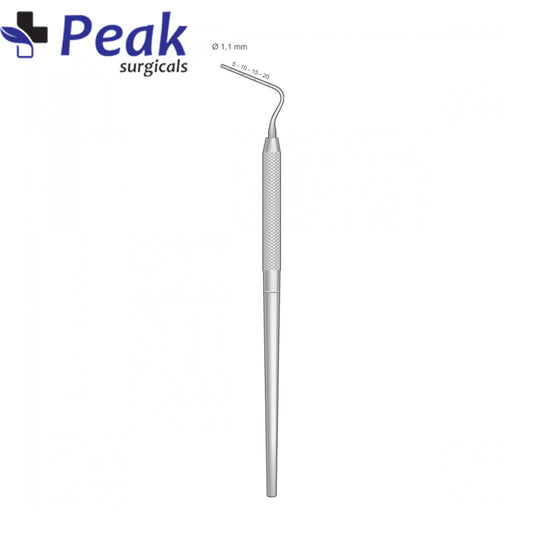
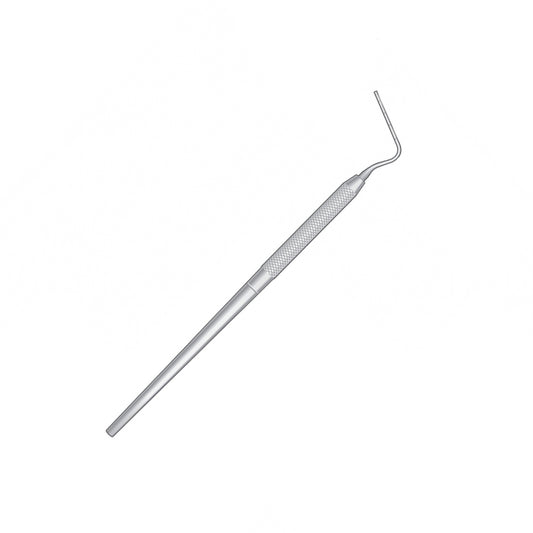
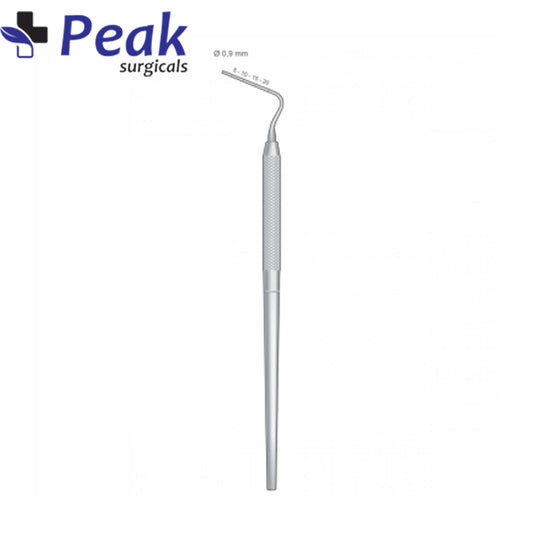
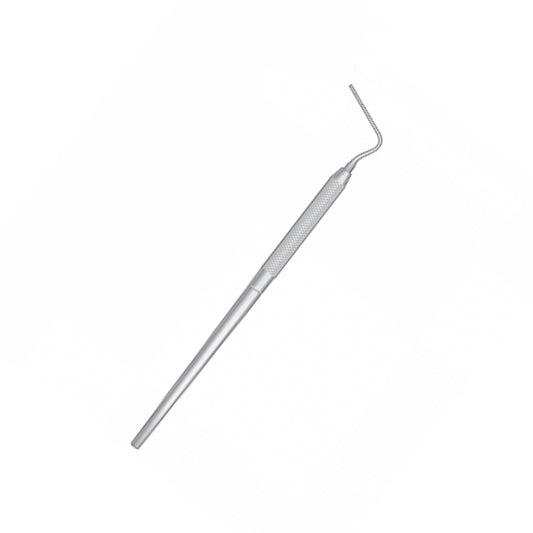
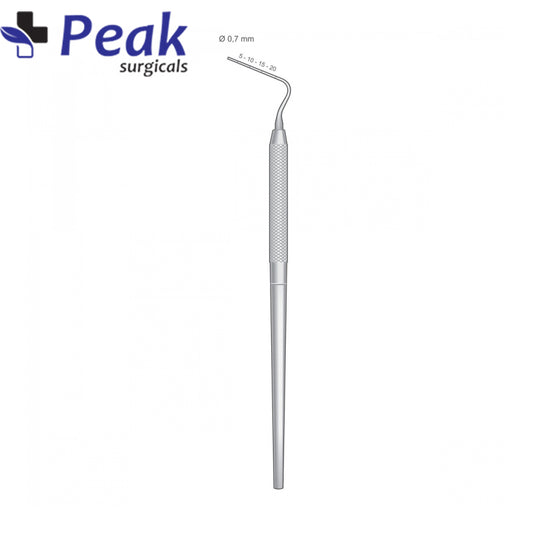
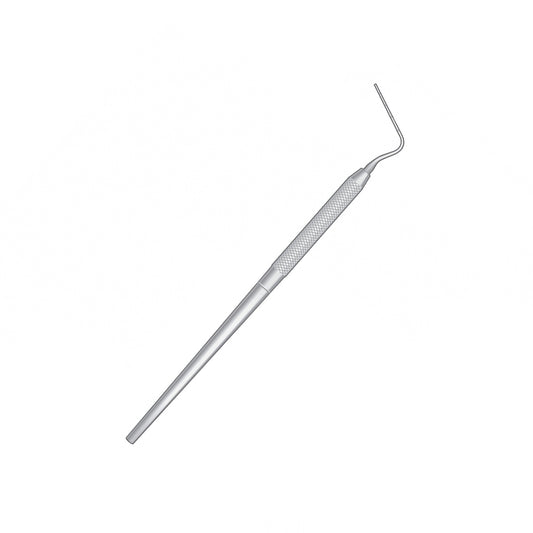
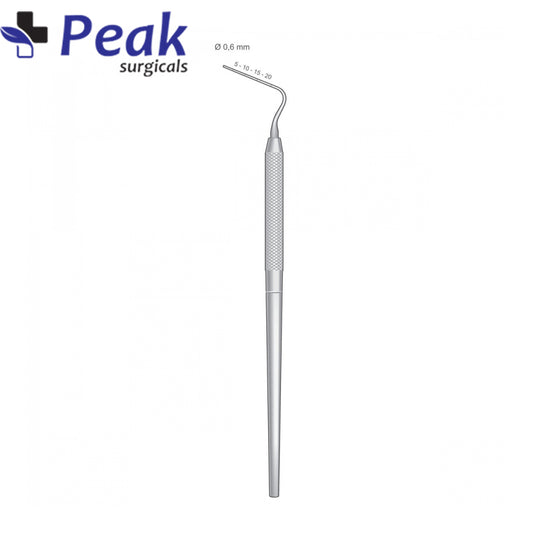
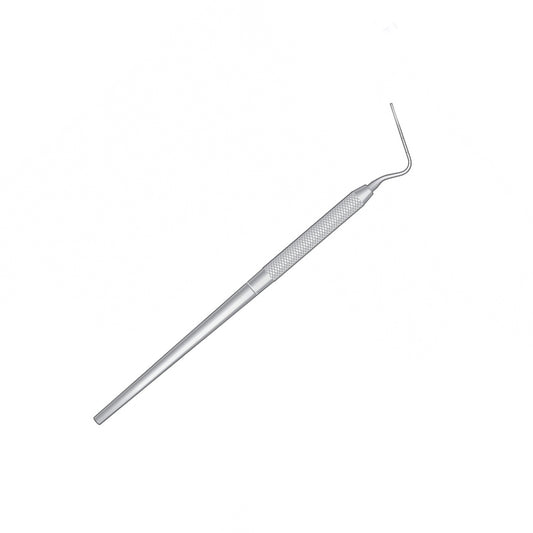
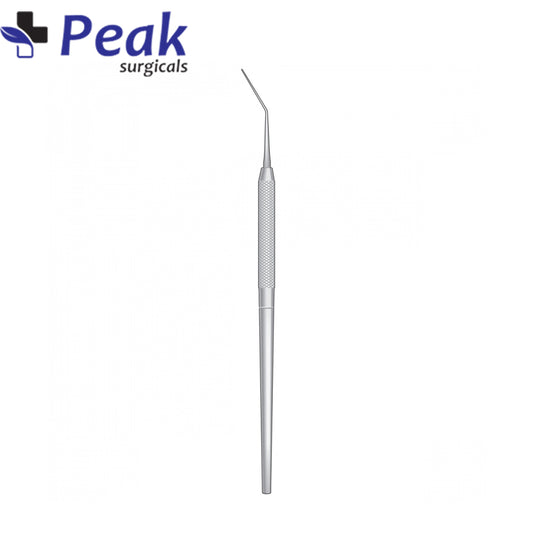
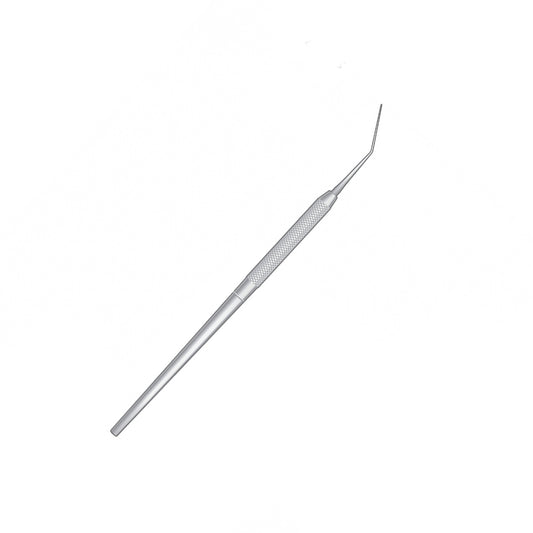
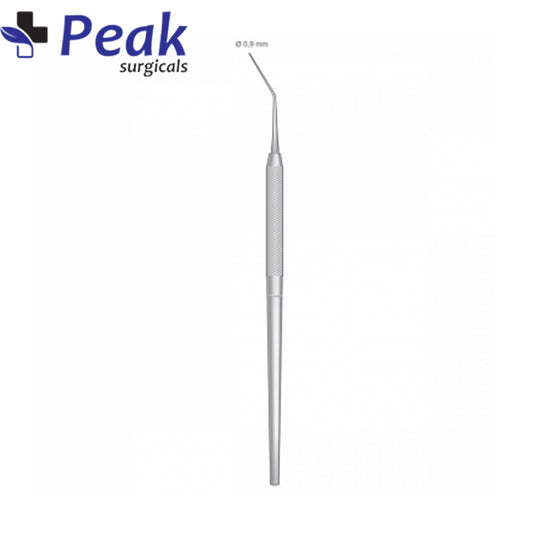
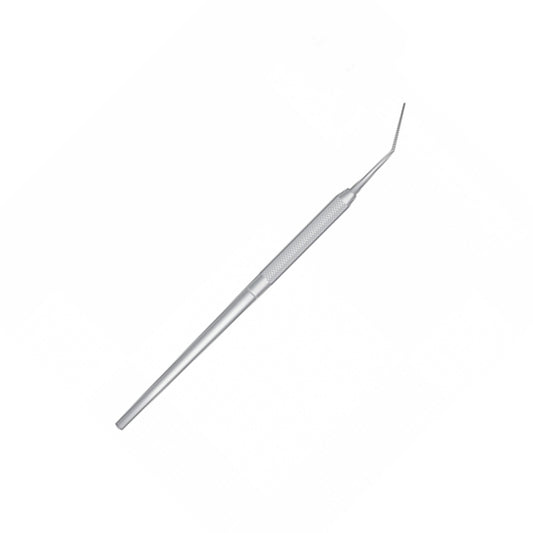
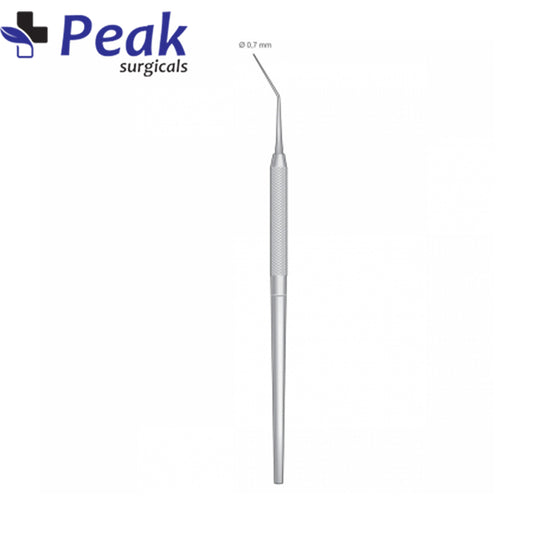
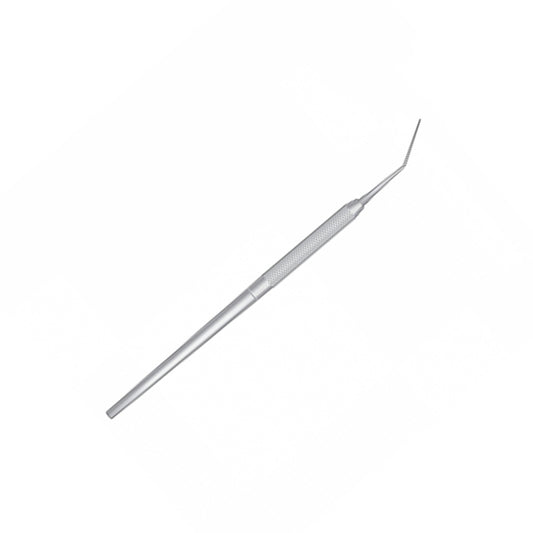
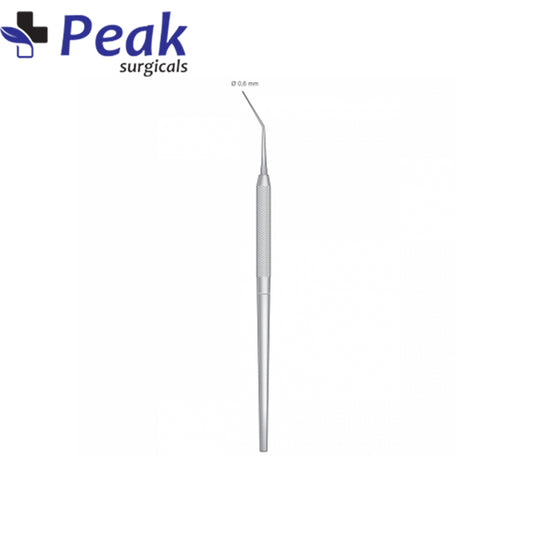
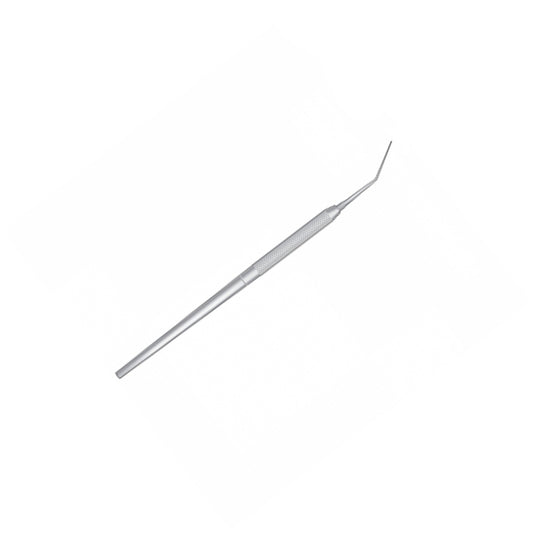
Root canal pluggers compact gutta-percha vertically along the canal axis during obturation, a flat working tip that drives the filling material to the apex, distinct from the pointed spreader used for lateral condensation. Peak Surgicals supplies eight patterns — Luks and posterior, with 0.6mm to 1.15mm tips in German stainless steel, from $4.51 to $11.00. Each is CE marked and built under ISO 13485. Compare all eight pluggers in the grid below.
Plugger, Spreader or Condenser: Which for Obturation?
A plugger has a flat tip that compacts gutta-percha vertically toward the apex, a spreader has a pointed tip that creates lateral space for accessory cones, and a condenser carries a broader tip for both the flat versus pointed tip is the distinction, and it decides which obturation technique the instrument serves. Choosing the wrong one leaves voids in the fill.
Warm vertical compaction is where the plugger works. After the master cone is fitted 0.5 to 2mm short of the working length, the plugger drives the softened gutta-percha down the canal and backfills it in increments, compacting each until the canal is sealed three-dimensionally. Tip diameter is matched to canal depth: a fine 0.6mm plugger (PS-D-087, $6.60) reaches the apical third, while a 0.9mm (PS-D-089, $11.00) and 1.0–1.15mm (PS-D-092, $4.51) work the wider coronal portion. The Luks Root Canal Pluggers (PS-D-088 to PS-D-090, from $6.60) run a defined pattern across 0.6, 0.7 and 0.9mm tips, and the posterior pluggers (PS-D-091 to PS-D-094, from $4.51) carry angled shanks for molar access where a straight instrument cannot reach. We supply every pattern at MOQ 1.
Tip Size, Shank and Apical Fit
Tip diameter is the specification that determines the fill. A plugger must reach within a few millimetres of the apical constriction without binding on the canal walls, so tip size is selected to match the prepared canal rather than chosen for reach alone, a plugger too wide stops short and leaves the apical gutta-percha uncompacted, while one too narrow perforates the fill instead of compacting it. The sizes here span 0.6mm through 1.15mm to cover that range across canal types.
Shank angle is the second variable, and it is why posterior patterns exist. A straight plugger reaches anterior and premolar canals directly, but molar access demands an angled shank that clears the opposing arch and the cheek, the posterior patterns in this range carry that geometry. Working-end markings help verify depth against the radiographic working length. The instruments compact by hand pressure along the canal axis; excessive force risks vertical root fracture, so the technique is controlled compaction rather than driven force.
Reprocessing, Edge Integrity and Certification
These pluggers are forged from German stainless steel, corrosion-resistant across repeated steam autoclave cycles, and holding the tip form that compaction depends on. The working tip is the inspection point: a bent or flattened tip no longer seats against the gutta-percha cleanly, so check tips after each cycle and set aside any that have deformed. Ultrasonic-clean before autoclaving so gutta-percha and sealer residue does not set on the working end, where it changes the tip diameter that the technique relies on.
Every instrument is Class I, reusable, CE marked and built under ISO 13485 — the documentation a dental supply team verifies before qualifying a vendor. Warranty is one year with return-and-replacement, MOQ is 1 piece, orders over $99 ship free in carton box packing, and OEM marking is available for distributors. For lateral condensation see root canal spreaders; related patterns sit in endodontic excavators. Browse all endodontic instruments. Talk to us about OEM and volume terms.
Our Top Selling Products:
Cobbett Skin Graft Knife | FUE Serrated Punch 0.8mm | Clark Hysterectomy Clamp - Curved Gynecological Surgical Clamp | Olsen Hegar Needle Holder | Gelpi Perineal Retractors - 3.5-7.25 in Self-Retaining Sharp-Prong Design | Debakey Forceps 4 1/2" Fenestrated Handle Atraumatic Tissue Forceps | Winged Elevator Standard Handle | Brown Adson Tissue Forceps - Precision Surgical Tissue Forceps | No Scalpel Vasectomy Forceps | Gillies Skin Hooks - 3-4 mm Sharp Single-Prong Retractors for Plastic Surgery