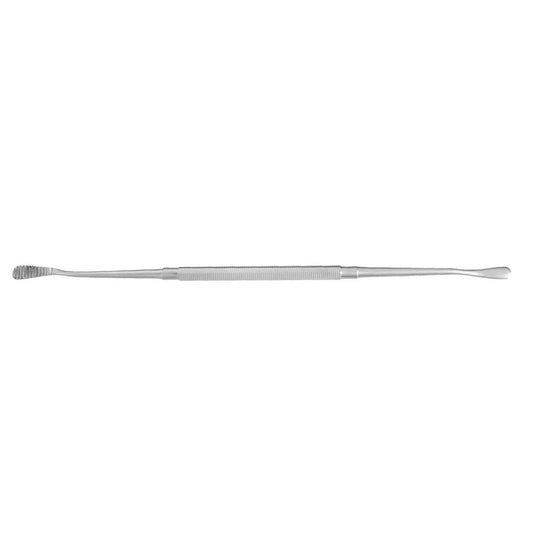
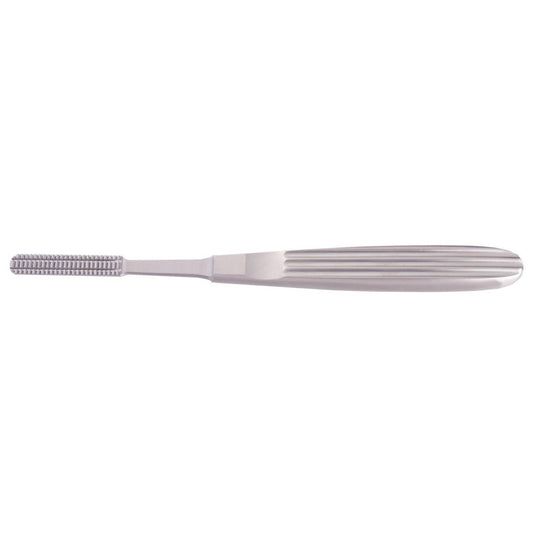
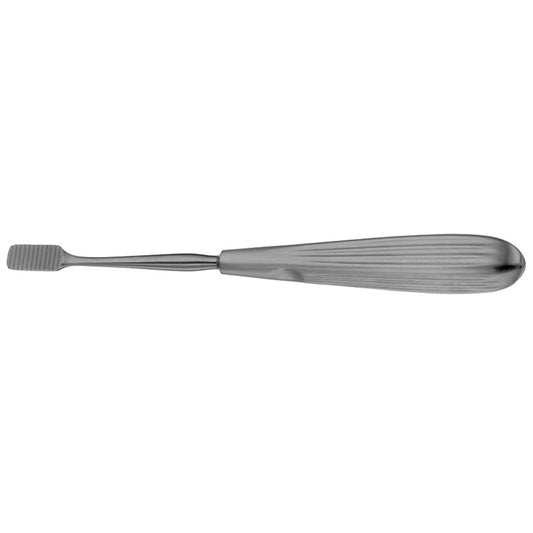
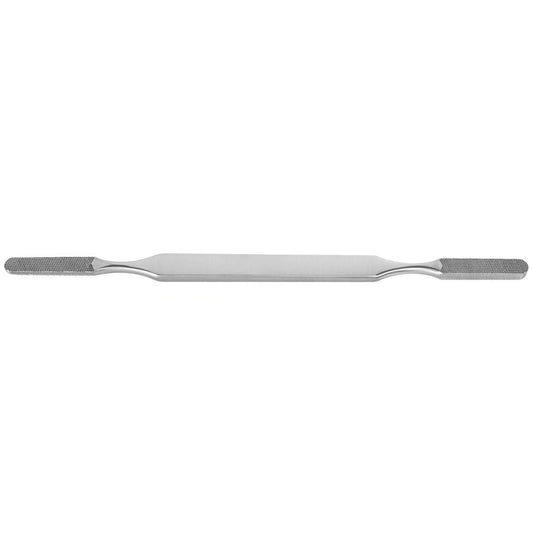
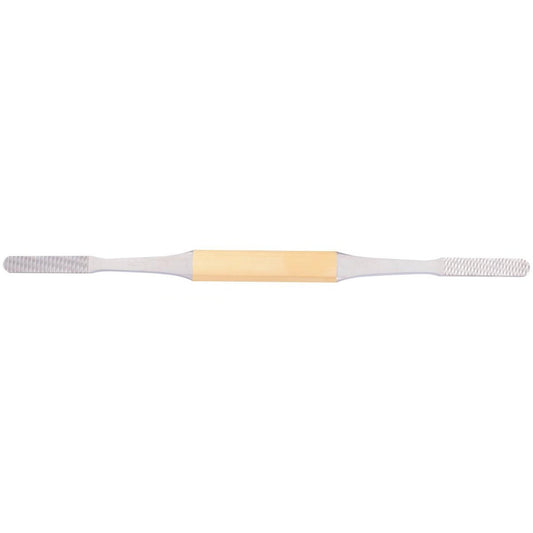
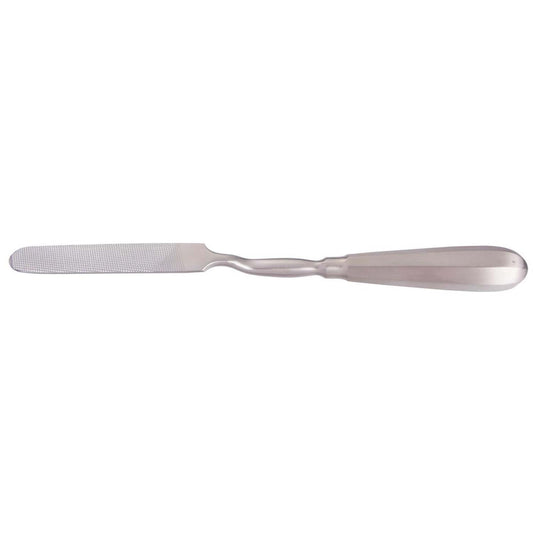
Orthopedic rasps level irregular bone edges, contour graft surfaces and smooth the coarse margins left after osteotomy, the ridges that damage surrounding soft tissue if left in place. Peak Surgicals supplies six patterns, Putti, Miller, diamond and double-ended bone files, in German stainless steel, from $16.50 to $19.80, each carrying a model number. Every pattern is CE marked and built under ISO 13485. Compare all patterns in the grid below.
Which Rasp for Which Bone Work?
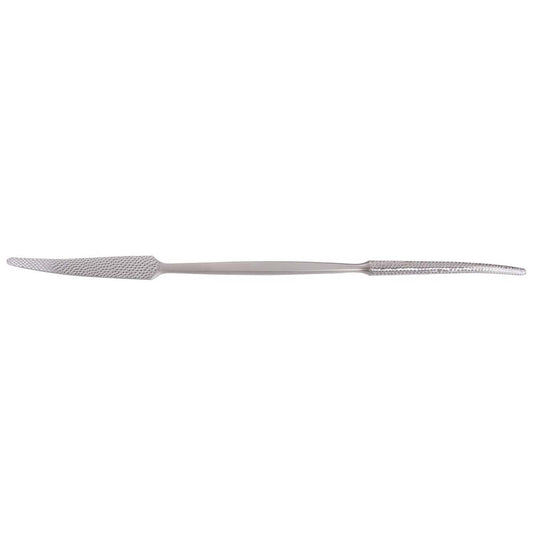
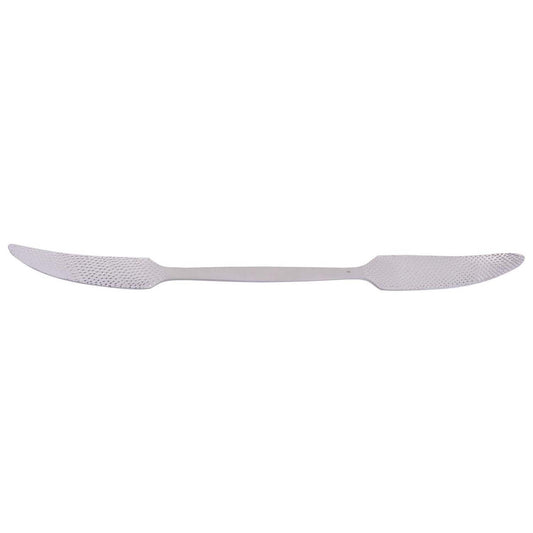
Putti bone rasps carry two working ends, one flat, one curved or round, for levelling irregular bone and remodelling grafts, Miller rasps use cross-serrated ends that cut on both the push and pull stroke, and diamond rasps abrade rather than cut for fine finishing. Working length and tooth pattern are the two variables, and the depth of the field decides the first.
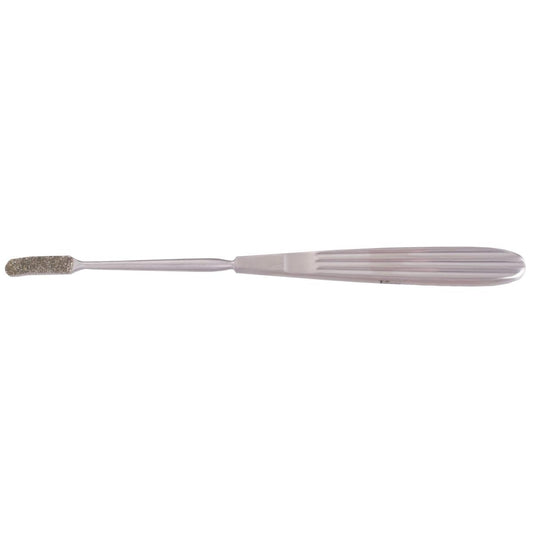
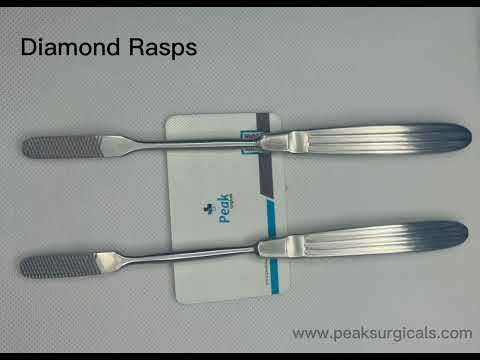
Putti Bone Rasp 30cm (PS-8623, $16.50) reaches deep fields where a shorter instrument would put the surgeon's hand inside the wound; Putti Bone Rasp 27cm (PS-8622, $17.60) trades that reach for control in shallower work. Both are double-ended, which is the pattern's defining feature — one instrument covers flat and contoured surfaces without swapping. Miller Rasp (PS-8618, $19.80) carries cross-serrated ends that remove bone on both strokes, working faster where bulk removal matters. Diamond Rasps (PS-8605, from $18.70) finish rather than shape — an abrasive surface that smooths what the cutting rasps left. The Bone File (PS-8624, $19.80) and Double Ended Rasps (PS-8609, from $17.60) cover general shaping. We supply each at MOQ 1.
Cutting Direction, Tooth Pattern and Stroke
Three features decide how a rasp behaves against bone, and none of them is sharpness. Cutting direction comes first: an upcutting rasp removes bone on the pull stroke, a downcutting rasp on the push. The distinction matters because it determines which direction loads the instrument against the bone and which direction merely repositions it — using the wrong stroke skates across the surface instead of cutting.
Tooth pattern is second. Cross-serrated teeth cut in both directions and clear debris between rows; plain or single-direction serrations cut more aggressively on one stroke and leave a coarser surface. Fine teeth finish, coarse teeth shape — and a rasp used for the wrong stage either takes too long or removes more bone than intended.
Double-ended construction is the third. A single shaft carrying a flat end and a curved or round end covers both plane and contour surfaces without a second instrument on the tray, which is why the Putti pattern became standard. Central flat handles balance that double-ended geometry in the hand.
Reprocessing, Edge Life and Certification
These rasps are forged from German stainless steel — corrosion-resistant across repeated steam autoclave cycles, and holding tooth geometry where a softer instrument would round over. The serrations are the reprocessing point: bone debris packs between the teeth and hardens there, so ultrasonic cleaning before autoclaving is what keeps the cutting surface working rather than burnishing. Inspect teeth for rounding after each cycle — a dulled rasp compresses bone instead of cutting it, generating heat at the working surface.
Every instrument is Class I, reusable, CE marked and built under ISO 13485 — the documentation a hospital supply team verifies before qualifying a vendor. Warranty is one year with return-and-replacement, MOQ is 1 piece, orders over $99 ship free in carton box packing, and OEM marking is available for distributors. For related patterns see bone files and rasps and osteotomes and chisels; nasal patterns sit in rhinoplasty instruments. Browse all orthopedic instruments. Talk to us about OEM and volume terms.
Our Top Selling Products:
Safety Lock Screw Ø3.5mm Self Tapping | Cortex Screws for Epiphyseal Plate Self Tapping Cannulated 4.5mm | Headless Compression Screw Cannulated Ø 2.5mm Fully Threaded | Headless Compression Screw (Herbert Screw) Cannulated Ø 2.5mm | Thompson Hip Prosthesis Excel Stainless Steel Standard Stem Narrow Stem | Crile Wood Needle Holder - Tungsten Carbide Surgical Needle Holder | Galabin Uterine Sound - Graduated Gynecological Measuring Instrument (Regular Size) | Cortex Screw ∅3.5mm Self Tapping | Cannulated Cancellous Screw Ø 4.0mm Short Thread | Diagnostic Instruments