
Featured Collection
Your cart
Featured Collection

PEAK SURGICAL
SKU:PS-D-047
Couldn't load pickup availability
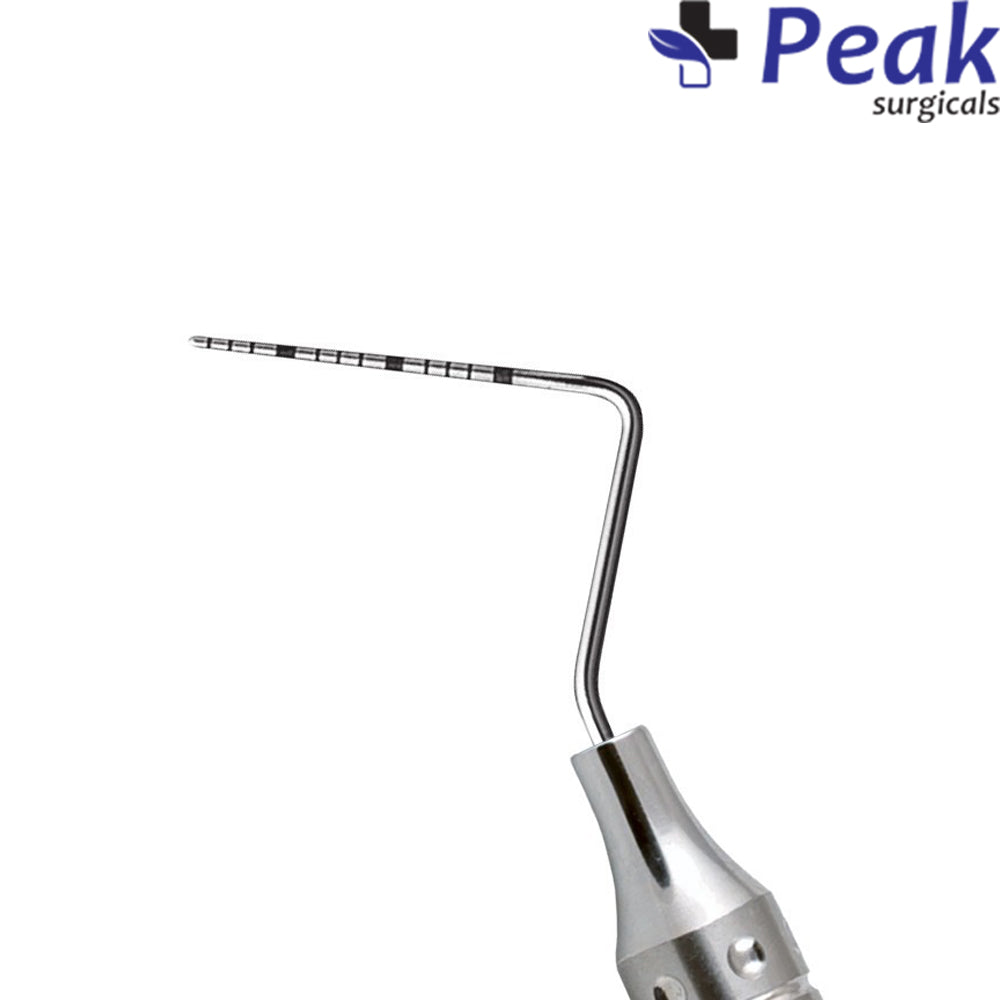
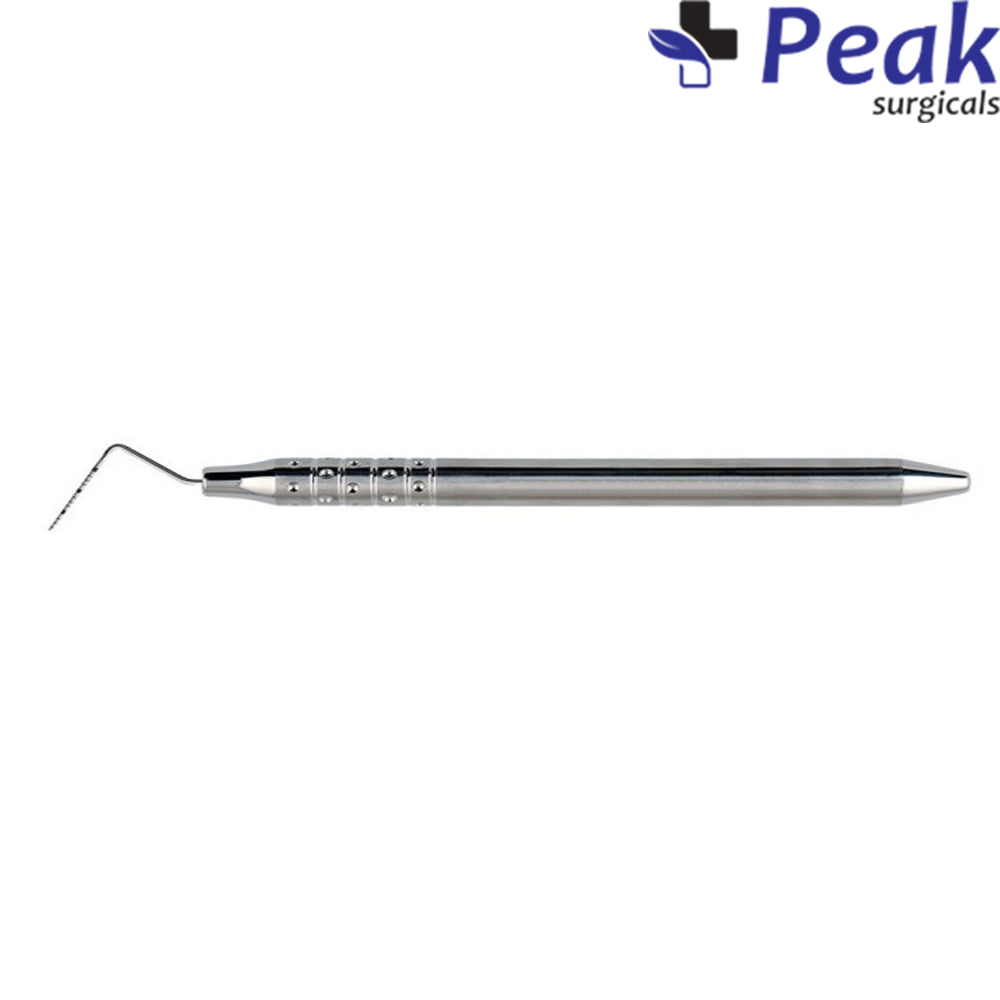
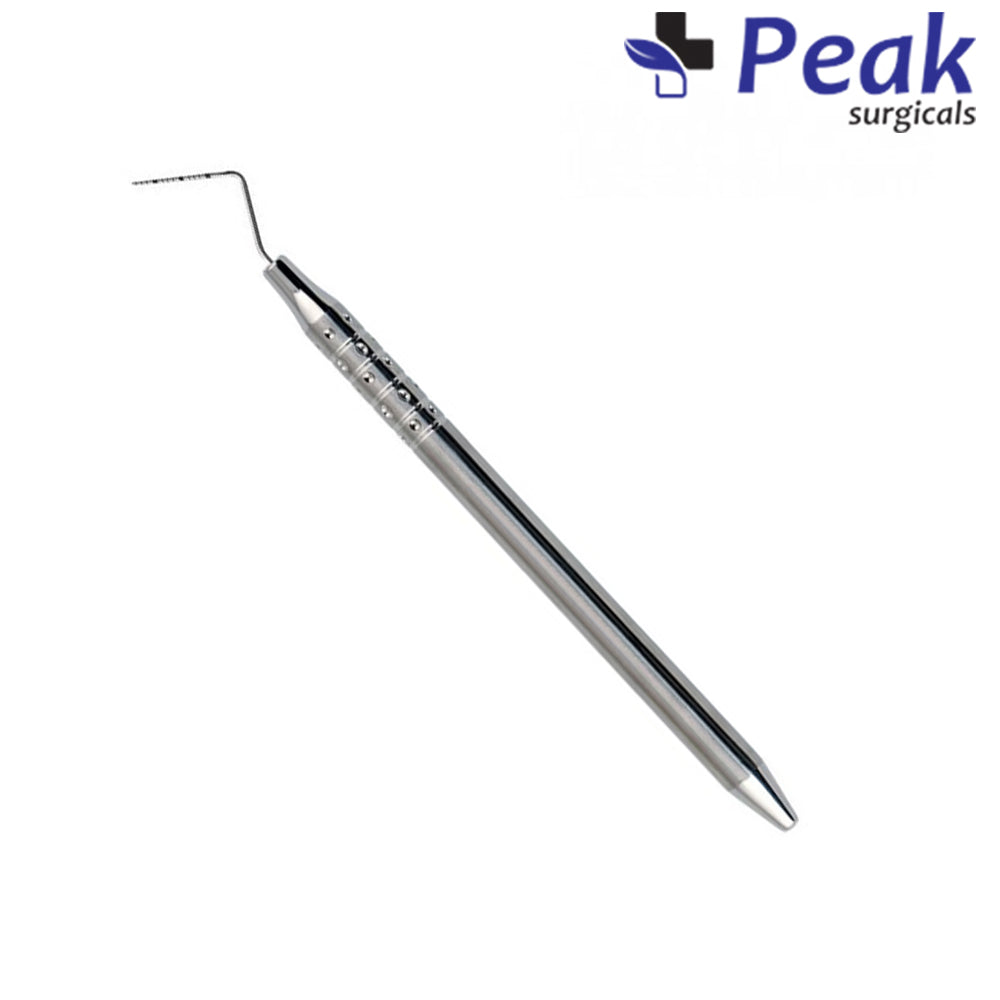
Probe UNC15 University of North Carolina, SKU PS-D-047, is a calibrated dental diagnostic instrument made from German stainless steel for periodontal pocket-depth measurement, gingival sulcus assessment, recession recording, and clinical attachment level documentation. The product page lists size selections of 1 mm, 2 mm, 3 mm, 5 mm, 7 mm, 8 mm, 9 mm, and 10 mm, with color-coded black markings in the 1-2-3-5-7-8-9-10 sequence and an ergonomically shaped 10 mm handle. The visible working end has a slim angled shank, rounded terminal tip, and banded scale that allows the operator to walk the probe along root surfaces with controlled tactile pressure. Periodontists, dental surgeons, hygienists, implant clinicians, and general dentists use this instrument during comprehensive periodontal examination, six-point full-mouth charting, scaling and root planing review, periodontal maintenance, peri-implant assessment, orthodontic clearance, crown-lengthening planning, flap debridement evaluation, and restorative margin inspection in dental clinics, hospitals, teaching departments, and procurement-managed examination kits.
The working end is a narrow measuring rod intended to enter the gingival sulcus parallel to the long axis of the tooth. A rounded terminal tip contacts the base of the pocket without a cutting edge, which allows repeated site-by-site recording while reducing abrasion of inflamed epithelium. The offset shank keeps the handle away from the crown and occlusal plane, giving the operator a clearer line of sight in anterior sextants, premolar embrasures, and posterior molar surfaces. Black calibration bands interrupt the reflective steel surface so the clinician can read the depth at the gingival margin without excessive wrist rotation. The 10 mm handle supports a modified pen grasp and controlled rolling between thumb, index finger, and middle finger. Because the instrument has no hinge, ratchet, spring, or box lock, its mechanism is based on fixed shank geometry, tactile adaptation, and direct visual interpretation of the color-coded scale during intraoral measurement. The slender neck also helps the tip remain parallel in narrow interproximal spaces instead of levering against the crown.
During a full periodontal chart, the clinician positions the tip at distobuccal, midbuccal, mesiobuccal, distolingual, midlingual, and mesiolingual sites, then records pocket depth with gingival recession to calculate attachment level. In nonsurgical periodontal therapy, the probe helps identify bleeding on probing, suppuration, residual pocketing, furcation involvement on multirooted teeth, and areas requiring subgingival debridement. In periodontics, measurements guide incision planning before open flap debridement, osseous recontouring, guided tissue regeneration, connective tissue grafting, free gingival grafting, and crown lengthening. In implant maintenance, gentle probing around the peri-implant sulcus documents depth, bleeding, exudate, and mucosal stability around abutments. The Probe UNC15 University of North Carolina is also used before orthodontic treatment, restorative margin review, hygiene recall, and referral documentation, where reproducible millimeter readings help align chairside findings with radiographs and periodontal records. In teaching clinics, the same sequence trains students to compare baseline values with postoperative and maintenance visits, while procurement teams can place it consistently in diagnostic trays used across several operatories.
The 1 mm, 2 mm, and 3 mm selections support shallow sulcus readings during routine adult examination, pediatric screening, post-prophylaxis review, and gingival margin checks. The 5 mm reference is important when documenting early periodontal pocketing, localized inflammatory response, and sites that require root surface instrumentation. The 7 mm reading assists evaluation of deeper defects on premolars and molars, especially interproximal sites where radiographs are reviewed for crestal bone loss and angular defects. The 8 mm and 9 mm markings are used when recording advanced disease, persistent pockets after nonsurgical therapy, or recurrent inflammation around posterior segments. The 10 mm scale selection supports documentation before periodontal flap access, regenerative treatment planning, and specialist referral. Selection is based on the deepest site being assessed, visibility of the black band at the gingival margin, access to the tooth surface, and whether the measurement is being recorded for baseline charting, maintenance comparison, or surgical planning. These references also help standardize notes across clinicians in multi-chair practices.
German stainless steel construction gives the slim measuring end adequate rigidity for controlled sulcus entry while resisting corrosion during repeated cleaning and sterilization cycles. A smooth polished finish supports inspection after decontamination and reduces retention of blood, calculus debris, and polishing paste on the handle and shank. The black markings create contrast against enamel, root surfaces, and gingival tissue under operatory light, which helps clinicians record measurements quickly during full-mouth charting. Reusable processing typically includes chairside transfer, enzymatic cleaning, ultrasonic decontamination or washer-disinfector exposure, rinsing, drying, pouching, steam autoclave sterilization, and clean storage before the next appointment. CE marking and ISO 13485 support procurement documentation for clinics, hospitals, distributors, and dental schools that require controlled manufacturing records. FDA-compliant purchasing context is relevant for U.S. buyers adding Class I reusable diagnostic instruments to periodontal examination sets, hygiene cassettes, implant maintenance packs, and multi-chair replacement stock. These procurement details assist receiving teams when matching ordered goods to sterile processing and inventory records.
| SKU | PS-D-047 |
|---|---|
| Product Name | Probe UNC15 University of North Carolina |
| Price | $11.00 |
| Size/Gauge Variants | 1 mm, 2 mm, 3 mm, 5 mm, 7 mm, 8 mm, 9 mm, 10 mm size selections with black 1-2-3-5-7-8-9-10 markings |
| Instrument Category | Dental diagnostic periodontal probe |
| Procedure | Periodontal examination, six-point full-mouth charting, pocket-depth measurement, clinical attachment level recording, scaling and root planing review, periodontal maintenance, peri-implant assessment |
| Material | German stainless steel |
| Finish | Smooth polished stainless steel with black color-coded measurement bands |
| Sterilization | Reusable instrument suitable for cleaning, ultrasonic decontamination, washer-disinfector workflow, pouching, and steam autoclave sterilization |
| Instrument Classification | Class I reusable dental diagnostic instrument |
| Reusable | Yes |
| Certifications | CE marked, ISO 13485 supported, FDA-compliant procurement standard |
| Warranty | 1-year warranty for manufacturing defects with 30-day return support for unused, non-customized instruments |
| MOQ | 1 piece for standard online orders |
| OEM / Custom Orders | Available for distributor supply, institutional branding, bulk purchasing, and customized packaging programs |
| After-Sale Service | Order support, product guidance, warranty review, and replacement assistance for eligible manufacturing-related concerns |
How is this instrument different from a Williams periodontal probe?
A Williams periodontal probe is the closest clinical alternative because it is also used for sulcus and pocket-depth recording. The Williams pattern is commonly associated with the 1-2-3-5-7-8-9-10 marking sequence used for routine periodontal screening. The Probe UNC15 University of North Carolina is selected when the clinician wants the UNC pattern naming and a color-coded working end for structured charting. Its angled shank and rounded terminal tip allow the same controlled walking motion around root surfaces. The main difference for buyers is the pattern designation, handle design, visual banding, and intended placement in periodontal diagnostic sets.
How should the listed millimeter selections be used during charting?
The 1 mm, 2 mm, and 3 mm readings are used for healthy sulcus checks, gingival margin review, and maintenance records. The 5 mm reference is clinically important when documenting early pocket formation or sites requiring subgingival instrumentation. The 7 mm mark assists evaluation of deeper interproximal defects around premolars and molars. The 8 mm and 9 mm readings are used for advanced periodontal breakdown, residual pockets, and recurrent inflammation after nonsurgical therapy. The Probe UNC15 University of North Carolina supports 10 mm recording before flap access, regenerative planning, or specialist referral documentation.
What do CE, ISO 13485, and FDA compliance mean for procurement?
CE marking supports conformity documentation for international dental instrument purchasing. ISO 13485 indicates that manufacturing is managed under a medical device quality framework used for controlled production, inspection, and traceability. FDA-compliant procurement context is relevant for U.S. clinics and hospitals purchasing reusable Class I dental diagnostic instruments. The Probe UNC15 University of North Carolina can be recorded in periodontal diagnostic instrumentation files for tenders, distributor catalogs, and hospital supply records. These details support receiving inspection, quality documentation, and inventory approval for clinics, dental schools, and multi-location practices.
How does the angled shank help the operator control measurement?
The angled shank is the main control feature because it offsets the handle from the tooth surface and improves access to interproximal and posterior sites. During use, the clinician holds the 10 mm handle in a modified pen grasp and walks the rounded tip along the root surface. The offset neck helps the working end remain parallel to the long axis of the tooth while the black markings are read at the gingival margin. The instrument has no ratchet, spring, pivot, or locking mechanism, so control depends on finger rest, light pressure, and shank orientation. The Probe UNC15 University of North Carolina is handled by tactile feedback rather than mechanical activation.
Is this probe suitable for clinic, hospital, and distributor supply?
Dental clinics can place this instrument in periodontal examination trays, hygiene cassettes, implant maintenance kits, and student diagnostic sets. Hospital dental departments can process it through standard cleaning, ultrasonic decontamination, pouching, and steam sterilization workflow. Distributors can source it for replacement stock, bulk procurement, and institutional supply programs. OEM and custom order requests support branded packaging and recurring purchasing needs for procurement teams. The reusable stainless steel design makes the Probe UNC15 University of North Carolina suitable for routine chairside inventory where inspection, traceability, and sterilization turnaround are required.
