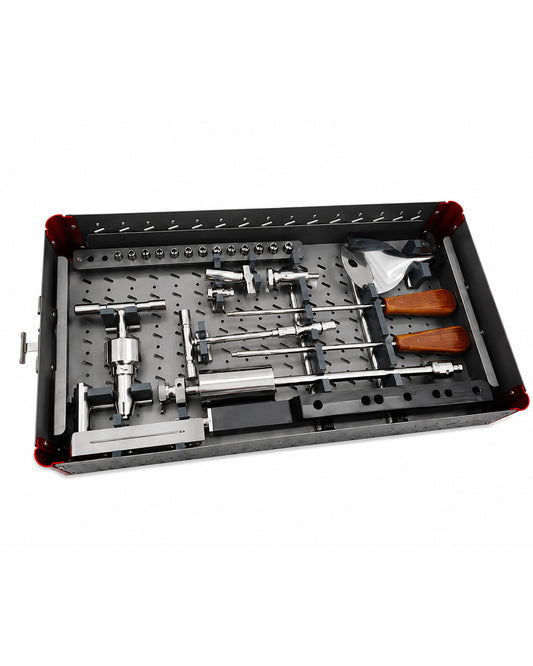
Interlocking Nails
Interlocking nails are intramedullary rods inserted through the hollow center of a long bone to stabilize a fracture, with screw holes at both the proximal and distal ends that let locking screws pass through the nail and into the bone. That locking mechanism controls rotation and axial length at the fracture site — something a plain, unlocked nail can't do on its own — making interlocking nails the standard fixation choice for femoral, tibial, and humeral shaft fractures.
What's in This Collection
For the femur, the range includes the Retrograde Femoral Nail (180mm–360mm, inserted from the knee upward), the Proximal Femoral Nail (PFN), and the PFNA-II Proximal Femoral Nail Antirotation (available in long, left/right configurations), which uses a helical blade rather than a screw for rotational control in osteoporotic bone. RECON Nails (left/right) address combined femoral neck and shaft fractures in a single implant. For the upper arm, the Humeral Nail (Unreamed) covers humeral shaft fixation without canal reaming.
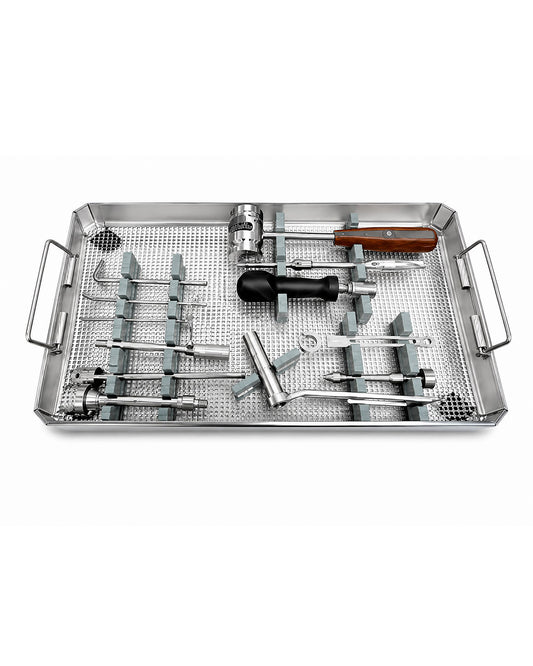
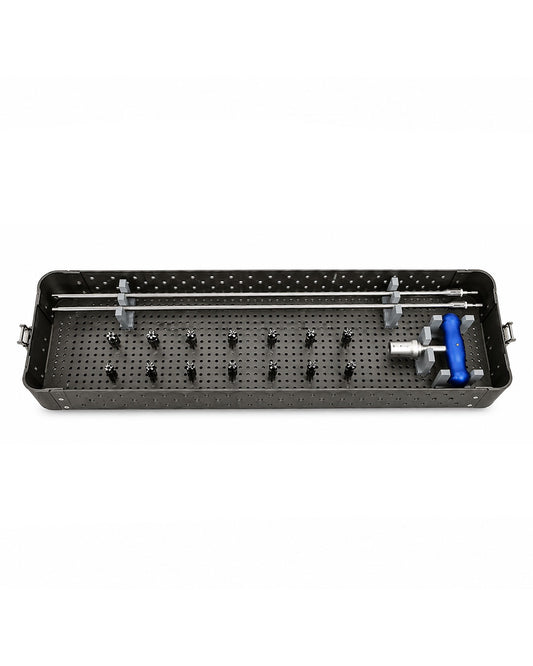
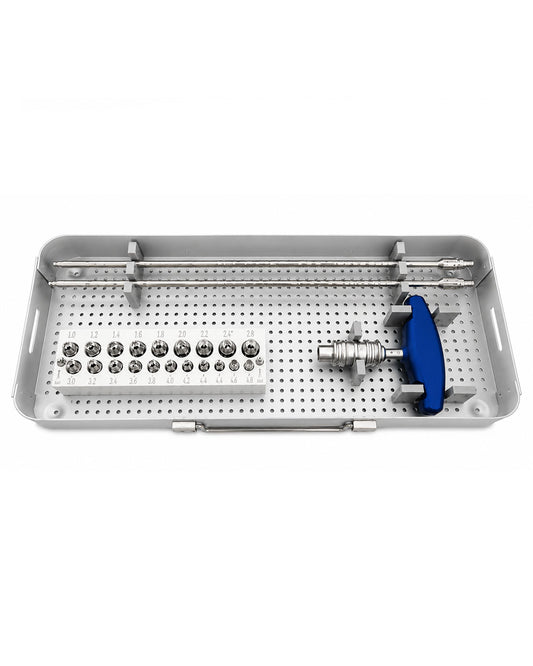
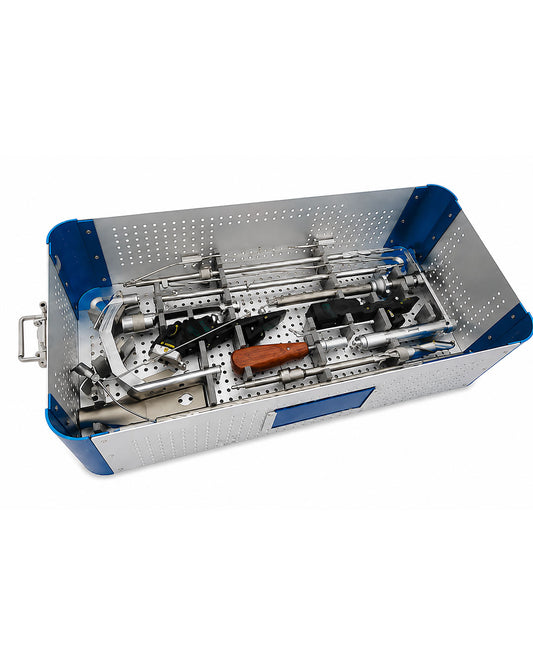
Supporting hardware includes locking bolts (Ø5mm, 6mm, and 8mm, self-tapping and cannulated), cephalic and blade screws for PFNA-II fixation, inner screws, and end caps sized to match each nail system (standard, PFNA-II, and PFN/Recon variants) — these seal the nail's proximal end and, on some systems, allow for dynamic or static locking configuration. For canal preparation, the collection includes flexible reamer sets (7.5mm–15mm heads, including nitinol and laser-cut variants) used to prepare the medullary canal to the correct diameter before nail insertion.
Choosing the Right Nail
Nail selection follows fracture location and pattern: a retrograde femoral nail suits distal femoral shaft fractures accessed from the knee, a PFN or PFNA-II suits proximal femoral fractures where a separate cephalic screw or blade provides femoral neck fixation, and a RECON nail addresses cases where both the neck and shaft need fixation from one implant. Reamer diameter should be selected to match canal size, with reaming increasing canal diameter incrementally until the nail's fit is secure.
Related Products
Pair these nails with Kirschner Wires for guide-wire placement, Bone Drills and Screw Holding Forceps, Taps & Countersinks for insertion support, and Headless Compression / Cannulated Screws for adjunct fixation. For hip-specific fixation using a different mechanism, see DHS/DCS & Pediatric. Browse the full Orthopedic Implants catalog for the complete range.
Ordering
Peak Surgicals manufactures interlocking nail systems for hospitals and distributors worldwide, with international shipping — contact our team for current stock on complete instrument sets and wholesale pricing.
Frequently Asked Questions
What's the difference between a PFN and a PFNA nail?
A PFN uses a screw for femoral neck fixation, while a PFNA (Antirotation) uses a helical blade instead, which compacts surrounding bone on insertion — often preferred in osteoporotic bone where screw purchase may be weaker.
What is a RECON nail used for?
A RECON (reconstruction) nail addresses combined femoral neck and shaft fractures with a single implant, rather than requiring separate fixation for each fracture location.
What's the difference between an antegrade and retrograde femoral nail?
An antegrade nail is inserted from the hip downward; a retrograde femoral nail is inserted from the knee upward, often preferred for distal femoral shaft fractures or cases where hip access is complicated.
Why does canal reaming matter before nail insertion?
Reaming enlarges the medullary canal to match the nail's diameter, improving the nail's fit and stability within the bone; flexible reamers allow this to be done while following the natural curve of the canal.
Is "Recon Nail" a Synthes-specific product?
No — "recon nail" and "PFN/PFNA" are generic terms used across the orthopedic implant industry for this type of fixation. Peak Surgicals manufactures its own line under these generic descriptive names, separate from any specific branded system such as Synthes' Pangea system.