
Featured Collection
Your cart
Featured Collection

PEAK SURGICAL
SKU:PS-2969
Couldn't load pickup availability


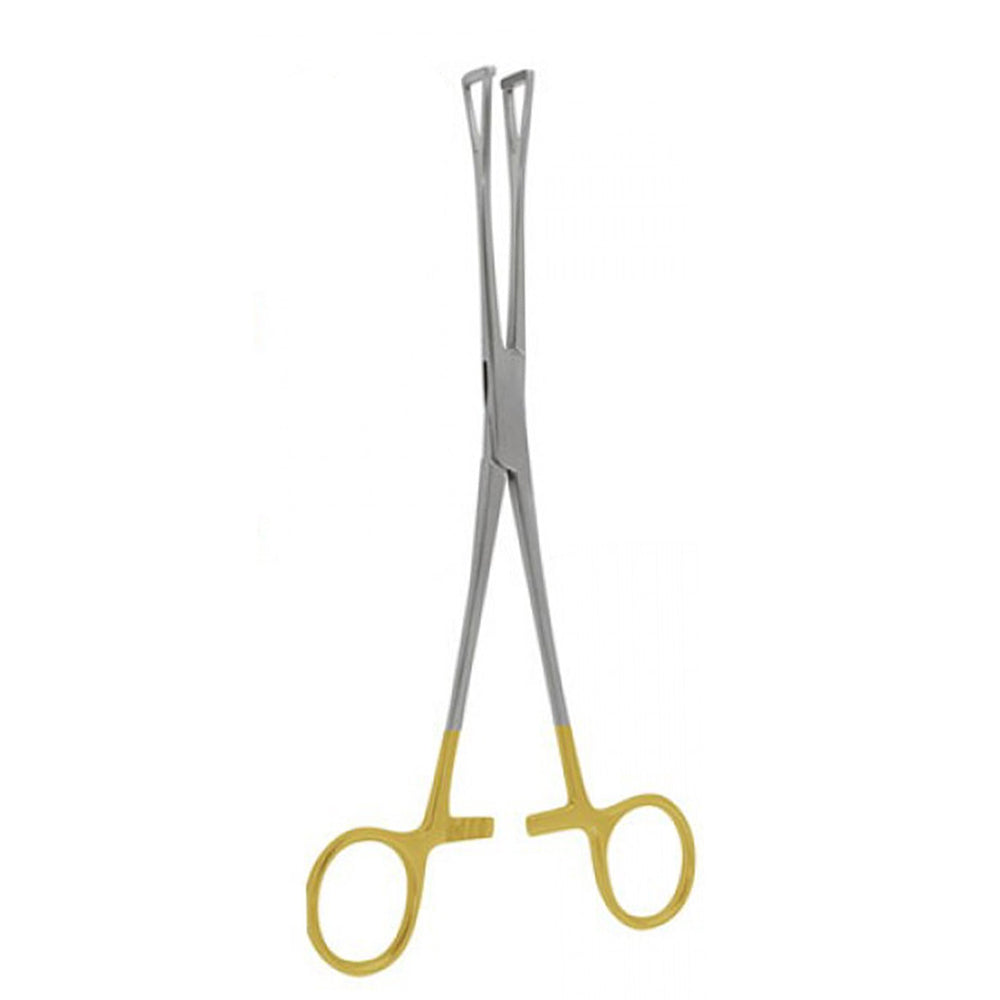
Duval Intestinal Forceps, SKU PS-2969, is a 9 inch 23 cm bowel-holding forceps manufactured from German stainless steel for controlled grasping of intestinal wall, omental tissue, gastric edge, and soft abdominal structures during open gastrointestinal procedures. The available size variant is 9 inch 23 cm model PS-2969, configured with triangular fenestrated jaws, serrated gripping faces, straight shanks, a box-lock pivot, ring handles, gold-tone handle finish, and a ratchet locking mechanism. The triangular Duval jaw is used during small bowel resection, colectomy exposure, gastrectomy edge handling, enterotomy closure, intestinal anastomosis preparation, appendectomy field control, exploratory laparotomy, adhesiolysis, abdominal tumor mobilization, and veterinary bowel surgery. Its wide atraumatic jaw frame distributes pressure across a larger contact area than narrow clamp patterns while preserving visibility through the open jaw window. General surgeons, colorectal surgeons, gastrointestinal surgeons, gynecologic surgeons, veterinary surgeons, operating room teams, hospitals, clinics, distributors, and procurement departments use this instrument where bowel tissue requires stable presentation, traction, and temporary holding without cutting or crushing action.
The Duval pattern works through a triangular distal jaw that encloses tissue within a broad open frame rather than compressing it between narrow clamp tips. This geometry supports atraumatic bowel handling because force is distributed across the serrated jaw face while the fenestration reduces unnecessary surface compression. The serrated inner surface increases purchase on moist serosa, omentum, sponge material, and soft tissue edges during traction. Straight shanks transmit handle movement directly toward the working end, giving predictable jaw alignment during open abdominal access. The box-lock pivot stabilizes both arms so the triangular ends meet evenly as the surgeon closes the ring handles. The ratchet allows staged locking when an assistant must maintain exposure, hold a bowel edge, or keep an operative sponge in place during suturing, suctioning, or hemostatic work. Gold-tone rings improve tray recognition during instrument counts and help separate the forceps from plain stainless hemostats. The 23 cm length gives adequate reach across laparotomy wounds while keeping hand control responsive during bowel manipulation.
During small bowel resection, the forceps can elevate jejunal or ileal wall after mobilization so the surgeon can inspect viability, define the resection margin, and prepare the bowel for division. In colectomy exposure, the triangular jaw can hold the colonic wall or adjacent omentum while the operative team maintains access around the cecum, transverse colon, sigmoid colon, or rectosigmoid region. During enterotomy repair, the broad grasping end supports edge presentation while sutures are placed in a controlled sequence. In gastrectomy or gastric wedge work, the instrument helps stabilize the stomach edge without applying a cutting grip. During appendectomy, it can assist with cecal pole handling or sponge positioning when the operative field requires temporary traction. Gynecologic surgeons may select the same pattern during pelvic laparotomy when bowel loops need gentle relocation away from adnexal or uterine dissection. Veterinary teams use the 23 cm model for intestinal foreign body surgery, bowel resection, and abdominal exploration in small and medium animal procedures.
The 9 inch 23 cm model PS-2969 is selected when the operating field requires more reach than compact bowel forceps while still allowing ring-handle precision. In adult laparotomy, this length keeps the hand outside the deepest part of the incision and places the triangular jaw at the intestinal segment being presented. The jaw profile is suited for bowel wall and omental handling because its broad frame reduces focal pressure compared with narrow serrated forceps. For colorectal work, the 23 cm shaft supports access around the sigmoid colon, cecum, and mobilized transverse colon. In upper abdominal procedures, the length helps stabilize gastric or omental tissue without forcing the surgeon’s hand into the wound. For veterinary surgery, the same configuration gives practical reach during abdominal work in medium animal patients while preserving tactile control. Hospitals and distributors can use the single 23 cm option as a replacement item for general surgery sets, gastrointestinal trays, colorectal packs, gynecology laparotomy instruments, and veterinary abdominal kits.
German stainless steel gives the instrument the structural rigidity, corrosion resistance, and reusable durability required for repeated bowel-holding use. The material supports stable jaw alignment at the box lock, maintains serration definition, and tolerates standard hospital cleaning and steam sterilization cycles. A satin steel surface reduces reflection under operating room lights and allows visual inspection of the triangular jaws, serrated faces, shanks, pivot, ratchet teeth, and ring handles before packaging. The reusable design fits central sterile processing workflows that include point-of-use cleaning, manual brushing of the jaw serrations and hinge, ultrasonic cleaning where used, washer-disinfector processing, drying, inspection, and autoclave sterilization. The fenestrated jaw and ratchet require focused cleaning because tissue residue can collect around the open frame and lock teeth. CE marking and ISO 13485 alignment support regulated purchasing documentation for hospitals, clinics, and distributors. FDA-compliant procurement support helps buyers serving United States healthcare channels maintain reusable surgical instrument records for general surgery, colorectal, gynecology, and veterinary supply programs.
| SKU | PS-2969 |
|---|---|
| Product Name | Duval Intestinal Forceps |
| Price | $15.40 |
| Size/Gauge Variants | 9 inch 23 cm model PS-2969 |
| Instrument Category | General surgery intestinal grasping forceps |
| Procedure | Small bowel resection, colectomy exposure, gastrectomy edge handling, enterotomy closure, intestinal anastomosis preparation, appendectomy field control, exploratory laparotomy, adhesiolysis, veterinary bowel surgery |
| Material | German stainless steel |
| Finish | Satin steel with gold-tone ring handle finish |
| Sterilization | Reusable and autoclavable after cleaning, drying, inspection, and sterile packaging |
| Instrument Classification | Reusable non-powered intestinal holding forceps |
| Reusable | Yes |
| Certifications | CE & ISO 13485 with FDA-compliant procurement support |
| Warranty | 30-day money-back support |
| MOQ | 1 unit |
| OEM / Custom Orders | Available for distributor, hospital, clinic, and institutional purchasing programs |
| After-Sale Service | Order support, dispatch tracking, replacement assistance, and procurement documentation support |
How does Duval Intestinal Forceps differ from Babcock Forceps?
Duval Intestinal Forceps uses a triangular fenestrated jaw with a broad serrated gripping face. Babcock Forceps usually has a rounded atraumatic grasping profile used for tubular tissue and soft structure handling. The Duval pattern provides a wider, flatter contact area that is useful when bowel wall, omentum, or sponge material must be held for exposure. Babcock Forceps is often selected for tubular structures where encircling support is preferred. Duval Intestinal Forceps gives a more defined tissue presentation point during open abdominal work. The 23 cm length also provides greater reach than shorter general tissue forceps in adult laparotomy fields.
When is the 23 cm size selected for intestinal procedures?
The 23 cm Duval Intestinal Forceps is selected when the surgeon needs reach across an open abdominal incision without sacrificing ring-handle control. In small bowel resection, the length supports handling of mobilized jejunum or ileum while the operative segment is inspected. In colectomy, the same size helps present colonic wall around the cecum, transverse colon, sigmoid colon, or rectosigmoid field. During enterotomy closure, the triangular jaw can stabilize the bowel edge while sutures are placed. In upper abdominal procedures, the 23 cm frame assists with gastric edge or omental traction. Veterinary surgeons can use this length for bowel exploration and intestinal repair in small and medium animal abdominal surgery.
What do CE, ISO 13485, and FDA-compliant procurement mean for this product?
Duval Intestinal Forceps is supplied for healthcare purchasing workflows that require traceable documentation. CE marking supports regulated distribution where European conformity documentation is required. ISO 13485 alignment indicates that the manufacturing quality system follows a medical device framework. FDA-compliant procurement support helps buyers serving United States healthcare channels maintain records for reusable surgical instruments. Hospitals can use these references during vendor onboarding, internal product review, and recurring supply approval. Distributors can include the instrument in general surgery, colorectal, gynecology, gastrointestinal, and veterinary surgical supply programs.
How is the ratchet and box-lock mechanism used during surgery?
The ratchet on this forceps provides staged closure between the ring handles. After the triangular jaw is placed on bowel wall, omentum, or sponge material, the surgeon closes the handles until the required grip is achieved. The lock maintains tissue presentation during suctioning, suturing, inspection, or assistant-held exposure. The box-lock pivot keeps the arms aligned so the distal jaws close evenly under repeated use. This alignment helps the serrated faces maintain contact without side-to-side jaw shift. Before release, the ring handles are moved to disengage the ratchet, allowing the jaw to open in a controlled manner.
How should hospitals, clinics, and distributors manage reprocessing and supply?
Duval Intestinal Forceps is reusable and suited for standard central sterile processing workflows. After surgery, the triangular jaws, serrations, fenestration, pivot, and ratchet teeth require prompt cleaning preparation. The instrument can then be processed through validated cleaning, drying, inspection, sterile packaging, and steam autoclave cycles. Hospitals can stock the 23 cm model as a replacement item for general surgery, colorectal, gynecology, gastrointestinal, and veterinary trays. Clinics and distributors can order single units or include the forceps in custom abdominal instrument sets. Procurement teams receive order support, tracking assistance, replacement handling, and documentation support for institutional purchasing.


