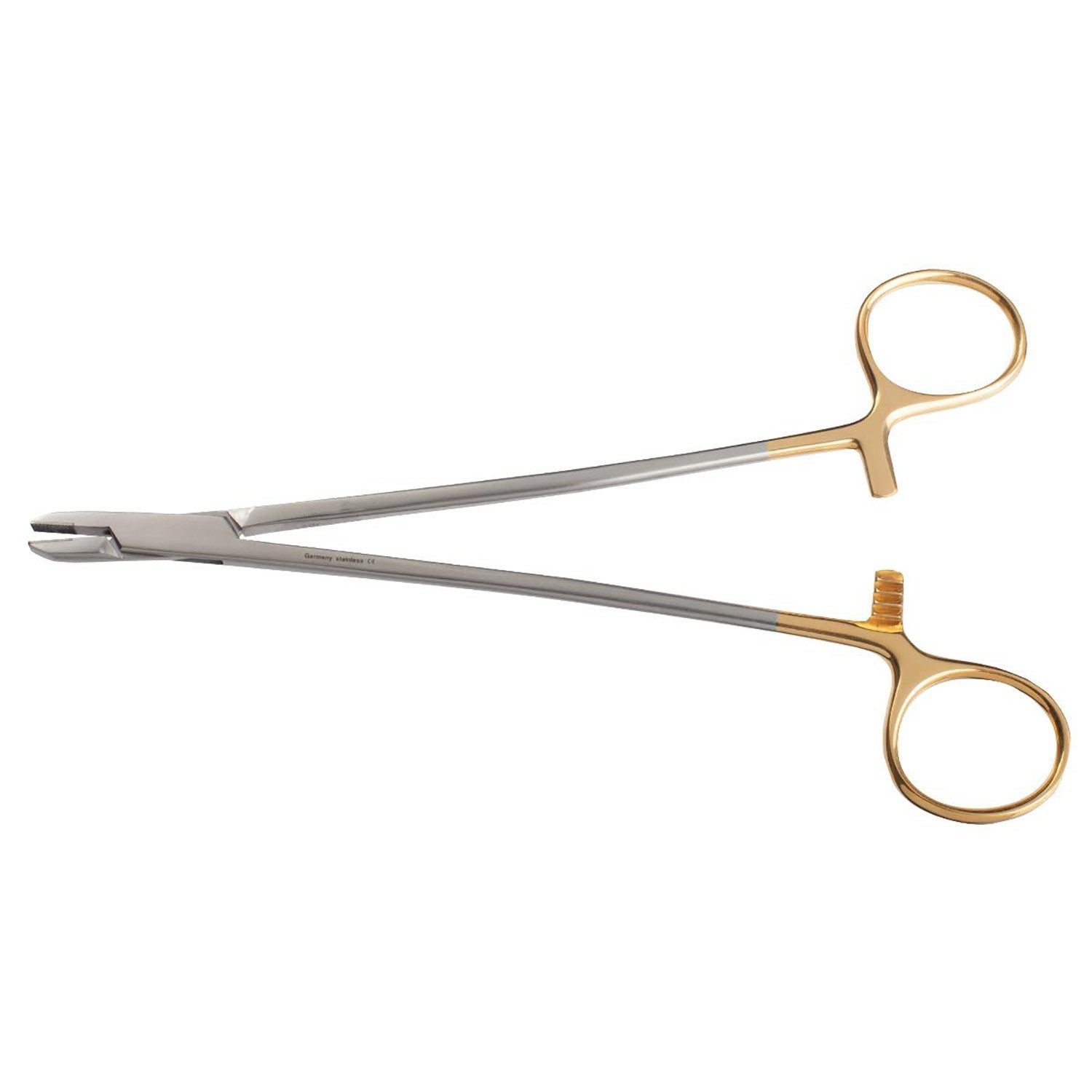
Featured Collection
Your cart
Featured Collection

PEAK SURGICAL
SKU:PS-2963
Couldn't load pickup availability
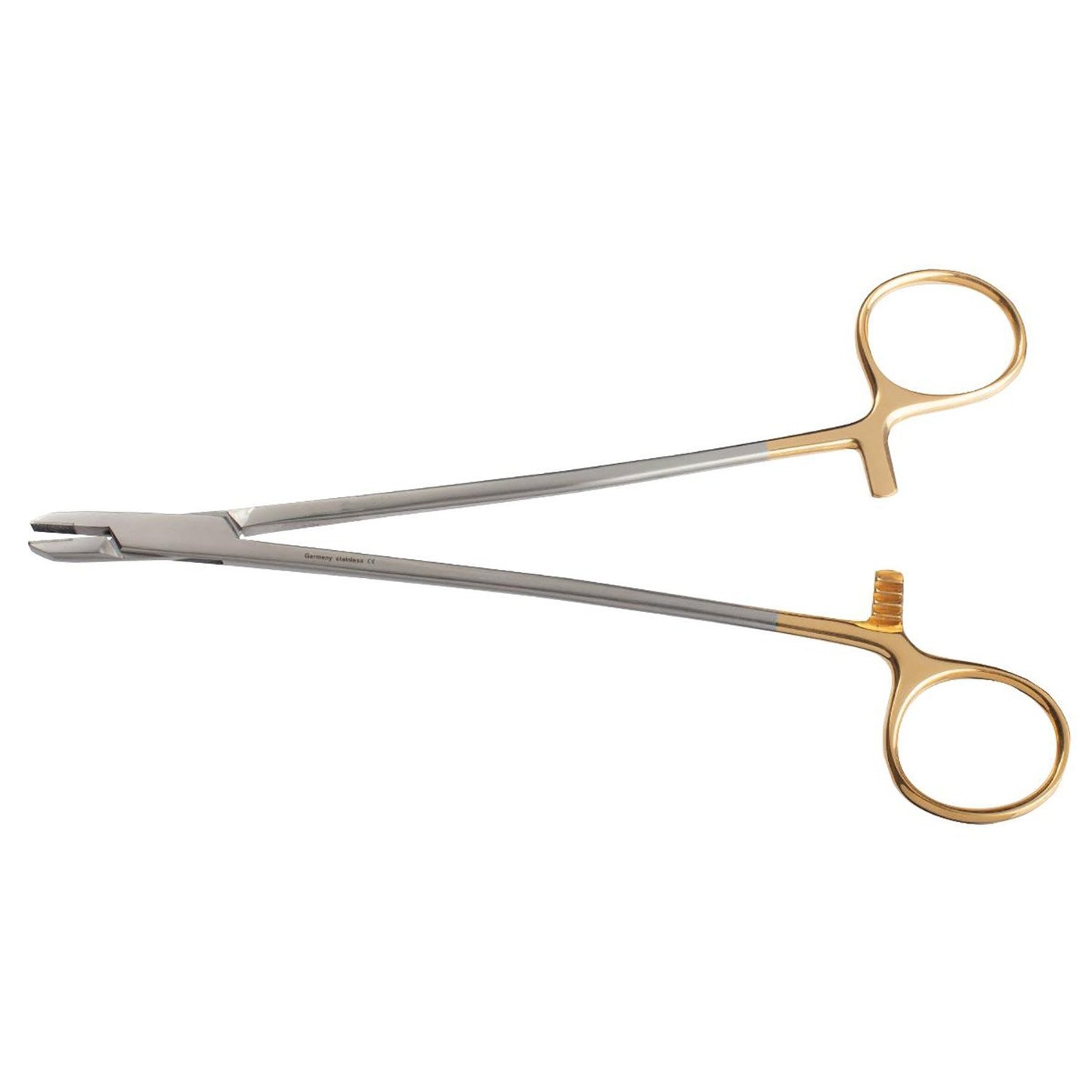
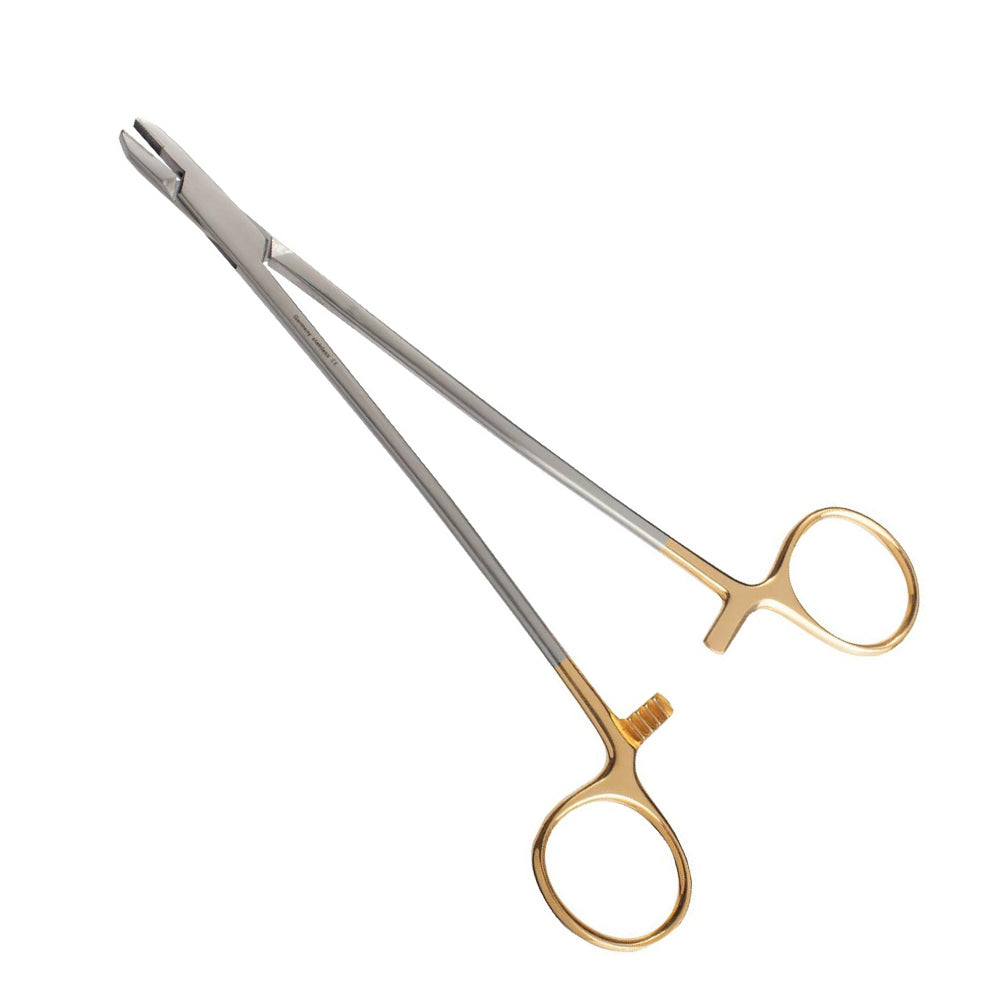
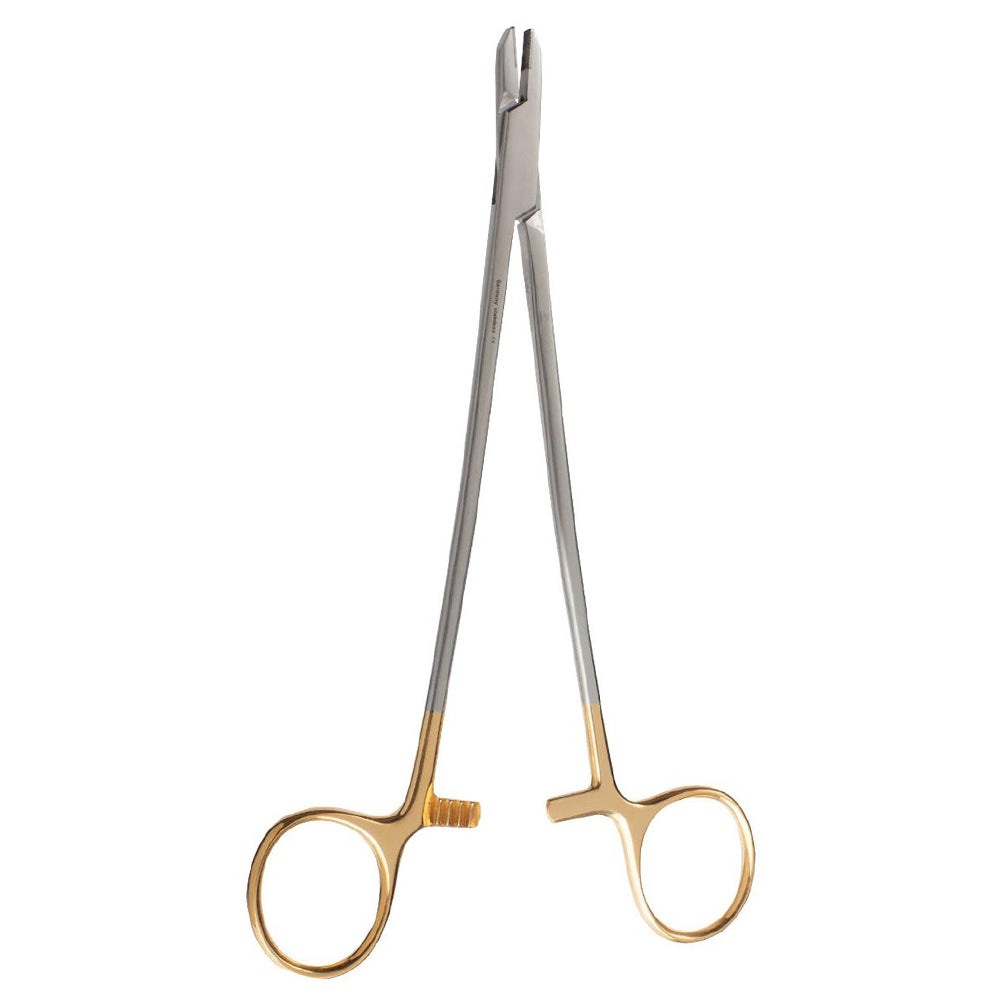
Cooley Baumgarten Wire Twister, SKU PS-2963, is a 7.8 inch 20 cm surgical wire-twisting forceps manufactured from German stainless steel for controlled manipulation of stainless steel fixation wire in thoracic, cardiovascular, orthopedic, and veterinary procedures. The available size variant is 7.8 inch 20 cm model PS-2963, configured with short gripping jaws, straight shanks, a box-lock pivot, ring handles, and a ratchet locking mechanism. Its needle-holder style profile allows the surgeon to grasp, tension, rotate, and secure wire during median sternotomy closure, thoracotomy rib approximation, chest wall fixation, orthopedic cerclage wiring, patellar tension band wiring, olecranon fixation, mandibular fracture stabilization, and veterinary long-bone repair. The compact jaw length concentrates grip at the working end, while the 20 cm frame gives hand clearance around deep operative fields. Cardiothoracic surgeons, orthopedic surgeons, oral and maxillofacial surgeons, veterinary surgeons, hospitals, surgical centers, trauma units, and procurement teams use this instrument where wire fixation requires firm purchase, controlled rotation, and repeatable locking handle response.
The Cooley Baumgarten pattern works through a straight ring-handle frame that transfers rotational force from the hand to a short, robust jaw profile. The jaw geometry is intentionally compact so the wire can be held close to the pivot axis, reducing distal flexion during twisting. Serrated inner gripping surfaces engage stainless steel surgical wire and limit slippage while the operator rotates the handle to form an even twist. The box-lock pivot maintains alignment between both arms, allowing the distal tips to meet consistently during traction, rotation, and release. A ratchet lock between the finger rings provides staged closure, keeping wire tension stable while the surgeon repositions the hand or assistant controls exposure. The gold-tone handle area improves visual identification in a crowded tray and separates the instrument from standard hemostats during counting. The 20 cm length provides working distance for sternotomy and orthopedic fixation without making the distal end difficult to control in confined fields.
During median sternotomy closure, Cooley Baumgarten Wire Twister is used after sternal wires are passed through or around the sternum and aligned for approximation. The jaws grip both wire limbs, the ratchet stabilizes the hold, and the surgeon rotates the instrument to bring the sternal edges into controlled contact. In thoracotomy closure, the same mechanism assists with rib approximation when wire fixation is selected for chest wall stability. In orthopedic cerclage, the short jaw can secure wire around long-bone fragments during fracture reduction, especially when a controlled twist is required before cutting and bending the wire end. For patellar tension band wiring or olecranon fixation, the instrument helps form a compact twist while the reduction is maintained by forceps or clamps. In oral and maxillofacial surgery, it can support mandibular wire stabilization when rigid plate fixation is not the selected workflow. Veterinary surgeons use the 20 cm model during long-bone cerclage, mandibular repair, and thoracic closure in small and medium animal cases.
The 7.8 inch 20 cm model PS-2963 is selected when the surgeon needs a balance of reach, torque, and tactile control. In sternotomy closure, this length keeps the hand outside the immediate sternal field while allowing the jaw to remain close to the wire twist point. In orthopedic fixation, the same size provides enough leverage to rotate stainless steel cerclage wire without excessive handle travel. The short jaw is chosen for direct wire purchase rather than broad soft tissue grasping, making it different from general forceps patterns used for clamping vessels or holding dressings. Straight shanks allow predictable force transfer along the axis of rotation, which is important when the twist must remain compact and centered. The ratchet is useful when temporary tension must be maintained before the final wire turns are completed. For hospitals and distributors, a single 20 cm configuration supports cardiovascular, trauma, maxillofacial, and veterinary tray requirements without adding multiple length variants to inventory.
German stainless steel gives the Cooley Baumgarten Wire Twister the rigidity and corrosion resistance required for repeated wire-handling use. The instrument must withstand torsional loading at the jaws, repetitive ratchet engagement, and repeated exposure to cleaning and sterilization cycles. A satin steel surface reduces glare under operating room lighting and allows visual inspection of the jaw serrations, box lock, ratchet teeth, and shank alignment. The reusable construction supports standard central sterile processing, including manual pre-cleaning, ultrasonic cleaning where used, washer-disinfector processing, drying, inspection, packaging, and steam autoclave sterilization. The pivot and ratchet require focused brushing because metallic wire debris, blood, and protein residue can collect in moving interfaces. CE marking and ISO 13485 alignment support regulated procurement documentation for hospitals, clinics, and distributors. FDA-compliant procurement support assists buyers serving United States surgical supply channels. This model is suitable for replacement in cardiothoracic sets, orthopedic wire fixation trays, maxillofacial packs, and veterinary surgical instrument inventories.
| SKU | PS-2963 |
|---|---|
| Product Name | Cooley Baumgarten Wire Twister |
| Price | $15.95 |
| Size/Gauge Variants | 7.8 inch 20 cm model PS-2963 |
| Instrument Category | Surgical wire twister and needle-holder pattern forceps |
| Procedure | Median sternotomy closure, thoracotomy rib approximation, orthopedic cerclage wiring, patellar tension band wiring, olecranon fixation, mandibular wire stabilization, veterinary long-bone repair |
| Material | German stainless steel |
| Finish | Satin steel with gold-tone ring handle finish |
| Sterilization | Reusable and autoclavable after cleaning, drying, inspection, and sterile packaging |
| Instrument Classification | Reusable non-powered surgical wire-twisting forceps |
| Reusable | Yes |
| Certifications | CE & ISO 13485 with FDA-compliant procurement support |
| Warranty | 30-day money-back support |
| MOQ | 1 unit |
| OEM / Custom Orders | Available for distributor, hospital, clinic, and institutional purchasing programs |
| After-Sale Service | Order support, dispatch tracking, replacement assistance, and procurement documentation support |
How does Cooley Baumgarten Wire Twister differ from a Mayo-Hegar Needle Holder?
Cooley Baumgarten Wire Twister is designed for gripping and rotating stainless steel surgical wire. A Mayo-Hegar Needle Holder is primarily used to hold curved suture needles during suturing. The Cooley Baumgarten pattern uses a short, firm jaw profile that concentrates purchase on wire limbs during torsional movement. Mayo-Hegar jaws are shaped for needle stability, not repeated wire twisting under higher rotational load. Cooley Baumgarten Wire Twister also gives better control when forming compact twists during sternotomy closure or orthopedic cerclage. The 20 cm length adds leverage for wire fixation while maintaining ring-handle control.
When is the 20 cm size selected for surgical wire fixation?
The 20 cm Cooley Baumgarten Wire Twister is selected when the surgeon needs working distance and rotational leverage in the same instrument. In median sternotomy closure, the length keeps the hand clear of the sternal wound while the jaw remains close to the wire crossing point. In thoracic closure, it provides enough reach for rib approximation without excessive handle bulk. In orthopedic cerclage, the 20 cm frame helps twist wire around femoral, humeral, or mandibular fixation sites under controlled tension. Veterinary surgeons can use the same size for long-bone cerclage and chest wall closure in small and medium animals. This configuration is practical for procedure trays that require one reusable wire-twisting option.
What do CE, ISO 13485, and FDA-compliant procurement mean for this instrument?
Cooley Baumgarten Wire Twister is supplied for clinical purchasing workflows that require quality documentation and traceable procurement support. CE marking supports regulated device distribution where European conformity documentation is required. ISO 13485 alignment indicates that the manufacturing quality system follows a medical device framework. FDA-compliant procurement support helps buyers serving United States healthcare channels maintain documentation for reusable surgical instruments. Hospitals can use these references during vendor onboarding, internal product review, and recurring supply approval. Distributors can include the instrument in cardiothoracic, orthopedic, maxillofacial, and veterinary surgical supply programs.
How is the ratchet and box-lock mechanism used during wire twisting?
The ratchet on Cooley Baumgarten Wire Twister provides staged closure between the ring handles. After the jaws engage the wire limbs, the surgeon closes the handle until the required grip is achieved. The lock maintains tension while the instrument is rotated to form the twist. The box-lock pivot keeps the arms aligned so the distal jaws meet evenly during loading and release. This alignment is important when wire must be tightened without slipping or crossing irregularly. After the twist is completed, the ratchet is disengaged before the jaws are opened and repositioned.
How should hospitals, clinics, and distributors handle sterilization and supply planning?
Cooley Baumgarten Wire Twister is reusable and suitable for standard central sterile processing workflows. After surgery, the jaws, serrations, pivot, and ratchet teeth require prompt cleaning preparation to remove blood, protein residue, and metallic wire debris. The instrument can then be processed through validated cleaning, drying, inspection, packaging, and steam autoclave cycles. Hospitals can add the 20 cm model to cardiothoracic, orthopedic, trauma, maxillofacial, and veterinary trays. Clinics and distributors can order it as a single replacement instrument or include it in custom wire fixation sets. Procurement teams receive order support, tracking assistance, replacement handling, and documentation support for institutional purchasing.