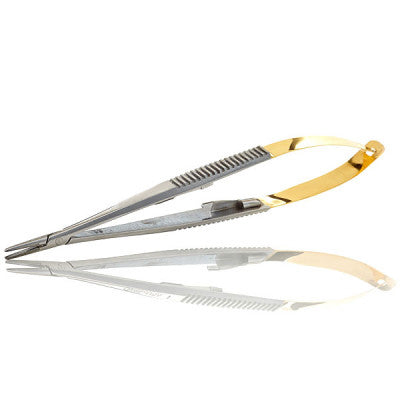
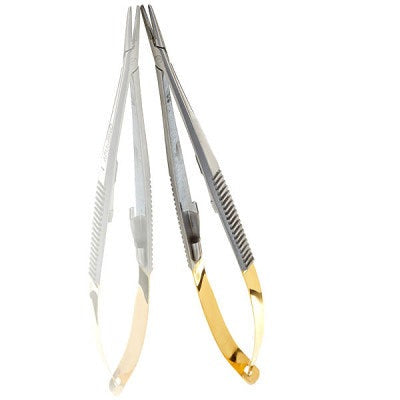
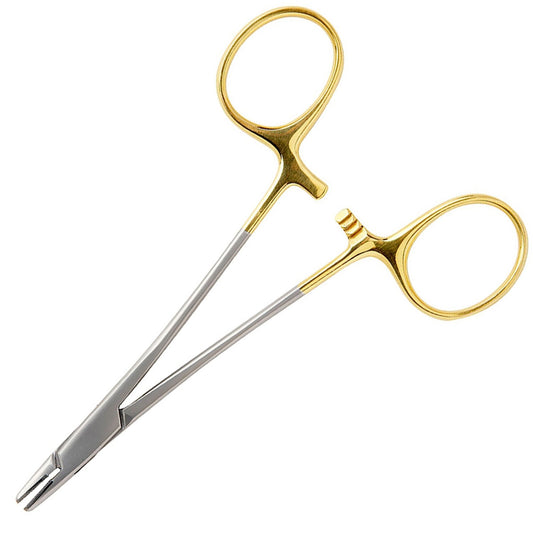
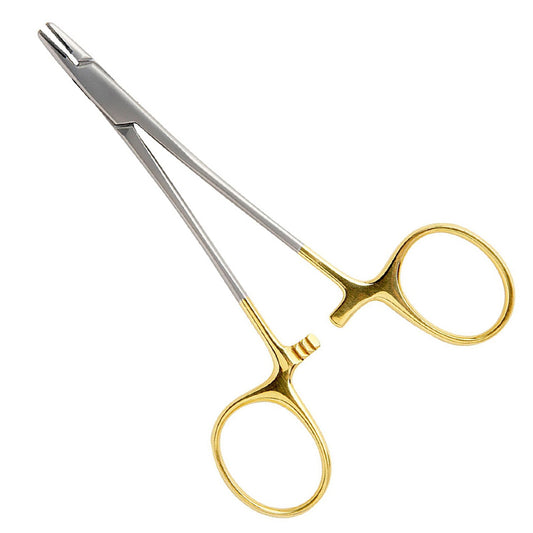
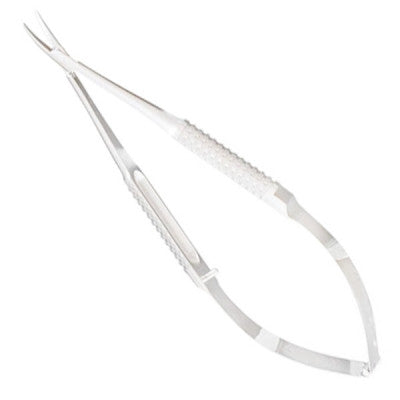
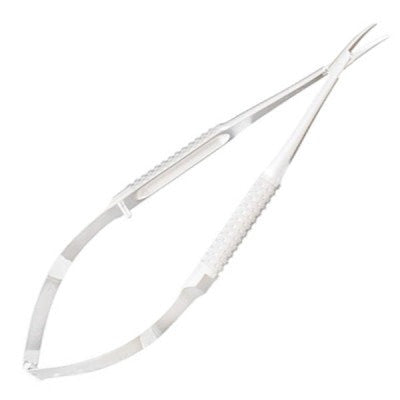
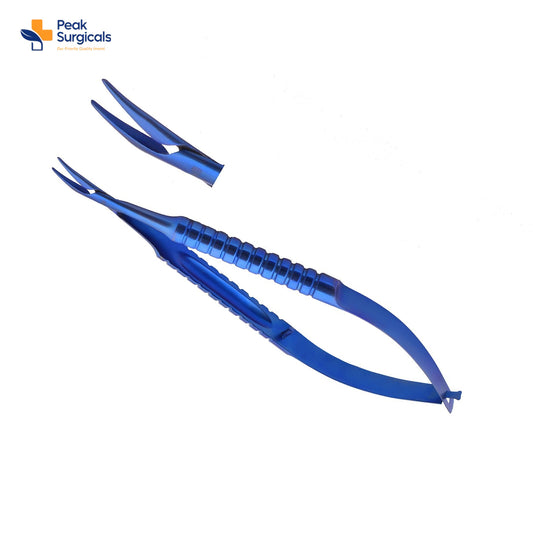
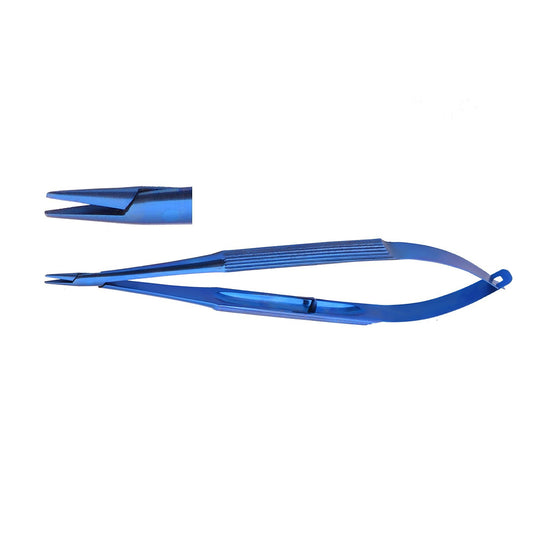
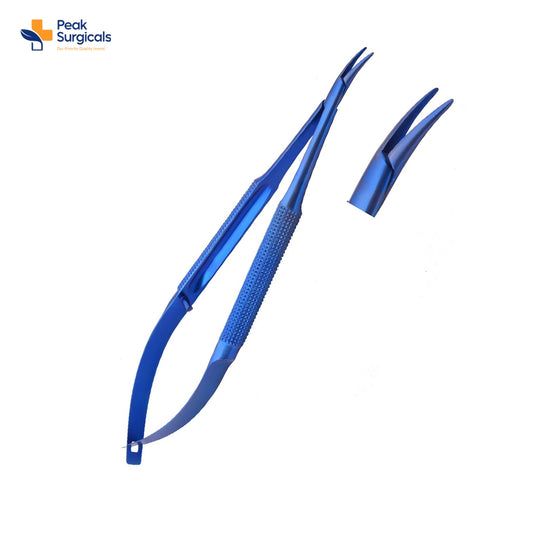
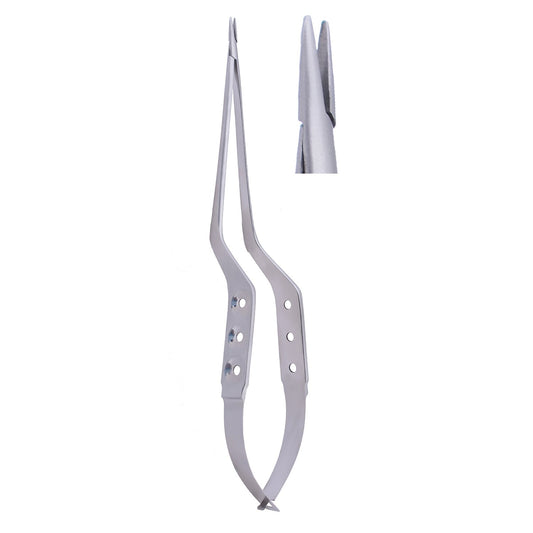
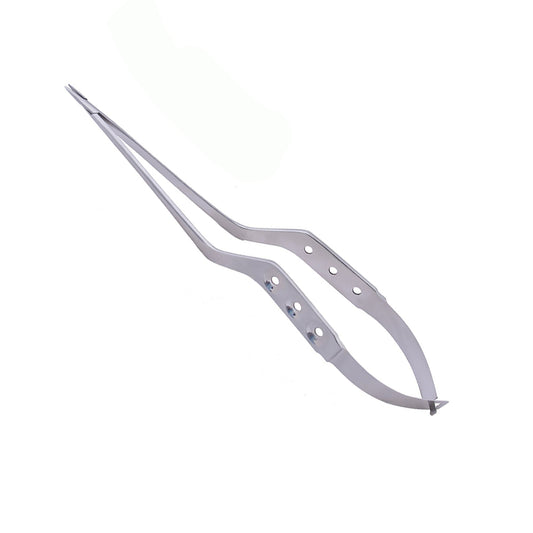
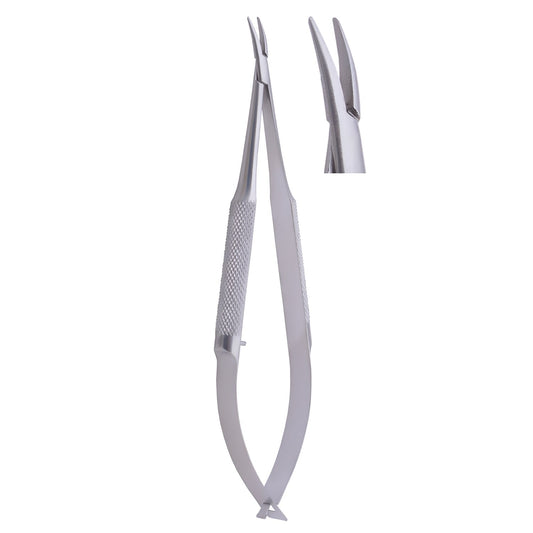
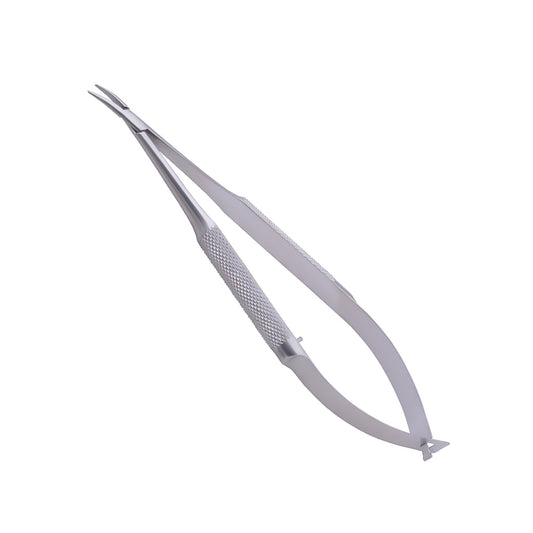
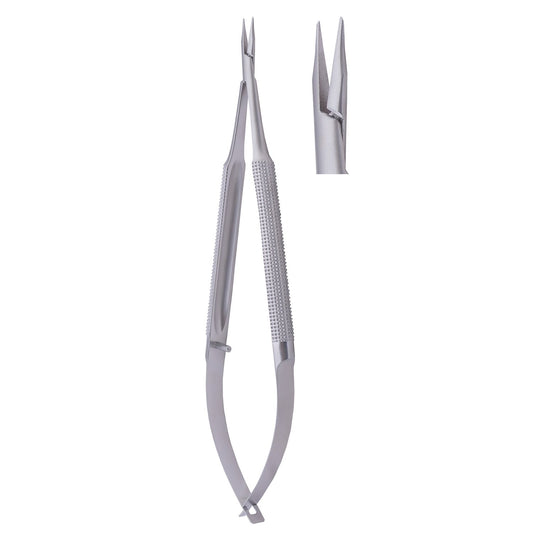
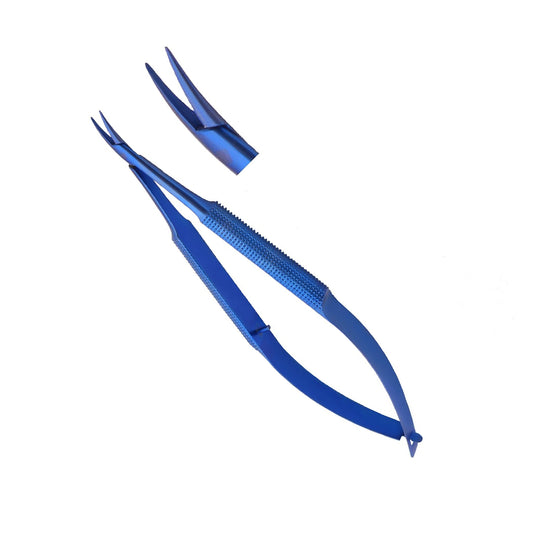
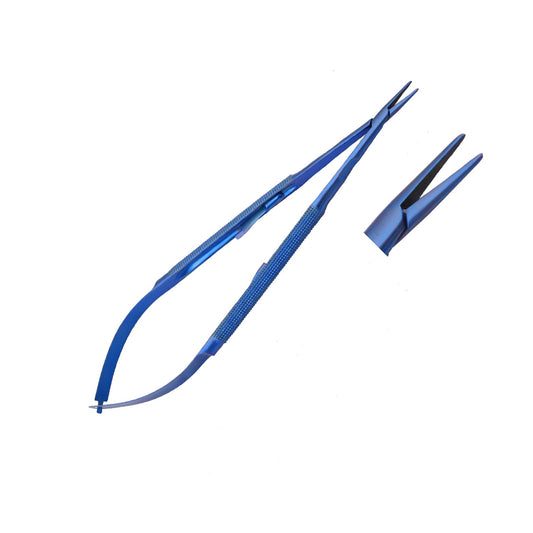
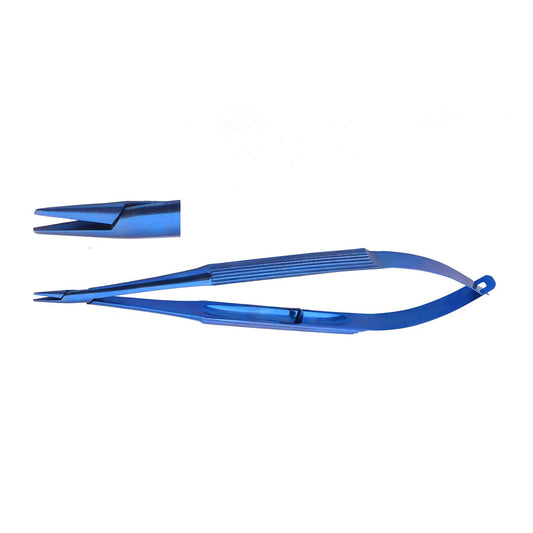
Holding a 10-0 suture needle is not a strength problem. The needle weighs almost nothing and the tissue offers almost no resistance; what limits the surgeon over two hours of microsurgery is the weight of the instrument in the hand and how steady it stays. Peak Surgicals stocks twelve micro needle holder patterns, from $5.50, in German stainless steel and titanium, CE marked and built under ISO 13485. Compare the full range in the grid below.
Why Titanium, and What It Costs
That is why titanium dominates this range. It is around forty-five percent lighter than stainless steel for the same instrument, and over a long case that difference shows up as tremor rather than as comfort: a lighter instrument is a steadier one at the point where the hand has been holding a fixed position for an hour. Titanium is also non-magnetic, and its finish does not throw glare back into a microscope the way a polished steel surface can.
Peak supplies seven titanium patterns, from $49.50, in straight and curved configurations at 14cm, 16cm and 18cm. The price sits two to nine times above the steel patterns in the same collection, and that gap is the whole decision: for occasional suturing steel is sufficient, and for a surgeon doing corneal or vitreoretinal lists week after week the weight difference is what is being bought.
Why Most Micro Holders Do Not Lock
Jaw configuration and locking are the other two variables. Micro needle holders are often supplied without a catch, and that is deliberate rather than a simplification. Releasing a ratchet requires a small squeeze followed by a release, and that movement transmits to the tip; on a 10-0 needle held in the anterior chamber, it is enough to move the needle out of the tissue it was placed in. A non-locking holder is released by simply relaxing the fingers.
Curvature follows the approach. A straight jaw holds the needle in line with the shaft and suits work viewed directly down the axis of the instrument. A curved jaw presents the needle at an angle while the hand stays clear of the microscope's line of sight, which is what corneal suturing usually requires. Derf Eye Needle Holder ($5.50) covers general ophthalmic work, and Barraquer Needle Holder ($27.50) carries the round spring handle that rotates in the fingers without regripping.
Material, Reprocessing and Certification
Steel patterns are forged from German stainless steel and passivated for corrosion resistance; titanium patterns are supplied with a non-glare finish. The inspection point on a micro needle holder is the jaw tips under magnification, and on this range it is the entire inspection: hold the jaws closed against light and confirm they meet flush along their full length with no daylight and no lateral offset, because tips that meet unevenly grip a fine needle at one corner and let it rotate under load. Check the jaw surfaces have not worn smooth, and on spring patterns confirm the handle returns the tips to their original gap when released. Clean immediately with a neutral-pH enzymatic solution, then rinse with deionised water and dry fully, following the reprocessing instructions supplied.
These are Class I reusable devices, supplied non-sterile, CE marked and built under ISO 13485, with a one-year warranty. We ship at MOQ 1 with free shipping over $99. See Ophthalmic Needle Holders for Castroviejo and tungsten carbide patterns, or browse all Ophthalmology Instruments.