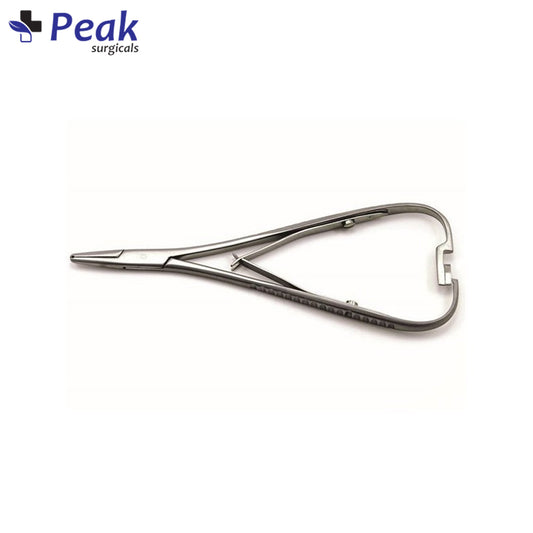
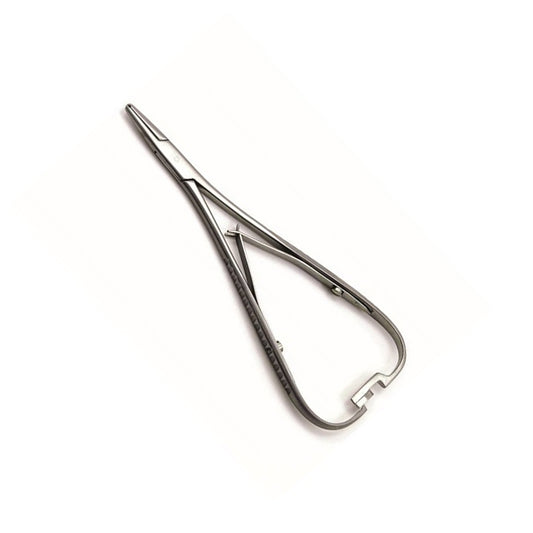
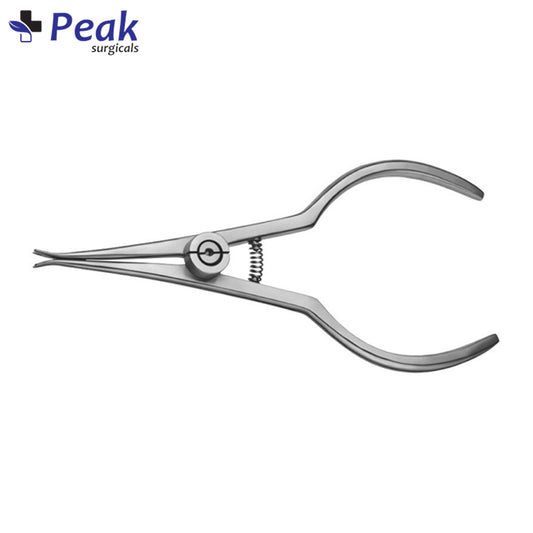
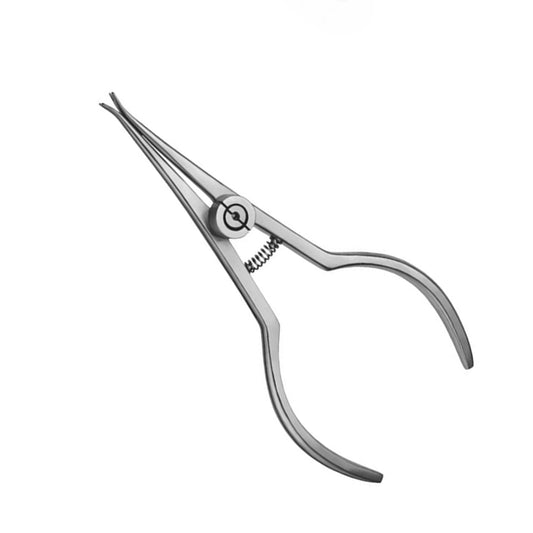
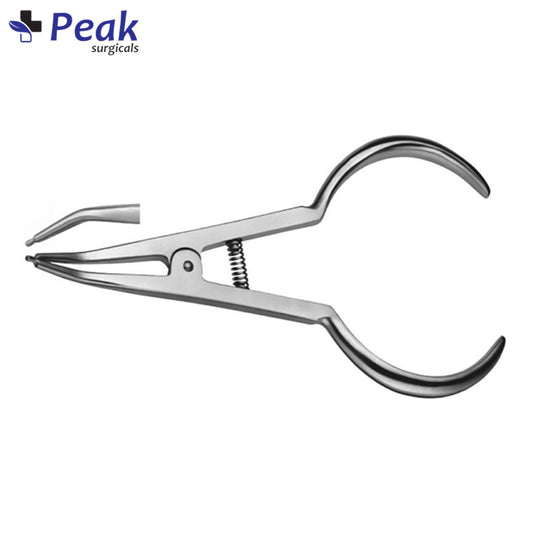
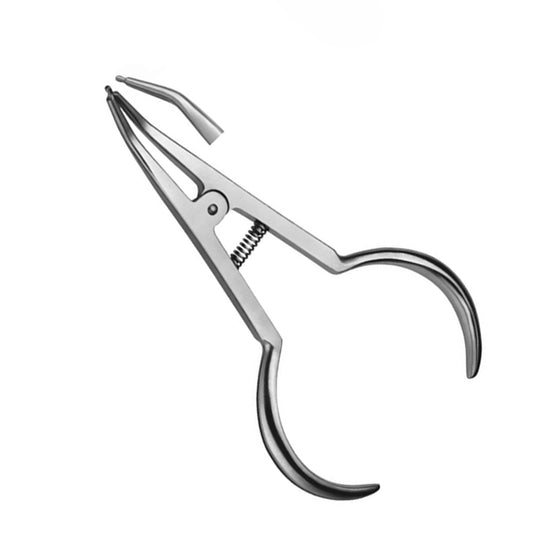
A Mathieu plier holds its own grip. That is the whole point of the pattern: a ratchet at the handle locks the jaws closed, so the hand can be repositioned or released entirely while whatever the plier is holding stays held. Peak Surgicals stocks two Mathieu patterns for orthodontic elastic placement, from $13.20, in German stainless steel and CE marked and built under ISO 13485. Compare both patterns in the grid below.
Why the Ratchet Matters
The ratchet exists because of what the instrument carries. An elastomeric module or a separator is small, under tension and easy to lose, and the working space is between adjacent teeth with the operator's other hand already occupied by a mirror or a second instrument. A conventional plier holds only while the fingers squeeze, which means every adjustment of grip risks dropping what is being placed. A Mathieu holds until it is deliberately released.
That changes the sequence at the chair. The module is loaded onto the plier, the plier is locked, and the operator can then take as long as the placement needs without maintaining pressure. Releasing is a separate deliberate action rather than a relaxation of grip, and it happens when the module is where it should be rather than when the hand tires.
Hole or Hook Tip?
Tip configuration is what separates the two patterns, and it is chosen by what is being carried. Elastic Placing Mathieu Plier with Hole (PS-D-174, $13.20) carries a hole through the tip, so an elastomeric module seats into it and is delivered by pushing it off the tip onto the bracket wings. Elastic Placing Mathieu Pliers with Hook Tip (PS-D-175, $14.30) carries a hooked tip instead, which stretches a module or a chain and releases it by rotation rather than by push.
Neither is a general-purpose orthodontic plier. Both are placement instruments with a single job, which is why they sit alongside separator pliers, ligature tying pliers and wire benders in a working tray rather than replacing any of them. We supply both patterns at MOQ 1.
Material, Reprocessing and Certification
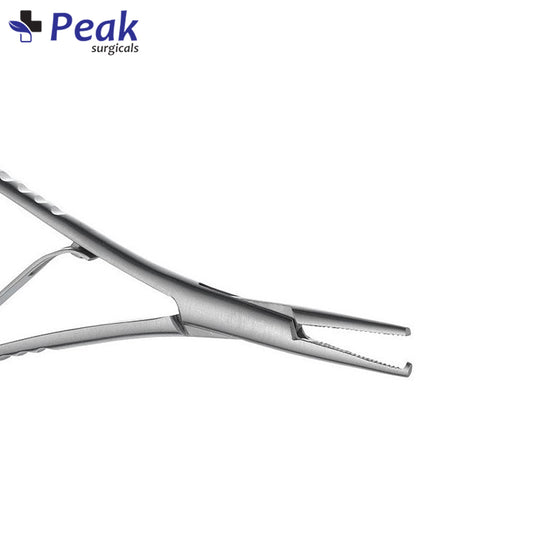
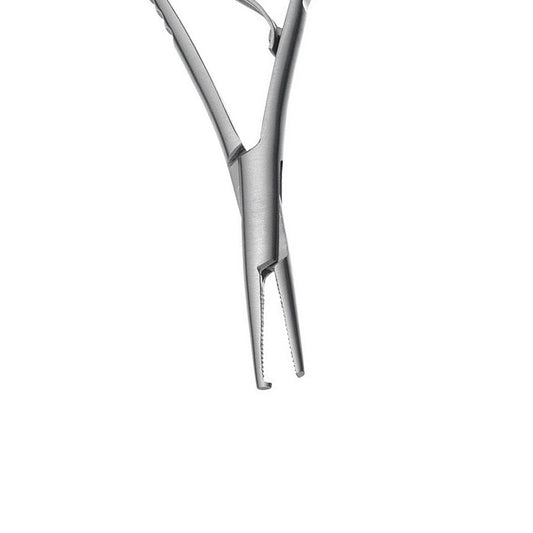
Both patterns are forged from German stainless steel and passivated for corrosion resistance across repeated cycles. The inspection point is the ratchet and the tip, and the ratchet should be load-tested rather than looked at: close the handles to the first tooth and try to force them open, because a ratchet that releases under tension drops a module into the mouth rather than onto the bracket. Check the tip under magnification for wear, since a hole that has enlarged no longer retains a module and a hook that has opened out no longer stretches one. Confirm the jaws close in alignment with no lateral offset. Clean immediately with a neutral-pH enzymatic solution, brushing into the ratchet teeth and through the tip hole, then rinse with deionised water and dry fully, following the reprocessing instructions supplied.
These are Class I reusable devices, supplied non-sterile, CE marked and built under ISO 13485, with a one-year warranty. We ship at MOQ 1 with free shipping over $99. See Orthodontic Pliers for the wider range, or browse all Dental Orthodontic Instruments.