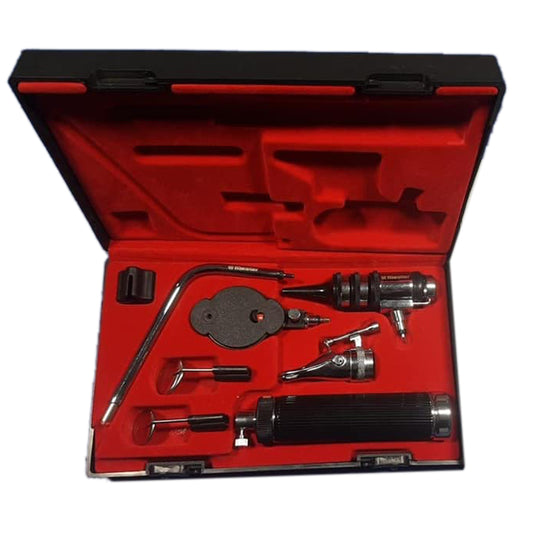
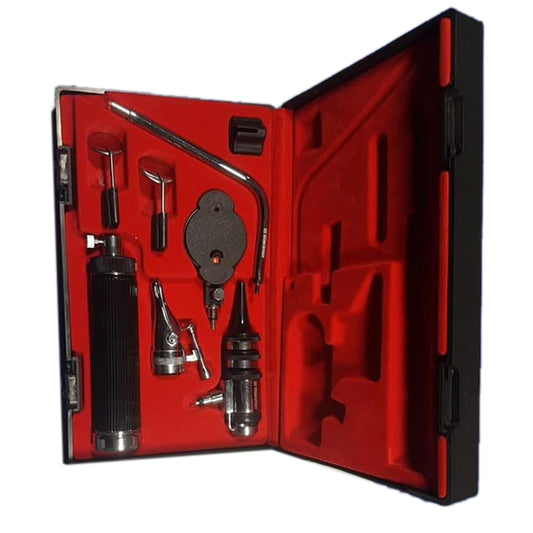
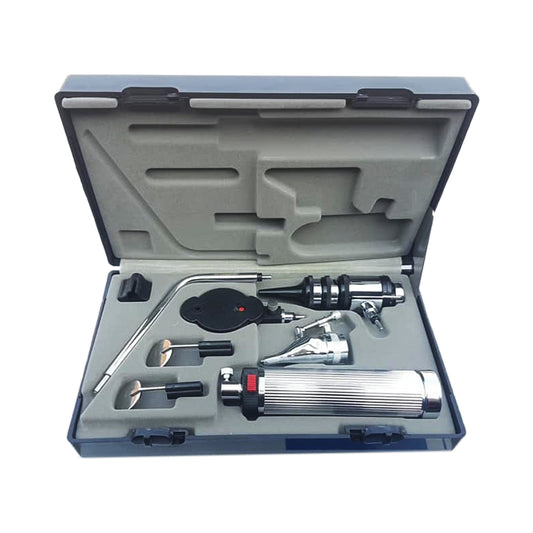
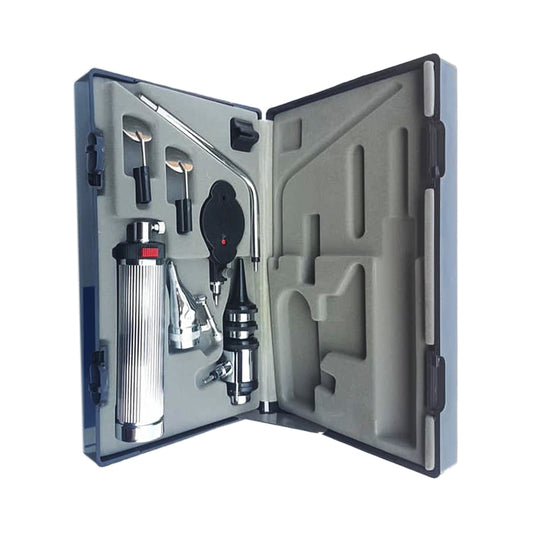
ENT Diagnostic Instruments Set: Otoscope, Nasal Speculum and Laryngeal Mirror
A basic ENT examination needs a different instrument for each of the ear, nose and throat, because no single tool opens all three. This collection brings together ENT diagnostic sets, pocket otoscopes and related examination instruments, priced from $8.80 to $49.50. Every item ships from Sialkot with worldwide delivery. All eight products are currently showing as sold out, so please contact us for availability.
ENT Diagnostic Sets
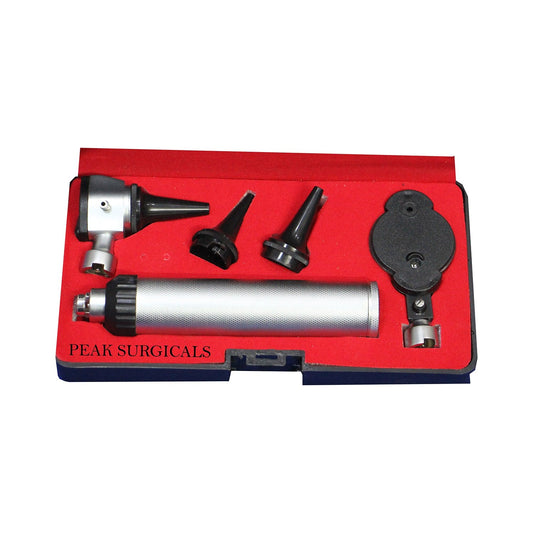
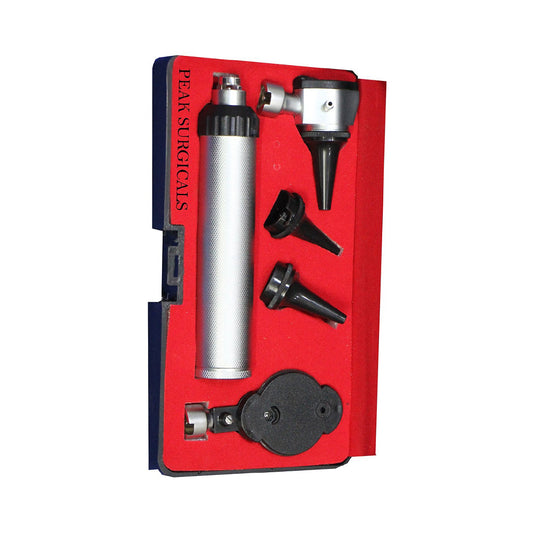
The ENT Diagnostic Instruments Set with Otoscope, Nasal Speculum and Laryngeal Mirror covers all three examination areas in one set, at $49.50. The Bruening Septum Forceps 18.7cm are $44.00 and are an examination instrument rather than a full set. The Ostoscope Set at $22.00 is also listed.
Pocket Otoscopes
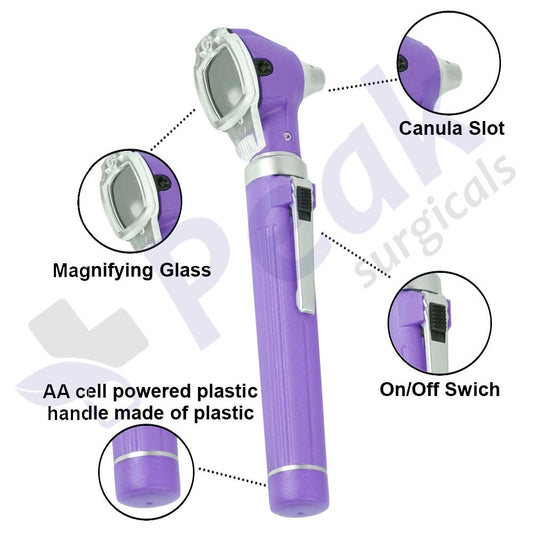
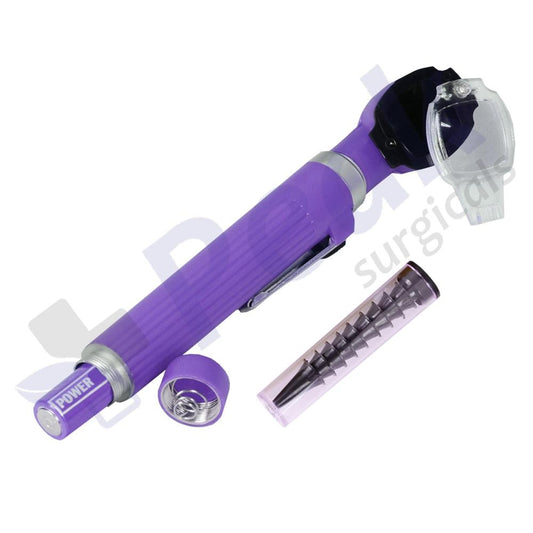
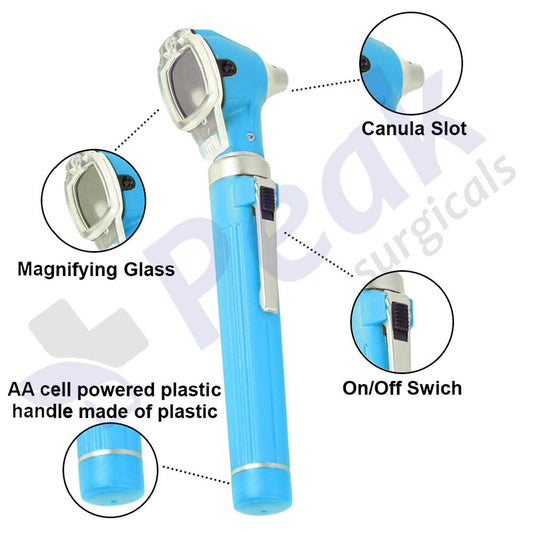
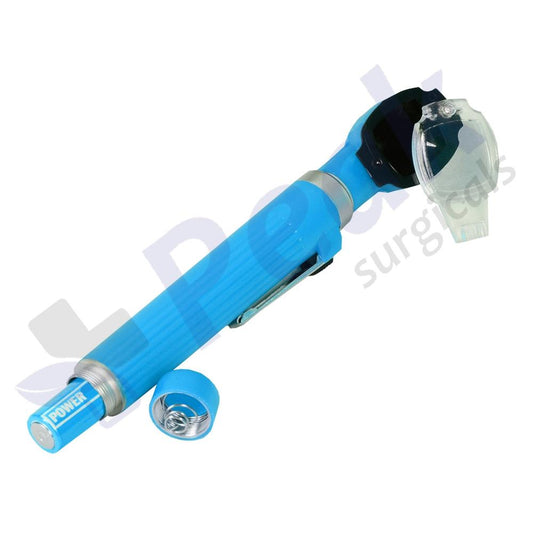
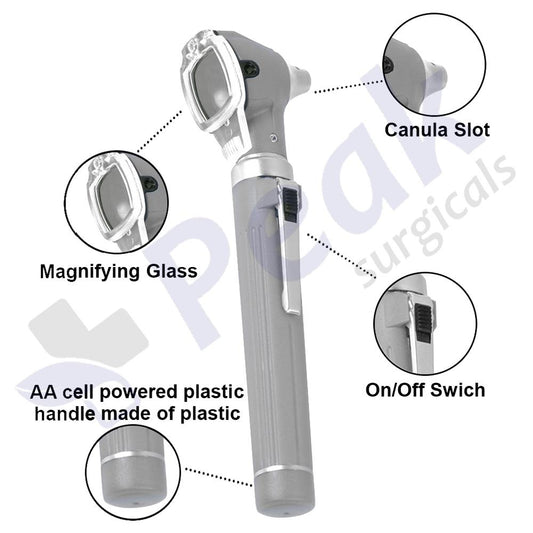
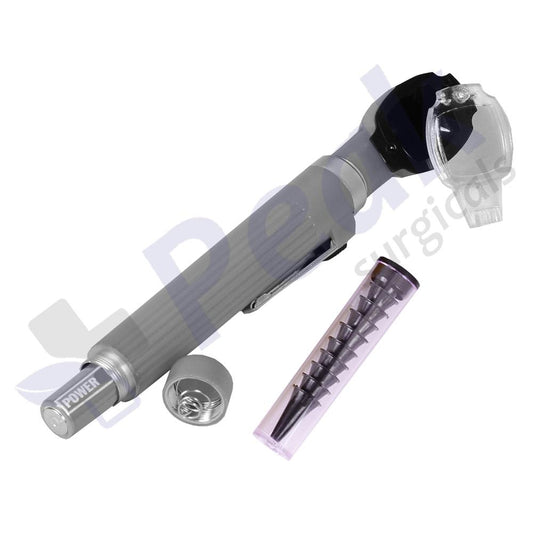
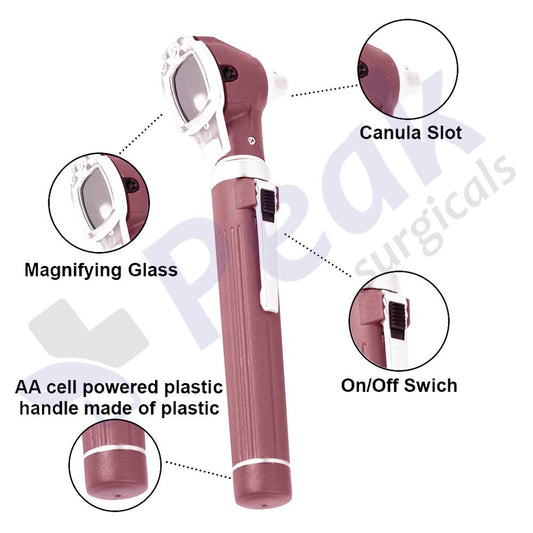
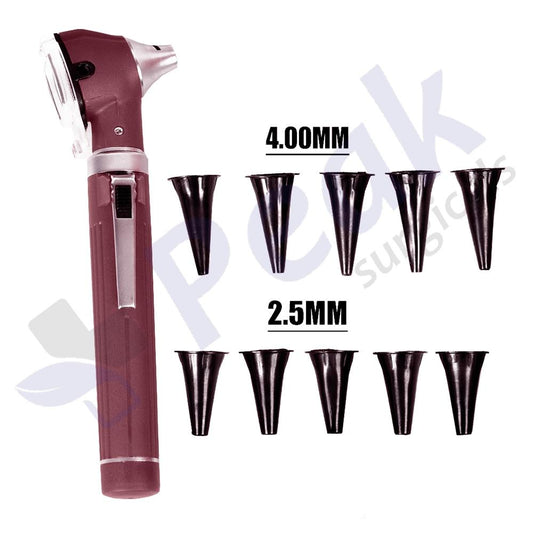
Pocket otoscopes give a lit, magnified view of the ear canal. The Mini Otoscope Grey has LED tip illumination and is priced at $8.80. The Mini Otoscope Brown adds a convex magnifying lens and costs $13.20. The Sky Blue and Purple versions are $8.80 each, and the Purple is listed for color-coded and paediatric use. All are fiber optic pocket models.
How Each Instrument Works
An otoscope holds the ear canal open and carries light and a viewing lens, so the eardrum can be assessed. A nasal speculum holds the nostrils apart so an external light can reach the front of the nasal cavity. A laryngeal mirror is warmed and angled at the back of the throat, so the examiner sees the larynx by reflection, since there is no straight line of sight. Each instrument has its own job.
Choosing the Right Set
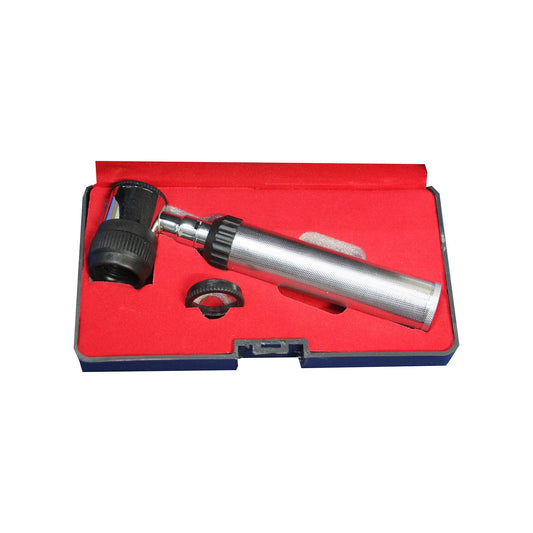
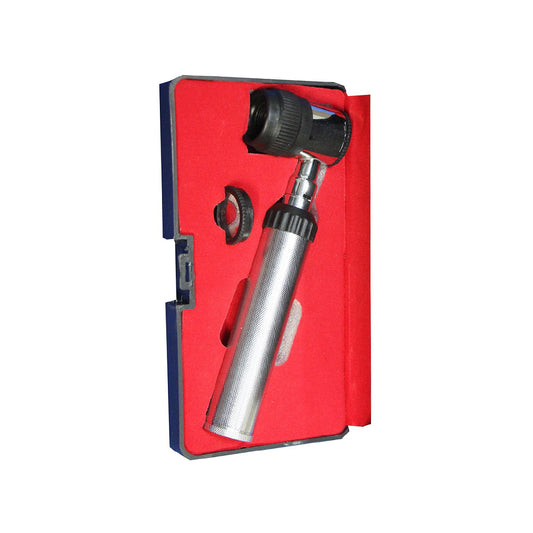
Choose by how you will use it. A general practice that sees ENT cases as part of a broader consultation needs the full three-instrument set, while a clinic that mainly examines ears may be well served by pocket otoscopes. A handheld Dermatoscope for skin examination is also listed in this collection at $27.50. Check each product page for what is included.
Complete Your ENT Examination Kit
Add more patterns from our nose and ear specula and ENT mirrors collections, or explore the full ENT instruments range.
Care and Reprocessing
Check speculum tips for burrs and mirrors for pitting or clouding, since a worn mirror loses detail before it looks damaged. Clean promptly with a neutral-pH enzymatic solution, rinse and dry fully. Optical and non-metal parts have their own limits, so follow the supplied instructions.
Ordering
Orders over $99 ship free. Clinics and distributors can ask about volume or OEM options through our contact page.
Frequently Asked Questions
What is in an ENT diagnostic set?
The main set includes an otoscope, a nasal speculum and a laryngeal mirror. Check the product page for exact contents.
What does a laryngeal mirror do?
It lets the examiner see the larynx by reflection, because there is no direct line of sight from the mouth.
What is a pocket otoscope used for?
It gives a lit, magnified view of the ear canal and eardrum.
Are the instruments reusable?
Metal instruments can be cleaned and sterilized between patients. Optical and non-metal parts follow the supplied instructions.
What are your shipping, return and OEM terms?
Orders over $99 ship free. See our Help & FAQs for details, or contact us about OEM requests.