Headless Compression & Cannulated Screws
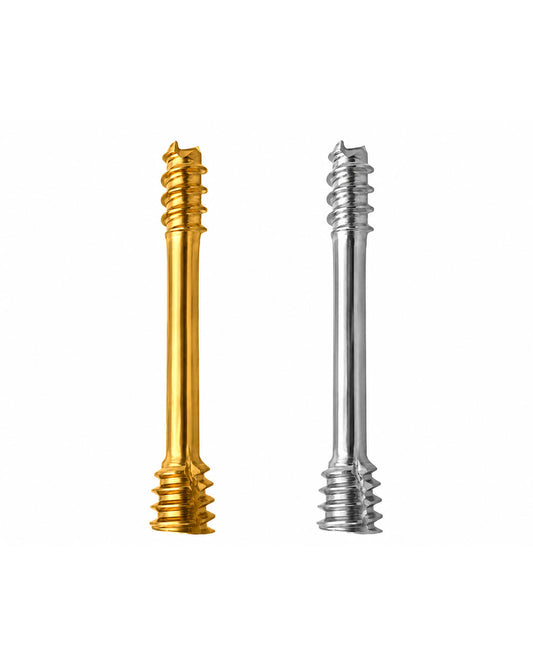
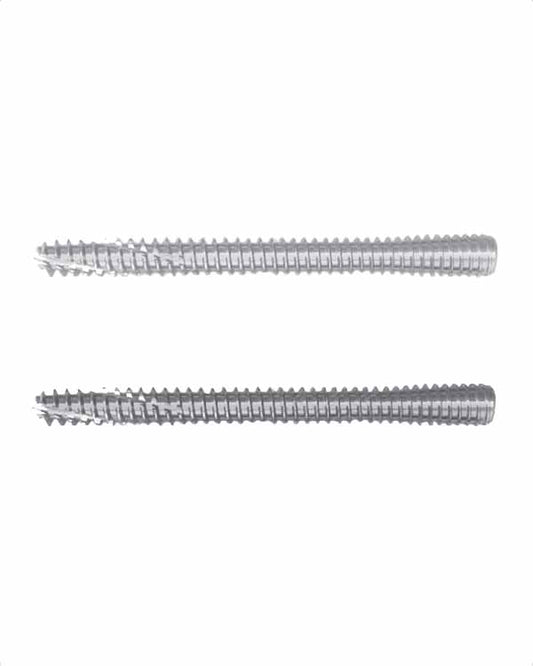
Cannulated screws have a hollow core running the full length of the screw, allowing them to be inserted directly over a guide wire for precise, accurate placement — the surgeon places the wire first under imaging, then threads the screw down it, rather than positioning the screw freehand. Headless compression screws take this a step further: the screw head sits flush with or below the bone surface rather than protruding, reducing soft-tissue irritation in areas where a standard screw head would sit under skin or near a joint. As the screw seats, a differential thread pitch draws the near and far fracture fragments together, creating compression across the fracture line.
What's in This Collection
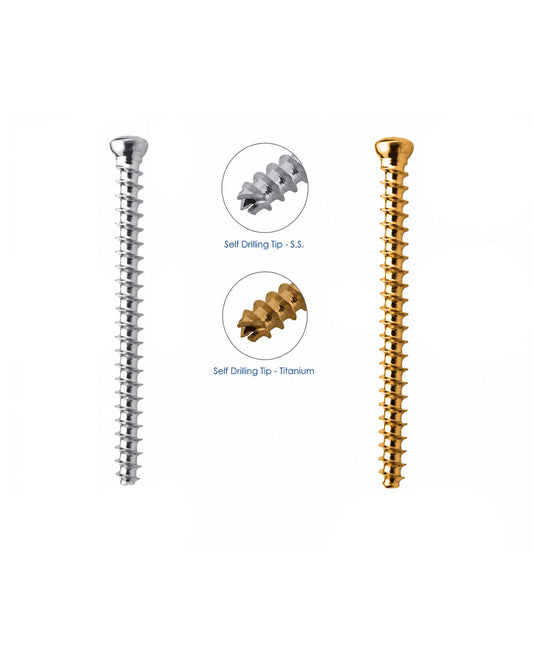
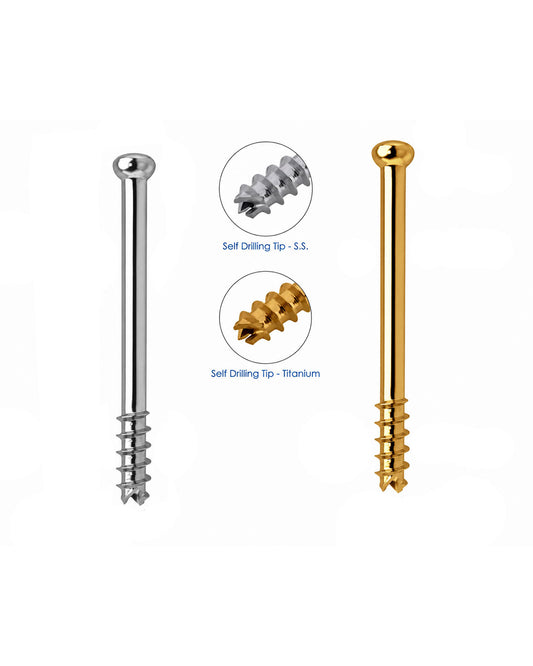
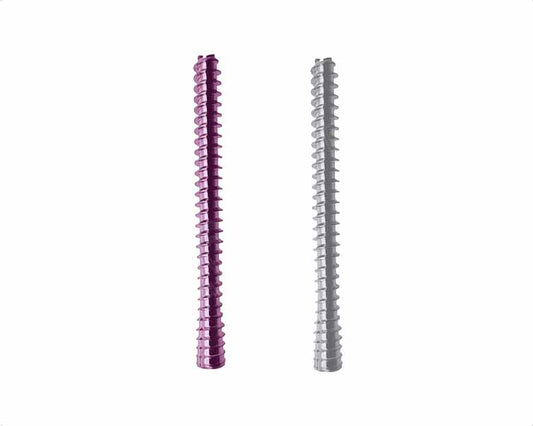
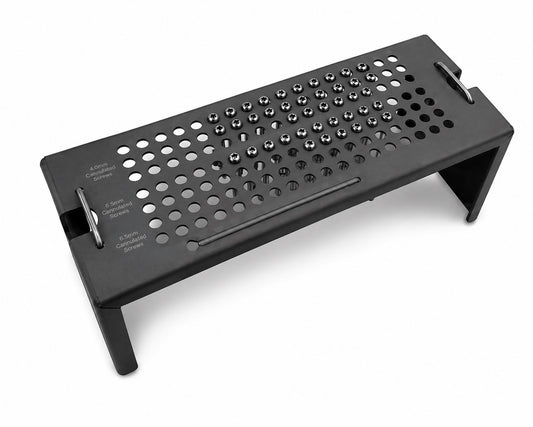
Cortex Cannulated Screws (3.5mm and 4.5mm, short and full thread) are fully or mostly threaded for fixation in dense cortical bone. Cancellous Cannulated Screws (4.0mm, 6.5mm, and 7.0mm, in short and full thread options) use a partial thread design suited to softer cancellous bone, where the unthreaded shaft lets the screw compress the fracture as it's tightened. The Headless Compression Screw (Herbert Screw), Cannulated Ø2.5mm follows the classic Herbert pattern — a variable-pitch double thread with no external head — widely used for scaphoid and small bone fixation in the hand and wrist. Additional Headless Compression Screws are available in 2.5mm and 5.5mm, fully threaded. The Safety Lock Screw Ø5.0mm rounds out the range for locking plate applications.
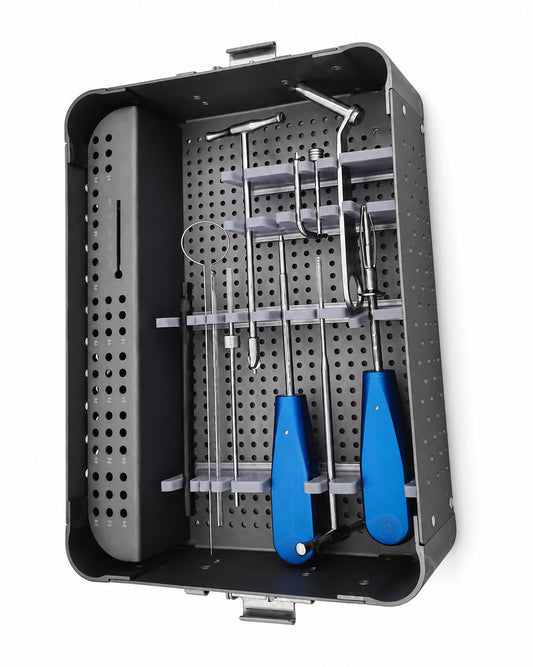
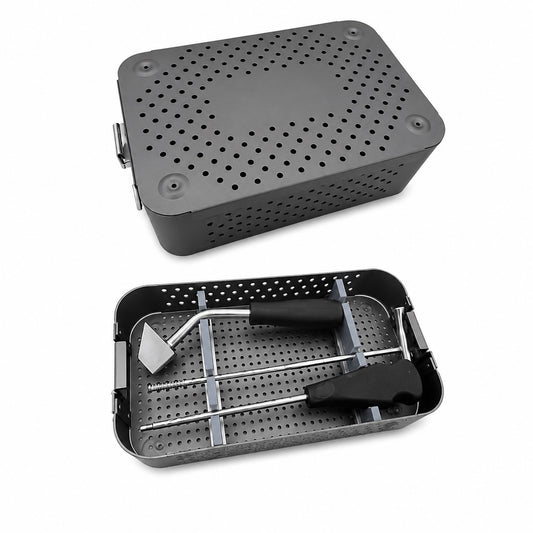
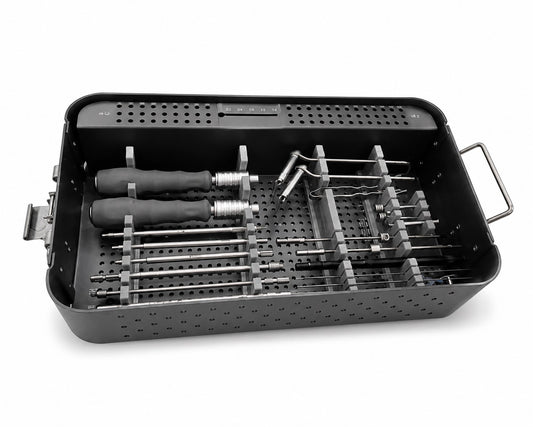
Instrument sets bundle the guide wires, cannulated drills, taps, and screwdrivers needed to place these screws as a complete system, sized to match: 4.0mm and 6.5mm cancellous sets, a 7.0mm implant set with 16mm/32mm thread options, a dedicated Herbert Screw set for scaphoid fixation, and a broader set covering 4.7/5.5/7.5mm headless compression screws.
Choosing the Right Screw
Bone type drives thread selection: cortex screws for dense cortical bone, cancellous screws where compression across softer bone matters most. Diameter scales with the fixation site — smaller diameters (2.5mm, Herbert pattern) for small bones like the scaphoid, mid-range diameters (3.5–4.5mm) for hand, foot, and small fragment work, and larger diameters (6.5–7.0mm) for cancellous applications like the femoral neck, ankle, or pelvis. Full thread versus short/partial thread depends on how much of the screw length needs to cross the fracture site versus sit in the far fragment.
Related Products
Pair these screws with our broader Orthopedic Screws and Locking Screws Self Tapping ranges, and with Screw Holding Forceps, Taps & Countersinks and Bone Drills for placement. Guide wires for cannulated insertion are covered in Kirschner Wires. For plating systems these screws often pair with, see Small Fragment Standard and Rib, Pelvic & Foot Implants. To browse the full implant range, visit Orthopedic Implants.
Ordering
Peak Surgicals manufactures and supplies headless compression and cannulated screws in bulk for hospitals and distributors worldwide, with international shipping available — contact our team for wholesale pricing and current stock on instrument sets.
Frequently Asked Questions
What's the difference between a cortex and a cancellous cannulated screw?
A cortex screw is more fully threaded, suited to dense cortical bone. A cancellous screw uses a partial thread with an unthreaded shaft, so the screw compresses the fracture as it seats in softer cancellous bone.
What is a Herbert screw used for?
A Herbert screw is a headless, variable-pitch compression screw most commonly used to fix scaphoid fractures and other small bone injuries in the hand and wrist, where a protruding screw head would irritate surrounding soft tissue or joint surfaces.
Why is the screw "cannulated"?
A cannulated screw has a hollow core so it can be inserted directly over a guide wire, which is placed first under imaging guidance. This allows more accurate screw placement than inserting a solid screw freehand.
What does "headless" mean on a compression screw?
A headless screw's head sits flush with or below the bone surface rather than protruding, which reduces irritation to nearby soft tissue, tendons, or joint surfaces — important in areas like the scaphoid, femoral neck, or small joints.
Are these screws used in veterinary orthopedic surgery?
Cannulated compression screws of this type are commonly used in veterinary orthopedic procedures, including canine fracture fixation, following the same compression principles used in human orthopedics.
Is this the same as a Synthes, Stryker, or Zimmer compression screw?
No. Those are separate, trademarked implant systems from other manufacturers. This is Peak Surgicals' own compression screw line — verify thread and instrumentation compatibility independently before substituting between systems.