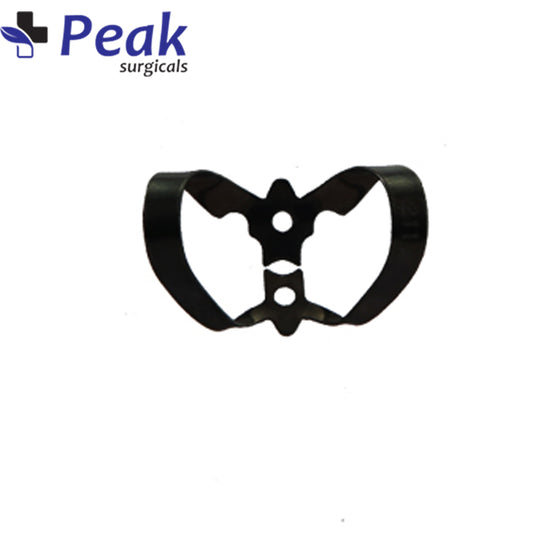
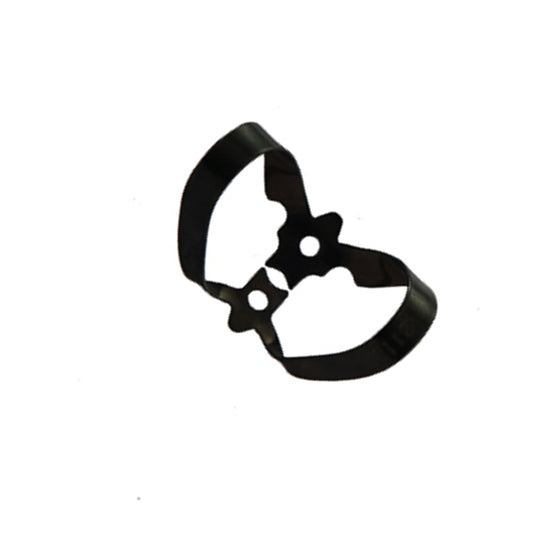
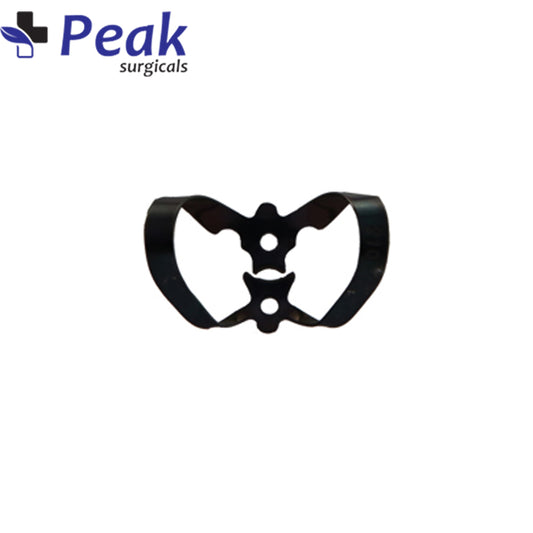
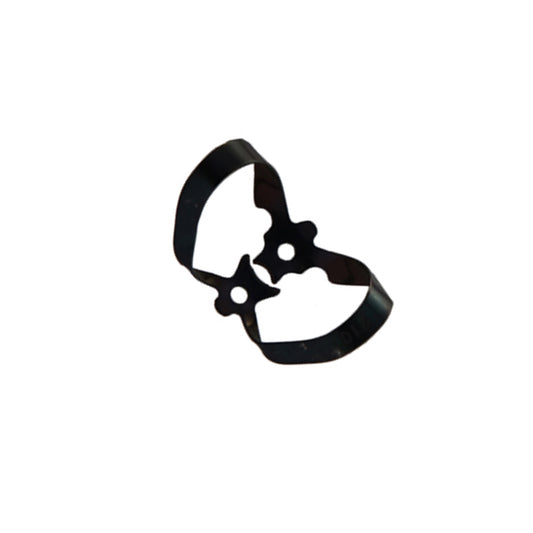
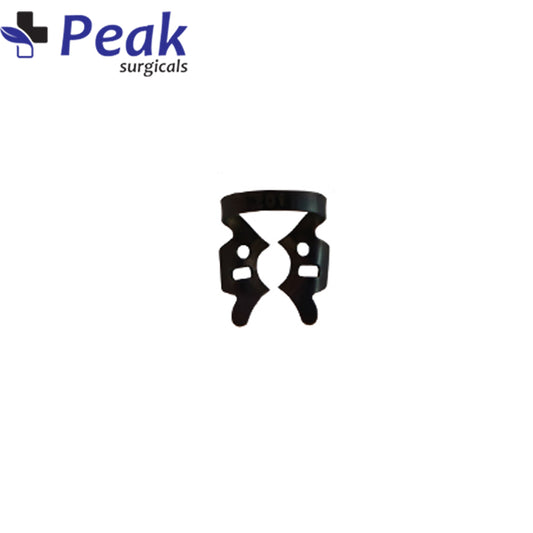
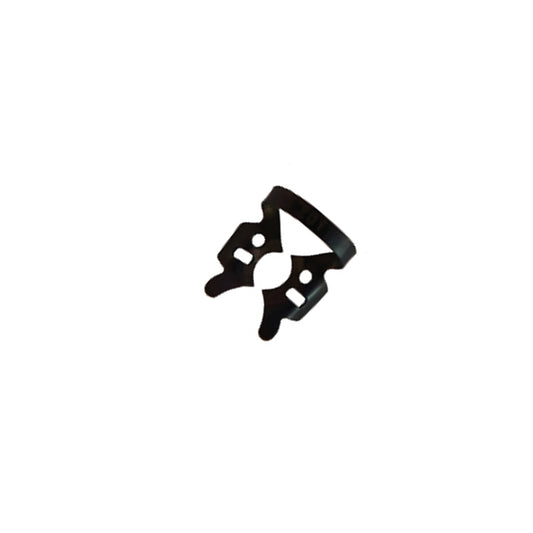
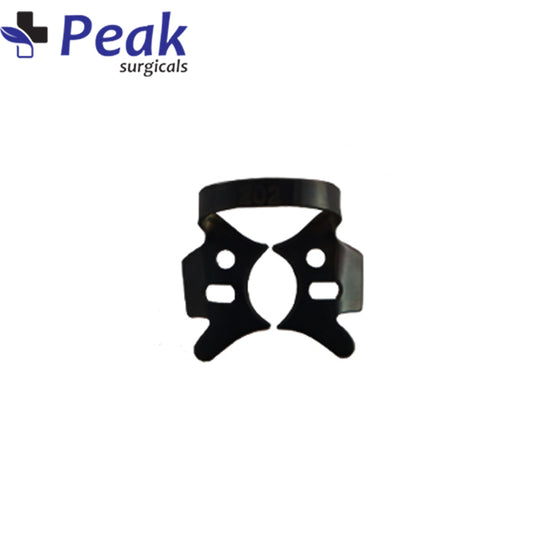
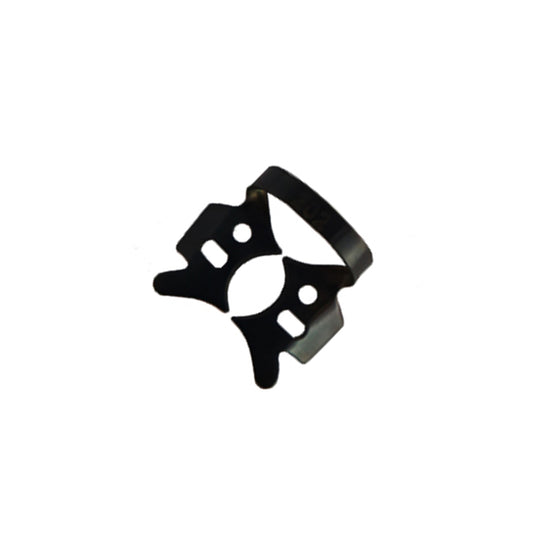
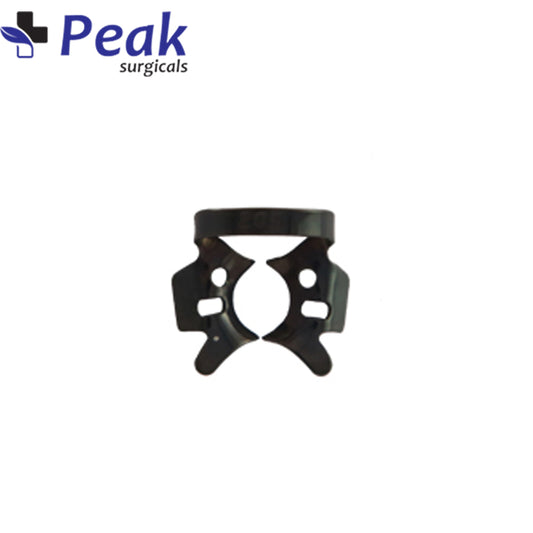
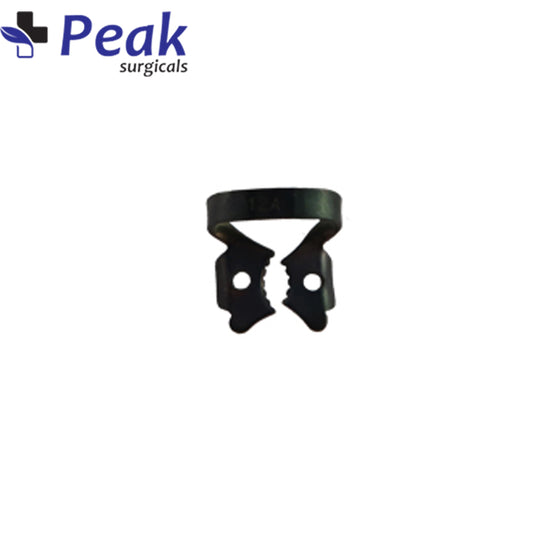
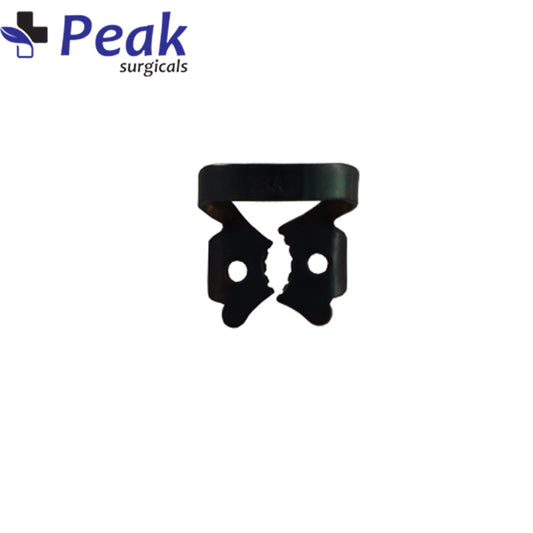
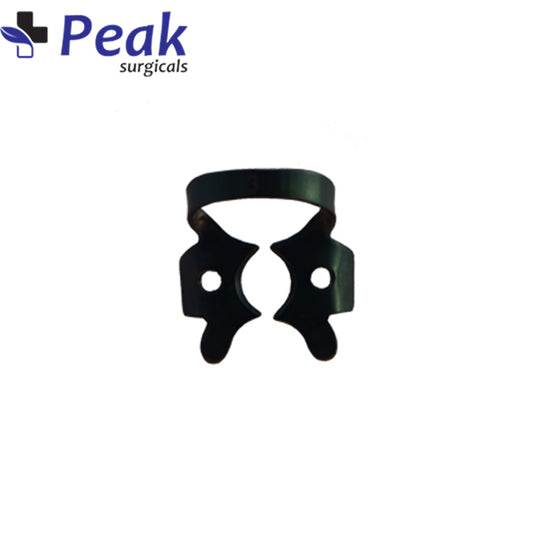
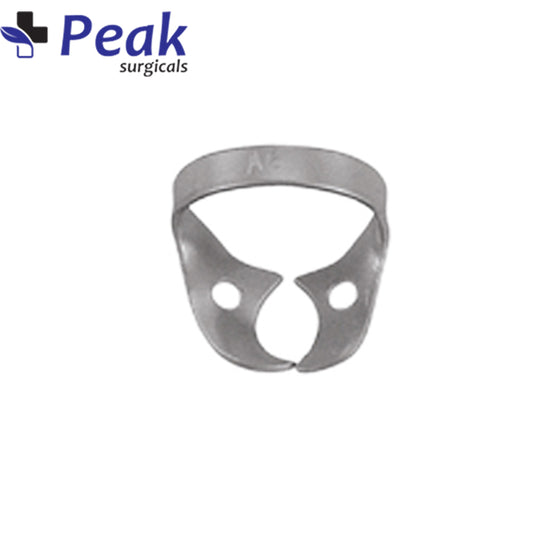
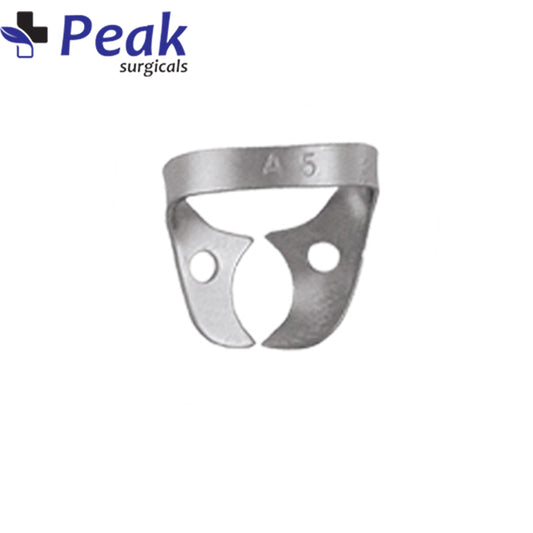
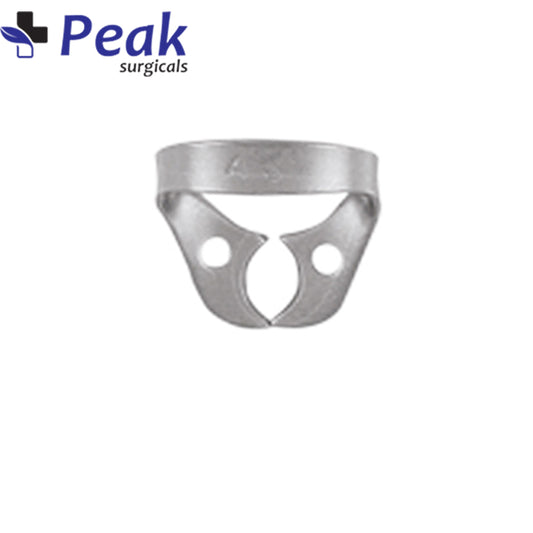
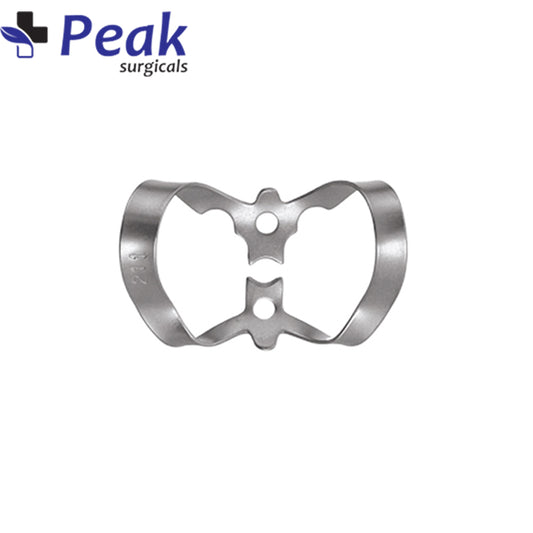
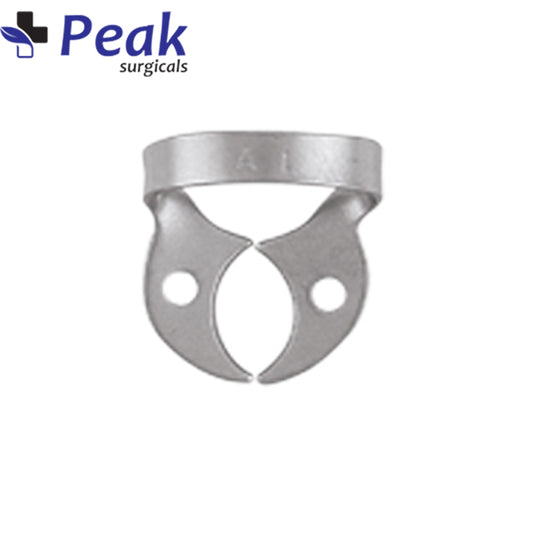
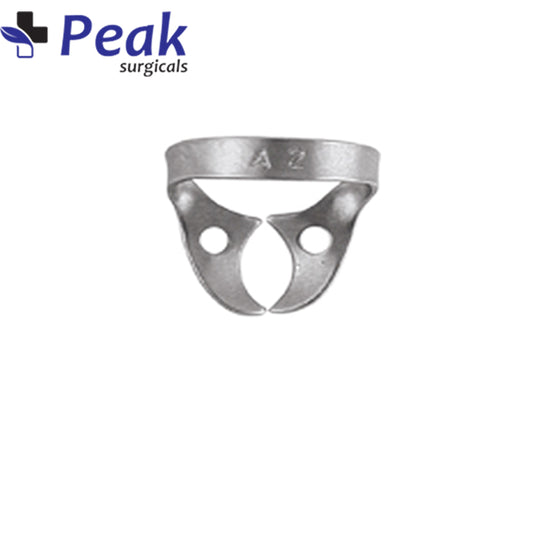
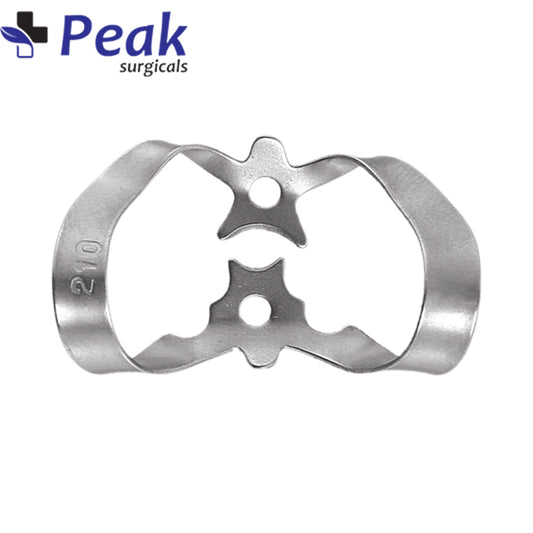
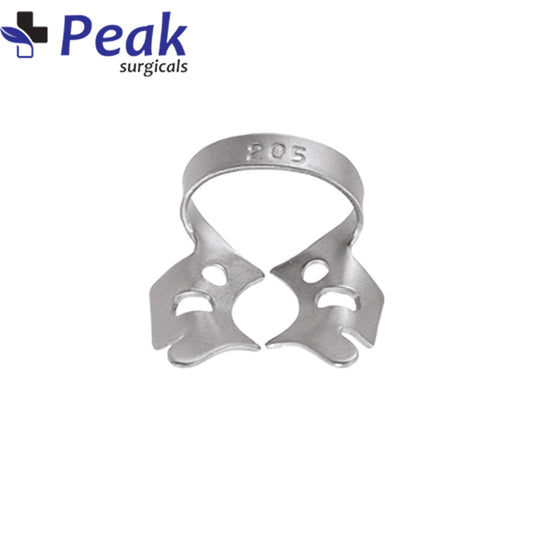
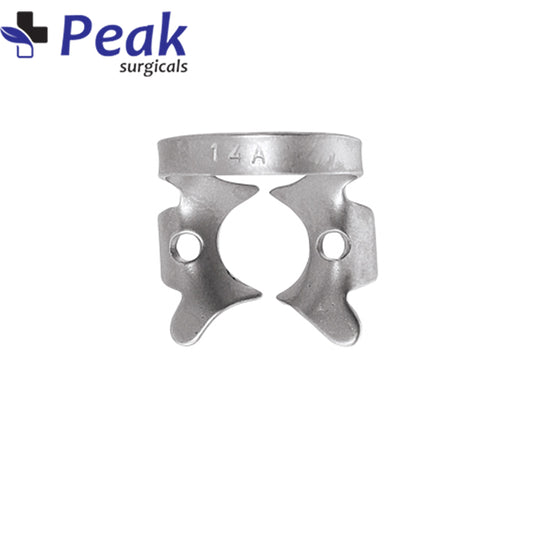
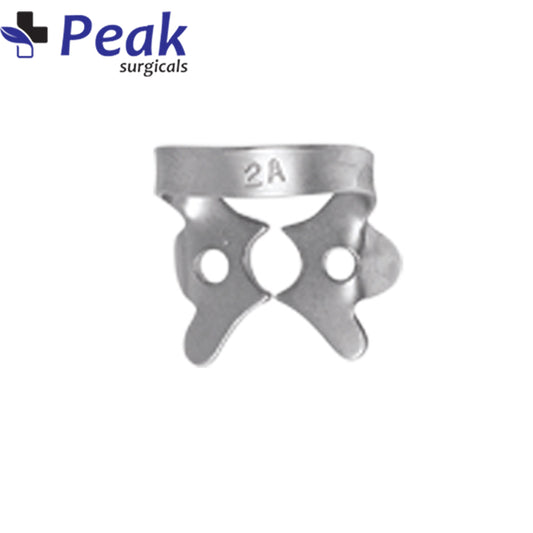
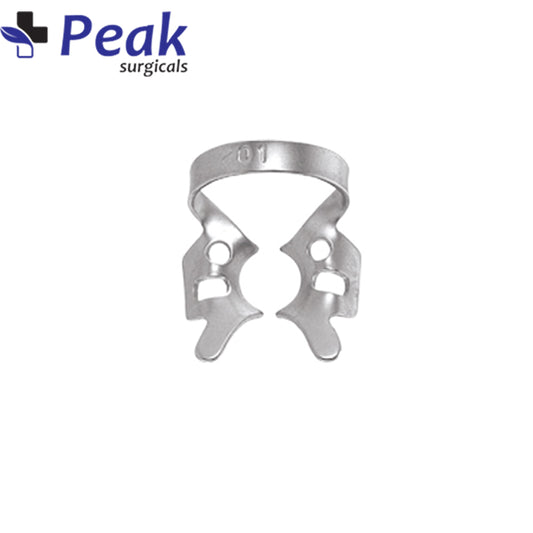
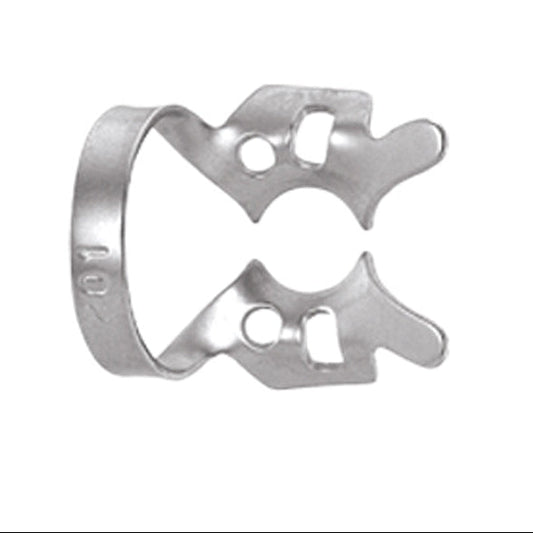
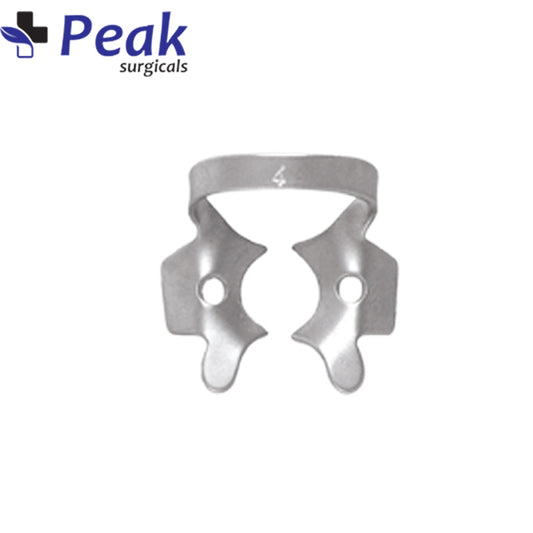
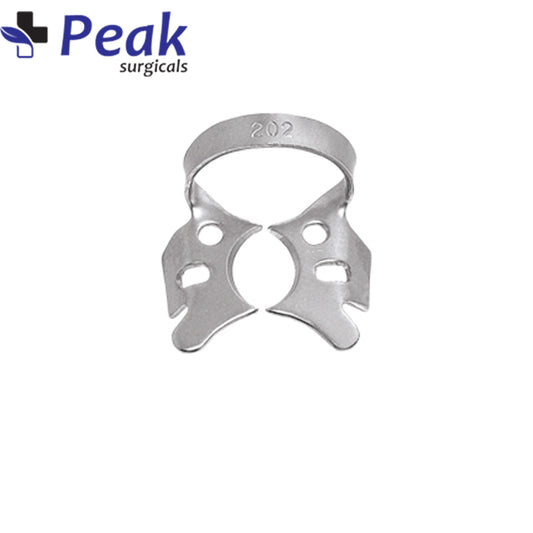
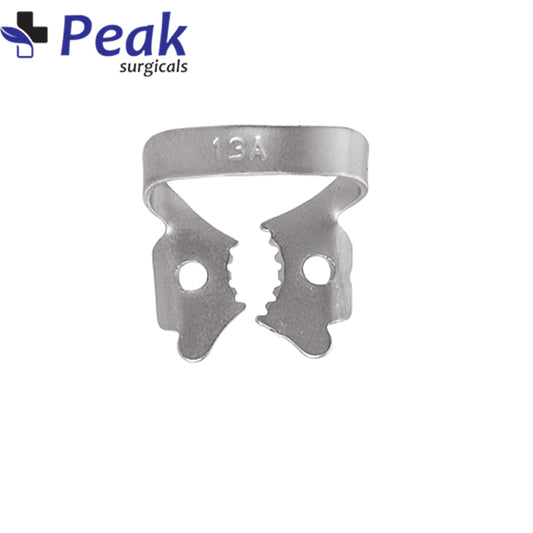
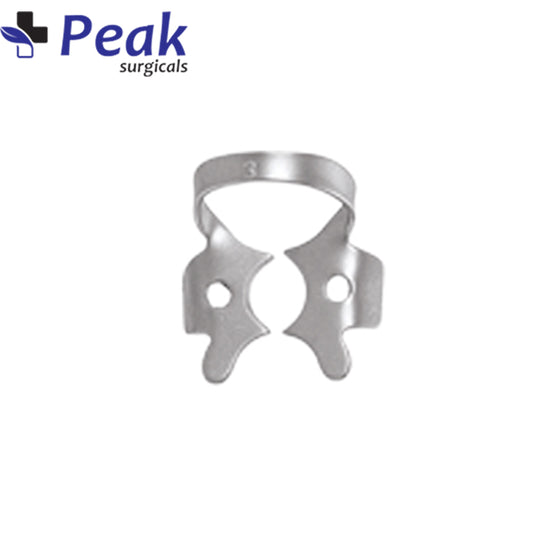
Rubber dam clamps anchor the isolation sheet to the tooth, holding the dam in place while the field stays dry for endodontic, restorative and adhesive work. Peak Surgicals supplies twenty-four patterns, winged and wingless, molar and premolar, in stainless steel, from $3.30 to $6.55. Each is CE marked and built under ISO 13485. Compare all twenty-four clamps in the grid below.
Winged or Wingless: Which Clamp for Which Tooth?
Winged clamps carry projections on the jaws that hold the dam sheet clear of the field and allow the clamp and dam to be placed together in one motion, while wingless clamps omit those projections for use where the wings would obstruct the working field — and the tooth being isolated decides the jaw shape. Two decisions define clamp selection: winged versus wingless, and the tooth type.
For molars, the 12A and 13A patterns are the master clamps for posterior teeth — serrated jaws grip the anchor tooth, with the narrower side applied to the lingual surface. Peak's Molar Clamp 13A Winged (PS-D-106), 12A Posterior Winged (PS-D-105, $4.29) and Lower Molar No.3 (PS-D-104, $4.18) cover mandibular and maxillary molar isolation, with the Lower Molar Clamp (PS-D-108) for mandibular molars specifically. For premolars, flatter jaws suit the smaller tooth: the Premolar 2A (PS-D-110), Premolar No.202 (PS-D-107) and Premolar Clamp (PS-D-125, $3.30) anchor bicuspids. The Brinker clamp (PS-D-113) is a retentive pattern for difficult isolation. We supply every clamp at MOQ 1.
Four-Point Contact and Clamp Selection
The rule that governs every clamp choice is four-point contact — the jaws should touch the tooth at four points on its proximal surfaces, which is what makes the clamp stable. A clamp too large impinges on the soft tissue and traumatises the gingiva; one too small fails to grasp the tooth and rocks loose mid-procedure. Selecting to that four-point rule matters more than the clamp number.
Jaw shape follows the tooth. Flat jaws seat on premolars and small teeth; festooned or offset jaws follow the contour of a molar; serrated jaws add grip on an anchor tooth that must hold the whole dam under tension. For endodontic therapy only the treated tooth is isolated, so the clamp anchors a single tooth against the dam's pull. The winged clamp (PS-D-109) gives more retraction toward the back of the mouth, which is why posterior quadrant work favours it — unless the wings obstruct the field, in which case the wingless equivalent is chosen. Marking or numbering each clamp to its tooth indication is what turns a drawer of clamps into a usable set.
Material, Reprocessing and Certification
These clamps are forged from stainless steel — corrosion-resistant across the constant autoclave cycles a chairside instrument sees, and holding jaw geometry under the spring tension that anchors the dam. The jaw points are the inspection item: a clamp whose jaws have spread or lost their points no longer makes four-point contact, so check the fit on the tooth rather than only cleaning the clamp. Ultrasonic-clean before autoclaving so debris does not collect in the bow and jaws. A clamp should always be secured with floss through the bow during placement, so a fractured clamp is retrieved rather than aspirated.
Every clamp is Class I, reusable, CE marked and built under ISO 13485 — the documentation a dental supply team verifies before qualifying a vendor. Warranty is one year with return-and-replacement, MOQ is 1 piece, orders over $99 ship free in carton box packing, and OEM marking is available for distributors. For frames, forceps and punches see rubber dam instruments; related patterns sit in endodontic instruments. Browse all dental instruments. Talk to us about OEM and volume terms.
Our Top Selling Products
Knife Tenotome Blunt Straight | Gelpi Retractor 90 Degree Angle | Proximal Humerus Locking Plate Flat with 4-14 Hole Shoulder Fixation Range | Green Fixation Forceps | Debakey Adson Tissue Forceps Serrated Precision Surgical Forceps | Canine Root Tip Pick Elevator Dental Extraction Instrument | Frazier Suction Tubes & Obturators | Dandy Nerve Hooks PS-OT-0202 for Pointed and Straight Neural Retraction | Metzenbaum Dissecting Scissors Straight/Curved | No Scalpel Vasectomy Fixator Ring Clamp