Featured Collection
Your cart
Featured Collection

PEAK SURGICALS
SKU:PS-OT-0571
Couldn't load pickup availability
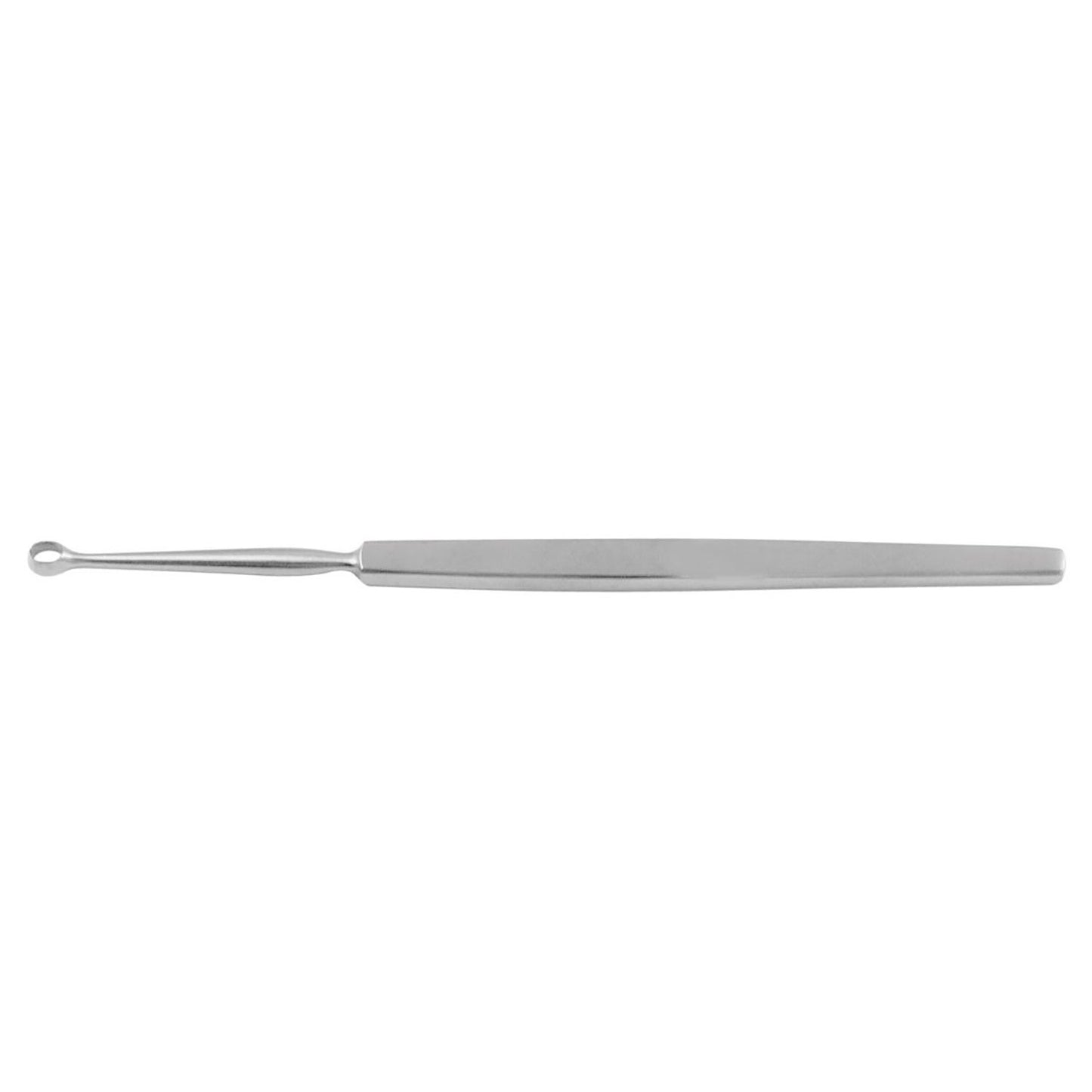
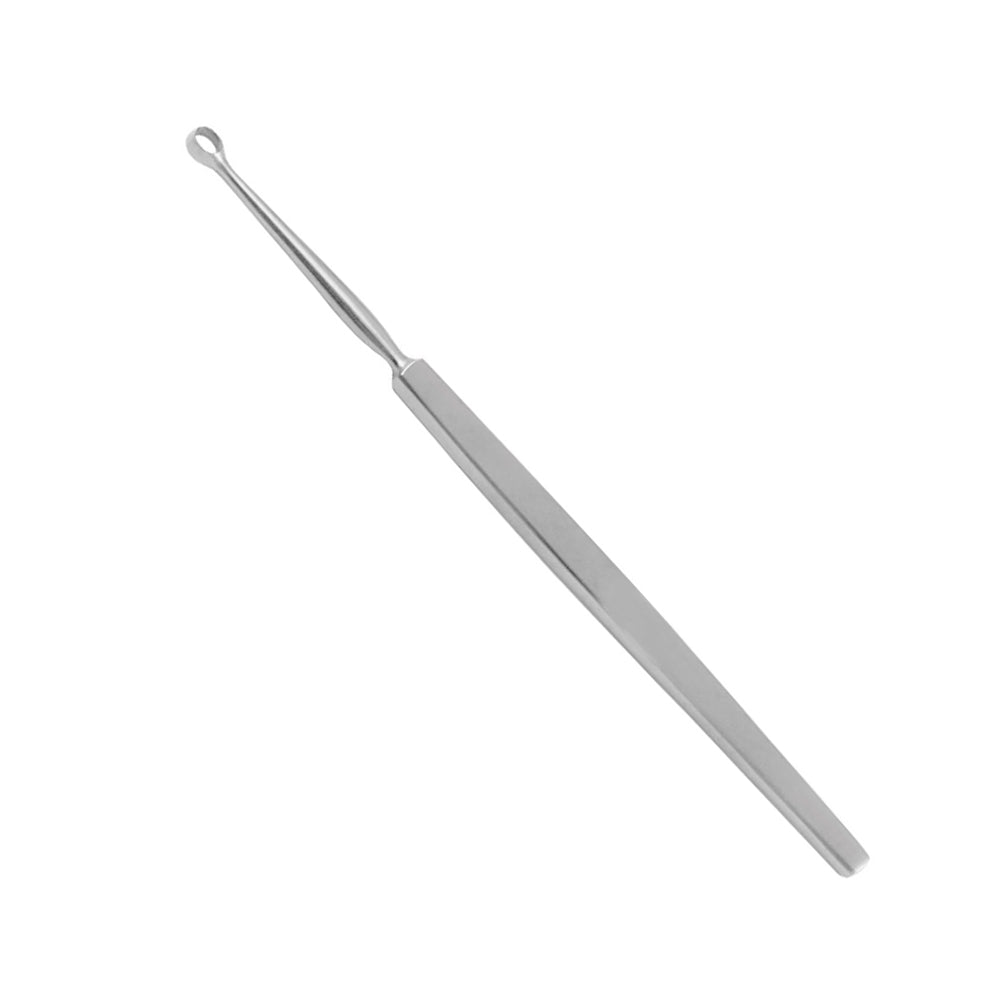
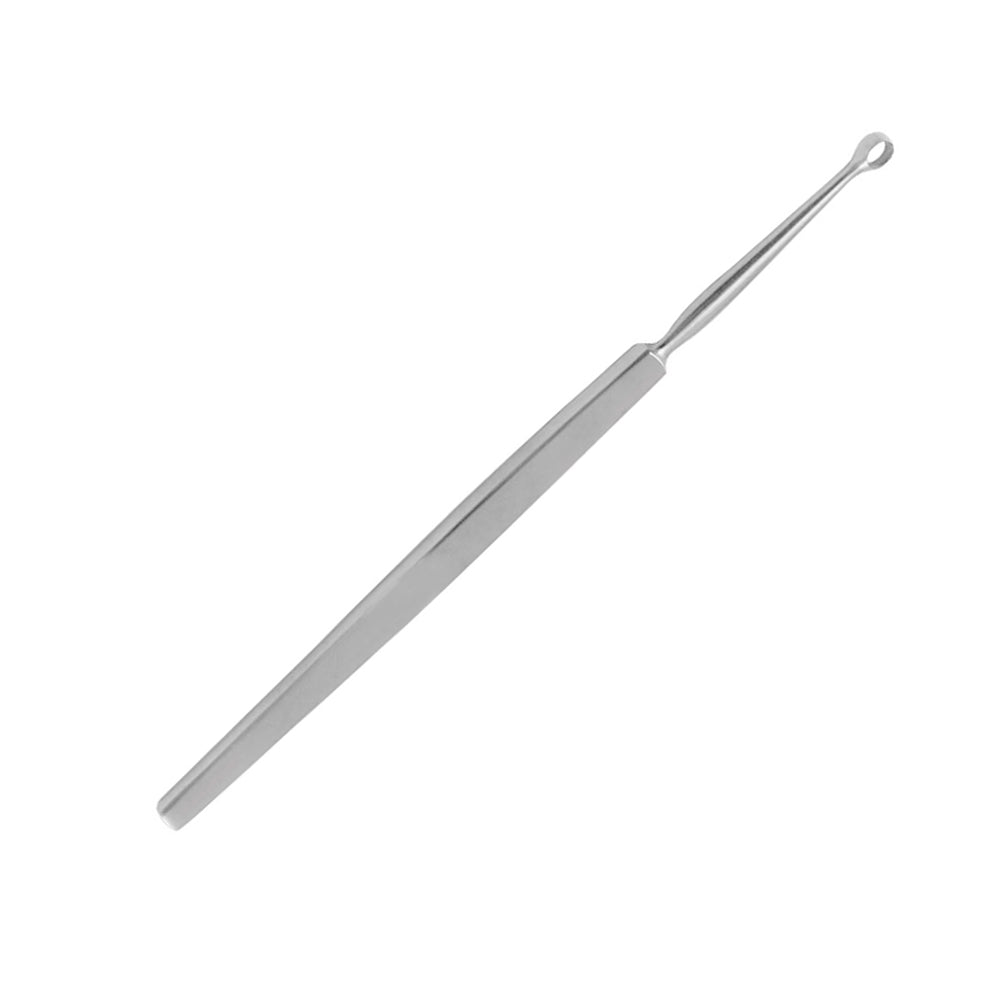
Fox Dermal Curettes, SKU PS-OT-0571, are reusable sharp dermal curettes manufactured from German stainless steel for controlled curettage of superficial cutaneous lesions and localized abnormal tissue. The working end is a small circular fenestrated loop with a sharp circumferential edge, joined to a narrow straight shaft and broad manual handle for tactile control during scraping. Four diameter variants are available: PS-9001 at 3 mm, PS-9002 at 4 mm, PS-9003 at 5 mm, and PS-9004 at 6 mm. These sizes allow the operator to match the cutting footprint to the lesion base and accessible skin surface rather than using a single oversized working end. The Fox pattern is used in dermatologic curettage of verrucae, molluscum contagiosum, seborrheic keratoses, selected superficial keratinocytic lesions, and curettage-electrodesiccation workflows where clinically indicated. It is also useful for localized debridement of superficial devitalized tissue in minor surgical settings. Dermatologists, plastic surgeons, podiatric surgeons, and clinicians performing office-based skin procedures use this pattern in outpatient procedure rooms, ambulatory surgical facilities, and hospital minor-operation environments where a reusable sharp curette is required.
The Fox configuration works by translating controlled hand pressure and short scraping strokes into cutting action at the circular loop. Its fenestrated tip presents a continuous sharp rim to the tissue surface, allowing the operator to engage a defined edge of epidermal or superficial dermal pathology while the open center provides visual and tactile feedback as material is removed. The small distal loop is connected through a tapered narrow shaft, keeping the operator’s fingers away from the treatment site and improving access around confined contours such as digits, periungual skin, or small facial areas. A broad straight handle supports pencil-style or modified palmar control depending on the direction and force required. Unlike a hinged or ratcheted device, the curette has no lock, pivot, or powered mechanism; depth is determined entirely by the angle of approach, downward pressure, stroke length, and number of passes. The operator can rotate the handle to bring different portions of the cutting circumference into contact with the lesion base. Because the tip is sharp, curettage should be progressive rather than forceful. This manual geometry is intended to distinguish pathologic or friable tissue from firmer surrounding tissue through tactile resistance while maintaining direct control over the scraping plane.
During dermatologic curettage, the lesion is first exposed and stabilized so the cutting loop can be placed against the intended tissue plane. For verrucae and molluscum contagiosum, a smaller diameter can be used to remove localized keratinous or infected tissue with short controlled strokes. Seborrheic keratoses and other superficial exophytic lesions may be reduced by sequential scraping until the clinician reaches an appropriate endpoint based on tissue feel and visual inspection. In curettage and electrodesiccation of selected superficial basal cell carcinomas or squamous cell carcinoma in situ, the curette is used to debulk and define friable tumor tissue between electrosurgical treatment cycles according to the surgeon’s treatment plan. For superficial debridement, the loop can remove focal devitalized tissue while preserving adjacent viable margins through careful control of pressure and direction. The 3 mm and 4 mm variants suit smaller treatment footprints and anatomically restricted sites, whereas the 5 mm and 6 mm models provide broader contact for larger superficial lesions on the trunk or extremities. The instrument should be used with the working end visible whenever possible so the surgeon can monitor the tissue plane, bleeding pattern, lesion base, and resistance during each pass.
PS-9001 has a 3 mm circular working end and provides the smallest listed curettage footprint. It is suited to small papules, focal verrucae, molluscum lesions, periungual work, and confined facial or digital sites where a larger loop would extend beyond the target area. PS-9002 increases the diameter to 4 mm, giving slightly broader contact for small-to-moderate superficial lesions while retaining fine control around curved skin surfaces. PS-9003 uses a 5 mm tip and is appropriate when the lesion base is wider and the operator needs more tissue contact per stroke, including selected keratotic lesions or broader curettage fields on the trunk and extremities. PS-9004 has a 6 mm diameter and provides the largest cutting circumference in the Peak Surgicals range, reducing the number of passes required across a larger superficial treatment area when that size matches the operative target. Diameter selection should be based on the visible lesion base, anatomic location, access angle, and the amount of surrounding normal skin that must remain outside the cutting path. The larger option should not be selected simply for speed. A correctly matched loop allows the clinician to keep the sharp rim within the intended treatment field and adjust stroke direction without unnecessary lateral extension.
German stainless steel gives the Fox pattern the rigidity needed to maintain a defined circular cutting edge while resisting deformation during repeated manual curettage. Peak Surgicals lists satin, dull, and mirror finish options. Satin or dull surfaces can reduce distracting reflections under procedure lighting, while a polished mirror surface provides a smooth exterior that is straightforward to inspect after cleaning. Because the instrument is reusable, reprocessing should begin promptly after use so blood, keratinous debris, and tissue fragments do not dry within the fenestrated loop or along the narrow shaft transition. Cleaning should address both surfaces of the cutting rim, followed by thorough rinsing, drying, magnified or direct visual inspection, and assessment of the edge for nicks, flattening, corrosion, or retained residue. The device can then be packaged and steam sterilized within the healthcare facility’s validated reusable-instrument cycle and applicable reprocessing instructions. Peak Surgicals identifies the product as Class I and lists CE, ISO 13485, and FDA-related procurement documentation. ISO 13485 concerns the medical-device quality-management system, while CE and FDA documentation should be handled within the institution’s supplier-qualification and regulatory review process rather than described as an individual product being FDA approved.
| SKU | PS-OT-0571 |
|---|---|
| Product Name | Fox Dermal Curettes |
| Price | $4.40 USD |
| Size/Gauge Variants | PS-9001: 3 mm diameter; PS-9002: 4 mm diameter; PS-9003: 5 mm diameter; PS-9004: 6 mm diameter |
| Instrument Category | Dermal Curette |
| Procedure | Dermatologic curettage, superficial lesion removal, curettage-electrodesiccation, localized superficial debridement |
| Material | German Stainless Steel |
| Finish | Satin, Dull, Mirror |
| Sterilization | Reusable; steam sterilization after validated cleaning and inspection |
| Instrument Classification | Class I Reusable Manual Curette |
| Reusable | Yes |
| Certifications | CE, ISO 13485, FDA-related procurement documentation |
| Warranty | 1 Year |
| MOQ | 1 Piece |
| OEM / Custom Orders | Available |
| After-Sale Service | Return and Replacement |
How do Fox Dermal Curettes differ from Piffard Dermal Curettes?
Fox Dermal Curettes use a round fenestrated cutting loop, whereas a Piffard Dermal Curette is classically supplied with an oval working end. The round Fox geometry gives a symmetrical cutting circumference that can be rotated during short scraping strokes without changing the basic footprint. The oval Piffard pattern offers a longer axis and narrower side profile, which can be useful when the operator wants directional access along an elongated lesion or confined surface. Both are manually controlled sharp curettes rather than hinged or locking instruments. The choice therefore depends on lesion shape, access angle, and whether a circular or elongated cutting outline better matches the operative target. For small localized skin lesions, the 3–6 mm Fox range provides four defined circular diameters for matching the lesion base.
Which Fox Dermal Curette diameter should be selected?
PS-9001 at 3 mm is the most focused option for small papules, periungual sites, digits, and confined facial treatment areas. PS-9002 at 4 mm provides slightly greater contact while remaining suited to compact superficial lesions. PS-9003 at 5 mm is selected when a broader lesion base on the trunk or extremities requires more cutting circumference per pass. PS-9004 at 6 mm is the largest listed model and is appropriate for wider superficial treatment fields when the operative target supports that footprint. Fox Dermal Curettes should be chosen according to lesion diameter, anatomic contour, access angle, and the amount of adjacent normal skin that must remain outside the scraping path. Diameter selection does not determine depth; depth remains controlled by pressure, angle, tactile resistance, and repeated visual assessment.
What do CE, ISO 13485 and FDA references mean for procurement?
Peak Surgicals lists CE, ISO 13485, and FDA-related information for Fox Dermal Curettes. ISO 13485 addresses the quality-management system used for controlled medical-device production rather than serving as an individual instrument performance claim. CE documentation supports conformity review for applicable markets under the relevant medical-device framework. For United States procurement, FDA status should be assessed according to the device category, establishment responsibilities, listing requirements, and documents required by the purchasing organization. The term FDA approved should not be substituted for the regulatory status of a reusable manual curette unless that specific claim is independently supported. Hospitals and distributors should retain the relevant supplier, product-identification, and regulatory records within their vendor-qualification system.
How is cutting depth controlled when the curette has no locking mechanism?
Fox Dermal Curettes do not use a ratchet, pivot, spring, lock, or adjustment mechanism. Control comes directly from the fixed handle, narrow shaft, and sharp circular working edge. The operator changes cutting action by adjusting grip, shaft angle, downward pressure, stroke length, and rotational orientation of the loop. Rotating the handle allows a fresh portion of the circular edge to engage the lesion while maintaining the same nominal diameter. Short controlled strokes provide better tactile discrimination than forceful sweeping movement, especially as firmer surrounding tissue is encountered. Because there is no mechanical stop, the clinician must continuously judge depth from tissue resistance, visual appearance, and the procedural endpoint.
How should hospitals order and reprocess Fox Dermal Curettes?
Fox Dermal Curettes should be ordered by the Shopify SKU PS-OT-0571 together with the required model diameter: PS-9001, PS-9002, PS-9003, or PS-9004. Peak Surgicals lists an MOQ of one piece, a one-year warranty, OEM availability, and return and replacement after-sale service. After use, tissue residue should be removed promptly from the fenestrated loop and narrow shaft before debris dries on the cutting edge. Cleaning should be followed by rinsing, complete drying, and visual inspection for retained material, corrosion, deformation, or edge damage. The instrument can then be packaged and steam sterilized using the healthcare facility’s validated reusable-instrument cycle and applicable reprocessing instructions. Operating-room and central sterile teams should keep model identification and inspection criteria consistent so the correct tip diameter and a serviceable cutting edge return to inventory.