
Featured Collection
Your cart
Featured Collection

PEAK SURGICALS
SKU:PS-OP-51210
Couldn't load pickup availability


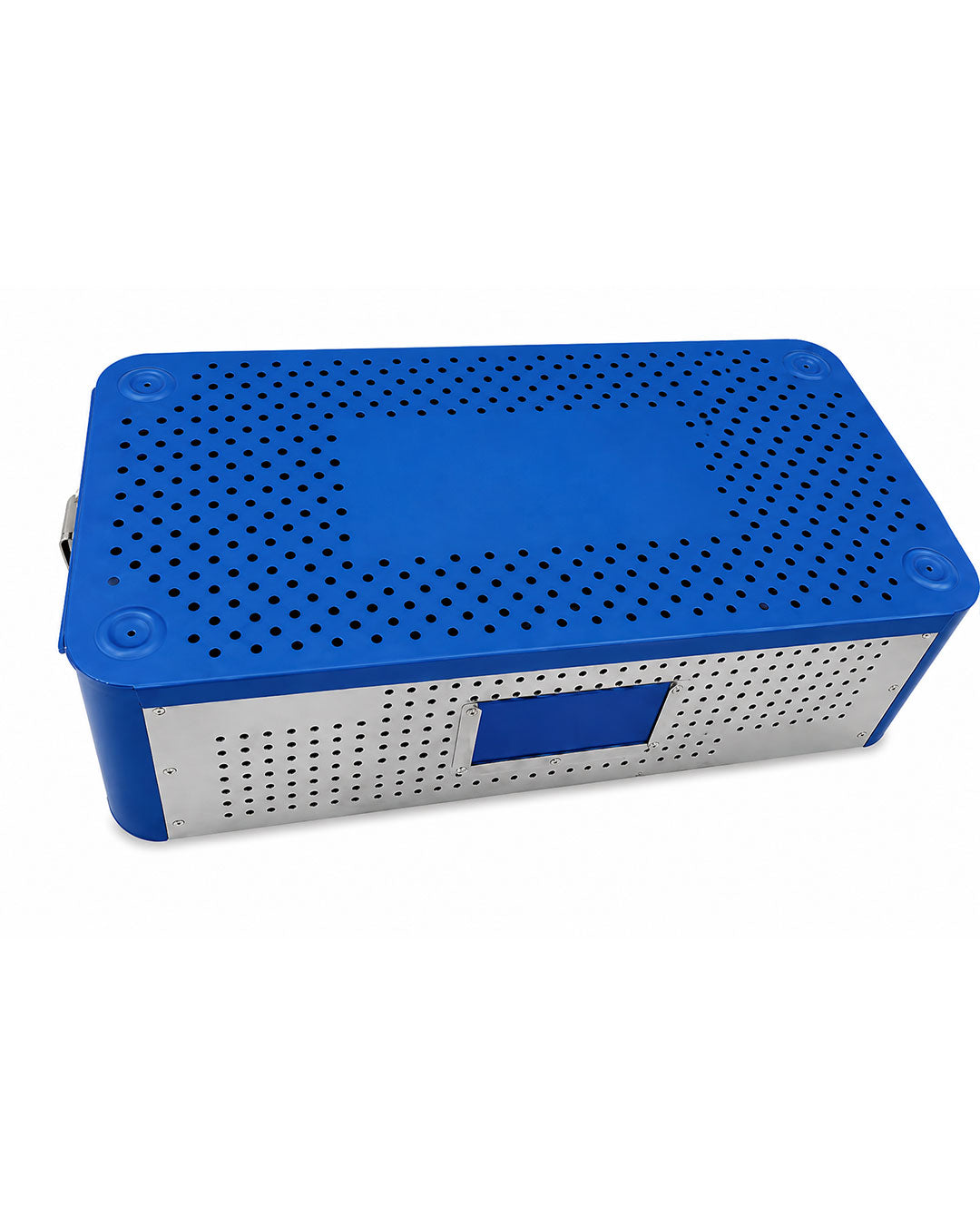
Instruments Set for PFNA-II Nails Antirotation – Proximal Femoral Blade Nail Instrumentation, SKU PS-OP-5121, is a reusable German stainless steel orthopedic system for PFNA-II cephalomedullary fixation. Q.078 Q-Series comprises 63 coded component entries with the stated quantities, including the PFNA insertion handle and connecting screw; 130° aiming arm; blade protection, drill, and trocar sleeves; Ø3.2 mm guide wires and direct measuring device; Ø11 mm blade drill and reamer; blade impactor, compression instrument, key, and extraction screw; PFNA-II bone awl; Ø17 mm cannulated proximal drill; Ø9, Ø10, Ø11, Ø12, and Ø13 mm flexible reamers; distal guide bar, targeting device, aligner, Ø6 mm drilling instruments, and depth gauge; quick-coupling handles, wrenches, screwdrivers, sliding hammer, radiographic ruler, and container. Orthopedic trauma and hip-fracture surgeons use the instrumentation for short or long PFNA-II nail fixation of intertrochanteric, pertrochanteric, and selected subtrochanteric-extension fractures. It supports trochanteric entry preparation, canal sizing, nail insertion, 130° femoral-neck targeting, helical blade channel preparation, controlled impaction, fracture compression when indicated, and distal locking under AP and axial fluoroscopy. The set is configured for trauma centers, orthopedic operating rooms, teaching hospitals, and implant-service departments.
The insertion handle couples to the PFNA-II nail through the connecting screw, establishing the mechanical reference for proximal and distal targeting. The 130° aiming arm reproduces the selected nail’s blade-hole angle and directs the protection sleeve, drill sleeve, trocar, and Ø3.2 mm guide wire as a coaxial assembly from the lateral cortex through the femoral neck. The direct measuring device reads guide-wire depth before channel preparation. The Ø11 mm blade drill opens the lateral cortex, while the corresponding reamer prepares the path required by the implant technique. The impactor transfers axial force to seat the helical blade without using a screw-driving motion; the blade key, compression nut, and compression instrument control locking, sliding, or fracture compression according to the nail system. The antirotation-wire jig guides an auxiliary wire during the operative stage specified by the implant protocol and does not represent a retained implant. Distally, the guide-bar connector, guide bar, targeting device, and aligner translate the handle reference to the locking-hole level. Protection sleeves and drill sleeves keep the drill trajectory aligned while shielding the soft-tissue corridor. Connection screws, locking nut, polyaxial wrench, spherical-head screwdriver, and distal-system key secure and adjust these assemblies without freehand substitution.
After closed or percutaneous reduction on a fracture table, the surgeon confirms proximal-femoral alignment in AP and axial views. The bone awl establishes the greater-trochanteric entry site; the Ø2.4 mm hooked guide wire, reaming rod, pin holder, guide-pin inserter, and quick-coupling handles support controlled access and canal preparation. Flexible reamers from Ø9 through Ø13 mm are selected sequentially to match the planned nail diameter and femoral canal, while the Ø17 mm cannulated drill and 20/17 mm sleeve enlarge the proximal entry corridor when required by the PFNA-II technique. The nail is mounted on the insertion handle, advanced to the planned depth, and rotationally aligned. Through the 130° arm, the Ø3.2 mm wire is directed into the head-neck segment and checked in two planes before depth measurement. The 16/11 mm protection sleeve, 11/3.2 mm drill sleeve, Ø11 mm drill, and blade reamer prepare the lateral cortex and blade track. The impactor seats the helical blade; the key and compression instruments complete implant locking or controlled compression. Distal interlocking then uses the guide-bar assembly, trocar, Ø6 mm sleeve and drills, depth gauge, and appropriate driver. The sliding hammer, connector, extraction screw, hammer guide, and nail-extractor key support controlled revision or removal steps.
The Ø2.4 mm × 485 mm hooked wire establishes the intramedullary reaming route, whereas the three Ø3.2 mm guide wires address blade targeting and other system-defined guide functions. Green Ø11/8 mm protection sleeves, Ø8/4 mm drill sleeves, and Ø4 mm trocars create the distal locking corridor for compatible short-nail workflows. The 20/17 mm sleeve, drill sleeve, and Ø17 mm cannulated drill are selected for proximal entry enlargement. Blade preparation uses the Ø16/11 mm protection sleeve, Ø11/3.2 mm drill sleeve, Ø3.2 mm trocar, Ø11 mm drill, and 11 mm reamer; the measuring device determines blade length from the guide-wire position. Flexible Ø9–13 mm reamers are chosen from calibrated imaging, canal diameter, cortical resistance, and the planned implant. The Ø6 mm trocar, protective sleeve, handled or unhandled Ø6 mm drills, 5.6/3.2 drill sleeve, and depth gauge serve distal locking and screw-length determination. The T-handle and straight quick couplings provide different hand positions for reaming or driver shafts. SW3.5, SW10, Ø4 mm spherical-head, cannulated hex, Ø10/11 mm socket, combination wrench, blade key, lag-screw driver, and nail-extractor key are interface-specific; selection follows the matching screw, nut, blade, or extraction connection rather than surgeon preference alone.
German stainless steel provides the hardness required for awls, drills, reamers, drivers, and impact interfaces, together with corrosion resistance for repeated hospital processing. A satin, non-reflective surgical finish limits glare beneath operating-room lights and leaves etched codes and working surfaces visible during inspection. Following surgery, personnel disassemble handles, screws, sleeves, guide assemblies, drills, and blade instruments at their intended junctions. Point-of-use soil control is followed by validated cleaning, flushing of cannulations, brushing of reamer flutes and drill channels, rinsing, complete drying, functional inspection, packaging, and steam sterilization under the facility’s authorized cycle. Sterile-processing staff inspect guide wires for bending, cutting edges for damage, sleeves for obstruction, threaded connections for wear, aiming constructs for play, and impact instruments for deformation. Detergent chemistry, ultrasonic exposure, lubrication, water quality, and autoclave parameters follow supplied reprocessing instructions and local validation. CE marking supports applicable European conformity documentation, while ISO 13485 covers the controlled quality-management system and traceability records. FDA-compliant procurement concerns the device, establishment, labeling, listing, and import documentation applicable to the United States transaction rather than a general approval statement. Peak Surgicals offers one-set MOQ, OEM configuration, a one-year manufacturing warranty, and return or replacement support.
| Code | Q.078 Instruments Set for PFNA-II Nails — Set Consisting Of | Units |
|---|---|---|
| Q.078.01 | Insertion Handle for PFNA | 1 |
| Q.078.04 | Connecting Screw | 1 |
| Q.078.07 | Protection Sleeve Ø11.0/Ø8.0, green | 2 |
| Q.078.10 | Drill Sleeve Ø8.0/Ø4.0, green | 2 |
| Q.078.13 | Trocar Ø4.0 mm, green | 2 |
| Q.078.16 | Compression Nut for PFNA Blade | 1 |
| Q.078.19 | Trocar Ø3.2 mm for PFNA Blade | 1 |
| Q.078.25 | Direct Measuring Device for Guide Wire Ø3.2 mm | 1 |
| Q.078.28 | Tissue Protector | 1 |
| Q.078.31 | Solid Screwdriver SW3.5 | 1 |
| Q.078.32 | Cannulated Hex Wrench | 1 |
| Q.078.34 | Hexagonal Socket Ø10.0/11.0 mm, cannulated, for PFNA | 1 |
| Q.078.37 | Bone Awl for PFNA-II | 1 |
| Q.078.40 | Threaded Pin | 3 |
| Q.078.43 | Stylet | 1 |
| Q.078.46 | Protection Sleeve 20.0/17.0 mm for PFNA-II | 1 |
| Q.078.49 | Drill Sleeve | 1 |
| Q.078.52 | Cannulated Drill Bit Ø17 mm | 1 |
| Q.078.55 | Connector for Insertion Handle for PFNA | 1 |
| Q.078.58 | Sliding Hammer | 1 |
| Q.078.61 | Aiming Arm 130° | 1 |
| Q.078.61a | Plug for Aiming Device | 1 |
| Q.078.62 | Locking Nut | 1 |
| Q.078.64 | Polyaxial Ball-Tip Wrench SW10 | 1 |
| Q.078.65 | Hexagonal Screwdriver with Spherical Head Ø4.0 mm | 1 |
| Q.078.67 | Drill Bit Ø11.0 mm for PFNA Blade | 1 |
| Q.078.70 | Reamer 11 mm for PFNA-II Blade | 1 |
| Q.078.73 | Aiming Arm | 1 |
| Q.078.76 | Distal Guide Bar Connector | 1 |
| Q.078.79 | Distal Guide Bar | 1 |
| Q.078.82 | Distal Targeting Device | 1 |
| Q.078.88 | Connection Screw | 3 |
| Q.078.91 | Key for Distal Locking System | 1 |
| Q.078.94 | Trocar Ø6.0 mm | 1 |
| Q.078.97 | Protection Sleeve for Ø6 mm Drill Bit | 1 |
| Q.078.98 | Drill Sleeve 5.6/3.2 mm | 1 |
| Q.078.100 | Drill Bit Ø6 mm | 1 |
| Q.078.103 | Drill Bit Ø6 mm with Handle | 1 |
| Q.078.106 | Depth Gauge | 1 |
| Q.078.109 | Key for Blade | 1 |
| Q.078.112 | Aiming Jig for Antirotation Wire | 1 |
| Q.078.113 | Extraction Screw for PFNA Blade | 1 |
| Q.078.115 | Drill Sleeve Ø3.2 mm | 1 |
| Q.078.118 | Compression Instrument for PFNA Blade | 1 |
| Q.078.124 | Combination Wrench Ø11.0 mm | 1 |
| Q.078.127 | Guide Wire Ø3.2 mm | 3 |
| Q.078.130 | Impactor for PFNA Blade | 1 |
| Q.078.136 | Protection Sleeve Ø16.0/Ø11.0 for PFNA Blade | 1 |
| Q.078.139 | Drill Sleeve Ø11.0/Ø3.2 for PFNA Blade | 1 |
| Q.078.142 | Guide Wire Ø2.4 mm, length 485 mm, with Hook | 1 |
| Q.078.145 | Drill Bit Ø4 mm | 1 |
| Q.078.151 | Reaming Rod | 1 |
| Q.078.154 | Pin Holder | 1 |
| Q.078.155 | Guide Pin Inserter | 1 |
| Q.078.157 | T-Handle Quick Coupling | 1 |
| Q.078.160 | Radiographic Ruler | 1 |
| Q.078.163 | Flexible Reamers Ø9, Ø10, Ø11, Ø12, Ø13 | 1 |
| Q.078.181 | Straight Handle Quick Coupling | 1 |
| Q.078.185 | Distal Aligner | 1 |
| Q.078.187 | Hammer Guide | 1 |
| Q.078.190 | Key for Nail Extractor | 1 |
| Q.078.201 | Lag Screw Driver | 1 |
| Q.078.000 | Container for PFNA-II Instruments | 1 |
| Specification | Details |
|---|---|
| SKU | PS-OP-5121 |
| Product Name | Instruments Set for PFNA-II Nails Antirotation |
| Price | $1,628.62 USD |
| Size/Gauge Variants | 130° aiming arm; flexible reamers Ø9–13 mm; guide wires Ø2.4 and Ø3.2 mm; blade, entry, and distal-locking sleeves and drills as listed |
| Instrument Category | Orthopedic proximal femoral cephalomedullary nail instrumentation |
| Procedure | PFNA-II helical-blade fixation of intertrochanteric, pertrochanteric, and selected subtrochanteric-extension fractures |
| Material | German stainless steel |
| Finish | Satin, non-reflective surgical finish |
| Sterilization | Validated cleaning followed by steam autoclave sterilization under the healthcare facility’s approved cycle |
| Instrument Classification | Reusable orthopedic implant-insertion and targeting instrument set |
| Reusable | Yes |
| Certifications | CE marked; manufactured under ISO 13485 quality controls; FDA-compliant procurement documentation |
| Warranty | One-year manufacturing warranty |
| MOQ | 1 set |
| OEM / Custom Orders | Available for distributor branding, set configuration, labeling, and volume procurement |
| After-Sale Service | Return and replacement support for eligible manufacturing or supply issues |
How does PFNA-II helical-blade instrumentation differ from a lag-screw cephalomedullary set?
The Instruments Set for PFNA-II Nails Antirotation is configured around an impacted helical blade and its matching nail interface. It therefore includes an Ø11 mm blade drill, blade reamer, impactor, compression instrument, blade key, and extraction screw. A lag-screw system instead requires the drills, taps, measuring instruments, and threaded driver matched to its cylindrical screw. The helical blade is advanced axially over a guide wire, whereas a lag screw is inserted by rotation. Both constructs require accurate fracture reduction, head-neck targeting, depth measurement, and distal interlocking. Blade or screw selection remains dependent on fracture pattern, bone quality, implant design, and surgeon judgment. The two instrument sets are not interchangeable unless the implant manufacturer explicitly validates the shared components.
How are the 130° arm, guide-wire diameters, and reamer sizes selected?
The 130° aiming arm is paired only with a PFNA-II nail having the corresponding proximal blade angle. The Ø2.4 mm hooked wire and reaming rod establish the intramedullary route during trochanteric entry and canal preparation. Flexible Ø9–13 mm reamers are selected sequentially from preoperative measurement, the narrowest femoral canal segment, and the planned nail diameter. The Ø3.2 mm wires guide blade targeting through the femoral neck into the femoral head under AP and axial fluoroscopy. The direct measuring device determines the required blade length from the final wire position. The Instruments Set for PFNA-II Nails Antirotation uses diameter-matched sleeves so each trocar, drill, and wire remains coaxial. A different CCD angle, nail diameter, or implant family requires the corresponding targeting and preparation instruments.
What do CE, ISO 13485, and FDA-compliant procurement mean for this set?
CE marking supports conformity documentation for supply into applicable European medical-device markets. ISO 13485 identifies the controlled quality-management framework governing manufacture and traceability of the Instruments Set for PFNA-II Nails Antirotation. United States procurement also depends on the regulatory classification, establishment and device listing, labeling, importer responsibilities, and transaction-specific documentation. These terms describe separate regulatory functions and should not be treated as interchangeable approvals. Hospitals should retain the quotation, SKU, Q-Series code, labeling, batch records, and supplied conformity documents in the vendor file. Distributors must align import and market-registration records with the destination jurisdiction. Peak Surgicals can provide product and commercial documentation for institutional review.
How do the aiming arm and locking mechanisms control intraoperative alignment?
The insertion handle and connecting screw create the reference axis between the nail and the targeting assembly. The 130° aiming arm positions the sleeve and guide-wire corridor relative to the nail’s proximal blade hole. Its plug closes the unused targeting aperture, while the locking nut and interface screws stabilize the construct. The distal connector, guide bar, targeting device, and aligner extend that reference toward the locking holes. The compression nut and blade compression instrument control axial movement at the proximal fixation stage according to the implant technique. The Instruments Set for PFNA-II Nails Antirotation therefore depends on fully seated couplings and verified AP and axial imaging before drilling. Play, thread damage, incomplete seating, or mismatched components requires removal of the assembly from use.
What should procurement and sterile-processing teams check before releasing the set?
Procurement should reconcile all 63 coded entries against the attached quantity table rather than relying on the phrase “63-piece.” Multiples include paired green sleeves and trocars, three threaded pins, three connection screws, and three Ø3.2 mm guide wires. The Instruments Set for PFNA-II Nails Antirotation must be disassembled so cleaning reaches cannulations, sleeve lumens, reamer flutes, threads, and impact interfaces. After drying, personnel inspect cutting edges, guide wires, aiming connections, etched codes, and moving or threaded junctions. Components are arranged in the container and processed through the facility’s validated steam cycle. Release records should connect the set identifier, count result, inspection status, sterilizer load, and repair history. Hospitals and distributors may order one set, request OEM configuration, and use the after-sale channel for eligible replacements.


