
Featured Collection
Your cart
Featured Collection

PEAK SURGICALS
SKU:PS-OP-010009
Couldn't load pickup availability


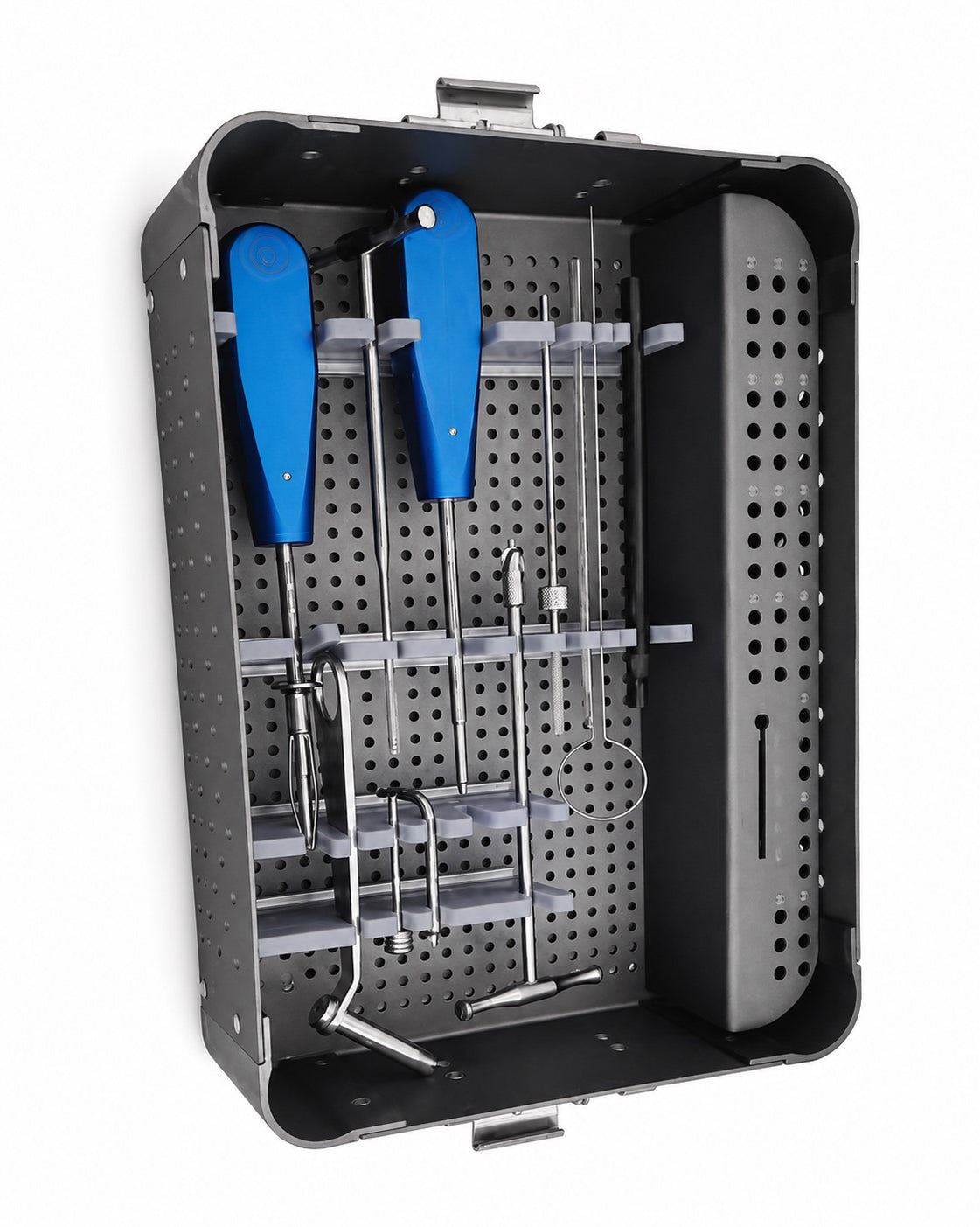
Instruments Set For 4.0mm Cannulated Cancellous Screws, SKU PS-OP-010009, is a reusable Q-Series orthopedic fixation system manufactured from German-forged stainless steel for guided preparation and insertion of compatible 4.0 mm cannulated cancellous screws. The configuration includes PS-080.01 Direct Measuring Device 0–70 mm, PS-080.02 Cleaning Stylet 1.2 mm, four PS-080.03 Threaded Guide Wires 1.2 mm, PS-080.04 Cannulated Drill Bit with Limited Block 2.7 mm, PS-080.05 Hexagonal Screwdriver with 2.5 mm tip, PS-080.06 Cannulated Tap for 4.0 mm screws, PS-080.07 Cannulated Hexagonal Screwdriver with 2.5 mm tip, PS-080.08 Cannulated Countersink Ø6.5 mm, PS-080.09 Hex Key, PS-080.10 Drill Sleeve 1.2 mm, PS-080.11 Protection Sleeve, and PS-080.000 Empty Container with Screw Rack. The system supports guide-wire-directed fracture fixation, osteotomy fixation, and selected arthrodesis procedures involving small bones and small fragments, including scaphoid and other carpal bones, metacarpals, tarsal and metatarsal regions, patella, radial head, radial styloid, and selected ankle or elbow fixation. It is intended for orthopedic trauma, hand, foot and ankle surgeons working in hospitals and specialist surgical centers.
The set is organized around a 1.2 mm threaded guide-wire pathway that establishes the planned screw axis before bone preparation and implant insertion. Once the surgeon has reduced the fracture or positioned the osteotomy or arthrodesis surfaces, the PS-080.03 guide wire is advanced along the intended trajectory under the imaging and fixation protocol used for the selected implant system. PS-080.10 Drill Sleeve controls the guide-wire entry path, while PS-080.11 Protection Sleeve separates the rotating instrumentation from surrounding soft tissue. The PS-080.04 2.7 mm cannulated drill bit passes over the guide wire so the pilot channel follows the pre-established axis; its limited-block configuration provides a mechanical reference during controlled drilling. If thread preparation is required, PS-080.06 Cannulated Tap follows the same guide-wire path and prepares the cancellous bone for the 4.0 mm screw. The PS-080.07 cannulated 2.5 mm hexagonal screwdriver then advances the implant while the wire remains available as an axial guide. PS-080.05 provides a solid 2.5 mm hexagonal driver option for compatible insertion or removal stages where cannulation is not required. This sequence keeps measurement, drilling, tapping, and driving referenced to one planned trajectory.
During small-fragment fixation, the Instruments Set For 4.0mm Cannulated Cancellous Screws enters the procedure after fracture reduction and determination of the intended screw trajectory. In scaphoid, carpal, metacarpal, tarsal, metatarsal, patellar, radial styloid, radial head, and selected ankle or elbow procedures, the 1.2 mm threaded guide wire establishes a controlled axis across the targeted bone fragments or fusion surfaces. The direct measuring device is used after wire placement to determine the required screw length within its 0–70 mm measuring range. The protection sleeve and drill sleeve maintain access to the selected entry point while limiting unnecessary contact between rotating instrumentation and surrounding soft tissue. A 2.7 mm cannulated drill prepares the channel along the wire, followed by the 4.0 mm cannulated tap when pre-tapping is appropriate for the selected screw and bone condition. The Ø6.5 mm cannulated countersink prepares the cortical entry region when the fixation technique calls for recessing the screw head. The cannulated 2.5 mm hexagonal driver then advances the compatible screw over the guide wire. After fixation is completed, the guide wire is removed and implant position, compression, length, and joint penetration are assessed according to the operative technique and imaging protocol.
Each component in the Q-Series configuration corresponds to a defined stage of 4.0 mm cannulated cancellous screw fixation. PS-080.01 provides direct measurement from 0–70 mm for screw-length selection after guide-wire positioning. PS-080.02 Cleaning Stylet 1.2 mm is used to maintain access through narrow cannulated instrument pathways during reprocessing and instrument preparation. Four PS-080.03 threaded 1.2 mm guide wires provide multiple provisional trajectories or replacement wires during a procedure. PS-080.04 combines a 2.7 mm cannulated drill with a limiting block for controlled pilot-channel preparation. PS-080.05 is a solid 2.5 mm hexagonal screwdriver, whereas PS-080.07 is cannulated so the screw can be advanced along the established guide-wire axis. PS-080.06 supplies the 4.0 mm cannulated tapping function. PS-080.08 provides a Ø6.5 mm countersinking diameter for preparation around the screw-head entry site. PS-080.09 Hex Key supports compatible system adjustments. PS-080.10 directs the 1.2 mm wire, and PS-080.11 forms the outer protective working sleeve. Together, the listed instrument lines provide 14 individual instruments or components because the guide-wire line contains four wires, with the dedicated PS-080.000 container and screw rack completing the tray configuration.
Set Includes:
| SKU | Quantity | Description |
|---|---|---|
| PS-080.01 | 1 | Direct Measuring Device, 0–70 mm |
| PS-080.02 | 1 | Cleaning Stylet, 1.2 mm |
| PS-080.03 | 4 | Threaded Guide Wire, 1.2 mm |
| PS-080.04 | 1 | Cannulated Drill Bit with Limited Block, 2.7 mm |
| PS-080.05 | 1 | Hexagonal Screwdriver, 2.5 mm Tip |
| PS-080.06 | 1 | Cannulated Tap for Cannulated Screw, 4.0 mm |
| PS-080.07 | 1 | Cannulated Hexagonal Screwdriver, 2.5 mm Tip |
| PS-080.08 | 1 | Cannulated Countersink, Ø6.5 mm |
| PS-080.09 | 1 | Hex Key |
| PS-080.10 | 1 | Drill Sleeve, 1.2 mm |
| PS-080.11 | 1 | Protection Sleeve |
| PS-080.000 | Empty Container with Screw Rack |
The reusable components in the Instruments Set For 4.0mm Cannulated Cancellous Screws are produced within Peak Surgicals’ German-forged stainless-steel instrument platform for repeated orthopedic handling, cleaning, inspection, and sterilization. Cannulated instruments require particular attention during reprocessing because blood, bone debris, and irrigation residue can remain within the internal bore even when the external surface appears clean. The 1.2 mm cleaning stylet supports mechanical access through compatible narrow lumens, while cannulated drill, tap, countersink, screwdriver, and sleeve pathways should be thoroughly flushed and inspected before packaging. Cutting flutes on the 2.7 mm drill, threads on the 4.0 mm tap, the Ø6.5 mm countersink, guide-wire surfaces, screwdriver tips, and measuring interfaces should be examined for wear, deformation, corrosion, or retained debris after every cycle. Peak Surgicals supplies reusable instruments non-sterile unless otherwise specified, requiring validated cleaning and sterilization before first clinical use and after each procedure. The company operates within an ISO 13485 medical-device quality-management framework and supports CE-marked instrumentation for applicable markets. FDA procurement context should be documented through applicable registration, listing, labeling, and quality requirements rather than interpreted as blanket individual device approval.
| Specification | Details |
|---|---|
| SKU | PS-OP-010009 |
| Product Name | Instruments Set For 4.0mm Cannulated Cancellous Screws |
| Price | $383.90 USD |
| Size/Gauge Variants | 1.2 mm guide wire and drill sleeve; 2.7 mm cannulated drill; 4.0 mm cannulated tap; 2.5 mm hex drivers; Ø6.5 mm countersink; 0–70 mm measuring device |
| Instrument Count | 14 instruments/components across 11 instrument catalog lines, plus PS-080.000 empty container with screw rack |
| Instrument Category | Orthopedic Cannulated Screw Fixation Instrument Set |
| Procedure | Small-bone fracture fixation, selected osteotomies and arthrodesis using compatible 4.0 mm cannulated cancellous screws |
| Material | German-forged medical-grade stainless steel |
| Finish | Surgical stainless-steel finish with polished functional interfaces and machined cutting or driving surfaces |
| Sterilization | Supplied non-sterile; reusable and processed through validated institutional cleaning and sterilization protocols |
| Instrument Classification | Reusable orthopedic screw insertion and bone-preparation instrument system |
| Reusable | Yes |
| Certifications | CE marked, ISO 13485 quality-management framework, FDA-compliant procurement context |
| Warranty | 1-Year Limited Warranty covering manufacturing defects under normal professional use |
| MOQ | 1 Set |
| OEM / Custom Orders | Bulk and custom quotations available for hospitals, clinics, distributors, and procurement teams |
| After-Sale Service | Warranty assistance and eligible 30-day return or replacement support under Peak Surgicals terms |
How does a 4.0 mm cannulated cancellous screw instrument set differ from a larger cannulated screw system?
The Instruments Set For 4.0mm Cannulated Cancellous Screws is configured around a smaller guide-wire-directed fixation pathway intended for compatible 4.0 mm implants. Larger cannulated screw systems use proportionally larger guide wires, drills, taps, drivers, and protective sleeves because the implants are designed for larger bone fragments or different fixation loads. The 4.0 mm system uses a 1.2 mm guide wire and a 2.7 mm cannulated drill, allowing controlled access to relatively small osseous targets. Its 2.5 mm hexagonal drivers correspond to the compatible screw interface used within this configuration. The set is therefore suited to small-bone and small-fragment fixation rather than functioning as a substitute for a large-fragment cannulated screw tray. Selection should follow the fracture pattern, bone dimensions, implant system, and surgeon’s operative plan.
How are the 1.2 mm guide wire, 2.7 mm drill, 4.0 mm tap and Ø6.5 mm countersink used?
The Instruments Set For 4.0mm Cannulated Cancellous Screws uses these dimensions sequentially around the planned screw trajectory. The 1.2 mm threaded guide wire establishes the initial axis through the fracture, osteotomy, or fusion site. The 2.7 mm cannulated drill then passes over that wire to prepare the pilot channel while retaining the selected direction. The 4.0 mm cannulated tap prepares the cancellous thread pathway when tapping is required for the selected implant and bone condition. The Ø6.5 mm countersink addresses the cortical entry region when the operative technique calls for seating the screw head into a prepared recess. The 2.5 mm cannulated screwdriver subsequently advances the compatible screw along the wire, while the 0–70 mm measuring device supports selection of the intended screw length.
What do CE, ISO 13485 and FDA requirements mean when procuring this instrument set?
The Instruments Set For 4.0mm Cannulated Cancellous Screws is supplied within Peak Surgicals’ medical-device manufacturing and procurement framework. ISO 13485 refers to the quality-management system used for controlled medical-device production and associated processes. CE marking addresses conformity requirements for applicable regulated markets. In the United States, FDA compliance concerns the relevant manufacturer registration, device listing, labeling, quality-system, and supporting regulatory documentation. The phrase FDA approved should not be used as a blanket claim for each reusable manual instrument unless that specific regulatory status applies to the device. Hospitals and distributors can retain the applicable compliance records together with purchasing, vendor qualification, warranty, and instrument-tray documentation.
How do the cannulation and drill-sleeve system control screw trajectory during fixation?
The primary guidance mechanism in the Instruments Set For 4.0mm Cannulated Cancellous Screws is the relationship between the 1.2 mm guide wire and the cannulated instruments that pass over it. The guide wire establishes the planned bone trajectory before the larger drilling or insertion components are introduced. The 1.2 mm drill sleeve supports controlled wire entry, while the outer protection sleeve creates a working channel through the soft-tissue corridor. The 2.7 mm drill, 4.0 mm tap, Ø6.5 mm countersink, and cannulated 2.5 mm screwdriver can then remain referenced to that axial guide where the operative step requires it. This reduces the need to recreate the screw trajectory independently during each stage. The limited block on the drill provides an additional mechanical control element during pilot-channel preparation according to the selected technique.
How should hospitals clean and manage this cannulated screw instrument set?
The Instruments Set For 4.0mm Cannulated Cancellous Screws requires detailed lumen cleaning because several components contain narrow cannulated pathways. After use, visible contamination should be removed promptly and the cannulated drill, tap, countersink, screwdriver, sleeves, and other accessible bores should be flushed before debris dries. The 1.2 mm cleaning stylet can assist with mechanical cleaning of compatible internal channels but does not replace the healthcare facility’s complete validated reprocessing protocol. Drill flutes, tap threads, guide wires, screwdriver tips, measuring surfaces, and sleeve openings should be inspected for retained material, deformation, corrosion, or functional wear. After rinsing and complete drying, the instruments should be reconciled against their PS-080 catalog codes and placed into the dedicated container and screw rack. The assembled tray can then be processed according to the institution’s validated sterilization procedure for reusable orthopedic stainless-steel instrumentation.


