
Featured Collection
Your cart
Featured Collection

PEAK SURGICALS
SKU:PS-OP-010007
Couldn't load pickup availability


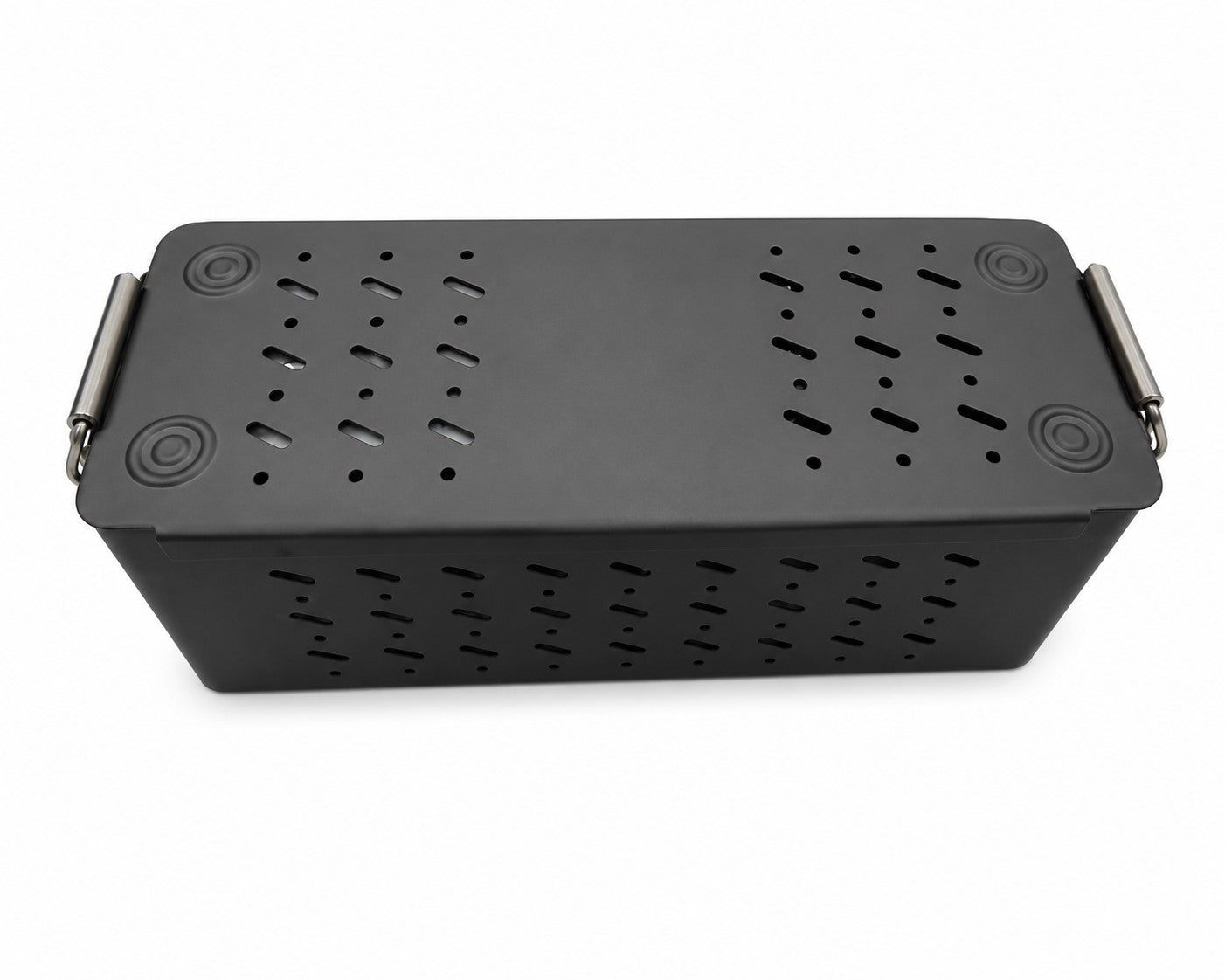
Cancellous Cannulated Screws 7mm, SKU PS-OP-010007, is an orthopedic implant set containing 7.0 mm cannulated cancellous screws in two threaded configurations, large washers, and a dedicated 900.050 storage container. The set provides 28 screws in the 16 mm configuration across 50, 55, 60, 65, 70, 75, 80, 85, 90, 95, and 100 mm overall lengths, together with 16 screws in the 32 mm configuration across 50, 55, 60, 65, 70, 75, 80, 85, 90, and 95 mm lengths. Ten large washers complete the implant inventory. Cannulation allows each screw to advance over a previously positioned guide wire so the surgeon can preserve a planned trajectory during definitive fixation. The cancellous thread geometry is intended to obtain purchase within trabecular bone, while the two threaded configurations provide different lengths of bone engagement for fracture compression and fixation strategy. Clinically, 7.0 mm large cannulated screws are used in orthopedic trauma and reconstructive procedures involving the femoral neck, tibial plateau, pelvis, sacroiliac region, distal or intercondylar femur, and selected hindfoot arthrodesis procedures. The set is intended for orthopedic trauma surgeons and hospital implant inventories requiring multiple screw lengths immediately available during fixation.
The 7.0 mm cannulated cancellous screw functions by combining a central guide-wire channel with a large-diameter threaded body that engages cancellous bone along the selected trajectory. After a guide wire has established position, direction, and depth, the screw is advanced concentrically over that wire with the compatible cannulated driver system. This relationship preserves the predetermined axis during insertion and is particularly useful where accurate placement through the femoral neck, tibial plateau, pelvic corridor, or other deep osseous pathway is required. The cancellous thread profile provides a larger thread form than cortical screw geometry and is designed to engage trabecular bone while transmitting axial compression through the fixation construct. The set contains shorter and longer threaded configurations so the surgeon can position the threaded region relative to the fracture plane and the intended far-fragment purchase. When a washer is selected, the large washer sits beneath the screw head and increases the contact area at the near cortex. This distributes head pressure over a broader bone surface and can reduce localized embedding of the screw head in cancellous or comparatively thin cortical bone. Final screw trajectory, thread position, washer use, and insertion torque follow the operative requirements of the selected fixation system.
In guide-wire-directed large-bone fixation, the surgeon first reduces the fracture or prepares the intended arthrodesis surfaces and then establishes the required screw trajectory using the compatible guide-wire instrumentation. In femoral neck fixation, parallel guide wires can define multiple screw pathways through the femoral neck toward the femoral head while maintaining the planned relationship to the cortical boundaries and fracture line. Similar cannulated screw principles are used for selected tibial plateau fractures, pelvic and iliosacral fixation, intercondylar femoral fractures, sacroiliac disruption, and subtalar arthrodesis. After guide-wire position and depth have been assessed, the required 7.0 mm screw length is selected from the 50–100 mm inventory. Bone preparation is performed with the matching cannulated drill, tap, and countersink instruments when required by the fixation technique. The implant is then advanced over the wire so the screw follows the established osseous path. The threaded portion is positioned to obtain the intended purchase beyond the fracture or fusion interface, while the screw head compresses the near side directly or through a large washer. The guide wire is removed after definitive seating, followed by assessment of implant position, fracture reduction, joint penetration, and construct alignment using the operative imaging protocol.
The implant inventory is divided into 16 mm and 32 mm threaded configurations to provide different amounts of cancellous thread engagement within the selected screw length. The 16 mm group contains 28 screws: two each in 50, 55, 60, 65, and 100 mm lengths, plus three each in 70, 75, 80, 85, 90, and 95 mm lengths. This distribution emphasizes the intermediate and longer lengths commonly required when the fixation pathway crosses a substantial osseous distance. The 32 mm group contains 16 screws: one each at 50, 55, 60, and 65 mm and two each at 70, 75, 80, 85, 90, and 95 mm. A shorter threaded region can be selected when the fixation strategy requires the threads to obtain purchase predominantly within the far fragment while allowing the unthreaded portion to span the fracture plane and support lag-screw compression. The longer threaded configuration increases the available threaded bone contact where greater cancellous engagement is required. Overall length is selected according to measured guide-wire depth, anatomical corridor, fracture position, and the required terminal screw position. Ten large washers give the surgical team an additional head-support option where wider load distribution at the near cortex is clinically appropriate.
Set Includes:
| Component | Quantity | Length Configuration |
|---|---|---|
| 7.0mm Cannulated Cancellous Screws / 16mm | 28 | 2 each: 50, 55, 60, 65, 100 mm; 3 each: 70, 75, 80, 85, 90, 95 mm |
| 7.0mm Cannulated Cancellous Screws / 32mm | 16 | 1 each: 50, 55, 60, 65 mm; 2 each: 70, 75, 80, 85, 90, 95 mm |
| Large Washers | 10 | For compatible 7.0mm cancellous cannulated screw fixation |
| 900.050 Empty Container | 1 | Dedicated implant storage and inventory container |
The Cancellous Cannulated Screws 7mm set is listed by Peak Surgicals as medical-grade steel orthopedic inventory and is organized in a dedicated perforated container for hospital storage, size identification, and implant reconciliation. Because the screws and washers are implant components rather than reusable hand instruments, they are treated as single-use clinical devices once implanted or exposed in a manner that prevents further use under the applicable product labeling. The central cannulation, screw threads, hexagonal driving interface, head geometry, and washer contact surface require protection from mechanical damage during handling because deformation can interfere with guide-wire passage, driver engagement, bone purchase, or final seating. Implant sterility and processing follow the validated labeling and packaging configuration supplied with the product rather than the general reprocessing pathway used for reusable orthopedic instruments. Peak Surgicals supports ISO 13485 certified manufacturing standards and CE-marked medical-device procurement for applicable markets. U.S. purchasing documentation is managed within the applicable FDA registration, listing, labeling, and quality-system context rather than by applying a blanket individual approval claim. The dedicated container allows operating-room and procurement teams to reconcile 44 screws across two thread configurations, 10 washers, and the complete length matrix before the set is released for clinical inventory.
| Specification | Details |
|---|---|
| SKU | PS-OP-010007 |
| Product Name | Cancellous Cannulated Screws 7mm |
| Price | $219.99 USD |
| Size/Gauge Variants | 7.0 mm diameter; 16 mm and 32 mm threaded configurations; overall lengths from 50–100 mm |
| Instrument Count | 44 cannulated screws, 10 large washers, and 1 container; 55 total physical items including container |
| Instrument Category | Orthopedic Cannulated Cancellous Screw Implant Set |
| Procedure | Large-bone fracture fixation, femoral neck fixation, tibial plateau fixation, pelvic and iliosacral fixation, intercondylar femoral fixation, and selected hindfoot arthrodesis |
| Material | Medical-grade steel |
| Finish | Machined orthopedic implant finish with threaded cancellous working profile and cannulated central bore |
| Sterilization | Implant sterility and processing follow the validated labeling and packaging configuration supplied with the set |
| Instrument Classification | Orthopedic internal fixation implant system |
| Reusable | No; screws and washers are single-use implant components after clinical implantation |
| Certifications | CE and ISO 13485 procurement framework with applicable FDA regulatory documentation |
| Warranty | 1-Year Limited Warranty for eligible manufacturing defects under Peak Surgicals terms |
| MOQ | 1 Complete Set |
| OEM / Custom Orders | Bulk and custom procurement quotations available for hospitals, distributors, and medical supply organizations |
| After-Sale Service | Eligible unused products may qualify for return within 30 days under Peak Surgicals return terms |
How does the 7.0mm Cannulated Cancellous Screw Implant Set differ from a 6.5mm cannulated screw system?
The Cancellous Cannulated Screws 7mm set uses a 7.0 mm nominal implant diameter rather than the 6.5 mm diameter used in a smaller large-cannulated-screw system. That difference changes the implant envelope and requires instrumentation that corresponds specifically to the selected screw design. The 7.0 mm set also provides dedicated 16 mm and 32 mm threaded configurations across a broad 50–100 mm length range. A 6.5 mm system uses its own matched guide wires, drills, taps, countersinks, and drivers and should not be treated as mechanically interchangeable with this implant family. Both screw classes are used for large-bone fixation where guide-wire-directed placement is required. Selection depends on the implant system, anatomical corridor, fracture pattern, fixation strategy, and the surgeon’s operative plan.
How are the 16mm and 32mm configurations selected during fracture fixation?
The Cancellous Cannulated Screws 7mm set provides two threaded configurations so the surgeon can control how much of the screw body engages cancellous bone. The 16 mm configuration provides a shorter threaded segment and is suited to lag-screw constructs where the threads are positioned predominantly within the far fragment while the smoother portion crosses the fracture interface. The 32 mm configuration provides a longer threaded purchase zone when greater cancellous engagement is required along the screw pathway. In femoral neck fixation, thread position is selected relative to the fracture plane and the intended terminal position within the femoral head. In pelvic, tibial plateau, or hindfoot fixation, the same principle is applied according to fragment dimensions and required bone purchase. Overall screw length from 50–100 mm is selected separately from thread configuration using the measured guide-wire depth and planned final seating position.
What do CE, ISO 13485 and FDA requirements mean when purchasing this implant set?
The Cancellous Cannulated Screws 7mm set is supplied within Peak Surgicals’ medical-device procurement framework. ISO 13485 relates to the quality-management system controlling medical-device manufacturing and associated production processes. CE documentation addresses conformity requirements applicable to the regulated markets in which the device is supplied. For United States procurement, FDA compliance concerns applicable manufacturer registration, device listing, labeling, quality-system, and supporting regulatory documentation. The phrase FDA approved should not be used as a blanket statement for each implant unless that precise regulatory status applies to the individual device. Hospitals and distributors can retain the applicable documentation with vendor qualification, implant traceability, purchasing, and inventory records.
How does cannulation control screw insertion during large-bone fixation?
The central bore allows a 7.0 mm cannulated cancellous screw to advance over a guide wire that has already established the intended fixation trajectory. During femoral neck fixation, this permits the definitive implant to follow a planned path through the femoral neck toward the femoral head without recreating the axis during screw insertion. The same guidance principle is used in selected pelvic, tibial plateau, intercondylar femoral, and hindfoot procedures. Compatible cannulated drills, taps, countersinks, and drivers can also reference the same wire during sequential preparation. This creates a continuous relationship between initial guide-wire placement, bone preparation, and definitive screw advancement. The guide wire remains a positioning reference rather than a substitute for intraoperative imaging, anatomical assessment, or final implant-position evaluation.
What should hospitals and distributors check when managing the complete 7.0mm screw inventory?
The Cancellous Cannulated Screws 7mm set contains 44 screws divided between two threaded configurations, 10 large washers, and one 900.050 container. Implant-management teams should reconcile both screw quantity and length distribution because an apparently complete tray can still be missing a clinically required size. The 16 mm group contains 28 screws and extends through 100 mm, while the 32 mm group contains 16 screws through 95 mm. Packaging integrity, implant identification, thread condition, cannulation, driver recess geometry, and washer inventory should be checked before the set is released to the operating room. Used, implanted, contaminated, or otherwise non-releasable implant components should not be returned to active stock as reusable surgical instruments. Procurement teams can use SKU PS-OP-010007 together with the length matrix and container reference 900.050 for stock replenishment, bulk ordering, and distributor inventory control.


