
Featured Collection
Your cart
Featured Collection

PEAK SURGICAL
SKU:PS-D-107
Couldn't load pickup availability
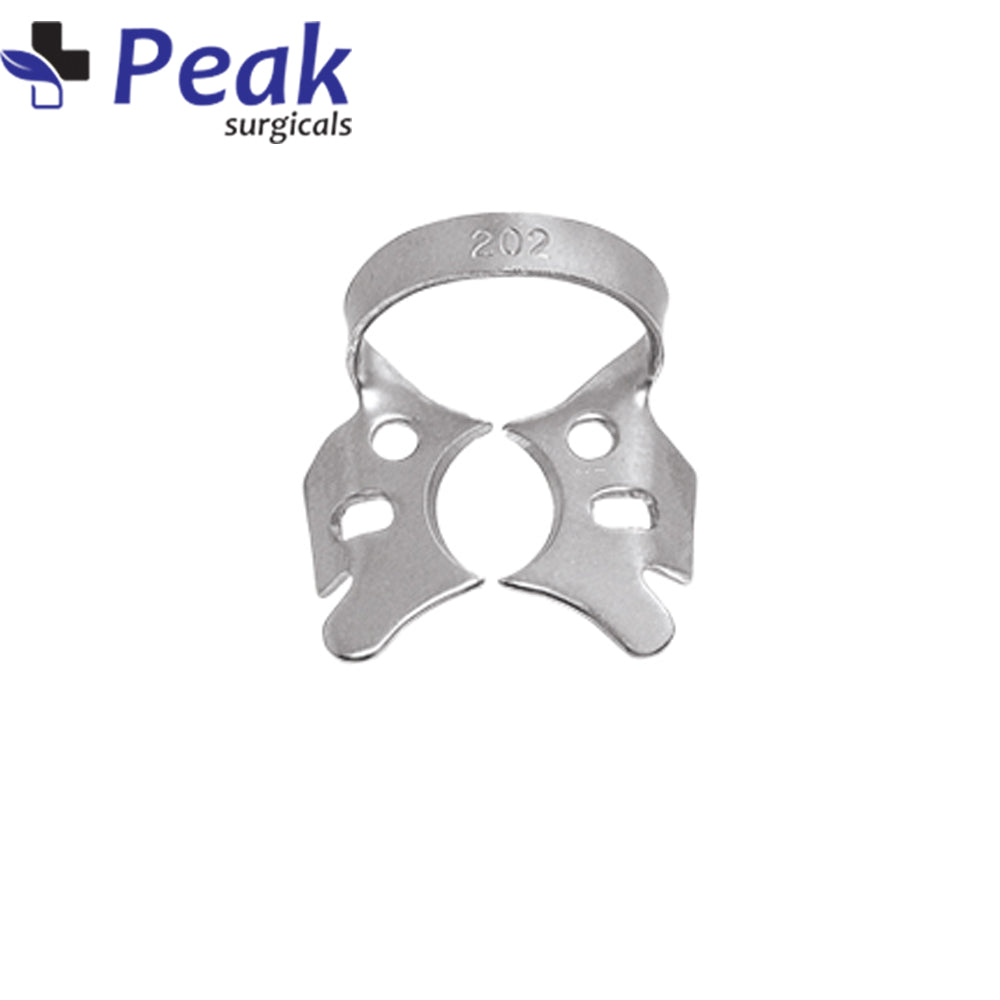


Premolar Clamp Number, SKU PS-D-107, is a reusable endodontic rubber dam clamp made from German stainless steel for premolar isolation, root canal therapy, restorative dentistry, adhesive procedures, crown-margin control, and operative moisture management. The product is supplied as one rubber dam clamp and the visible marking identifies a 202 premolar clamp pattern with a curved bow, winged extensions, forceps holes, cervical gripping contours, and a central access opening for controlled isolation around premolar crowns. The clamp is used during premolar endodontic access, class I restorations, class II cavity preparation, composite placement, amalgam replacement, coronal buildup, crown preparation isolation, pediatric posterior procedures where crown size permits, and veterinary dental restorations. The winged structure supports preloading with a rubber dam sheet before placement, while the jaw design stabilizes the clamp at the cervical contour during irrigation, suction, handpiece use, matrix placement, bonding, and restorative finishing. Endodontists, general dentists, restorative clinicians, pediatric dentists, dental schools, hospital dental departments, veterinary dental teams, distributors, and procurement offices use this Class I reusable isolation instrument in rubber dam kits, endodontic trays, and operative dental setups.
The Premolar Clamp Number uses a spring stainless steel bow to separate the jaws during forceps loading and to maintain retentive pressure after seating. The bow remains outside the operative crown surface, leaving the central field accessible for rotary preparation, pulp chamber entry, restoration placement, and coronal sealing. The 202 jaw profile is shaped for premolar retention, with cervical contact areas that engage the buccal and lingual contours of the tooth and resist displacement during irrigation, suction, and restorative manipulation. The winged extensions hold the rubber dam sheet while the operator carries the clamp and dam together to the tooth. This is useful when the clinician wants the sheet positioned with the clamp before inversion around the crown. The circular forceps holes accept rubber dam forceps beaks for opening, transfer, seating, stability testing, and removal. The clamp has no ratchet, screw joint, box lock, or pivot because its working mechanism depends on spring tension, jaw contact, winged dam support, bow resilience, and forceps-controlled placement.
During endodontic treatment, the Premolar Clamp Number is selected after clinical crown assessment, dam hole punching, floss ligature preparation, and forceps loading. The clinician opens the 202 clamp with rubber dam forceps, seats the jaws at the cervical contour, verifies stability, and then inverts the dam around the premolar before access preparation. In root canal therapy, the clamp retains the isolation field during chamber entry, canal location, irrigation, instrumentation, obturation, and temporary or definitive coronal sealing. In restorative workflows, the same clamp supports class I occlusal restorations, class II proximal preparations, adhesive composite placement, matrix adaptation, liner placement, base placement, amalgam replacement, and crown-margin refinement. The winged format is useful when the dam sheet is carried with the clamp and then inverted after placement. Pediatric use is selected when eruption level and crown size provide stable engagement. Veterinary dental teams use comparable isolation logic for restorative or endodontic procedures where moisture control and stable posterior access are required.
The 202 pattern is selected for premolar isolation when the operator needs a winged clamp with a compact bow that preserves crown access. The bow provides elastic memory and maintains clamp tension during the full procedure. The jaws contact the buccal and lingual cervical regions and help resist displacement during handpiece vibration, canal irrigation, suction movement, and matrix placement. The wings support rubber dam preloading, allowing the sheet to be stretched onto the clamp before the assembly is carried to the tooth. The forceps holes provide controlled engagement with clamp forceps, reducing uncontrolled finger pressure near the jaw edges. The central opening leaves the occlusal surface, access cavity, proximal box, and restorative field available for instrumentation. Selection is based on premolar crown morphology, eruption level, cervical contour, restorative margin position, adjacent tooth contact, dam hole spacing, and planned procedure. This clamp is not selected for extraction, tissue traction, orthodontic force application, or matrix retention without rubber dam isolation.
German stainless steel construction gives the Premolar Clamp Number the spring resilience required for repeated premolar isolation while maintaining bow tension, jaw alignment, wing form, and forceps-hole integrity through clinical turnover. The smooth stainless finish supports visual inspection after cleaning, including the bow curve, jaw contact areas, wing surfaces, and lateral holes where debris can collect after endodontic or restorative procedures. After use, staff remove visible rubber dam fragments, cement, composite residue, blood, saliva, and irrigant deposits, clean the clamp surfaces, rinse, dry, inspect retentive edges and spring tension, package, and steam autoclave according to facility protocol. CE marking supports international medical device procurement, ISO 13485 certification reflects regulated manufacturing controls, and FDA-compliant procurement support helps United States buyers maintain reusable dental hand instrument records. The product supports single-piece ordering, replacement planning, rubber dam kit assembly, OEM supply, return support, order tracking, and documentation for clinics, hospitals, dental schools, distributors, emergency dental units, and veterinary dental departments.
| SKU | PS-D-107 |
|---|---|
| Product Name | Premolar Clamp Number |
| Price | $3.30 USD |
| Size/Gauge Variants | 202 winged premolar rubber dam clamp pattern |
| Instrument Category | Endodontic rubber dam clamp and premolar dental isolation instrument |
| Procedure | Premolar rubber dam isolation, root canal therapy, class I restoration, class II cavity preparation, adhesive dentistry, crown-margin isolation, coronal buildup, pediatric operative dentistry, and veterinary dental restoration |
| Material | German stainless steel |
| Finish | Smooth stainless finish with formed bow, wings, jaws, and forceps holes |
| Sterilization | Reusable; clean bow, jaws, wings, and forceps holes, rinse, dry, inspect retentive points and spring tension, package, and steam autoclave through facility protocol |
| Instrument Classification | Class I non-powered reusable dental isolation instrument |
| Reusable | Yes |
| Certifications | CE marked, ISO 13485 certified, FDA-compliant procurement support |
| Warranty | 30 days money back guarantee |
| MOQ | 1 piece |
| OEM / Custom Orders | Available for clinics, hospitals, dental schools, distributors, veterinary dental units, and institutional purchasing programs |
| After-Sale Service | Return and replacement support, order tracking assistance, and procurement documentation support |
How does Premolar Clamp Number differ from a molar rubber dam clamp?
Premolar Clamp Number is designed around premolar crown morphology, while molar clamps usually have broader jaw geometry for larger posterior crowns. The 202 premolar pattern provides a compact clamp profile for smaller cervical contours and keeps the access field clear for endodontic and restorative work. A molar clamp can be too broad for many premolars and may interfere with dam inversion or crown access. The winged design on this clamp allows the dam sheet to be carried with the clamp during placement. The forceps holes support controlled opening and transfer with rubber dam forceps. Premolar Clamp Number is selected when premolar isolation and stable cervical engagement are required together.
When should the 202 premolar clamp pattern be selected?
Premolar Clamp Number in the 202 pattern is selected for premolars where crown contour allows stable cervical jaw engagement. The pattern is useful for root canal therapy, class I restoration, class II preparation, coronal buildup, and crown-margin isolation. The winged design is selected when the operator wants to carry the rubber dam sheet with the clamp before inversion. The central opening preserves access to the occlusal surface, access cavity, proximal box, and restorative field. Selection depends on crown height, eruption level, cervical contour, restorative margin position, adjacent tooth contact, and dam hole spacing. Another clamp pattern is selected when the tooth is partially erupted, severely broken down, or anatomically unsuitable for 202 retention.
How do CE, ISO 13485, and FDA procurement requirements apply?
Premolar Clamp Number is supplied for professional purchasing workflows that require reusable dental isolation instrument documentation. CE marking supports international procurement records for clinics, hospitals, dental schools, distributors, and institutional buyers. ISO 13485 certification reflects manufacturing controls used in regulated medical device supply. FDA-compliant procurement support helps United States buyers maintain vendor files and reusable instrument records. These references support supplier onboarding, tender preparation, clinic audits, product file review, and multi-location purchasing approval. The instrument remains a Class I non-powered reusable rubber dam clamp for professional endodontic, restorative, pediatric, teaching, and veterinary dental workflows.
How are the bow, wings, jaws, and forceps holes controlled during placement?
The control features on Premolar Clamp Number are the spring bow, winged extensions, retentive jaws, and lateral forceps holes. The clinician engages the holes with rubber dam forceps and opens the clamp just enough to pass over the premolar crown. The jaws are seated at the cervical contour and then released so spring tension maintains retention. The wings hold the rubber dam sheet during transfer and help guide inversion after seating. The bow remains outside the crown access zone while the central opening preserves the operative field. This handling pattern supports stable isolation during endodontic access, irrigation, restorative preparation, bonding, and coronal sealing.
How should clinics and distributors manage sterilization and supply?
Premolar Clamp Number is a reusable German stainless steel rubber dam clamp suitable for standard dental tray reprocessing. After use, staff remove visible rubber dam fragments, cement, composite residue, saliva, blood, and irrigant deposits from the bow, jaws, wings, and forceps holes. The clamp is cleaned, rinsed, dried, inspected for jaw alignment and spring tension, packaged, and steam autoclaved according to facility protocol. The one-piece spring design supports repeated turnover in endodontic, restorative, pediatric, teaching, emergency, and veterinary dental trays. Clinics can stock the 202 pattern for premolar isolation and rubber dam kit replacement. The $3.30 USD price supports single-piece replenishment, distributor inventory planning, and multi-chair clinic supply control.


