
Featured Collection
Your cart
Featured Collection

PEAK SURGICALS
SKU:PS-OP-7590
Couldn't load pickup availability


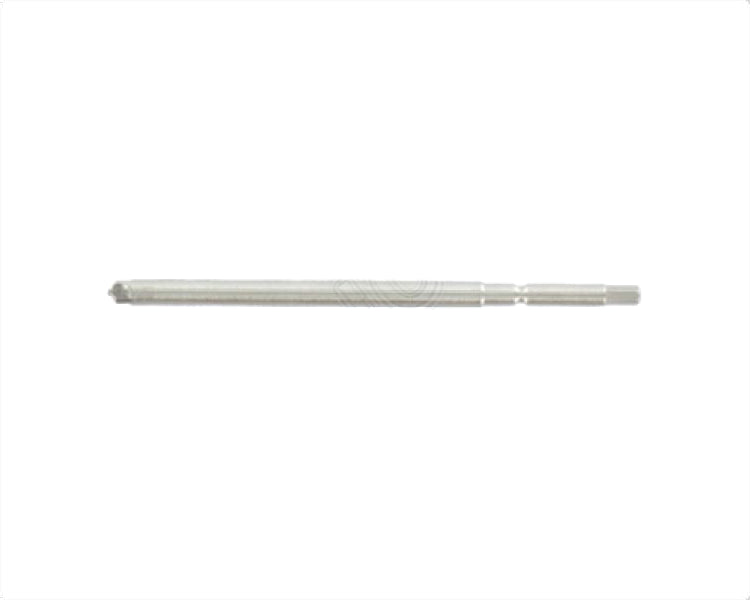
Screwdriver Blade Neuro, SKU PS-OP-7590 and catalog code PS-11500.261, is a reusable German-forged stainless steel driver shaft designed for manual screw insertion and removal within compatible cranial fixation systems. The instrument functions as the detachable working component between a Neuro screwdriver handle and the selected cranial fixation screw, transmitting controlled rotational force while maintaining axial alignment at the fastener head. Its long, straight metallic shaft keeps the surgeon’s hand clear of the immediate fixation site and provides direct access to low-profile plates, burr-hole covers, mesh constructs, and bone-flap fixation points. The proximal connection is designed to engage a compatible screwdriver handle, while the distal working end interfaces with the corresponding screw pattern used by the fixation system. Clinically, the blade is used during craniotomy closure, craniectomy reconstruction, bone-flap reattachment, burr-hole cover placement, cranial plate fixation, selected craniofacial reconstruction, and removal of previously implanted fixation screws. It is intended for neurosurgeons, craniofacial surgeons, hospital operating rooms, trauma services, and surgical teams managing reusable cranial fixation instrumentation.
The Screwdriver Blade Neuro operates as the torque-transmitting element of a modular cranial screwdriver assembly. Its straight shaft establishes a direct mechanical line between the surgeon’s hand at the reusable handle and the fixation screw positioned within a plate or cranial implant. During assembly, the proximal end is seated securely into the compatible Neuro screwdriver handle so rotational movement applied at the grip is transmitted along the shaft without requiring the surgeon to grasp the narrow blade directly. At the operative end, the screw-engaging tip is aligned coaxially with the fastener before rotation begins. Maintaining this alignment is important during cranial fixation because the small screw heads used with low-profile plate systems provide limited tolerance for angular driver engagement. The elongated profile allows the operator to keep fingers away from the plate while preserving visibility of the screw head and surrounding bone surface. The rigid stainless steel construction provides tactile transmission during initial thread engagement, progressive advancement, final seating, and reverse rotation during hardware removal. Unlike a screwdriver handle, this component does not create the hand grip or rotational leverage itself; it transfers the applied force from the handle directly to the compatible cranial fixation screw.
During craniotomy closure, the Screwdriver Blade Neuro enters the workflow after the bone flap has been repositioned and the surgeon has selected the appropriate low-profile plates, burr-hole covers, mesh, or other fixation components. The blade is connected to its compatible Neuro handle, engaged fully with the selected screw head, and positioned perpendicular to the plate hole before clockwise rotation begins. Controlled axial alignment during the first turns helps establish reliable thread engagement while limiting cam-out or damage to the screw recess. The surgeon then advances the fastener until the plate is stabilized against the cranial surface and the screw reaches the required seated position. The same instrument can be used sequentially across multiple fixation points around a bone flap while maintaining a consistent manual driving interface. In cranial trauma reconstruction, it supports fixation of non-load-bearing cranial bone segments where compatible plates and screws are used. During revision procedures or hardware removal, the blade is seated completely in the existing screw recess and rotated counterclockwise through the connected handle. This controlled engagement is particularly important when removing small cranial screws where incomplete driver seating can damage the head and complicate extraction.
This Screwdriver Blade Neuro is supplied as a single reusable shaft under catalog code PS-11500.261 rather than as a multi-size set. Instrument selection therefore depends primarily on compatibility with the associated Neuro fixation system, screwdriver handle, and screw-head interface. The blade is designed to work as the detachable shaft component of a modular driver assembly and can be paired with the corresponding Neuro screwdriver handle used to generate controlled manual rotation. The proximal portion establishes the mechanical connection with the handle, the central shaft transfers torque through its longitudinal axis, and the distal working end engages the selected cranial fixation screw. Before surgery, the sterile team should confirm that the driver tip seats fully within the intended screw recess and that the shaft connects securely to the selected handle without looseness. During craniotomy closure or cranial reconstruction, complete tip engagement should be maintained as the screw enters the plate and underlying bone. A driver that does not correspond to the fastener interface can reduce rotational control and damage the screw head. Hospitals maintaining modular cranial fixation trays can therefore organize the blade, compatible handle, plates, screws, mesh components, and related fixation instruments together for efficient intraoperative selection and inventory control.
The Screwdriver Blade Neuro is manufactured as a reusable German-forged stainless steel surgical instrument, providing the rigidity, corrosion resistance, and repeated-processing capability required for manual cranial fixation instrumentation. Its smooth metallic surfaces permit detailed visual inspection after cleaning and allow the shaft to move through the operative field without unnecessary surface irregularities. Peak Surgicals supplies reusable instrumentation non-sterile unless specifically designated otherwise, so the blade must enter the healthcare facility’s validated cleaning and sterilization workflow before initial clinical use and after every procedure. Reprocessing should include removal of visible contamination, cleaning of the complete shaft and both connection interfaces, thorough rinsing, drying, and inspection for bending, corrosion, surface damage, tip deformation, or impaired engagement with the screwdriver handle. The device can then be packaged and processed according to the institution’s validated sterilization protocol for reusable stainless steel surgical instruments. Peak Surgicals operates under ISO 13485 medical-device quality-management standards and supplies CE-marked instrumentation for applicable markets. For United States procurement, FDA compliance concerns the relevant quality, registration, listing, labeling, and documentation requirements rather than a blanket claim that every reusable manual instrument is individually FDA approved.
| Specification | Details |
|---|---|
| SKU | PS-OP-7590 |
| Product Name | Screwdriver Blade Neuro |
| Price | $9.39 USD |
| Size/Gauge Variants | Single Neuro screwdriver blade configuration |
| Instrument Count | 1 Piece |
| Instrument Category | Neurosurgical Cranial Fixation Instrument |
| Procedure | Craniotomy closure, cranial bone-flap fixation, burr-hole cover placement, cranial plating, reconstruction and screw removal |
| Material | German-forged stainless steel |
| Finish | Smooth metallic surgical finish |
| Sterilization | Supplied non-sterile; reusable and suitable for validated institutional sterilization workflows |
| Instrument Classification | Reusable manual neurosurgical screwdriver blade |
| Reusable | Yes |
| Certifications | CE marked, ISO 13485 manufacturing framework, FDA-compliant procurement context |
| Warranty | 1-Year Limited Warranty covering manufacturing defects under normal professional use |
| MOQ | 1 Piece for standard online purchase |
| OEM / Custom Orders | Custom instrument and bulk-order quotations available for institutional and distributor requirements |
| After-Sale Service | Warranty assistance and eligible 30-day return support under Peak Surgicals terms |
How does the Screwdriver Blade Neuro differ from a power screwdriver driver shaft?
The Screwdriver Blade Neuro is configured primarily as the working shaft of a manually controlled modular cranial screwdriver assembly. A power-driver shaft interfaces with a powered handpiece that supplies motorized rotation rather than direct hand-generated torque. Manual driving gives the surgeon continuous tactile feedback as the fixation screw begins threading, advances through the cranial plate, and approaches its final seated position. Power systems can accelerate repetitive screw placement but require compatible powered equipment and system-specific driver interfaces. The Screwdriver Blade Neuro transfers force directly from its compatible manual handle through the stainless steel shaft to the screw head. Selection between manual and powered driving depends on the fixation system, surgical workflow, surgeon preference, and compatibility of the implant instrumentation.
How should the correct Neuro screwdriver blade be selected for a cranial fixation system?
Selection should be based on the fixation screw interface and the compatible screwdriver handle used within the cranial plating system. The Screwdriver Blade Neuro must seat fully within the selected screw head without rocking, excessive clearance, or incomplete engagement. During bone-flap fixation, correct driver-to-screw matching maintains axial alignment as the fastener passes through the plate and enters cranial bone. The blade should also connect securely to its corresponding handle so rotational force is transferred without movement at the proximal junction. Screw dimensions alone do not establish driver compatibility because different fixation systems can use different head geometries. Surgical teams should therefore organize the blade with its corresponding handle and fixation components when preparing a neurosurgical implant tray.
What do CE, ISO 13485 and FDA requirements mean for procurement of this instrument?
The Screwdriver Blade Neuro is supplied within Peak Surgicals’ medical-device manufacturing and procurement framework. ISO 13485 addresses the quality-management system used for controlled medical-device manufacturing processes. CE marking supports conformity requirements for applicable regulated markets where the instrument is supplied. In the United States, FDA compliance involves relevant manufacturer registration, device listing, labeling, quality-system, and procurement documentation requirements. The term FDA approved should not be used as a blanket description for a reusable manual screwdriver blade unless that specific regulatory status applies to the individual device. Hospitals and distributors can retain the applicable regulatory documentation with vendor qualification, purchasing, and instrument-management records.
How does the blade-to-handle connection function during screw insertion?
The proximal end of the Screwdriver Blade Neuro forms the connection between the driver shaft and its compatible reusable handle. Before screw placement, the sterile user seats the blade securely into the handle so rotational movement can pass directly from the surgeon’s grip through the shaft. The distal working end is then engaged fully with the cranial screw while the instrument is maintained along the screw axis. As the handle is rotated, the blade transmits clockwise torque for insertion without requiring the operator to change the position of the working tip. During removal, the same mechanical pathway transfers counterclockwise force to the existing fastener. Secure engagement at both ends is important because movement at either the handle junction or screw interface reduces rotational control.
How should hospitals reprocess and manage the Screwdriver Blade Neuro?
The Screwdriver Blade Neuro is supplied as a reusable, non-sterile instrument and requires processing before clinical use. After surgery, visible contamination should be removed promptly and the entire shaft, proximal connection, and distal working end should receive detailed cleaning. The instrument should then be rinsed, dried, and inspected for bending, corrosion, surface deterioration, tip damage, or changes that interfere with secure handle or screw engagement. It can subsequently enter the healthcare facility’s validated sterilization process for reusable stainless steel surgical instrumentation. Sterile processing teams should keep the blade paired with its compatible screwdriver handle and cranial fixation system when assembling trays to prevent driver mismatch. Peak Surgicals provides a one-year limited warranty for manufacturing defects and eligible 30-day return support under its published commercial terms.


