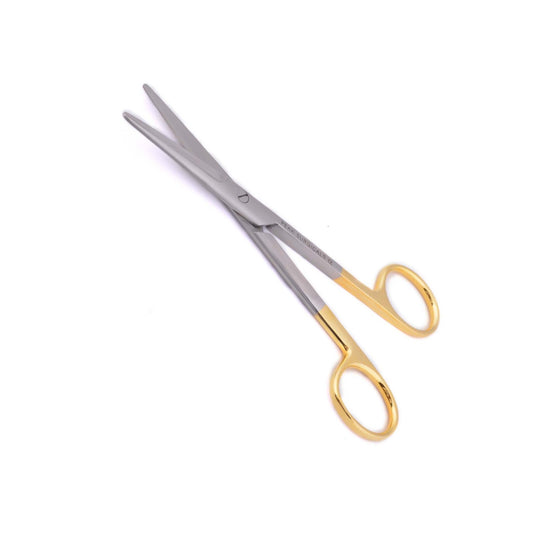
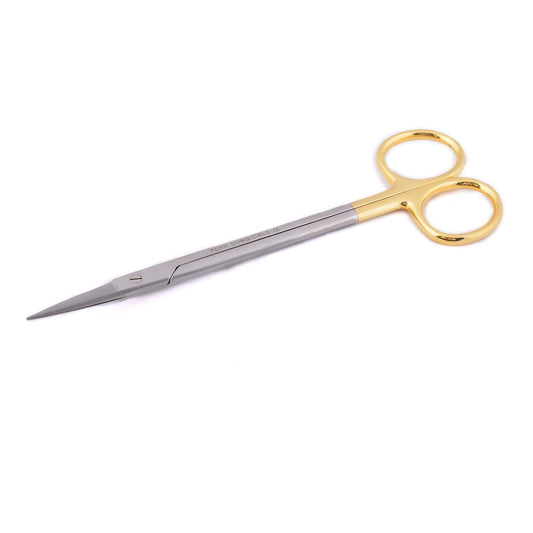
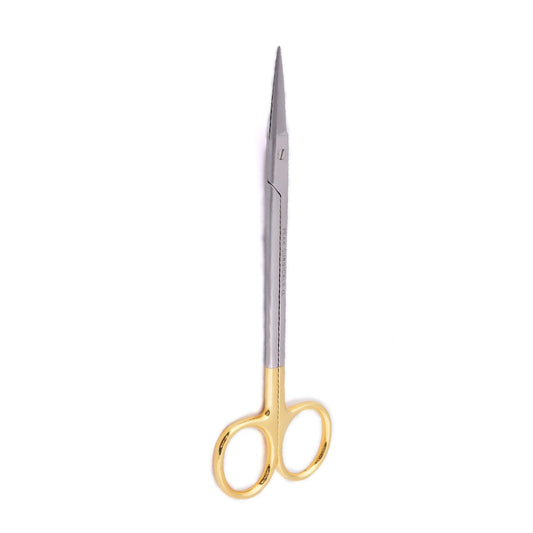
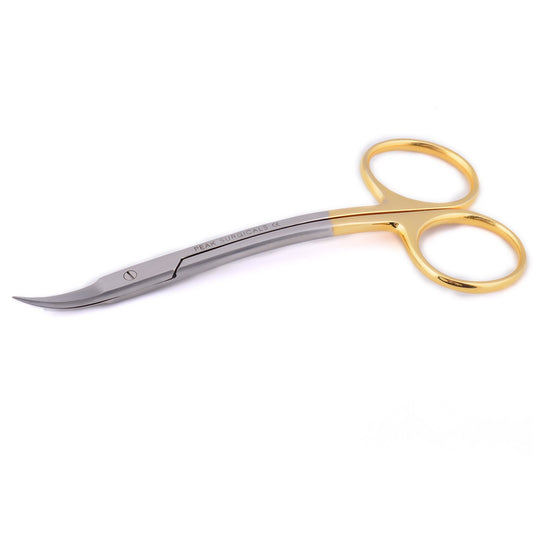
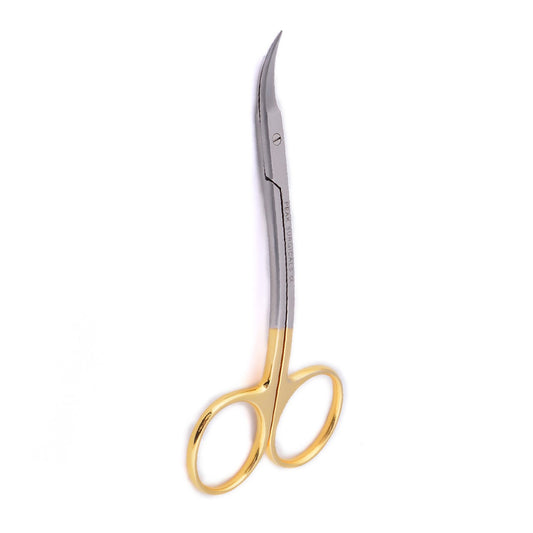
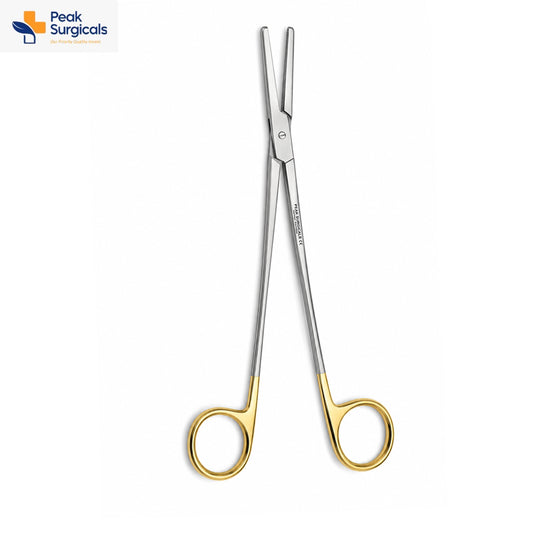
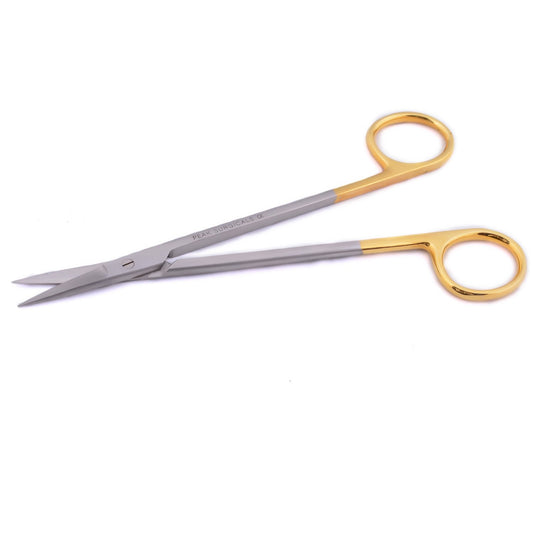
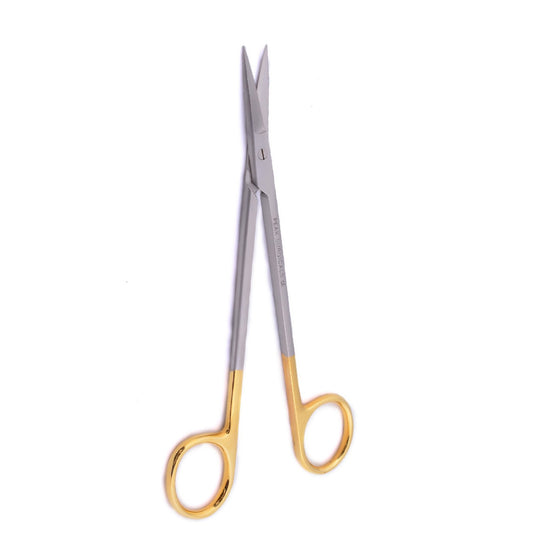
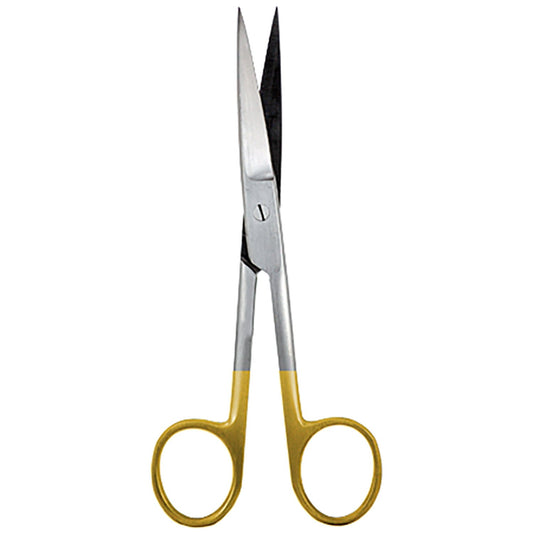
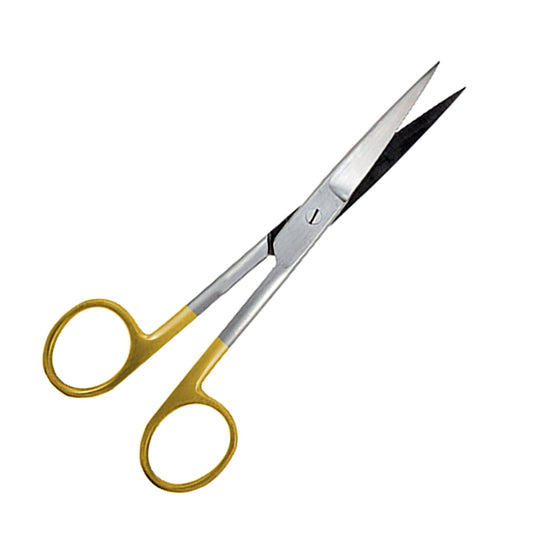
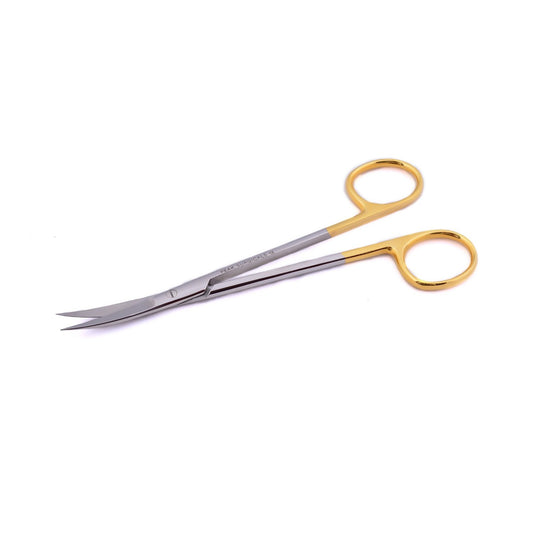
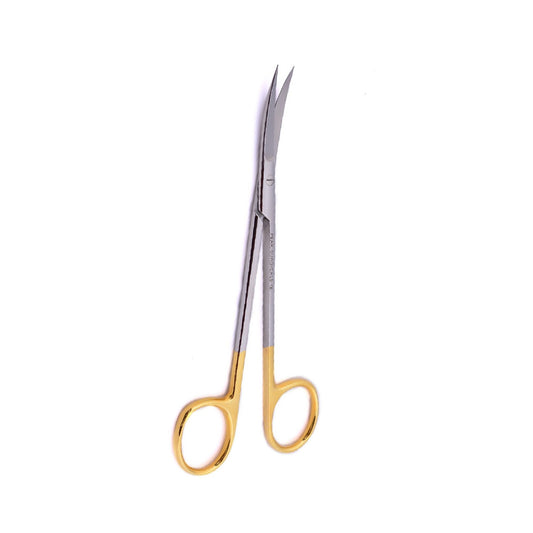
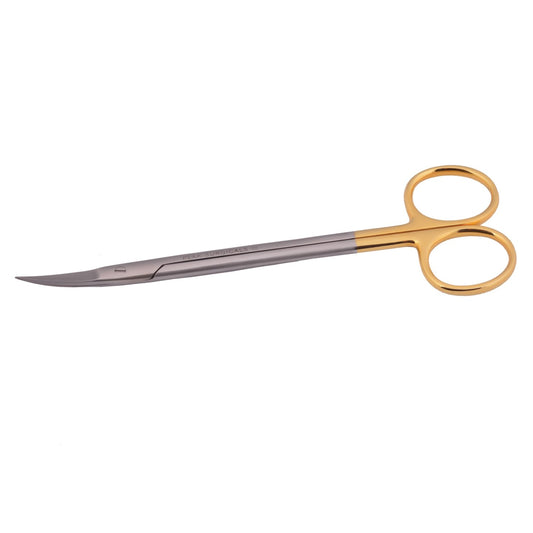
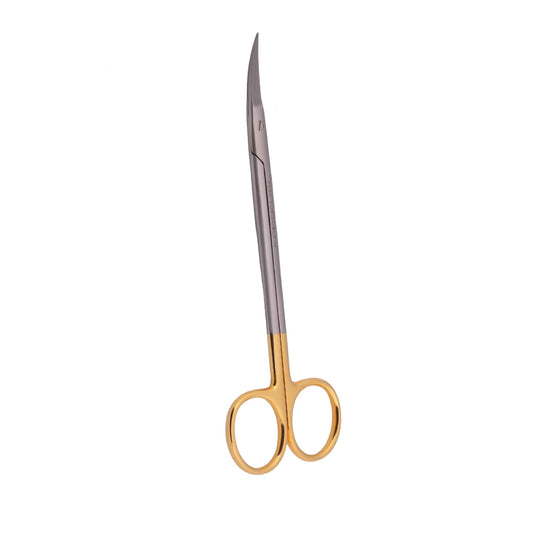
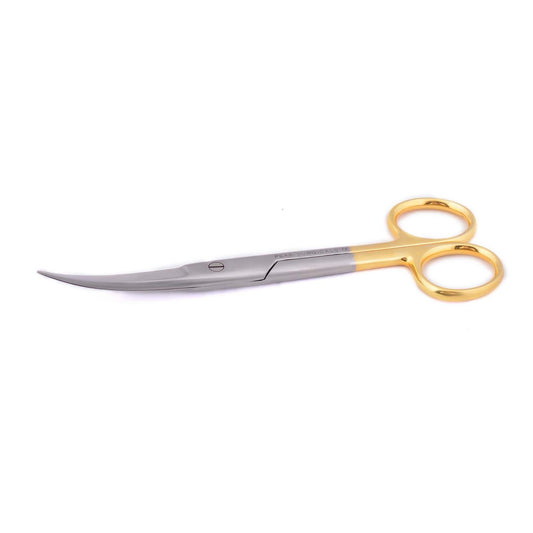
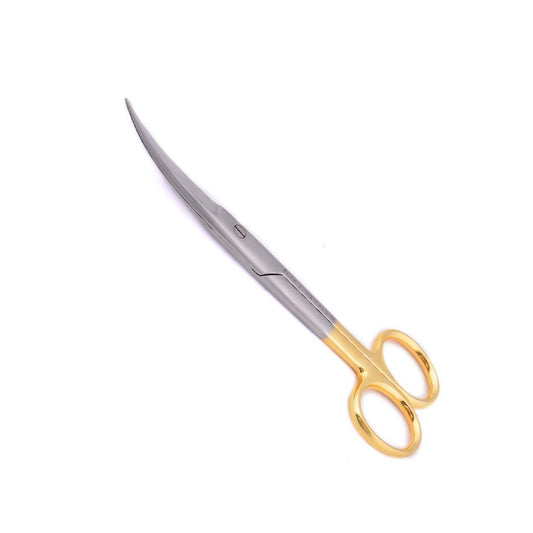
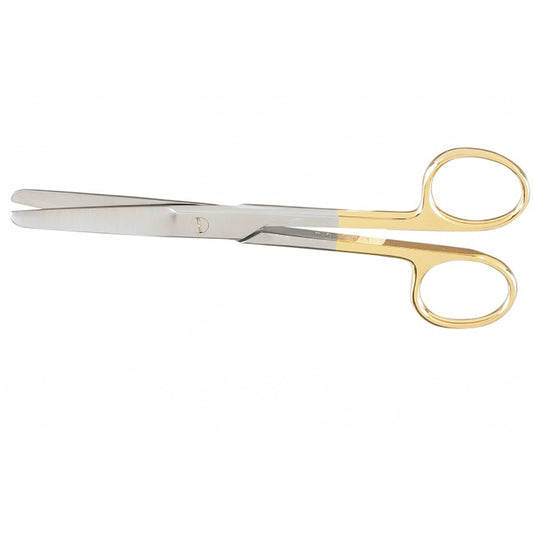
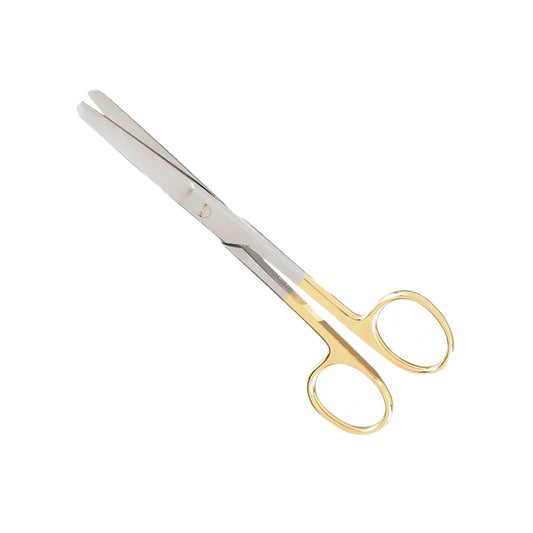
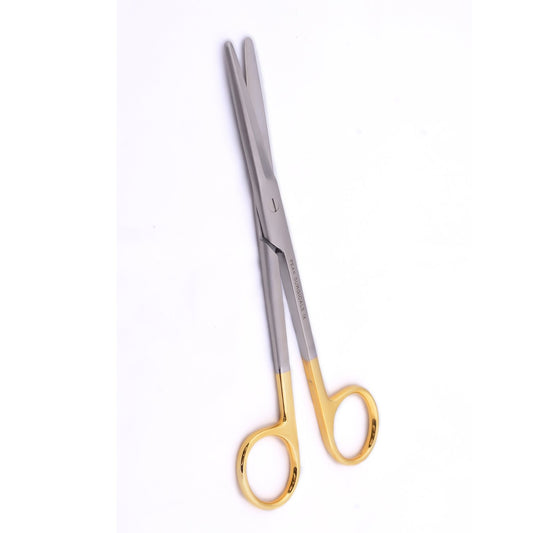
Tungsten carbide surgical scissors hold a cutting edge far longer than plain steel, the TC inserts are what let these eighteen patterns keep working through cycles that would blunt an ordinary blade. Peak Surgicals supplies Metzenbaum, Mayo, Iris and specialty patterns, in German stainless steel, from $6.60 to $11.00. Each is CE marked and built under ISO 13485. Compare all eighteen patterns in the grid below.
Metzenbaum and Mayo: The Dissecting Family
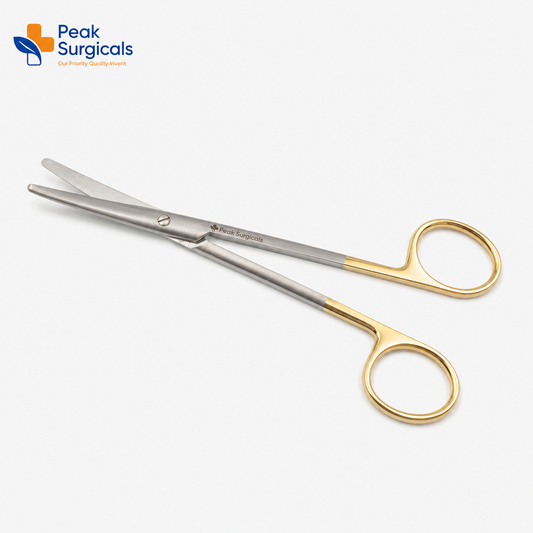
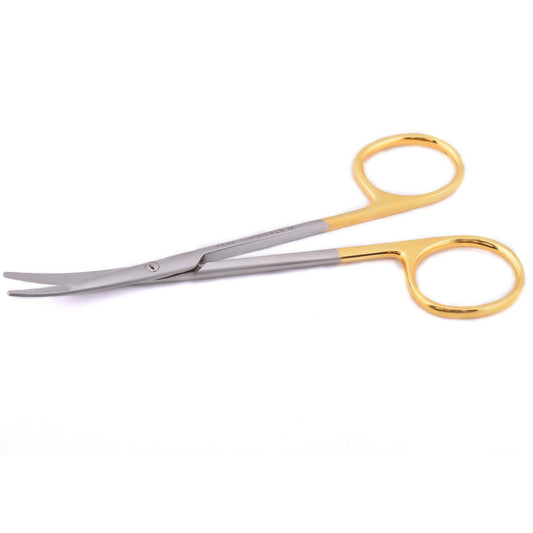
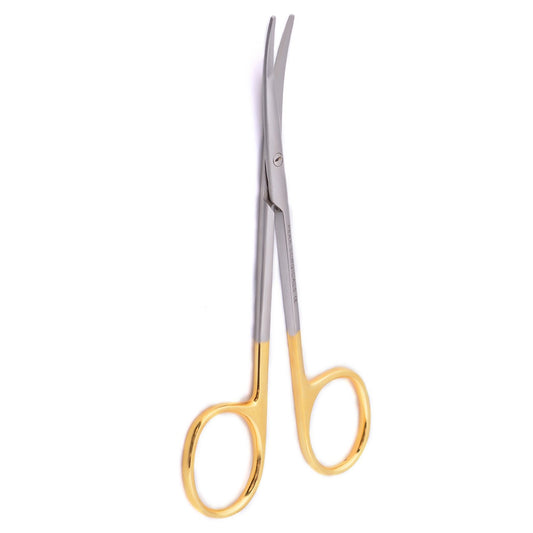
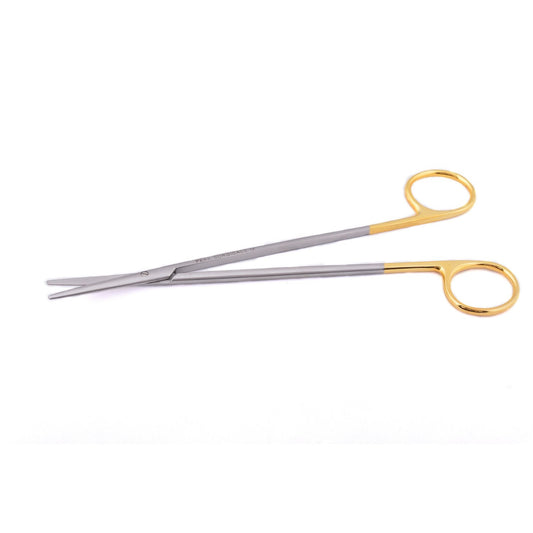
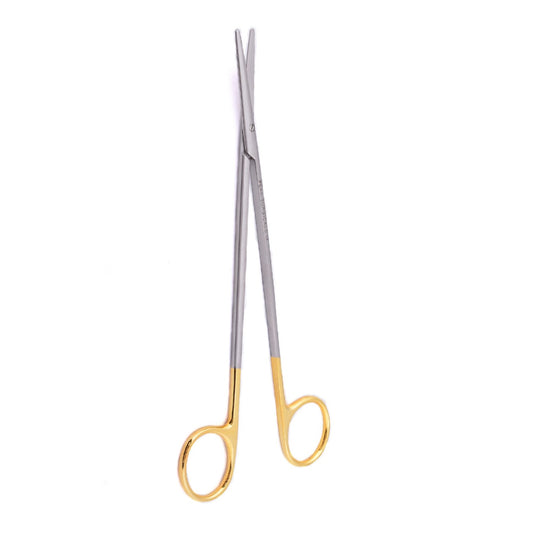
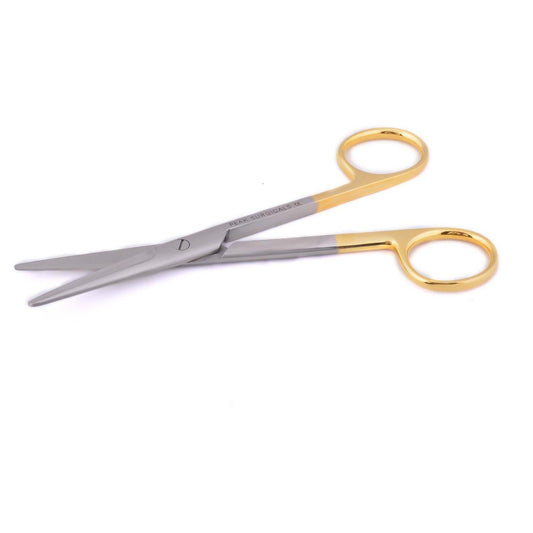
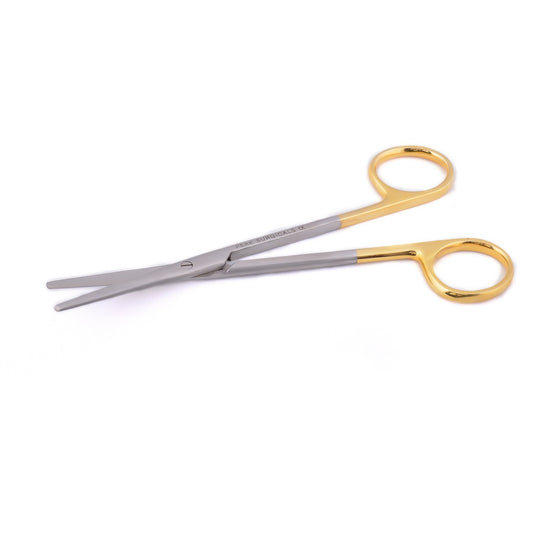
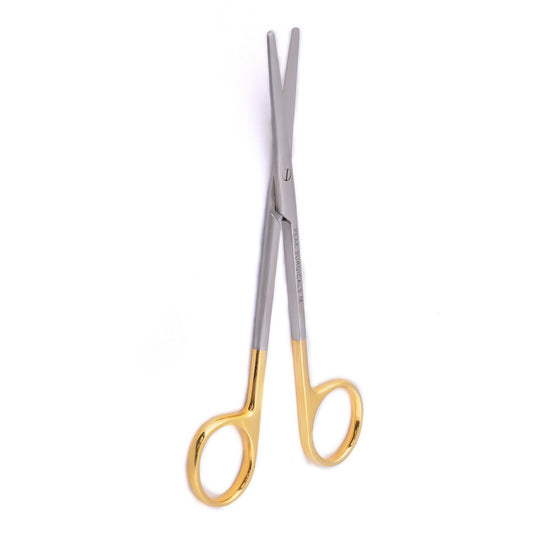
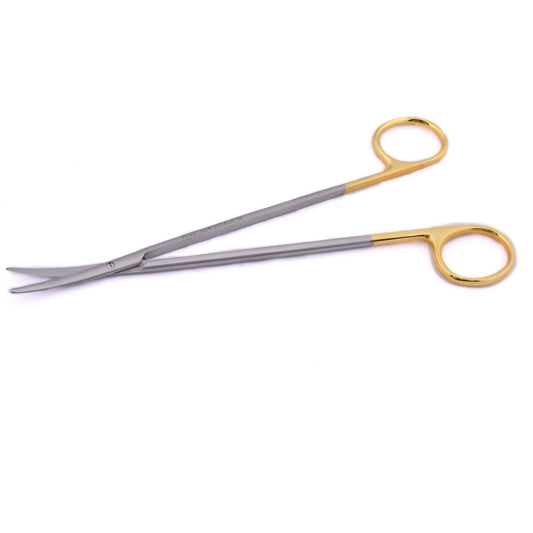
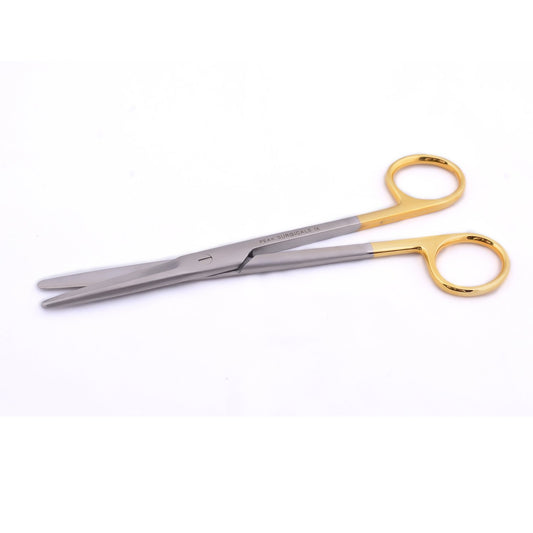
Metzenbaum scissors carry a long handle-to-blade ratio for delicate tissue dissection and blunt separation, while Mayo scissors run thicker and shorter for heavier connective tissue and fascia, both come in straight and curved profiles across a wide length range, and the length chosen follows how deep the surgeon needs to reach. This family makes up the largest share of the range.
TC Metzenbaum Dissecting Scissors (PS-3132, from $7.15, 14.6-28cm) and the 12.7-28cm variant (PS-3142 to PS-3153, from $8.25) cover general dissection at multiple lengths. TC Nelson Metzenbaum (PS-OT-01561, from $8.25, 14-17.1cm) and TC Mcindoe Metzenbaum (PS-3192, $11.00) are named sub-patterns within the same family, sized for specific reach and blade fineness. TC Mayo Dissecting Scissors (PS-OT-01569, from $8.25) and 14-17.1cm Mayo (PS-3164-1, from $8.25) handle the heavier cutting Metzenbaum blades are not built for. Multiple lengths exist because dissection depth varies by procedure, shorter for superficial work, longer for deep cavities. We supply every pattern at MOQ 1.
Iris and Specialty Patterns
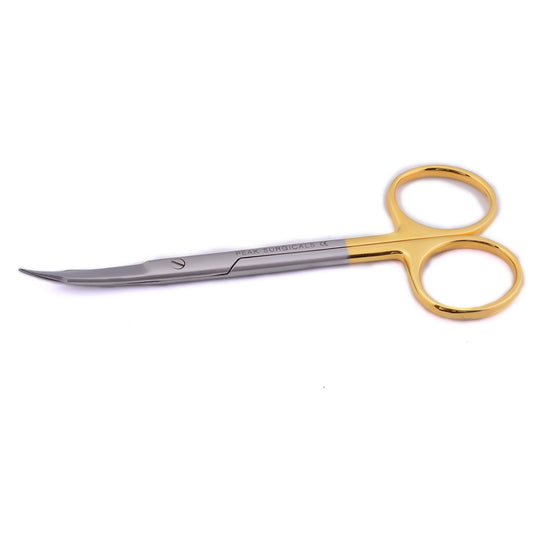
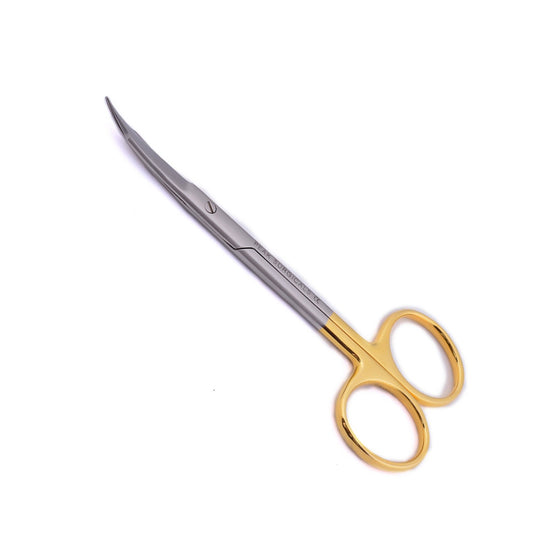
TC Iris Delicate Scissors (PS-OT-01539, $6.60) and TC Knapp Iris Scissors (PS-OT-01544, $6.60, straight and curved) carry fine blades built for ophthalmic and micro-dissection work, where the cut is measured in millimetres rather than centimetres. These are the smallest-bladed patterns in the range, reserved for delicate tissue that a Metzenbaum or Mayo blade would damage.
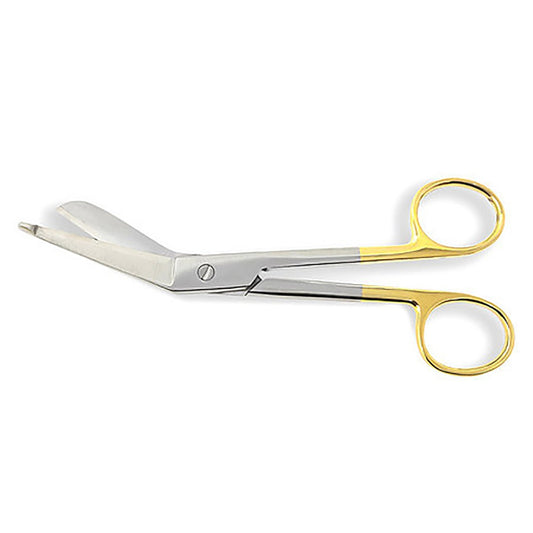
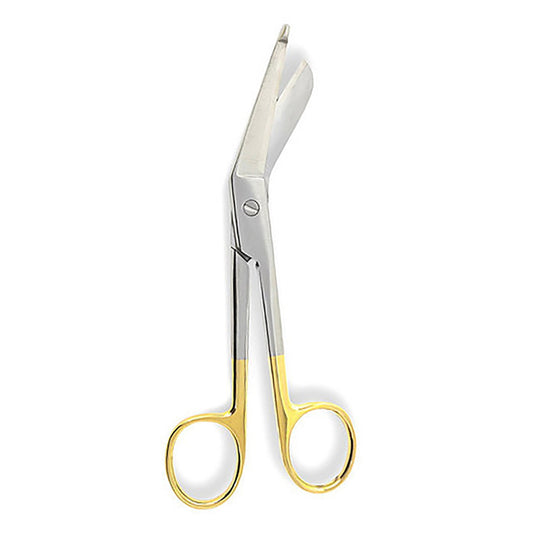
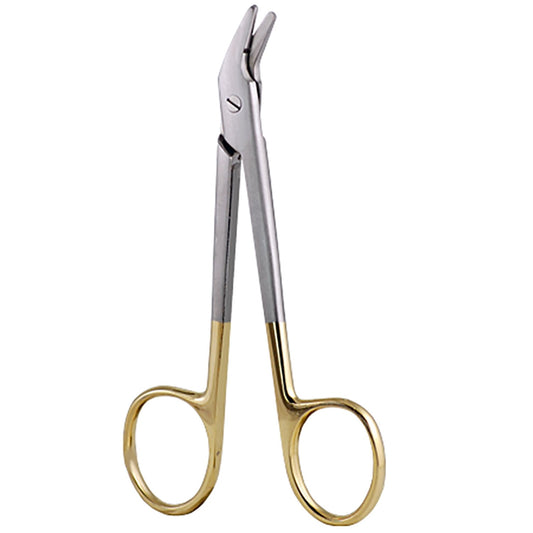
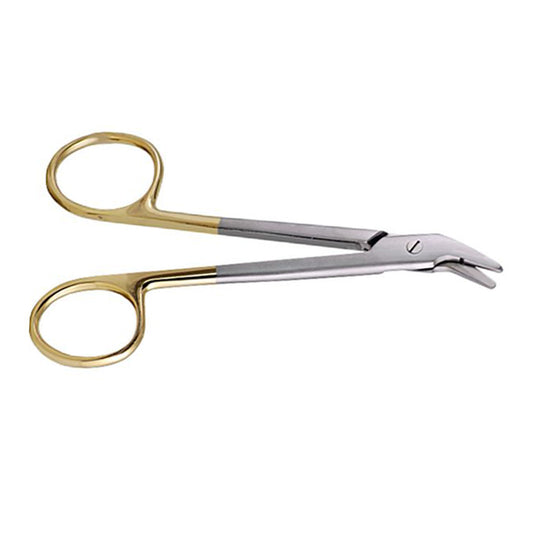
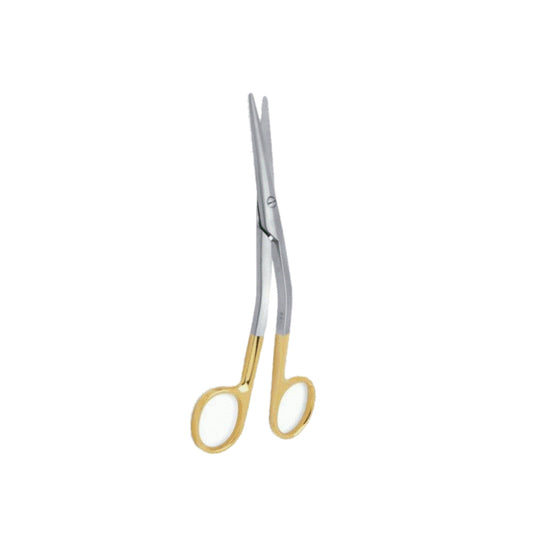
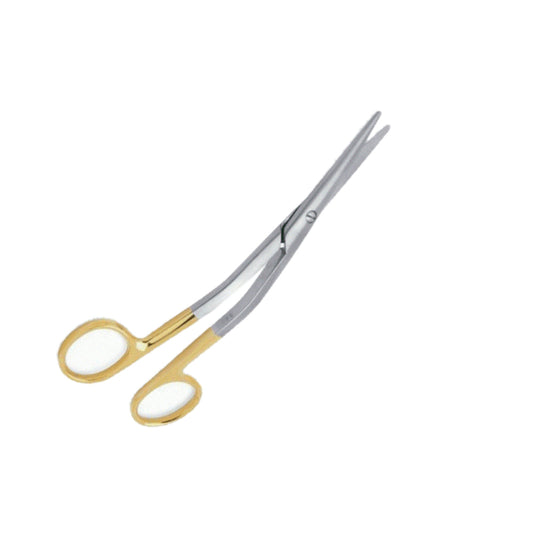
The remaining patterns each solve one specific task. TC Lister Bandage Scissors (PS-3172, $11.00, 8.89-20.32cm) carry a large bottom blade with a blunt tip that slides between skin and dressing without cutting into tissue underneath, the design that makes bandage removal safe rather than a general-purpose scissor adapted to the job. TC Cottle Dorsal Angular Scissors (PS-3171, $8.80, 16cm) are built specifically for rhinoplasty blade control at the nasal dorsum. TC Suture Wire Cutting Scissors (PS-3170, $8.80) handle wire rather than tissue. TC Operating Scissors (PS-OT-01587 and PS-OT-01094, from $6.60), TC Kelly Scissors (PS-OT-01541, $6.60), TC Dressing Scissors (PS-OT-01583, from $8.25) and TC Raynold Scissors (PS-OT-01546, from $8.25) round out the range for general and specialty use.
Reprocessing, Edge Integrity and Certification
Tungsten carbide inserts hold their edge through far more autoclave cycles than plain steel, but they are not indestructible. Check blades for chipping after each cycle, a chipped TC edge tears tissue instead of cutting it, and the damage does not reverse with sharpening the way a nick in plain steel sometimes does. Ultrasonic-clean before autoclaving so tissue debris does not collect at the pivot, and confirm blades close cleanly along their full length.
Every instrument is forged from German stainless steel with TC cutting inserts, Class I, reusable, CE marked and built under ISO 13485, the documentation a hospital supply team verifies before qualifying a vendor. Warranty is one year with return-and-replacement, MOQ is 1 piece, orders over $99 ship free in carton box packing, and OEM marking is available for distributors. For non-TC general scissors see surgical scissors; for the broader TC instrument range see TC surgical instruments. Talk to us about OEM and volume terms.
Our Top Selling Products
Knife Tenotome Blunt Straight | Gelpi Retractor 90 Degree Angle | Proximal Humerus Locking Plate Flat with 4-14 Hole Shoulder Fixation Range | Green Fixation Forceps | Debakey Adson Tissue Forceps Serrated Precision Surgical Forceps | Canine Root Tip Pick Elevator Dental Extraction Instrument | Frazier Suction Tubes & Obturators | Dandy Nerve Hooks PS-OT-0202 for Pointed and Straight Neural Retraction | Metzenbaum Dissecting Scissors Straight/Curved | No Scalpel Vasectomy Fixator Ring Clamp