Featured Collection
Your cart
Featured Collection

PEAK SURGICAL
SKU:PS-O T-01583
Couldn't load pickup availability
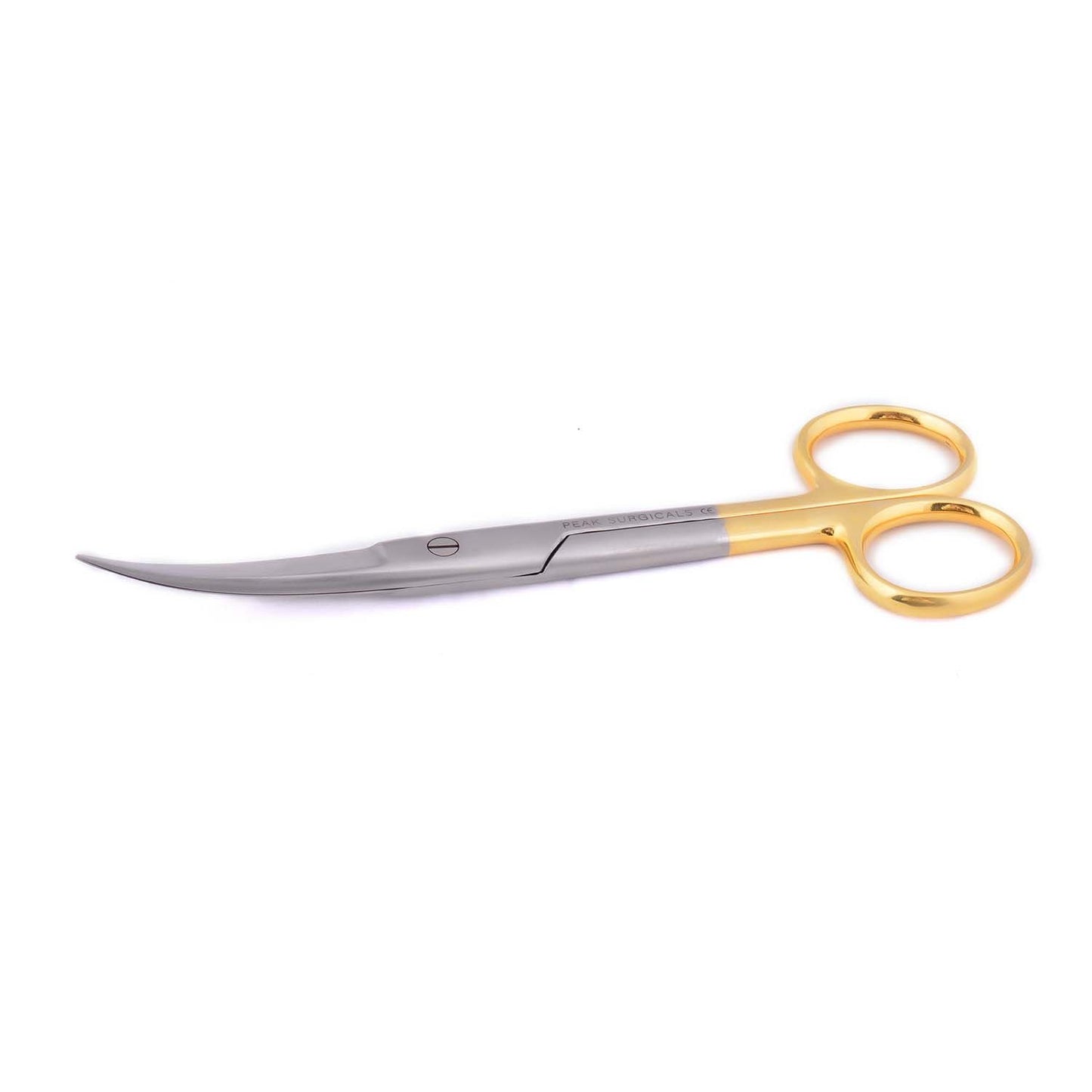
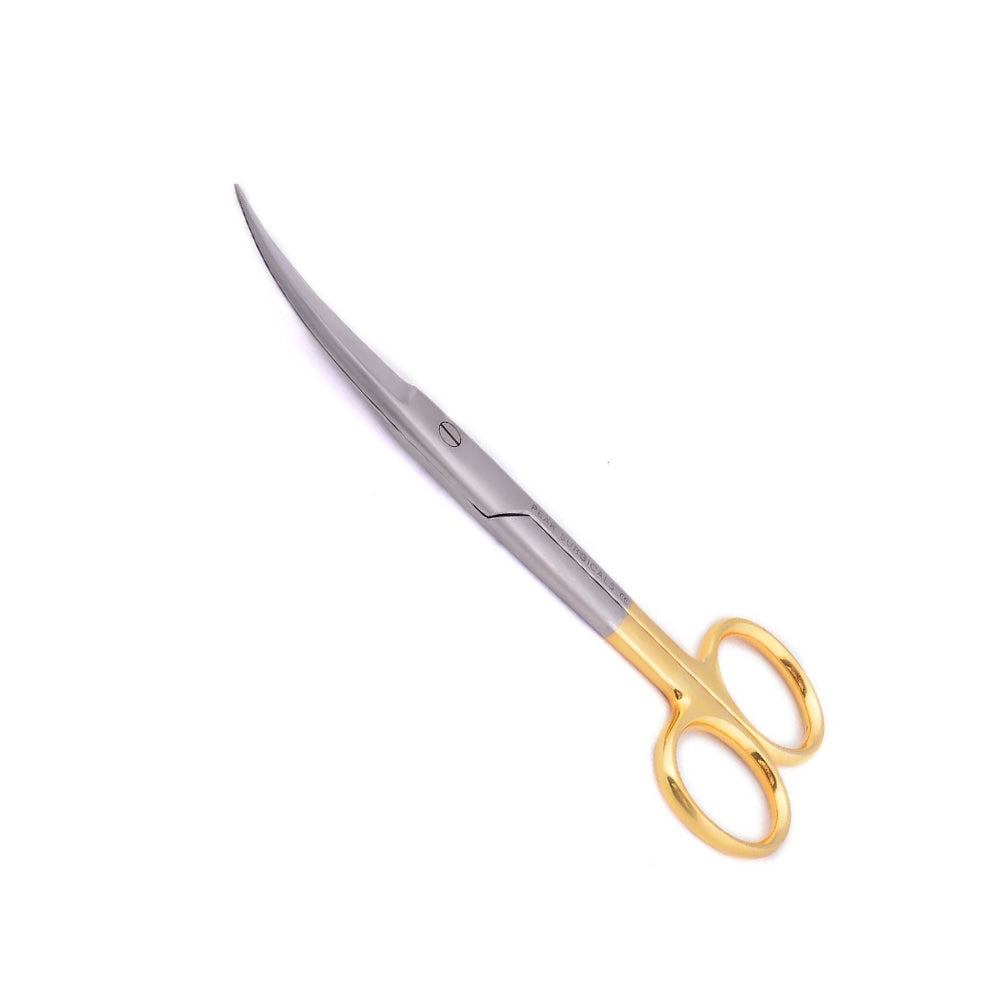
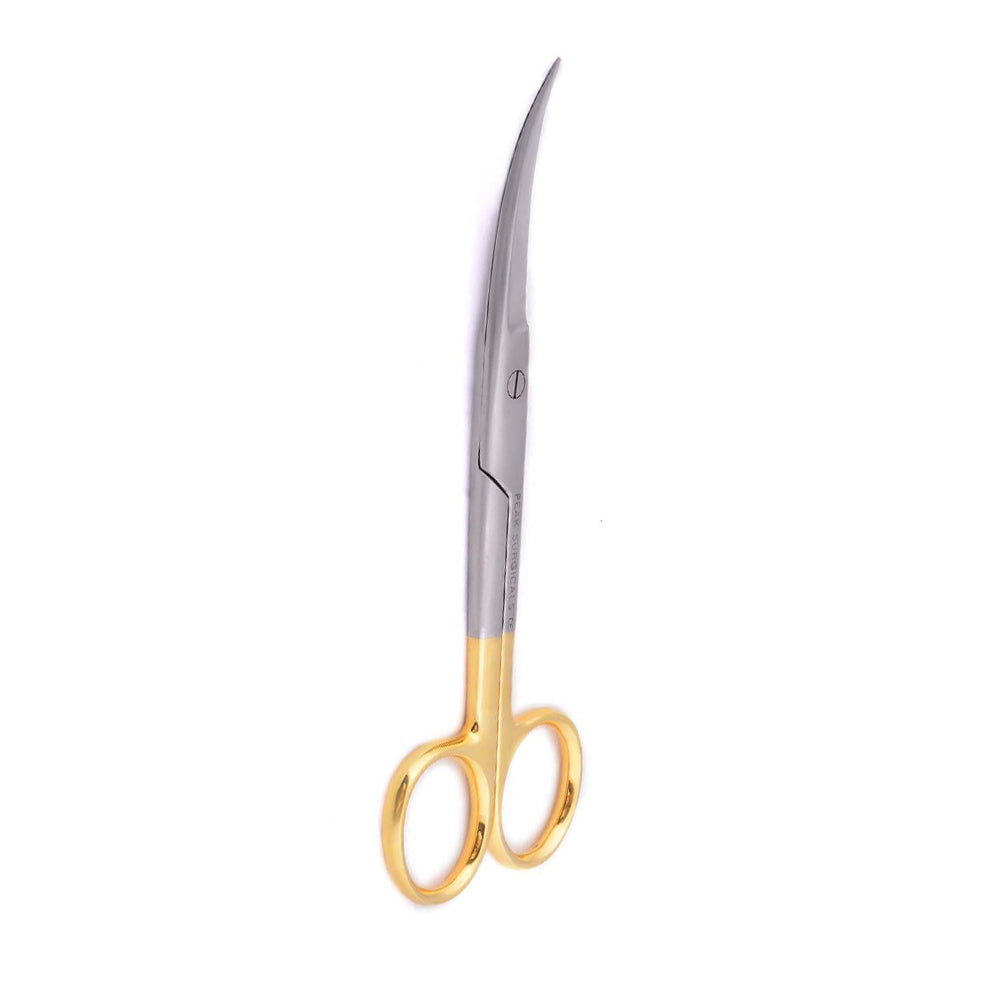
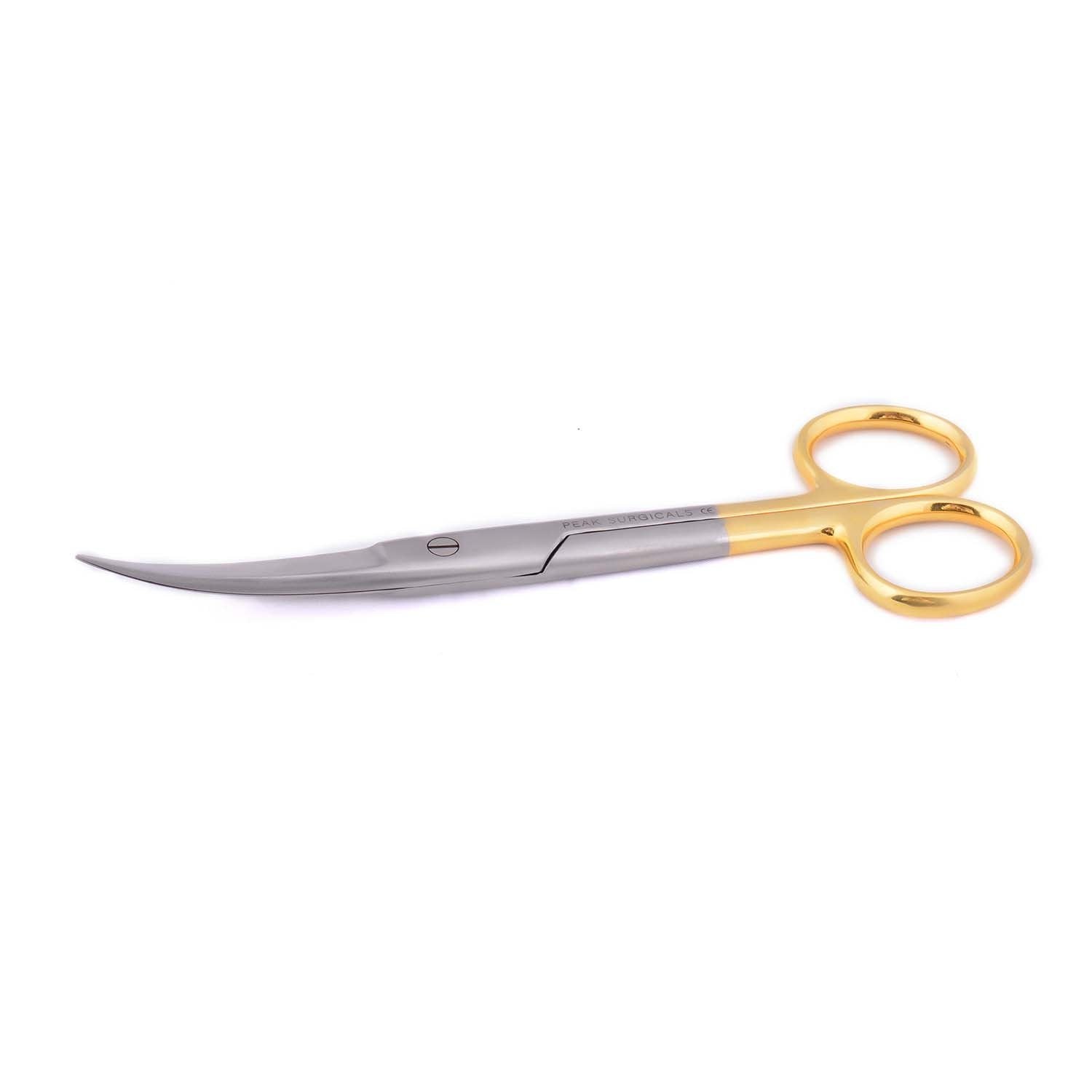
TC Dressing Scissors, SKU PS-O T-01583, are reusable surgical scissors manufactured from German stainless steel with tungsten carbide cutting inserts for controlled division of dressings, gauze, bandage material, drape edges, suture ends, and soft operative materials in operating room and clinical wound-care workflows. The available variants are PS-3175 Straight overall length 6 3/4 inch 17.1 cm, PS-3176 Curved overall length 5 1/2 inch 14 cm, PS-3177 Curved overall length 6 3/4 inch 17.1 cm, and PS-3175 Straight overall length 5 1/2 inch 14 cm. The instrument pattern includes straight or curved blades, TC cutting edges, a screw joint, ring handles, gold-tone handle finish, and reusable Class I construction. These scissors are used during postoperative dressing changes, wound debridement preparation, suture trimming, gauze shaping, bandage removal, orthopedic dressing work, emergency wound care, plastic surgery dressing management, and veterinary soft tissue aftercare. Surgeons, scrub nurses, wound-care clinicians, emergency teams, dental surgical teams, veterinary surgeons, hospitals, clinics, distributors, and procurement departments use this pattern where controlled material cutting and sterile tray compatibility are required.
The TC dressing pattern works through paired cutting blades that close through a screw joint, allowing progressive blade contact from the heel toward the tip. Tungsten carbide inserts provide a hard edge interface for repeated cutting of gauze, adhesive dressing margins, sutures, drape material, and bandage layers. Straight blade variants create a direct cutting line for trimming sutures, shaping gauze, opening sterile dressings, and preparing operative materials on the instrument table. Curved blade variants follow the contour of wound dressings, limb wraps, and body-surface bandage placement, helping the operator cut along a controlled arc without lifting the material away from the patient. The screw joint maintains blade alignment during repeated cycles and supports smooth opening and closure through the ring handles. Gold-tone handles identify the TC configuration within mixed scissors trays and help distinguish this product from plain stainless dressing scissors. The 14 cm and 17.1 cm lengths give teams compact and extended working options for procedure rooms, operating theaters, emergency units, and veterinary treatment areas.
During postoperative dressing management, TC Dressing Scissors are used to trim gauze, cut tape, open sterile dressing layers, and shape material before placement over incisions or drain sites. In wound-care clinics, the curved models assist with cutting around limb contours, abdominal dressings, pressure-relief padding, and irregular wound coverage without forcing a straight blade path. In the operating room, the straight versions are practical for suture trimming, drape adjustment, sponge preparation, and controlled removal of excess sterile material from the field. Orthopedic teams use dressing scissors during splint padding preparation, bandage adjustment, and soft dressing removal after fracture fixation or tendon repair. Plastic surgery teams can select the curved profile for contour-sensitive dressing work after flap procedures, graft placement, scar revision, or facial closure. Emergency clinicians use the same cutting principle during laceration repair setup and dressing removal. Veterinary teams use these scissors for wound bandaging, postoperative wrap adjustment, small animal dressing removal, and surgical pack preparation where reusable material-cutting instruments are required.
PS-3175 Straight 17.1 cm is selected when the clinician needs a longer direct cutting line for gauze shaping, drape trimming, operating room material preparation, and suture end cutting with added hand clearance. PS-3175 Straight 14 cm is suited to compact procedure trays, dental surgical packs, minor surgery sets, and veterinary treatment kits where close tactile control is preferred. PS-3176 Curved 14 cm is selected for short curved cuts around dressing edges, small bandage areas, hand wounds, oral surgical dressings, and small animal applications. PS-3177 Curved 17.1 cm provides added reach for larger dressings, limb wraps, abdominal wound coverage, orthopedic bandage work, and postoperative dressing removal in deeper or wider access fields. Straight blades are chosen when the cut must follow a linear path through flat material. Curved blades are chosen when the operator needs to follow a contour without awkward hand rotation. Hospitals and distributors can stock the full variant range for operating room, emergency, dental, outpatient, wound-care, and veterinary supply programs.
German stainless steel provides the rigidity, corrosion resistance, and dimensional stability required for reusable dressing scissors exposed to repeated cutting, cleaning, and steam sterilization cycles. Tungsten carbide inserts support durable edge performance when the instrument is used on gauze, dressing material, tape, sutures, and bandage layers. Satin, dull, or mirror finish options support operating room visibility preferences and instrument inspection routines, while the gold-tone handles identify the TC working pattern. Reprocessing follows standard central sterile workflows, including point-of-use preparation, manual cleaning around the blades and screw joint, ultrasonic cleaning where used, washer-disinfector processing, drying, edge inspection, sterile packaging, and autoclave sterilization. The screw joint requires focused cleaning because fibers, adhesive residue, blood, and protein material can collect around the moving interface after dressing or wound-care work. CE marking and ISO 13485 alignment support regulated purchasing documentation for hospitals, clinics, distributors, and international healthcare markets. FDA-compliant procurement support helps United States buyers maintain reusable surgical instrument records, while OEM availability and one-piece ordering support replacement purchasing and custom tray assembly.
| SKU | PS-O T-01583 |
|---|---|
| Product Name | TC Dressing Scissors |
| Price | $9.68 |
| Size/Gauge Variants | PS-3175 Straight overall length 6 3/4 inch 17.1 cm; PS-3176 Curved overall length 5 1/2 inch 14 cm; PS-3177 Curved overall length 6 3/4 inch 17.1 cm; PS-3175 Straight overall length 5 1/2 inch 14 cm |
| Instrument Category | TC surgical dressing scissors |
| Procedure | Postoperative dressing changes, wound dressing preparation, bandage removal, suture trimming, gauze shaping, orthopedic dressing work, emergency wound care, dental surgical dressing work, veterinary postoperative aftercare |
| Material | German stainless steel with tungsten carbide cutting inserts |
| Finish | Satin, dull, or mirror finish with gold-tone ring handle finish |
| Sterilization | Reusable and autoclavable after cleaning, drying, inspection, and sterile packaging |
| Instrument Classification | Class I reusable non-powered surgical scissors |
| Reusable | Yes |
| Certifications | CE & ISO 13485 with FDA-compliant procurement support |
| Warranty | 1-year warranty with 30-day money-back support for eligible non-personalized orders |
| MOQ | 1 piece |
| OEM / Custom Orders | Available for distributor, hospital, clinic, dental, veterinary, and institutional purchasing programs |
| After-Sale Service | Return and replacement support, order tracking assistance, and procurement documentation support |
How do TC Dressing Scissors differ from Lister Bandage Scissors?
TC Dressing Scissors are designed for controlled cutting of gauze, dressings, bandage material, drapes, and suture ends in sterile clinical workflows. Lister Bandage Scissors usually feature a more pronounced angled blade with a protective blunt foot for sliding under bandages against the skin. The TC Dressing Scissors pattern offers straight and curved blade options rather than a single protective bandage-removal profile. Tungsten carbide cutting inserts support repeated material cutting and durable edge performance. Lister patterns are selected when the protective under-bandage foot is the main requirement. TC Dressing Scissors are more versatile for operating room material preparation, dressing shaping, suture trimming, wound-care setup, and veterinary wrap adjustment.
Which TC Dressing Scissors variant should be selected?
The straight 17.1 cm TC Dressing Scissors variant is selected for longer direct cuts through gauze, drapes, and dressing material. The straight 14 cm option is practical for compact procedure trays, dental surgery, minor wound care, and small animal use. The curved 14 cm model is selected when short contour-following cuts are needed around small dressings or limited access sites. The curved 17.1 cm option provides added reach for larger wound dressings, limb wraps, orthopedic soft dressings, and postoperative bandage work. Straight blades support linear cutting through flat material. Curved blades support controlled cutting around body contours, wound edges, and wrap surfaces.
What do CE, ISO 13485, and FDA-compliant procurement mean for this product?
TC Dressing Scissors are supplied for healthcare purchasing workflows that require traceable instrument documentation. CE marking supports regulated distribution where European conformity documentation is required. ISO 13485 alignment indicates that the manufacturing quality system follows a recognized medical device framework. FDA-compliant procurement support helps buyers serving United States healthcare channels maintain records for reusable surgical instruments. Hospitals and clinics can use these references during vendor onboarding, internal product review, and recurring supply approval. Distributors can include PS-O T-01583 in operating room, wound-care, emergency, dental, orthopedic, and veterinary procurement programs.
How is the screw joint used during dressing and suture cutting?
The screw joint on TC Dressing Scissors controls the alignment and movement of the two blade arms. When the operator closes the ring handles, the joint guides blade opposition so the TC cutting edges meet progressively through the material. This action supports controlled division of gauze, tape, drapes, bandage layers, and suture ends. Proper joint alignment helps the blades cut cleanly without excessive lateral movement at the tip. The screw joint also preserves predictable opening and closing during repeated material preparation. After use, the joint requires focused cleaning because dressing fibers, adhesive residue, blood, and protein material can remain around the moving interface.
How should hospitals, clinics, and distributors manage sterilization and supply?
TC Dressing Scissors are reusable instruments suited for standard central sterile processing workflows. After use, the blades, TC cutting inserts, screw joint, shanks, and ring handles require prompt cleaning preparation. The instrument can then be processed through validated cleaning, drying, inspection, sterile packaging, and steam autoclave cycles. Hospitals can stock straight and curved versions for operating room, emergency, orthopedic, wound-care, dental, and veterinary trays. Clinics and distributors can order single replacement units or include selected variants in custom dressing and procedure sets. Procurement teams receive return and replacement support, tracking assistance, and documentation support for institutional purchasing.