Featured Collection
Your cart
Featured Collection

PEAK SURGICAL
SKU:PS-O T-01544
Couldn't load pickup availability
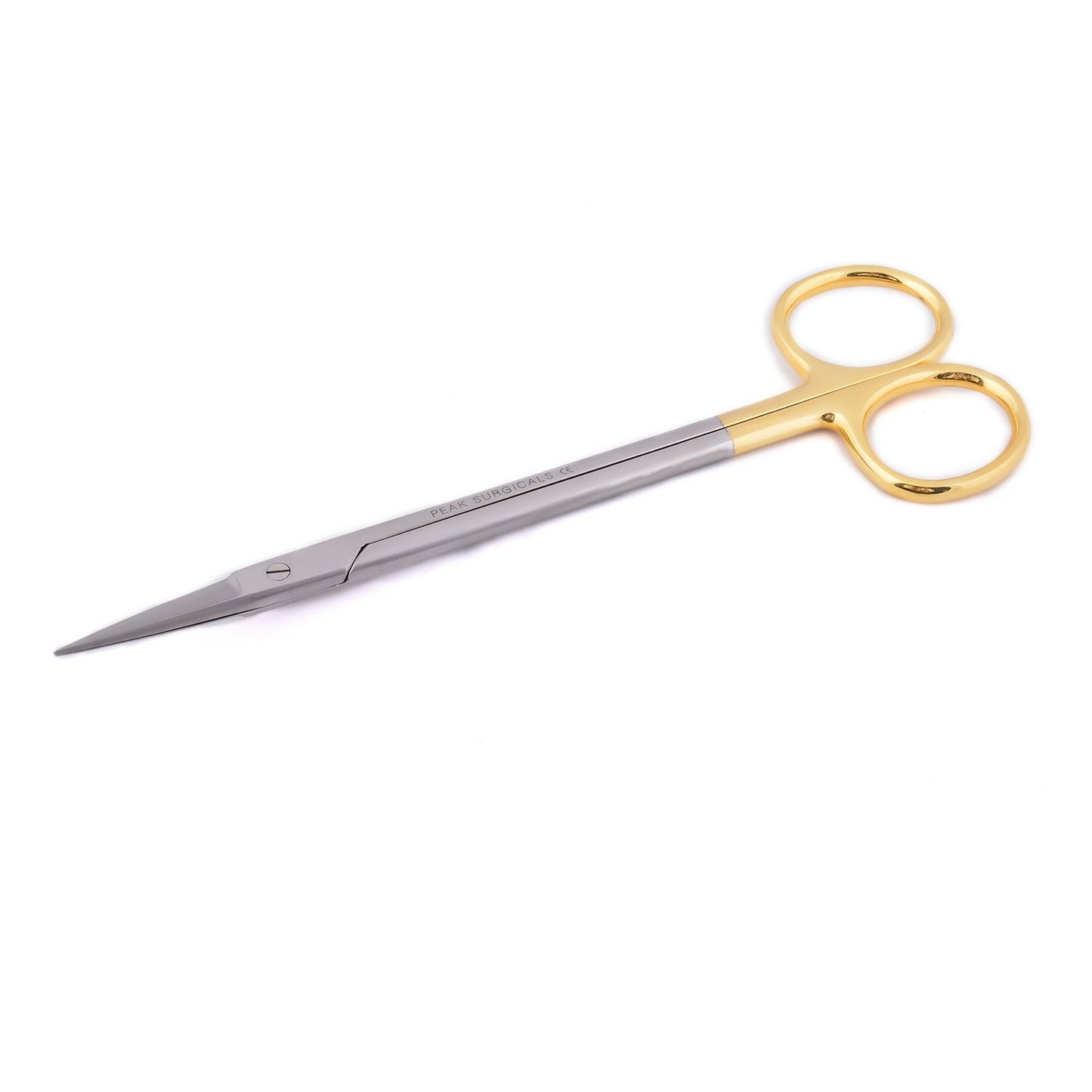
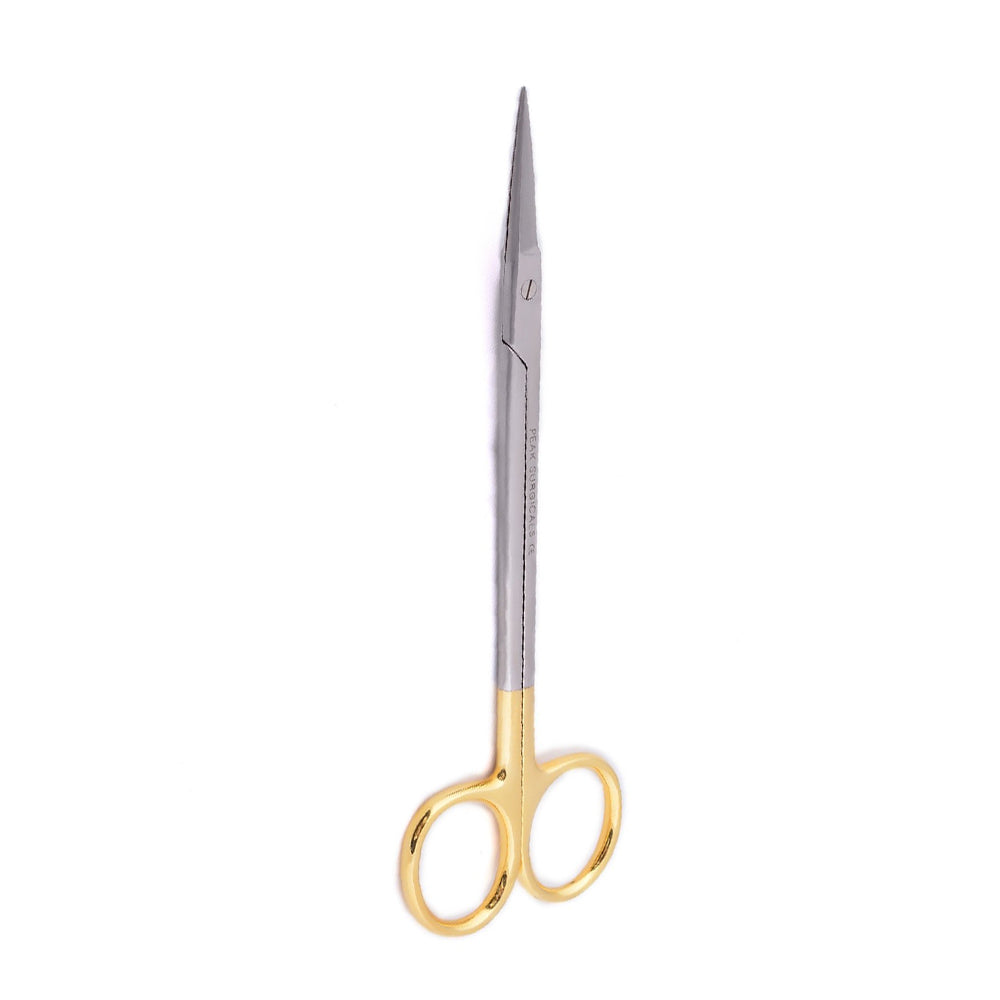
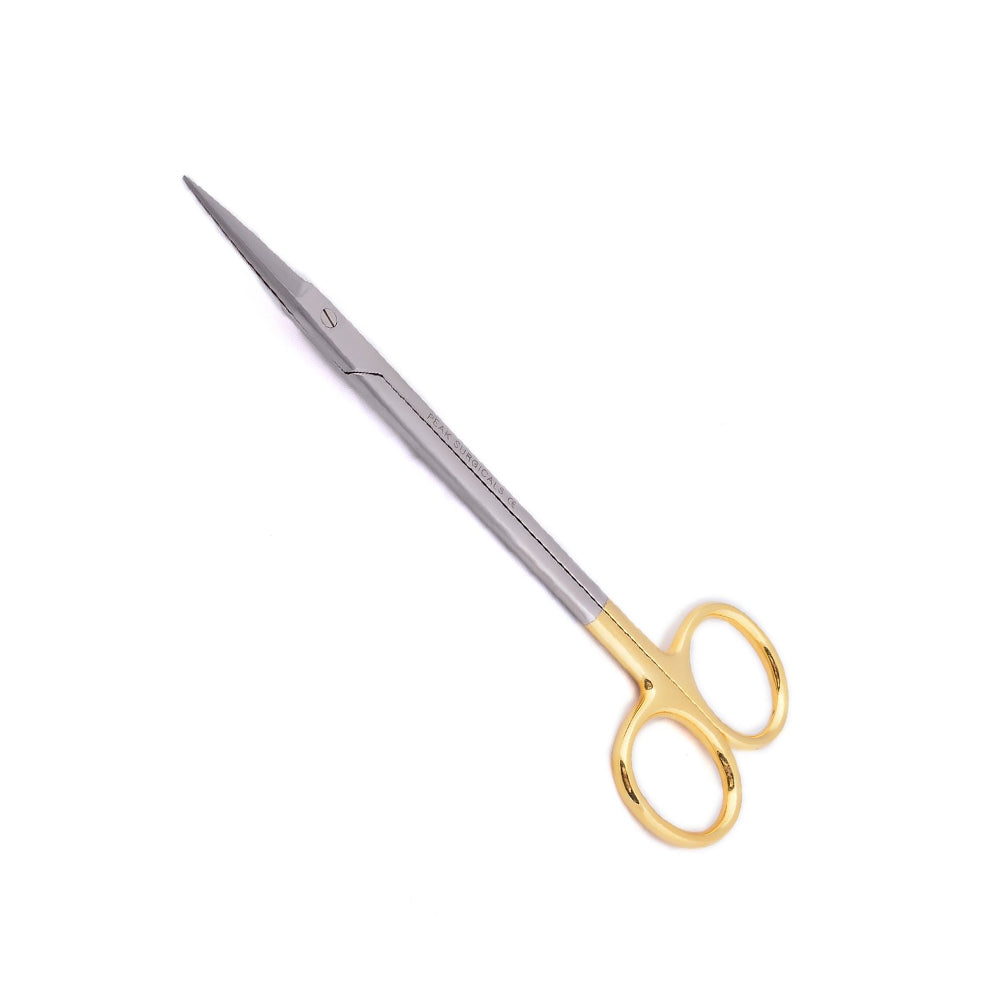
TC Knapp Iris Scissors, SKU PS-O T-01544, are reusable ophthalmic and plastic surgery scissors manufactured from German stainless steel with tungsten carbide cutting inserts for controlled fine dissection, iris tissue cutting, conjunctival trimming, eyelid work, and delicate soft tissue division. The available pattern variants are PS-3169 Straight and PS-3168 Curved under model PS-O T-01544, giving surgical teams two blade paths for direct linear cutting and contour-following dissection. The instrument pattern includes fine TC blade tips, slim shanks, a screw joint, ring handles, gold-tone handle finish, and Class I reusable construction. These scissors are used during ophthalmic microsurgery, iridectomy support, conjunctival peritomy, strabismus exposure, lacrimal procedure preparation, blepharoplasty tissue refinement, facial plastic dissection, dermatologic excision trimming, ENT soft tissue work, and veterinary ophthalmic surgery. Ophthalmic surgeons, plastic surgeons, ENT surgeons, dermatologic surgeons, veterinary ophthalmologists, hospitals, clinics, ambulatory surgery centers, distributors, and procurement departments use this pattern where precise blade control, small-field access, and sterile tray compatibility are required.
The Knapp iris pattern works through fine, narrow cutting blades designed for controlled division in small operative fields. Tungsten carbide inserts provide a hard cutting interface that supports repeated use on delicate tissue, fine fibrous planes, conjunctiva, eyelid tissue, and soft operative margins. The straight variant keeps the blade path aligned with the long axis of the shanks, which is useful when the surgeon needs direct trimming or short linear cuts. The curved variant follows a shallow arc, helping the operator work around ocular contours, eyelid margins, mucosal folds, or plastic surgery tissue planes without forcing the hand into an awkward angle. The screw joint controls blade opposition so the cutting edges meet progressively during each closure stroke. Slim shanks reduce bulk near the operative field and support access under magnification. Ring handles give controlled finger placement during repeated opening and closing. The gold-tone handle section identifies the TC configuration within ophthalmic, ENT, and plastic surgery scissors trays.
During ophthalmic procedures, TC Knapp Iris Scissors can support controlled cutting of iris tissue, conjunctival edges, Tenon’s capsule, and fine soft tissue layers when a compact ring-handled scissors pattern is preferred. In conjunctival peritomy, the fine blade tips allow short controlled cuts along the planned exposure line. During strabismus exposure, the scissors can assist with delicate tissue division around conjunctiva and subconjunctival planes before muscle handling. In lacrimal and eyelid procedures, the straight or curved blade path helps refine small tissue margins without the bulk of larger general scissors. Plastic surgeons can use the pattern during blepharoplasty, facial soft tissue refinement, scar revision, and graft edge trimming. ENT teams may select the curved option for narrow soft tissue access around nasal or auricular operative fields. Veterinary ophthalmic surgeons use the same design for conjunctival, eyelid, and periocular soft tissue work in small animal procedures where fine cutting response and controlled hand movement are required.
PS-3169 Straight is selected when the surgeon needs a direct cutting line for conjunctival trimming, eyelid edge refinement, superficial soft tissue dissection, dermal margin correction, and small plastic surgery cuts. The straight profile gives predictable forward blade alignment and close tactile feedback, especially under loupe or microscope visualization. PS-3168 Curved is selected when the operative plane follows a contour or when the blade must approach tissue from a slightly angled path. The curved model supports iris-adjacent work, conjunctival peritomy, periocular tissue division, blepharoplasty refinement, ENT soft tissue access, and veterinary ophthalmic procedures where a straight line would restrict visibility or hand position. Both variants use the same TC cutting principle and reusable German stainless steel body. Selection depends on cutting direction, tissue contour, field depth, magnification setup, and whether the case requires straight access or curved distal control. Hospitals can stock both patterns for ophthalmology, plastic surgery, ENT, dermatology, and veterinary specialty trays.
German stainless steel provides the corrosion resistance, rigidity, and dimensional stability required for reusable fine scissors exposed to repeated cutting, cleaning, and steam sterilization cycles. Tungsten carbide cutting inserts support durable edge performance when the instrument is used for conjunctival tissue, eyelid planes, fine fibrous attachments, soft tissue margins, and small dressing fragments. Satin, dull, or mirror finish options support operating room lighting preference and inspection routines, while the gold-tone handles identify the TC working pattern. Reprocessing follows standard central sterile workflows, including point-of-use preparation, manual cleaning of blade tips and the screw joint, ultrasonic cleaning where used, washer-disinfector processing, drying, edge inspection, sterile packaging, and autoclave sterilization. The screw joint requires focused cleaning because blood, protein residue, and fine tissue debris can remain around the moving interface. CE marking and ISO 13485 alignment support regulated purchasing documentation for hospitals, clinics, and distributors. FDA-compliant procurement support helps United States buyers maintain reusable surgical instrument records, while OEM availability and one-piece ordering support replacement purchasing and set assembly.
| SKU | PS-O T-01544 |
|---|---|
| Product Name | TC Knapp Iris Scissors |
| Price | $6.60 |
| Size/Gauge Variants | PS-3169 Straight and PS-3168 Curved |
| Instrument Category | TC ophthalmic and plastic surgery scissors |
| Procedure | Ophthalmic microsurgery, iridectomy support, conjunctival peritomy, strabismus exposure, lacrimal procedure preparation, blepharoplasty tissue refinement, facial plastic dissection, dermatologic trimming, ENT soft tissue work, veterinary ophthalmic surgery |
| Material | German stainless steel with tungsten carbide cutting inserts |
| Finish | Satin, dull, or mirror finish with gold-tone ring handle finish |
| Sterilization | Reusable and autoclavable after cleaning, drying, inspection, and sterile packaging |
| Instrument Classification | Class I reusable non-powered surgical scissors |
| Reusable | Yes |
| Certifications | CE & ISO 13485 with FDA-compliant procurement support |
| Warranty | 1-year warranty with 30-day money-back support for eligible non-personalized orders |
| MOQ | 1 piece |
| OEM / Custom Orders | Available for distributor, hospital, clinic, ophthalmic, veterinary, and institutional purchasing programs |
| After-Sale Service | Return and replacement support, order tracking assistance, and procurement documentation support |
How do TC Knapp Iris Scissors differ from Stevens Tenotomy Scissors?
TC Knapp Iris Scissors are fine iris-pattern scissors designed for controlled cutting in ophthalmic, periocular, plastic, ENT, and veterinary specialty fields. Stevens Tenotomy Scissors are commonly used for tenotomy, muscle-adjacent dissection, and delicate blunt-tipped soft tissue separation. The Knapp pattern uses fine blade tips for precise tissue cutting, while Stevens patterns often have a more rounded distal profile for safer separation around tendons and small soft tissue planes. TC Knapp Iris Scissors also include tungsten carbide cutting inserts for durable edge performance. Stevens Tenotomy Scissors are selected when blunt-tip access is the main requirement. The Knapp pattern is selected when fine blade control and straight or curved iris-style cutting are required.
Which TC Knapp Iris Scissors pattern should be selected?
PS-3169 Straight TC Knapp Iris Scissors are selected when the surgeon needs a direct cutting path. This pattern is suitable for conjunctival trimming, eyelid margin refinement, superficial soft tissue dissection, graft edge correction, and dermatologic trimming. PS-3168 Curved is selected when the cutting line follows a contour or when access requires a curved distal approach. The curved option supports iris-adjacent work, conjunctival peritomy, blepharoplasty refinement, ENT soft tissue access, and veterinary ophthalmic procedures. Straight blades provide direct axial control. Curved blades support controlled cutting around rounded or angled tissue planes.
What do CE, ISO 13485, and FDA-compliant procurement mean for this product?
TC Knapp Iris Scissors are supplied for healthcare purchasing workflows that require traceable instrument documentation. CE marking supports regulated distribution where European conformity documentation is required. ISO 13485 alignment indicates that the manufacturing quality system follows a recognized medical device framework. FDA-compliant procurement support helps buyers serving United States healthcare channels maintain records for reusable surgical instruments. Hospitals and clinics can use these references during vendor onboarding, internal product review, and recurring supply approval. Distributors can include PS-O T-01544 in ophthalmology, plastic surgery, ENT, dermatology, and veterinary procurement programs.
How is the screw joint used during fine surgical cutting?
The screw joint on TC Knapp Iris Scissors controls the alignment and movement of the two blade arms. When the surgeon closes the ring handles, the joint guides blade opposition so the TC cutting edges meet in a controlled sequence. This action supports precise cutting through conjunctiva, eyelid tissue, fine fibrous attachments, soft tissue margins, and small operative materials. Proper joint alignment helps the blade tips maintain predictable contact during short strokes under magnification. The screw joint also supports smooth opening and closing during repeated fine dissection. After surgery, the joint requires focused cleaning because tissue residue and protein material can remain around the moving interface.
How should hospitals, clinics, and distributors manage sterilization and supply?
TC Knapp Iris Scissors are reusable instruments suited for standard central sterile processing workflows. After surgery, the TC blade tips, cutting edges, screw joint, shanks, and ring handles require prompt cleaning preparation. The instrument can then be processed through validated cleaning, drying, inspection, sterile packaging, and steam autoclave cycles. Hospitals can stock the straight and curved patterns for ophthalmic, plastic surgery, ENT, dermatology, and veterinary specialty trays. Clinics and distributors can order single replacement units or include both versions in custom fine scissors sets. Procurement teams receive return and replacement support, tracking assistance, and documentation support for institutional purchasing.