
Featured Collection
Your cart
Featured Collection

PEAK SURGICAL
SKU:PS-D-062
Couldn't load pickup availability
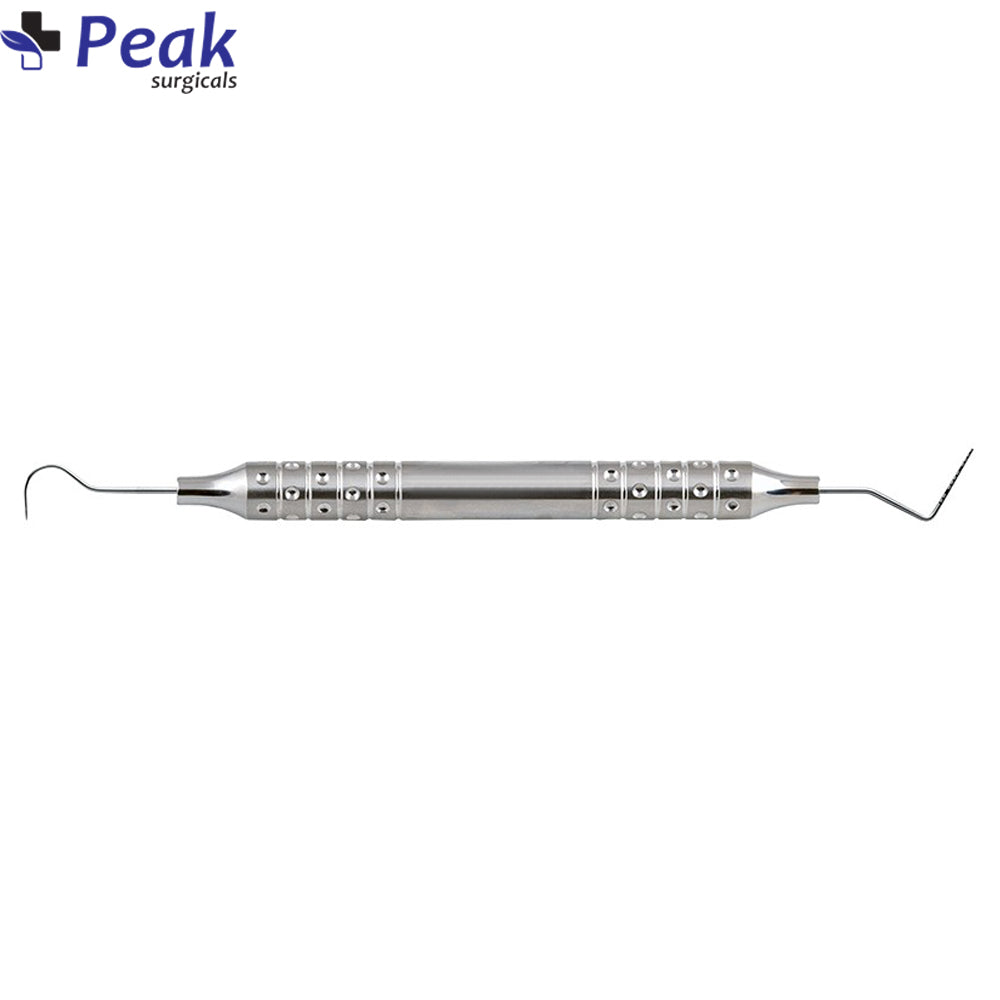
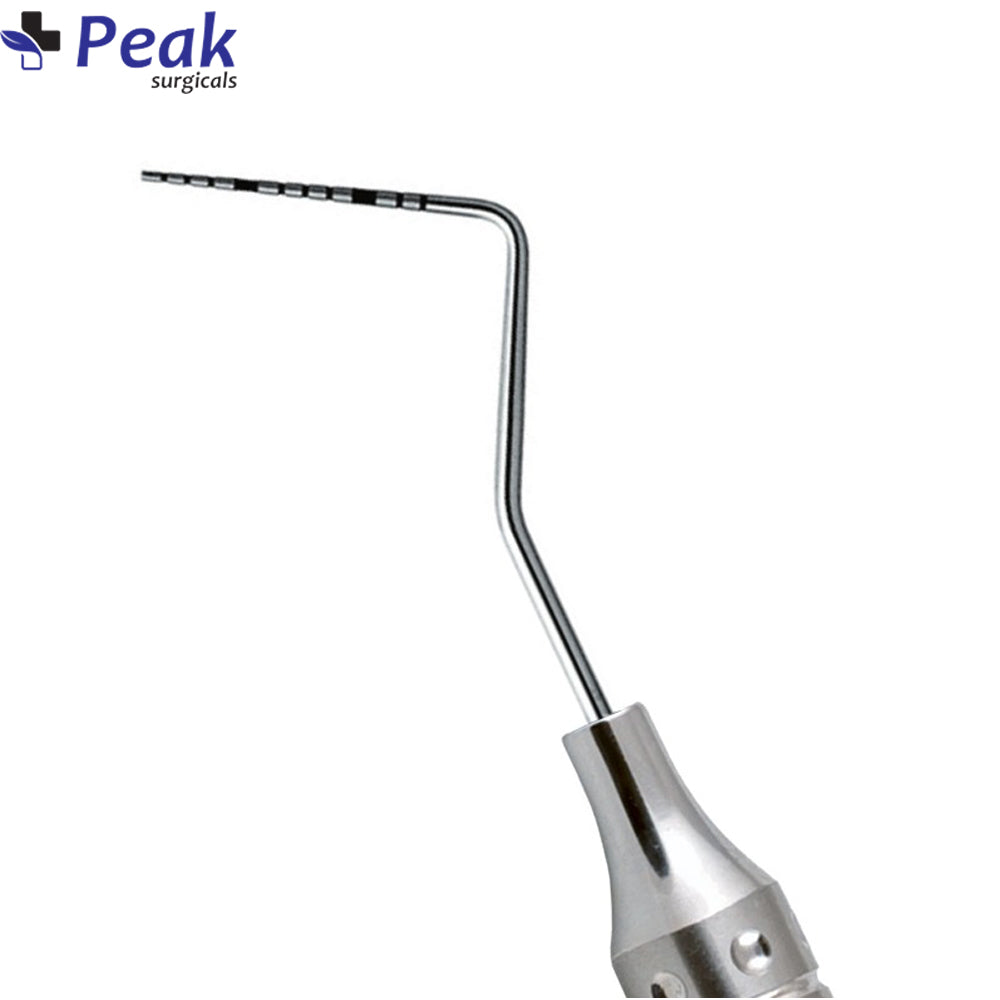
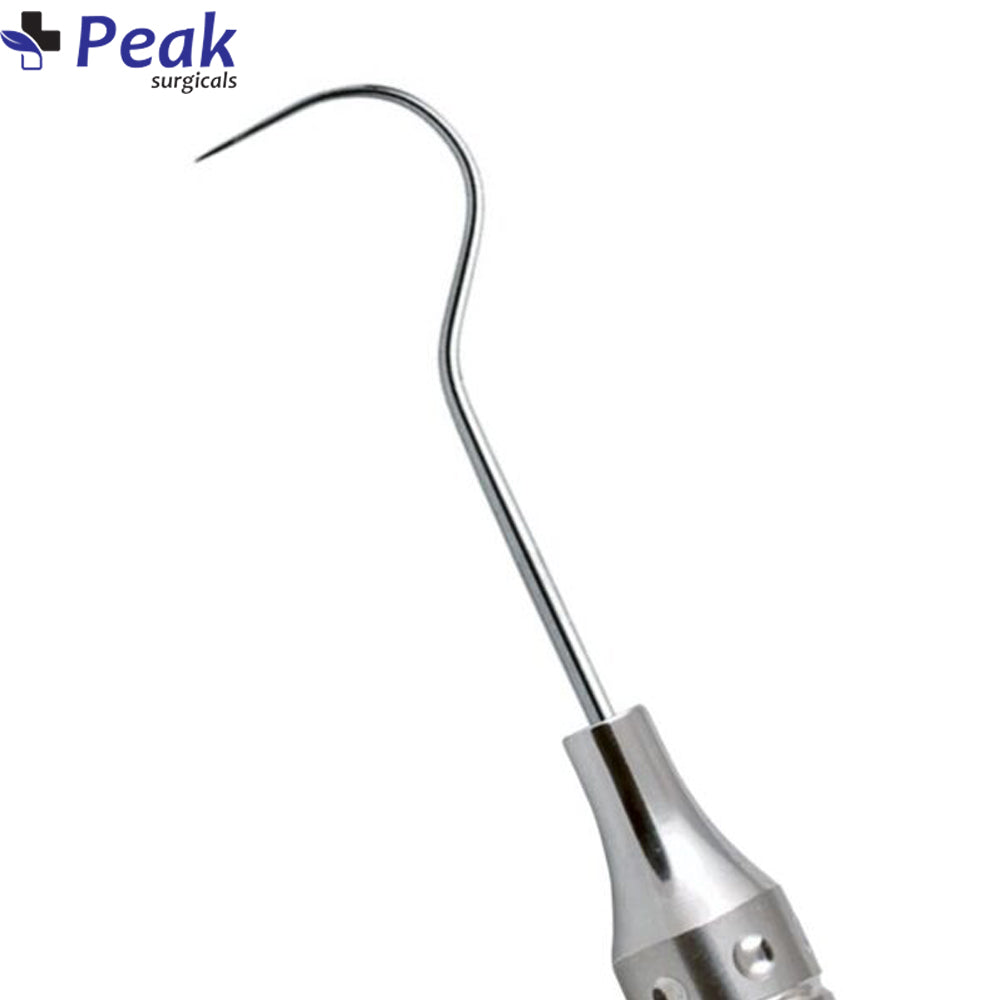
Expros 3A/UNC15 University of North Carolina, SKU PS-D-062, is a double-ended dental diagnostic instrument made from German stainless steel for periodontal charting, caries detection, calculus identification, restorative margin assessment, and routine oral examination. The instrument combines an Explorer 3A working end with a UNC15 periodontal probe carrying 1mm, 2mm, 3mm, 4mm, 5mm, 6mm, 7mm, 8mm, 9mm, 10mm, 11mm, 12mm, 13mm, 14mm, and 15mm markings for detailed sulcus and pocket measurement. The Explorer 3A side traces occlusal pits, fissures, cervical margins, crown edges, residual cement, calculus ledges, and restoration transitions through controlled tactile strokes. The UNC15 side supports six-site periodontal recording, bleeding-point documentation, attachment-level review, hygiene recall comparison, scaling follow-up, furcation-adjacent screening, and peri-implant mucosal assessment. General dentists, periodontists, restorative clinicians, dental hygienists, endodontists, oral surgery teams, orthodontic departments, dental schools, hospital dental units, veterinary dental practices, distributors, and procurement teams use this pattern in reusable diagnostic tray setups.
The Expros 3A/UNC15 University of North Carolina uses two diagnostic working geometries on one balanced stainless handle, allowing the clinician to move between tactile exploration and measured periodontal probing without changing instruments. The Explorer 3A side has a fine curved terminal form designed for pull strokes through occlusal fissures, cervical grooves, restoration interfaces, calculus-retentive surfaces, and exposed root contours. Its slender tip transmits surface changes from softened enamel, marginal ditching, rough cement, residual composite flash, and subgingival ledges through the shaft to the operator’s fingers. The UNC15 side has a rounded marked end designed for axial insertion along the root surface during pocket measurement. Black millimeter markings are read at the gingival margin while the terminal end contacts the sulcus base or periodontal defect. Long shanks preserve visibility around mirrors, suction, cheeks, tongue, and adjacent teeth. The textured cylindrical handle supports wet-glove finger rotation, while the one-piece layout avoids ratchets, springs, locks, pivots, and box joints because clinical control depends on manual pressure, tip orientation, and visual marking interpretation.
During periodontal assessment, the UNC15 end is introduced after visual tissue inspection, plaque review, and supragingival calculus evaluation. The clinician inserts the rounded end parallel to the long axis of the tooth and records measurements at mesiobuccal, midbuccal, distobuccal, mesiolingual, midlingual, and distolingual sites. Lower readings support routine maintenance records, while deeper references document pocket progression, bleeding response, attachment loss, furcation-adjacent findings, therapy response, or referral data. Hygiene and periodontal teams use the same side during recall appointments, scaling and root planing review, peri-implant mucosal checks, and supportive periodontal therapy. The Explorer 3A side is selected for caries-suspect fissures, cervical calculus detection, crown-seat review, bridge-abutment inspection, orthodontic band checks, cement cleanup, and restorative margin evaluation. Restorative clinicians use the curved tip around composite interfaces, amalgam edges, inlay lines, onlay transitions, veneer margins, and fixed prosthetic contours. Endodontic teams use it to inspect access outline margins, while oral surgery and veterinary dental clinicians include the instrument in pre-extraction and posterior oral examination trays.
The Explorer 3A component is selected when the clinical task requires surface exploration rather than numeric depth recording. Its curved geometry follows pits, fissures, restoration edges, cervical contours, calculus shelves, and residual cement through a controlled pull stroke. The UNC15 component is selected when the operator needs detailed periodontal measurements across a 1mm to 15mm range. The 1mm, 2mm, and 3mm references document shallow sulcus readings around stable gingival margins and recall patients. The 4mm, 5mm, and 6mm markings support documentation of developing pocket depth, localized bleeding, calculus retention, and post-scaling comparison. The 7mm, 8mm, and 9mm references are used around molars, furcation-adjacent contours, bridge abutments, root concavities, and implant-supported posterior restorations. The 10mm through 15mm markings support severe periodontal assessment before full-mouth charting review, surgical consultation, extraction planning, or referral. The textured handle allows compact finger rotation and fast reversal between the explorer and probe sides during combined restorative inspection and periodontal documentation.
German stainless steel gives the Expros 3A/UNC15 University of North Carolina the stiffness required for tactile diagnosis while preserving the fine Explorer 3A tip and UNC15 marked end through repeated clinical use. The polished working ends support inspection after cleaning, while the satin-style textured handle reduces glare under operatory lighting and maintains grip control with wet gloves. Reprocessing follows standard reusable dental instrument workflow: point-of-use debris removal, careful cleaning around the curved tip and marked probe, ultrasonic cleaning when included in facility protocol, rinsing, drying, visual inspection, packaging, and steam autoclave sterilization. A single-piece metal body simplifies instrument counts because there are no detachable measuring sleeves, plastic inserts, or disposable tips. CE marking supports international medical device procurement, and ISO 13485 certification reflects manufacturing controls expected by hospitals, clinics, dental schools, distributors, and institutional buyers. FDA-compliant procurement context helps United States buyers maintain reusable hand instrument records. The product supports single-piece replacement, custom diagnostic set assembly, distributor ordering, OEM programs, after-sale assistance, and routine replenishment for professional dental and veterinary supply channels.
| SKU | PS-D-062 |
|---|---|
| Product Name | Expros 3A/UNC15 University of North Carolina |
| Price | $11.00 USD |
| Size/Gauge Variants | UNC15 markings: 1mm, 2mm, 3mm, 4mm, 5mm, 6mm, 7mm, 8mm, 9mm, 10mm, 11mm, 12mm, 13mm, 14mm, and 15mm |
| Instrument Category | Dental explorer and periodontal probe |
| Procedure | Periodontal charting, caries detection, calculus identification, restorative margin assessment, crown review, hygiene examination, peri-implant review, endodontic access review, pre-extraction clearance, and veterinary dental examination |
| Material | German stainless steel |
| Finish | Satin-style textured handle with polished working ends and black probe markings |
| Sterilization | Reusable; clean the Explorer 3A tip and UNC15 marked end, rinse, dry, inspect, package, and steam autoclave through facility protocol |
| Instrument Classification | Non-powered reusable dental diagnostic hand instrument |
| Reusable | Yes |
| Certifications | CE marked, ISO 13485 certified, FDA-compliant procurement support |
| Warranty | 30 days money back guarantee |
| MOQ | 1 piece |
| OEM / Custom Orders | Available for dental clinics, hospital dental departments, distributors, veterinary dental units, and institutional purchasing programs |
| After-Sale Service | Return and replacement support, order tracking assistance, and procurement documentation support |
How does this differ from an Expros 23/UNC15?
Expros 3A/UNC15 University of North Carolina pairs a 3A explorer end with a UNC15 probe, while an Expros 23/UNC15 uses an Explorer 23 shepherd’s-hook end with the same 1mm to 15mm periodontal scale. The 3A explorer profile is selected for fine tactile tracing along occlusal fissures, cervical grooves, calculus ledges, and restorative transitions. The Explorer 23 pattern gives a broader hook-style sweep through pits and marginal ridges. Both instruments support detailed periodontal charting through the UNC15 side. This product is selected when the clinician wants the UNC15 measurement range with the Explorer 3A tactile access pattern. Expros 3A/UNC15 University of North Carolina is suited to hygiene recall, periodontal documentation, restorative review, and dental school examination trays.
How should the 1mm to 15mm UNC15 markings be selected?
Expros 3A/UNC15 University of North Carolina uses the 1mm, 2mm, and 3mm references for shallow sulcus readings around stable gingival margins and maintenance patients. The 4mm, 5mm, and 6mm markings support documentation of developing pocket depth, localized bleeding response, calculus retention, and post-scaling comparison. The 7mm, 8mm, and 9mm references are used around molars, furcation-adjacent contours, bridge abutments, root concavities, and implant-supported posterior restorations. The 10mm, 11mm, and 12mm levels support advanced defect recording before periodontal therapy review or surgical consultation. The 13mm, 14mm, and 15mm markings support severe pocket documentation before referral, extraction planning, or complex periodontal records. The Explorer 3A side remains available during the same appointment for caries detection, calculus confirmation, and restoration transition checks.
How do CE, ISO 13485, and FDA procurement requirements apply?
Expros 3A/UNC15 University of North Carolina is supplied for professional dental purchasing where reusable hand instrument documentation is required. CE marking supports international procurement records for hospitals, clinics, dental schools, distributors, and institutional buyers. ISO 13485 certification reflects manufacturing controls used in regulated medical device supply. FDA-compliant procurement context helps United States buyers maintain vendor files and reusable dental instrument records. These references support tender preparation, distributor onboarding, clinic audits, product file review, and multi-location purchasing approval. The instrument remains a non-powered dental explorer and periodontal probe for professional chairside examination.
How are the Explorer 3A tip, UNC15 probe, and handle controlled during use?
The control feature on Expros 3A/UNC15 University of North Carolina is the double-ended working geometry combined with the textured cylindrical handle. The clinician rolls the handle between the thumb and index finger to orient the Explorer 3A tip against occlusal, cervical, or restorative surfaces. For periodontal charting, the UNC15 end is aligned parallel to the root surface and advanced with light pressure until the pocket base is contacted. The black marking is read at the gingival margin before the end is withdrawn or moved to the next recording site. There is no ratchet, spring, lock, pivot, or box joint because the instrument depends on manual pressure and precise shank angulation. This handling pattern supports sequential caries, calculus, restoration, and periodontal assessment without changing instruments.
How should clinics and distributors manage sterilization and supply?
Expros 3A/UNC15 University of North Carolina is a reusable German stainless steel dental instrument suitable for standard clinical tray reprocessing. After use, staff remove visible debris, clean the Explorer 3A tip and UNC15 marked end carefully, rinse, dry, inspect both working tips, package the instrument, and steam autoclave it according to facility protocol. The one-piece metal construction supports repeated turnover in examination, periodontal, hygiene, restorative, endodontic review, orthodontic, oral surgery, and veterinary dental trays. Hospitals and teaching clinics can stock the same pattern across departments to standardize diagnostic inspection and periodontal recording. Distributors can order single pieces or include the item in custom diagnostic kits for professional buyers. The $11.00 USD price supports replacement ordering, department replenishment, and multi-chair clinic inventory planning.
