
Featured Collection
Your cart
Featured Collection

PEAK SURGICALS
SKU:PS-OT-0596
Couldn't load pickup availability
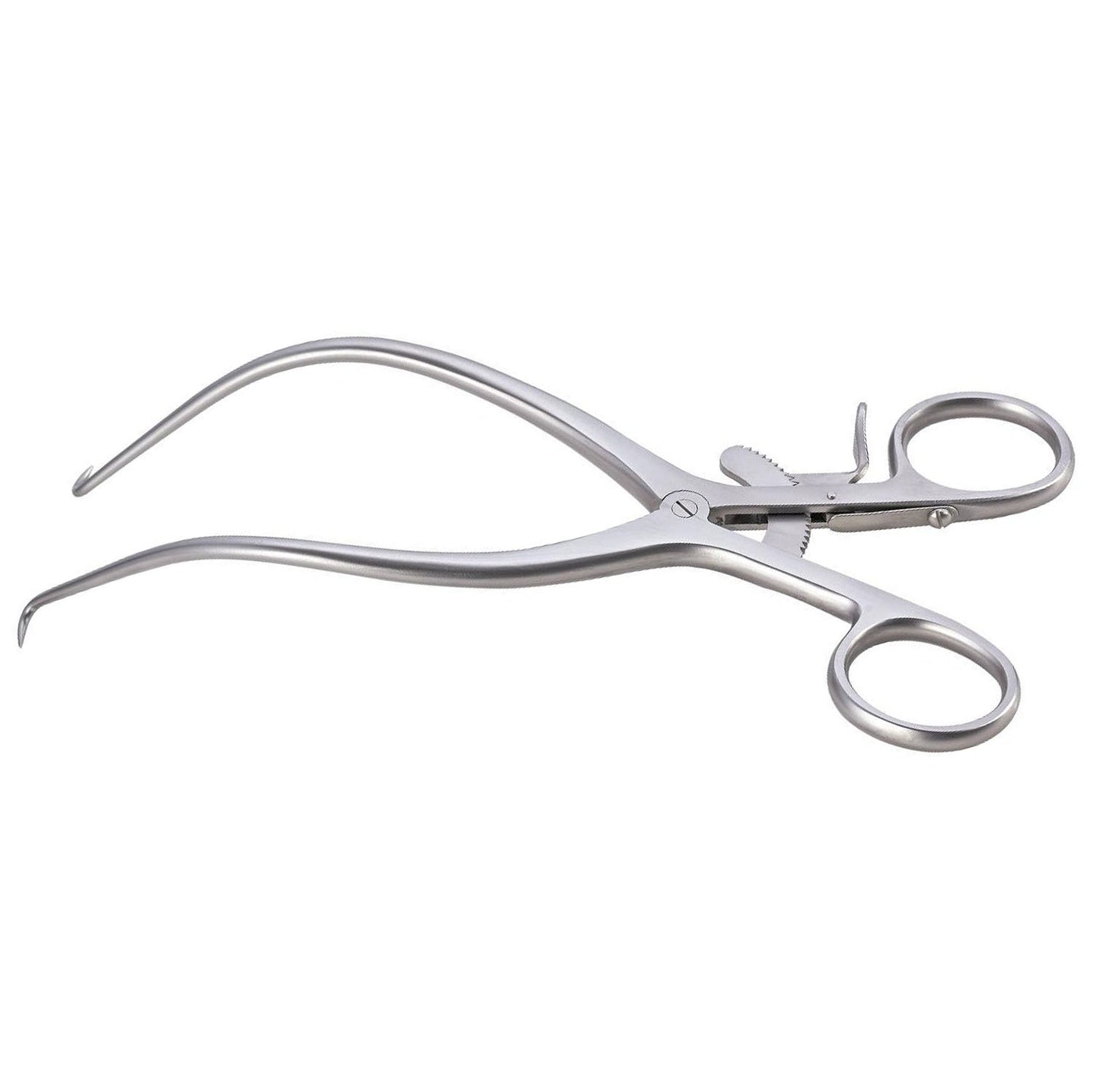
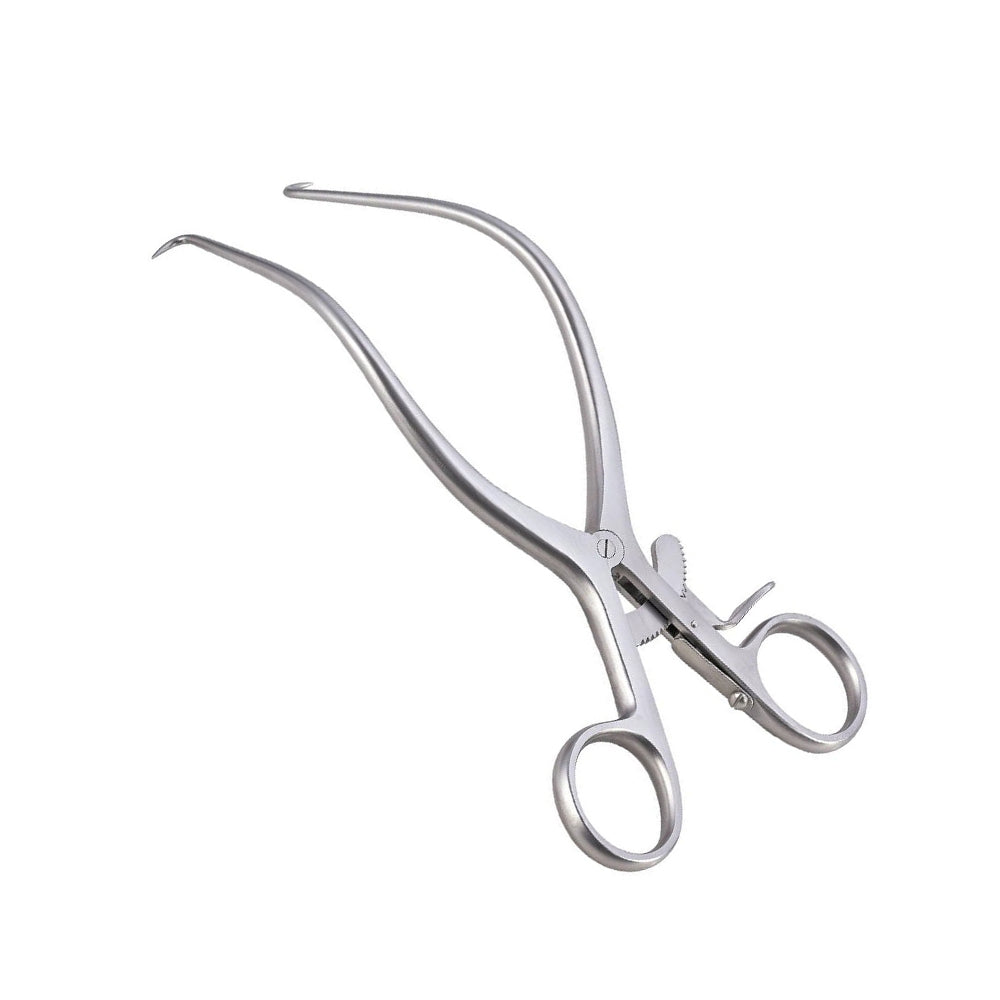
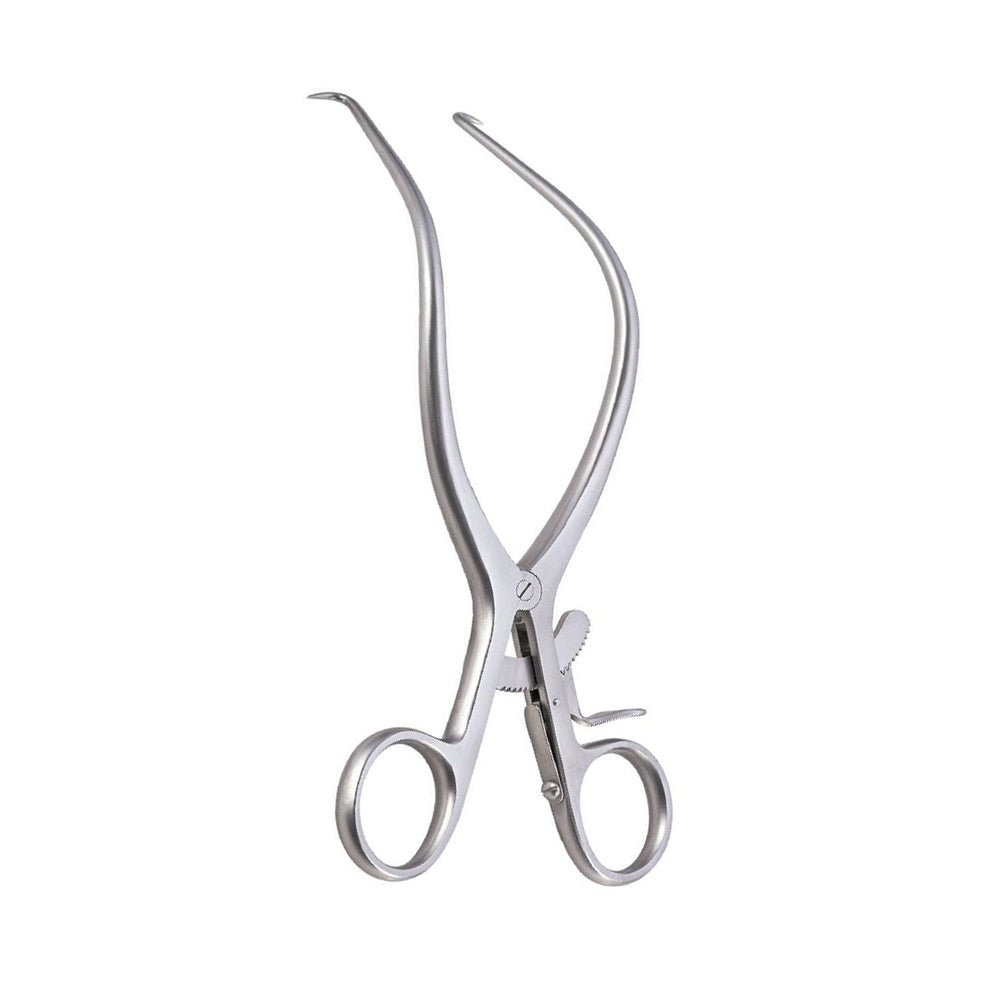
Surgical Gelpi Perineal Retractors, SKU PS-OT-0596, are reusable self-retaining surgical retractors manufactured from German stainless steel for maintaining controlled exposure through narrow perineal, orthopedic, spinal, and other compact open surgical approaches. The pattern uses two outward-curving arms that terminate in sharp single tenaculum-style prongs; closing the ring handles spreads the working ends, while the ratchet maintains the selected opening without continuous hand pressure. Four model sizes are offered: PS-8864 with 1 3/8 in (3.5 cm) total opening, 1 1/4 in (3.2 cm) arm length, and 3 1/2 in (8.9 cm) overall length; PS-8865 with 1 5/8 in (4.1 cm) opening, 2 in (5 cm) arms, and 4 1/2 in (11.4 cm) overall length; PS-8866 with 2 1/8 in (5.4 cm) opening, 3 in (7.6 cm) arms, and 5 1/4 in (13.3 cm) overall length; and PS-8867 with 3 1/4 in (8.3 cm) opening, 4 3/4 in (12.1 cm) arms, and 7 1/4 in (18.4 cm) overall length. The pattern is used for perineal repair and reconstruction, anal and perirectal exposure, limited-incision orthopedic access, and paraspinal retraction during open lumbar procedures. It is suited to colorectal, gynecologic, urogynecologic, orthopedic, and spine surgeons working in operating rooms and ambulatory surgical facilities.
The Gelpi pattern is built around a central pivot that converts ring-handle closure into controlled separation of the distal arms. As the handles approximate, the curved shafts diverge, carrying the opposing sharp prongs laterally into the wound margins. Each prong is narrow and pointed, so fixation is concentrated at a defined tissue edge rather than distributed across a broad blade. This geometry is useful where the incision is relatively small but the operative target lies below the skin surface. The outward sweep of the arms creates clearance between the wound and the instrument body, reducing interference with forceps, scissors, needle holders, suction tips, or powered instruments entering the same field. A toothed ratchet adjacent to the handles locks the retractor at progressive opening positions. The surgeon can increase separation incrementally, assess the tissue response, and stop at the minimum opening that produces adequate visualization. The pivot must move freely because stiffness can make opening abrupt, while a worn ratchet can reduce positional security. Ring handles provide familiar bilateral control during insertion and release. To remove the device, the lock is disengaged under control, the arms are allowed to approximate, and the sharp ends are withdrawn from the wound margins without dragging across exposed tissue.
In perineal surgery, the retractor is positioned after the incision or laceration has been defined and the surgeon requires stable access to deeper planes. During repair of obstetric perineal lacerations, perineorrhaphy, or perineoplasty, the opposing prongs can engage selected wound edges to maintain visualization of the muscular and fascial layers while sutures are placed. In anal and perirectal procedures, compact models can support exposure of the operative tract while leaving the central field accessible for dissection, hemostasis, or repair. In orthopedic surgery, the same self-retaining mechanism is useful through short incisions where skin, fascia, or muscle must be held apart during fracture exposure, small-joint work, or access to superficial bone. In lumbar spine procedures such as open discectomy or laminectomy, larger patterns can retract paraspinal soft tissue to preserve a working corridor toward the lamina and interlaminar space. Placement should be deliberate because the sharp prongs concentrate load at their contact points. The ratchet is advanced only until the required field is obtained rather than to its maximum position. Smaller dimensions favor shallow or restricted access, while longer arms permit the pivot and handles to remain farther from deeper operative planes. This staged selection helps the surgeon balance exposure, tissue engagement, and instrument clearance.
Model PS-8864 is the most compact option, with a 3 1/2 in (8.9 cm) overall length, 1 1/4 in (3.2 cm) arms, and 1 3/8 in (3.5 cm) total opening. Its short reach is suited to superficial perineal exposure, small hand or foot incisions, and other shallow fields where a longer frame would crowd the operative site. PS-8865 measures 4 1/2 in (11.4 cm) overall with 2 in (5 cm) arms and a 1 5/8 in (4.1 cm) opening, providing additional depth for pediatric perineal or anal access and compact adult procedures. PS-8866 extends to 5 1/4 in (13.3 cm), using 3 in (7.6 cm) arms and a 2 1/8 in (5.4 cm) opening for adult perineal work, limited orthopedic approaches, and moderately deep soft-tissue corridors. PS-8867 is the largest listed configuration at 7 1/4 in (18.4 cm) overall, with 4 3/4 in (12.1 cm) arms and a 3 1/4 in (8.3 cm) total opening. That longer geometry is selected when deeper perineal, paraspinal, or orthopedic exposure requires the handles and pivot to remain outside the immediate operative window. Size choice should follow incision depth, required lateral separation, tissue thickness, and the amount of clearance needed for other instruments.
German stainless steel provides the rigidity required for repeated opening loads while allowing the fine prongs, pivot, handles, and ratchet teeth to retain their working geometry through routine clinical use. The product page lists satin, dull, and mirror finish options. A satin or dull surface reduces glare under operating lights, while a mirror surface provides a smooth polished exterior that is straightforward to inspect for residue or surface damage. The device is reusable and should enter reprocessing immediately after use so blood and proteinaceous material do not dry around the pivot, ratchet, or distal hooks. Cleaning must include the joint and locking teeth, followed by rinsing, drying, visual inspection, and functional testing. The ratchet should engage progressively without skipping, the pivot should articulate smoothly, and both prongs should remain aligned and intact. Sharp ends require protection during tray assembly so they do not perforate wraps or become damaged during handling. Steam sterilization can be used within a healthcare facility's validated reusable-instrument cycle, with cycle parameters governed by the facility protocol and applicable instructions for use. Peak Surgicals lists the instrument as Class I, reusable, with CE, ISO 13485, and FDA-related procurement documentation. These references support institutional purchasing review but should not be interpreted as an FDA approval claim for an individual manual instrument.
| SKU | PS-OT-0596 |
|---|---|
| Product Name | Surgical Gelpi Perineal Retractors |
| Price | $16.50 USD |
| Size/Gauge Variants | PS-8864: 3 1/2 in overall, 1 1/4 in arm, 1 3/8 in opening; PS-8865: 4 1/2 in overall, 2 in arm, 1 5/8 in opening; PS-8866: 5 1/4 in overall, 3 in arm, 2 1/8 in opening; PS-8867: 7 1/4 in overall, 4 3/4 in arm, 3 1/4 in opening |
| Instrument Category | Self-Retaining Surgical Retractor |
| Procedure | Perineal repair and reconstruction, anal and perirectal exposure, limited orthopedic access, lumbar discectomy and laminectomy exposure |
| Material | German Stainless Steel |
| Finish | Satin, Dull, Mirror |
| Sterilization | Reusable; steam sterilization following validated healthcare-facility reprocessing protocol |
| Instrument Classification | Class I |
| Reusable | Yes |
| Certifications | CE, ISO 13485, FDA procurement context |
| Warranty | 1 Year |
| MOQ | 1 Piece |
| OEM / Custom Orders | Available |
| After-Sale Service | Return and Replacement |
How do Gelpi Perineal Retractors differ from Weitlaner Retractors?
Surgical Gelpi Perineal Retractors use one sharp tenaculum-style prong on each arm, whereas a Weitlaner Retractor usually uses multiple rake prongs on each side. The Gelpi pattern concentrates traction at two opposing points and is therefore well suited to narrow, deeper access where broad blades would occupy more space. A Weitlaner distributes retraction across a wider tissue margin and is commonly selected for broader superficial or intermediate-depth exposure. The Gelpi's long curved arms also keep the ring handles and locking mechanism away from the central wound corridor. Both designs are self-retaining, but their tissue engagement geometry is clinically different. Selection depends on incision width, tissue thickness, depth of the target, and whether concentrated or distributed retraction is preferred.
Which Gelpi size should be selected for different operative depths?
Size selection should match the depth of the operative target and the lateral opening required rather than simply choosing the longest instrument. PS-8864, at 3 1/2 in overall, is suited to shallow perineal, hand, foot, and compact soft-tissue fields. PS-8865, at 4 1/2 in, provides greater reach for pediatric perineal or anal exposure and restricted adult incisions. PS-8866, at 5 1/4 in, is appropriate when adult perineal repair or limited orthopedic access requires more arm length and a 2 1/8 in total opening. PS-8867, at 7 1/4 in, provides the deepest listed reach and the widest opening for deeper perineal, paraspinal, or orthopedic approaches. Surgical Gelpi Perineal Retractors should be selected according to wound depth, tissue thickness, required instrument clearance, and the minimum separation needed to visualize the operative plane.
What do CE, ISO 13485 and FDA references mean for procurement?
Peak Surgicals lists CE, ISO 13485, and FDA-related procurement information for Surgical Gelpi Perineal Retractors. CE documentation addresses conformity requirements relevant to applicable medical-device markets, while ISO 13485 relates to the quality-management system used for medical-device manufacturing and controlled production processes. For United States purchasing, FDA status should be evaluated in the context of the device category, establishment responsibilities, listing requirements, and the documents requested by the buyer. FDA terminology should not be converted into an unsupported claim that an individual manual retractor is FDA approved. Hospitals and distributors can use the available regulatory documentation during supplier qualification and purchasing review. Procurement teams should retain the applicable certificates, product identification, and supplier records within their own quality or vendor-management system.
How is the self-retaining ratchet used intraoperatively?
The control feature on Surgical Gelpi Perineal Retractors is the ratcheted self-retaining mechanism positioned beside the ring handles. After the sharp prongs are placed at opposing wound margins, gradual approximation of the handles separates the distal arms. The ratchet engages in steps, allowing the surgeon to hold a selected opening without continuous manual pressure. Retraction should be advanced only until visualization and working clearance are adequate because the pointed ends concentrate force at their contact sites. Before removal, the lock is deliberately released while the instrument is controlled so the arms do not close abruptly against tissue. During preoperative inspection, the pivot should move smoothly and the ratchet should hold each selected position without skipping or unintentional release.
How should hospitals reprocess and procure these retractors?
Hospitals, clinics, and distributors should procure Surgical Gelpi Perineal Retractors by SKU and model number so the requested opening, arm length, and overall length are preserved through ordering and replenishment. The listed MOQ is one piece, OEM service is available, and the stated warranty period is one year with return and replacement after-sale service. After use, visible soil should be removed promptly and the pivot, ratchet teeth, curved arms, and prongs should receive thorough cleaning and rinsing. The instrument should then be dried and inspected for tip damage, corrosion, joint stiffness, and secure ratchet engagement. Sharp prongs should be protected during tray assembly to reduce damage to the instrument and sterilization packaging. Final steam sterilization should follow the healthcare facility's validated reusable-instrument cycle and applicable reprocessing instructions before the device returns to the operating-room inventory.


