


Types of Surgical Instruments: Names, Uses & Pictures
Surgical instruments are easiest to understand when you group them by what they do. A scalpel and a pair of Mayo scissors both cut, a Kelly and a Crile hemostat both clamp, and a Balfour and a Senn retractor both hold tissue out of the way, even though each looks very different. This guide explains the main types of surgical instruments, with names, pictures and general uses for 17 of the most common patterns.
There is no single official number of categories. Training programs group instruments in slightly different ways, but most organize them by function: cutting, grasping, clamping, retracting, suturing, suction and probing. Alongside each group, you will learn how to identify instruments by their design, how to tell similar patterns apart and what to check when selecting one.
What Are Surgical Instruments?
Surgical instruments are hand-held tools designed for a specific task during an operation or procedure, such as cutting tissue, holding it, controlling bleeding, improving exposure or placing sutures. They are one branch of the wider family of medical instruments, which also includes diagnostic, dental and examination tools.
Most reusable surgical instruments are made from surgical-grade stainless steel and are built to be cleaned, inspected and sterilized between uses. Many patterns are named after the surgeon who developed or popularized them, which is why names such as Metzenbaum, Babcock and Deaver appear on operating room trays. The name tells you the design, and the design tells you the job.
Facilities comparing lifecycle, workflow and supply considerations can also review our guide to reusable and disposable surgical instruments.
How Are Surgical Instruments Classified?
Surgical instruments can be grouped according to their primary function. Classification systems vary between hospitals, textbooks and training programs, but commonly used functional groups include instruments for cutting, grasping, clamping, retracting, suturing, suction and access or probing.
Some instruments sit across two groups. A hemostat, for example, clamps vessels but is also used to hold sutures or tissue. Grouping by primary function still gives the clearest mental map, and this guide uses seven functional groups to organize the instruments that follow. Instruments can also be sorted by specialty, by handle type or by whether they lock, and those views are covered later in the guide.
Types of Surgical Instruments at a Glance

| Functional group | Examples | General role |
|---|---|---|
| Cutting and dissecting | Scalpel, Mayo scissors, Metzenbaum scissors | Incise and separate tissue |
| Grasping and holding | Adson, Allis and Babcock forceps | Hold or move tissue |
| Clamping and occluding | Crile, Kelly and Kocher forceps | Compress vessels or hold tissue under a locked grip |
| Retracting and exposing | Senn, Deaver, Weitlaner and Balfour retractors | Hold tissue or wound edges back to improve access and visibility |
| Suturing and closure | Mayo-Hegar needle holder | Hold and drive curved suture needles |
| Suction and aspiration | Frazier and Poole suction tubes | Clear blood, fluid and irrigation from the field |
| Probing and access | Grooved director | Explore tracts and guide cutting instruments |
Every group below can be browsed within Peak's surgical instruments collection.
Cutting and Dissecting Instruments
Cutting instruments make incisions, while dissecting instruments separate tissue planes. The group includes scalpels and a wide range of surgical scissors, each balanced for a different kind of tissue.
Scalpel Handles and Blades
A scalpel combines a reusable handle with a detachable, single-use blade. The #3 scalpel handle accepts the smaller blade series, including #10, #11, #12 and #15 blades. The #10 has a large curved edge for longer incisions, the #11 is pointed for stab incisions, and the #15 is a small curved blade for short, precise cuts. Blades are attached and removed with a needle holder or blade remover, never by hand.
Mayo Scissors
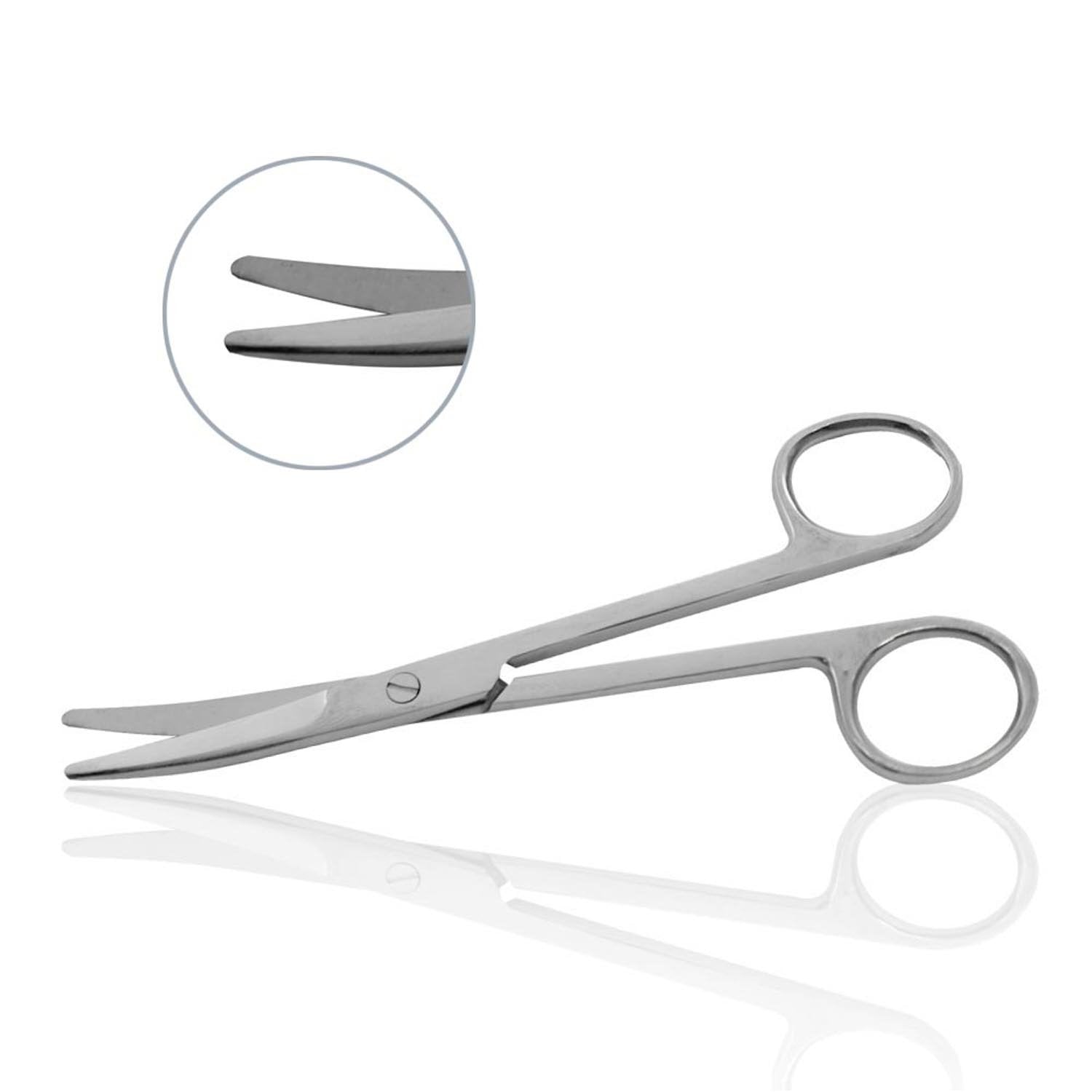
Mayo scissors are heavier surgical scissors with robust blades, commonly used for cutting dense tissue. Straight patterns are also commonly used for cutting sutures, while curved patterns are used where heavier tissue dissection is required.
Metzenbaum Scissors
Metzenbaum scissors have long handles, short fine blades and blunt tips. They are designed for delicate soft-tissue dissection and are not intended for routine suture cutting.

Browse the full range of surgical scissors, or read our guide to types of surgical scissors for Iris, tenotomy, operating and other patterns.
Grasping and Holding Instruments
Grasping instruments hold tissue so it can be cut, sutured or moved. Two design features separate most of them. The first is the handle: thumb forceps are sprung, tweezer-style instruments held like a pencil, while ring-handled forceps are held like scissors and often lock with a ratchet. The second is the tip, which may be smooth, serrated, toothed or fenestrated (open in the middle). Toothed tips grip firmly but can mark tissue, while smooth, serrated and fenestrated tips grip more gently.
Adson Forceps
Adson forceps are thumb forceps with a broad, flat grip that narrows sharply to fine tips. They come with or without teeth and are widely used for holding skin edges and superficial tissue, particularly during skin closure.
Allis Forceps
Allis forceps are ring-handled, ratcheted forceps with short rows of fine interlocking teeth at the tip. They give a firm, secure hold on tougher tissue such as fascia, or on tissue that will be removed, and are not intended for delicate structures.
Babcock Forceps
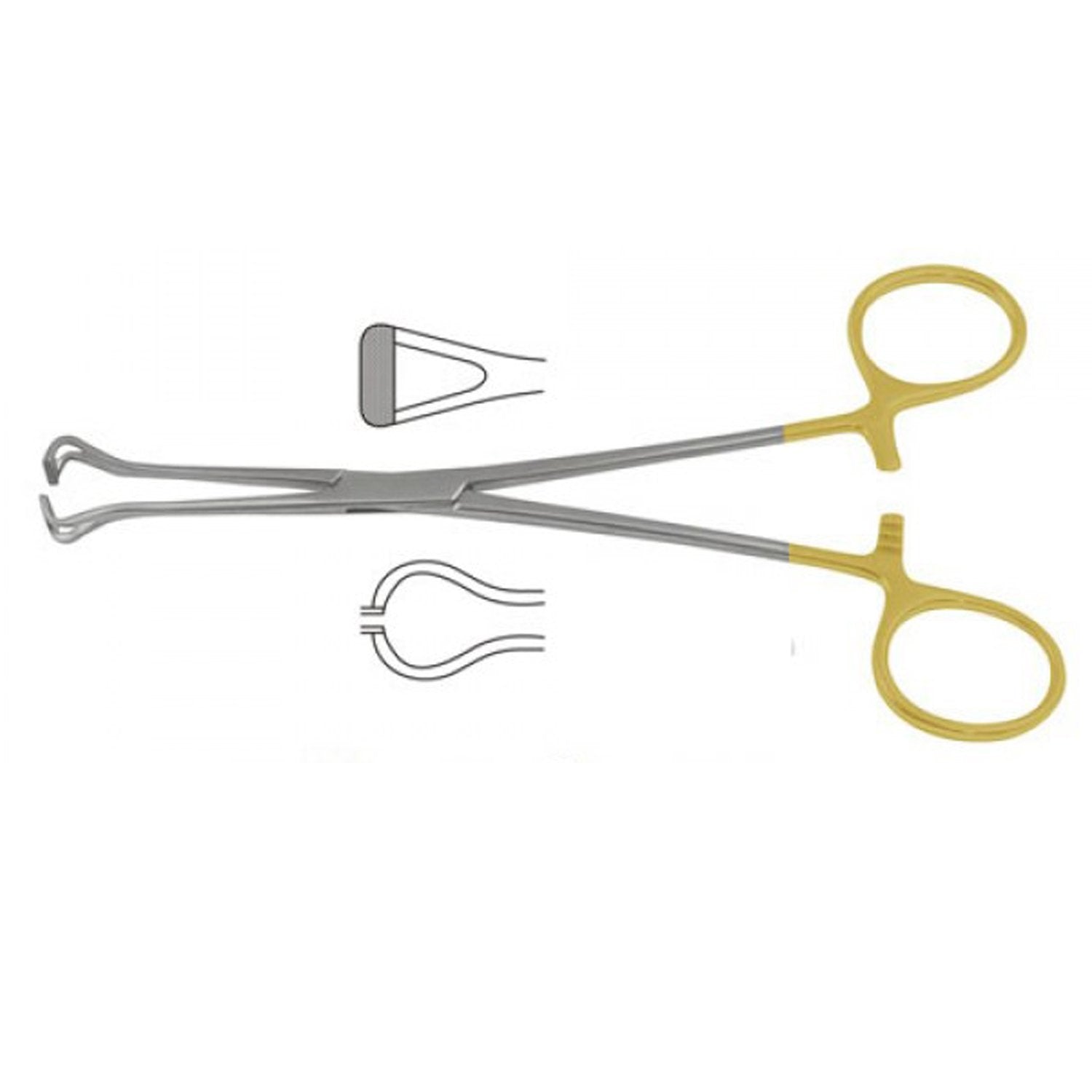
Babcock forceps are ring-handled, ratcheted forceps with rounded, fenestrated jaws and no teeth. The open, curved jaw encircles tubular structures such as bowel or fallopian tubes, which makes Babcock one of the classic atraumatic grasping patterns. Peak's TC Babcock forceps add tungsten carbide gripping surfaces to this design.
Explore more patterns in the surgical forceps collection.
Clamping and Occluding Instruments
Clamps compress a structure and usually hold it under a locked grip. The most familiar are hemostatic forceps, or hemostats, which close off blood vessels before they are tied or sealed. Hemostats share ring handles, a box lock and a ratchet, and differ mainly in size, jaw serration pattern and whether they have teeth.
Crile Hemostat
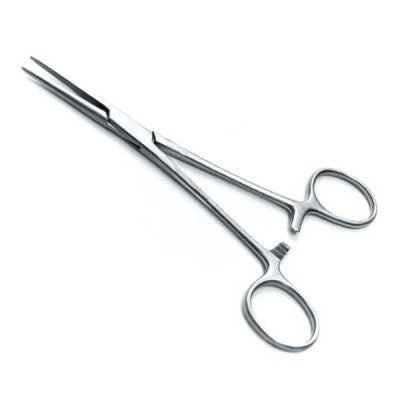
The Crile is a mid-sized hemostat, commonly around 14 cm long, with transverse serrations that typically run the full length of its jaws. It is made in straight and curved patterns. The Crile hemostatic forceps is a typical example.
Kelly Hemostat
The Kelly is similar in size and shape to the Crile, but its serrations typically cover only the distal half of the jaws. That detail is the most commonly used way to tell the two apart.
Kocher Forceps
Kocher forceps are heavier clamps with transverse serrations and interlocking teeth at the tip, commonly in a 1×2 pattern. The teeth give a secure hold on tough tissue such as fascia, but make them unsuitable for delicate tissue.
These three are only a starting point. Our guide to types of hemostats compares Mosquito, Pean, Carmalt and other patterns in more depth, and the hemostats collection shows the available sizes.
Retracting and Exposing Instruments
Retractors hold wound edges, organs or tissue out of the way so the surgical team can see and reach the working area. They fall into two broad groups. Handheld retractors are held by an assistant and can be repositioned instantly. Self-retaining retractors hold themselves open with a ratchet, screw or frame, which frees the assistant's hands during longer procedures.
Senn Retractor
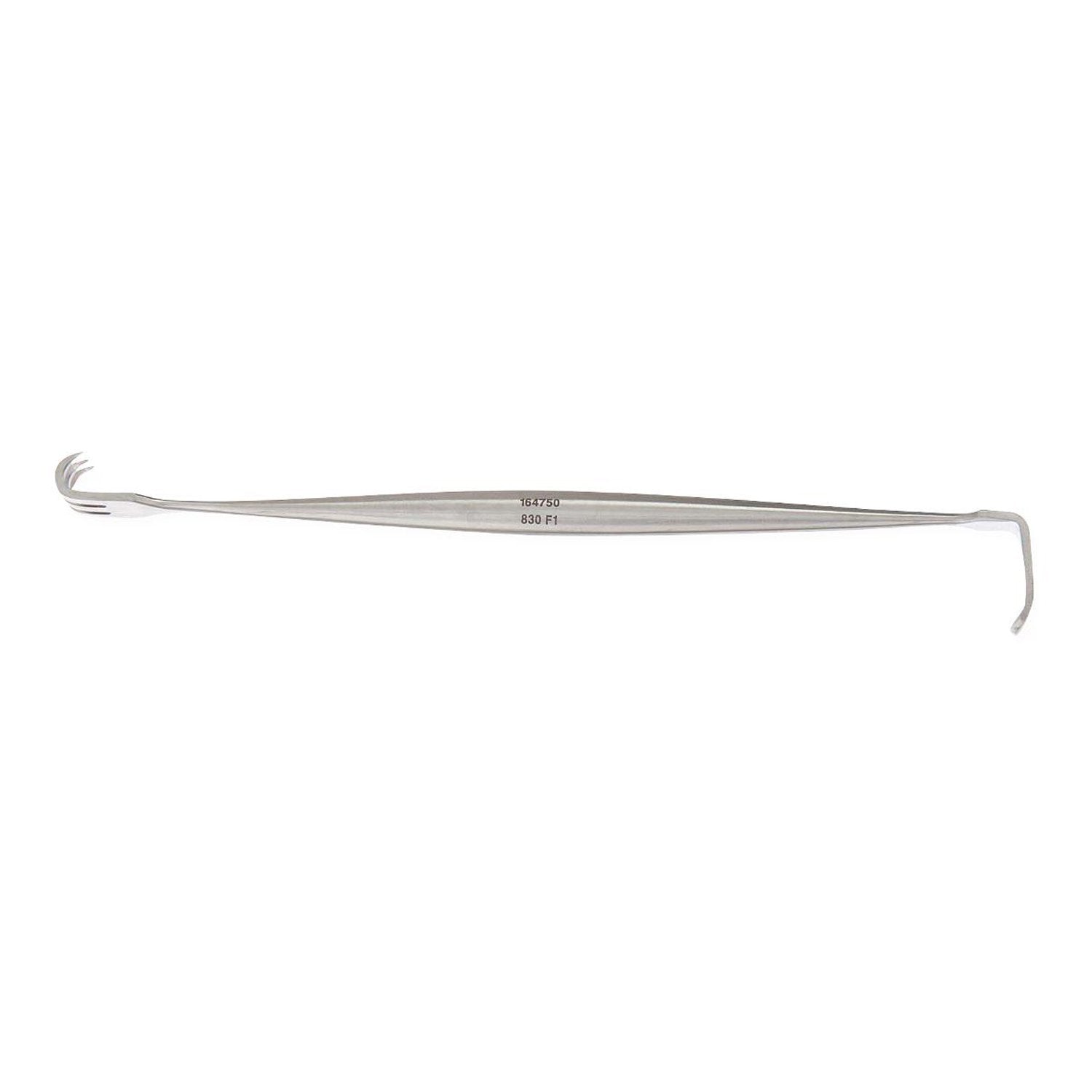
The Senn retractor is a small, double-ended handheld retractor. One end typically carries three bent prongs, which may be sharp or blunt, and the other has a flat, right-angled blade. It is used for shallow, superficial retraction.
Deaver Retractor
The Deaver retractor is a large handheld retractor with a smooth, flat blade curved into a broad hook. It is used for deep retraction, commonly in abdominal and thoracic procedures, and is made in several blade widths.
Weitlaner Retractor
The Weitlaner retractor is a self-retaining retractor with ring handles, a ratchet and rake-like prongs on each arm. Once opened, it holds superficial wound edges apart on its own.
Balfour Retractor
The Balfour retractor is a self-retaining abdominal retractor built on a frame with two lateral blades and a center blade. It holds a laparotomy incision open for extended periods.

See the wider range of handheld and self-retaining patterns in the retractors and spreaders collection.
Suturing and Closure Instruments
Needle holders, also called needle drivers, grip a curved suture needle and drive it through tissue. They look similar to hemostats but are built for a different kind of load.
Mayo-Hegar Needle Holder
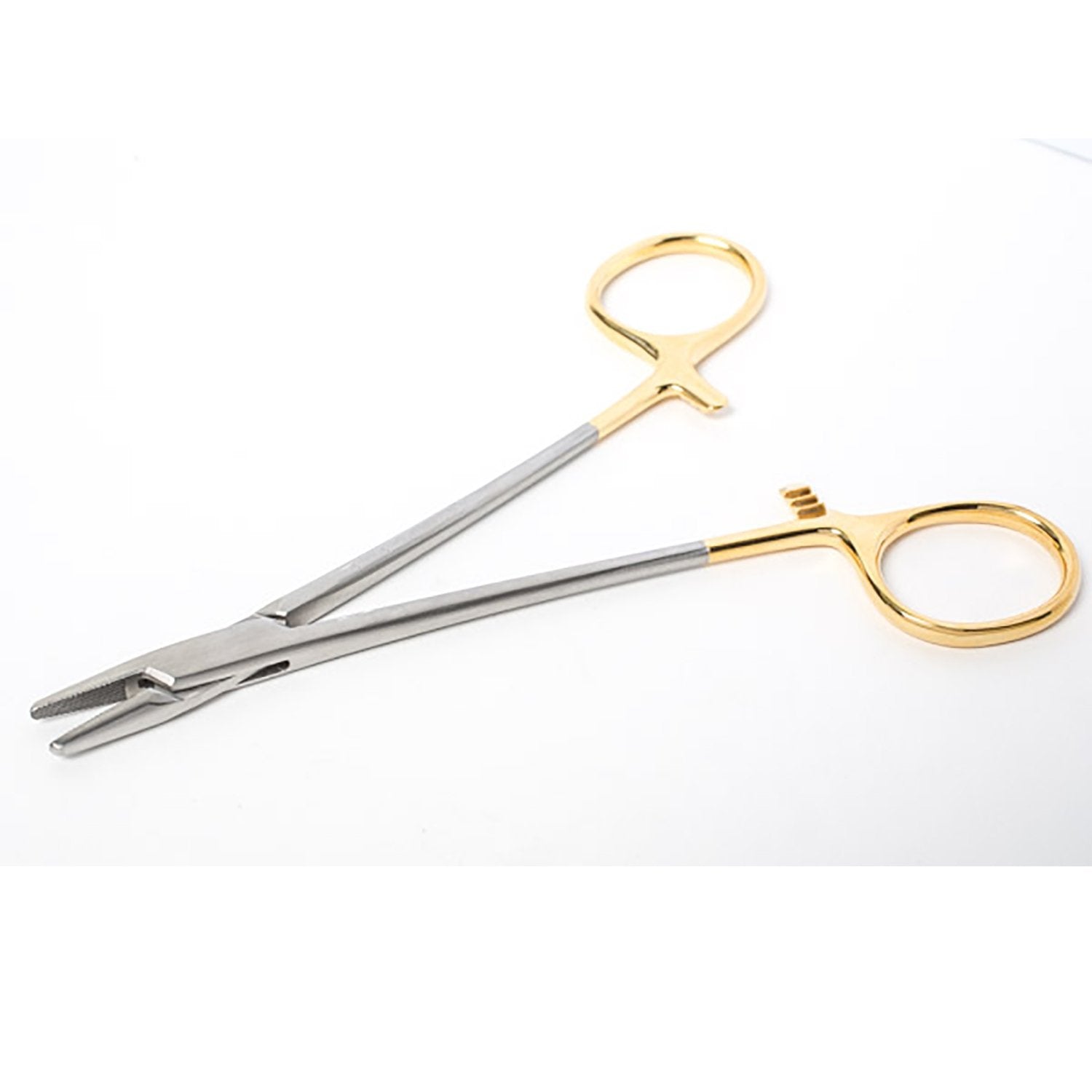
The Mayo-Hegar needle holder is one of the most widely used general-purpose needle holders. It has ring handles, a ratchet and short, sturdy jaws with a crosshatched gripping surface, often with tungsten carbide inserts. The short jaws and longer handles give the leverage needed to hold a needle without it rotating. Browse the full range of needle holders, including fine, heavy and TC patterns.
Suction and Aspiration Instruments
Suction instruments connect to tubing and a vacuum source to clear blood, fluid and irrigation from the operative field.
Frazier Suction Tube
The Frazier suction tube is narrow and angled, with a small vent near the handle. Covering the vent with a finger increases suction, and uncovering it reduces suction. A stylet is used to clear the lumen. Its fine tip suits small, precise fields.
Poole Suction Tube
The Poole suction tube is straight, with a perforated outer sleeve. The many holes let it remove large volumes of fluid without clogging against nearby tissue, which is why it is commonly associated with abdominal procedures. See Peak's suction tubes and cannulas.
Probes, Directors and Access Instruments
Grooved Director
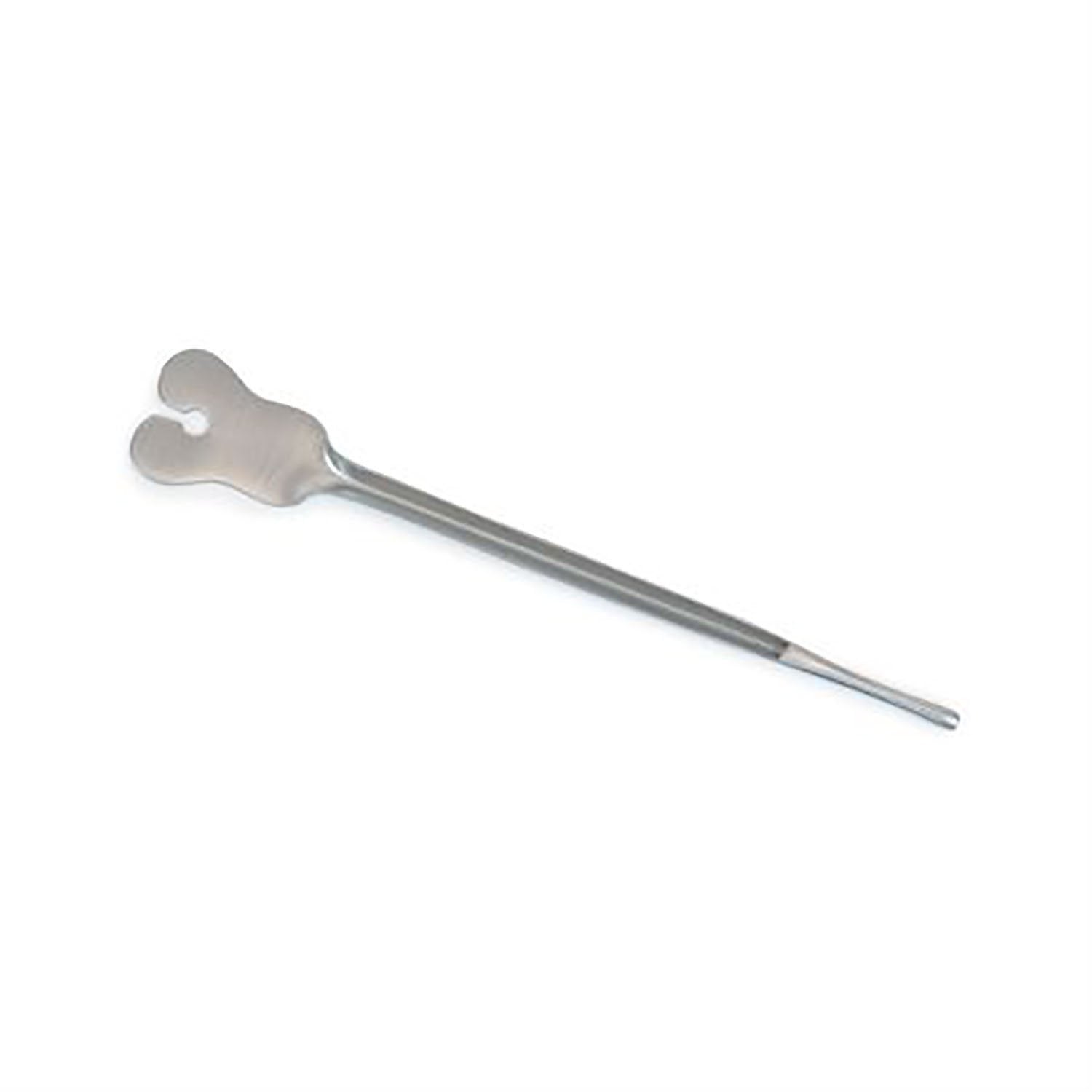
A grooved director is a flat, narrow probe with a channel along its length. It is passed along a tract or beneath tissue, and a blade or scissors is then run along the groove, protecting the structures underneath. Related probes are used to explore sinus and fistula tracts. Browse probes and grooved directors.
How to Identify Surgical Instruments by Their Design
Many instruments look alike at first glance. Reading an instrument from the handle to the tip, one feature at a time, is the fastest way to identify it.

Handle Style
Ring handles indicate scissors, clamps, needle holders or ring forceps. A sprung, tweezer-style body indicates thumb forceps. A flat handle with a working end at one or both ends points to a handheld retractor, probe or elevator.
Ratchet
Interlocking teeth between the finger rings mean the instrument is designed to keep its grip without hand pressure. Most clamps and needle holders have one, as do many grasping forceps. Scissors do not.
Box Lock or Joint
The joint is where the two halves cross. Scissors use a screw joint, while clamps and needle holders usually use a box lock, which keeps the jaws aligned under load.
Jaws and Serrations
Look at the direction and extent of the serrations. Transverse serrations along the full jaw suggest a Crile, while serrations on the distal half only suggest a Kelly. A crosshatched pattern on short, wide jaws usually means a needle holder.
Teeth and Fenestrations
Teeth at the tip, such as a 1×2 pattern, signal a firm grip that can mark tissue, as on toothed Adson or Kocher forceps. An open window in a rounded jaw, as on Babcock forceps, signals a gentler hold on tubular tissue.
Straight vs Curved Pattern
Many patterns are made both straight and curved. Curved tips improve visibility and reach around structures, while straight tips give a direct line of force.
Length and Working-End Proportion
Compare the working end with the handle. Metzenbaum scissors have short blades on long handles, while Mayo scissors have longer, heavier blades. Needle holders have short jaws for leverage. Overall length also shows whether an instrument is meant for superficial or deep work.
Common Surgical Instruments: Names, Pictures & Uses
Use this table as a quick visual reference for the 17 instruments covered in this guide.
| Picture | Instrument | Functional group | Recognition cue | General use |
|---|---|---|---|---|
| — | Scalpel handle #3 | Cutting | Flat handle with slotted blade mount | Holds #10, #11, #12 and #15 blades for incisions |
 |
Mayo scissors | Cutting | Heavy blades, semi-blunt tips | Cutting dense tissue and sutures |
 |
Metzenbaum scissors | Dissecting | Long handles, short fine blades | Delicate soft-tissue dissection |
| — | Adson forceps | Grasping | Broad grip narrowing to fine tips | Holding skin edges during closure |
| — | Allis forceps | Grasping | Ratchet, fine interlocking teeth | Firm hold on tough tissue |
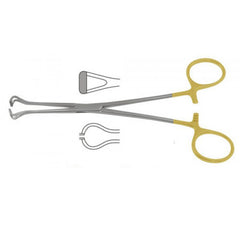 |
Babcock forceps | Grasping | Rounded, fenestrated jaws, no teeth | Gentle grasp of tubular tissue |
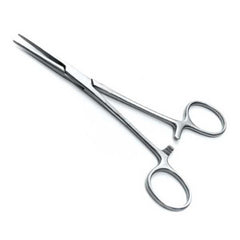 |
Crile hemostat | Clamping | Full-length transverse serrations | Clamping small to medium vessels |
| — | Kelly hemostat | Clamping | Serrations on distal half only | Clamping vessels and holding tissue |
| — | Kocher forceps | Clamping | Serrated jaws with 1×2 tip teeth | Holding fascia and tough tissue |
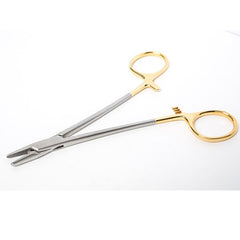 |
Mayo-Hegar needle holder | Suturing | Short jaws, crosshatched grip | Holding and driving suture needles |
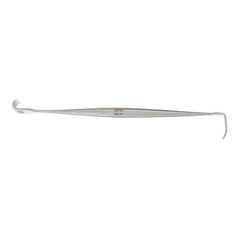 |
Senn retractor | Retracting | Double-ended: prongs and flat blade | Superficial handheld retraction |
| — | Deaver retractor | Retracting | Wide, smooth, curved blade | Deep abdominal and thoracic retraction |
| — | Weitlaner retractor | Retracting | Ratcheted arms with rake-like prongs | Self-retaining superficial retraction |
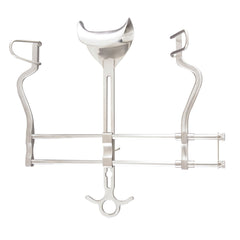 |
Balfour retractor | Retracting | Frame with lateral and center blades | Self-retaining abdominal exposure |
| — | Frazier suction tube | Suction | Angled tube with finger vent | Fine, controlled suction |
| — | Poole suction tube | Suction | Straight tube with perforated sleeve | High-volume field suction |
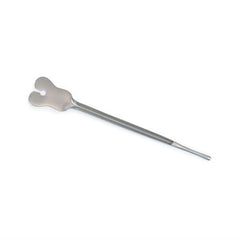 |
Grooved director | Probing | Flat probe with central channel | Guiding a blade along a tract |
Similar Surgical Instruments: How to Tell Them Apart
Hand-Held vs Self-Retaining Retractors
Hand-held retractors, such as Senn and Deaver patterns, must be held and repositioned manually during the procedure. Self-retaining retractors, such as Weitlaner and Balfour patterns, use a ratchet, screw or frame mechanism to maintain exposure without continuous hand pressure. The locking or frame mechanism is the quickest visual clue when telling the two groups apart.
Allis vs Babcock Forceps
Both are ratcheted, ring-handled grasping forceps. Allis jaws end in fine interlocking teeth for a firm hold, while Babcock jaws are rounded and fenestrated with no teeth, for gentle handling of tubular structures.
Kelly vs Crile Hemostats
The two share the same general size and shape, so check the jaws. A Crile is typically serrated along its full length and a Kelly only on the distal half, although patterns can vary between manufacturers.
Needle Holder vs Hemostat
Both have ring handles, a box lock and a ratchet. A needle holder has shorter, broader jaws, usually with a crosshatched or tungsten carbide surface that stops a needle from turning. A hemostat typically has longer, tapered jaws with transverse serrations, designed to occlude a vessel. Using a hemostat as a needle holder can damage its jaws and alignment.
Surgical Instruments by Specialty
Beyond the general instruments above, each surgical specialty uses its own patterns, sized and shaped for its anatomy.
- General surgery: core cutting, grasping, clamping and retracting instruments, often supplied as basic surgery sets.
- Orthopedic: bone-cutting, holding and fixation instruments such as rongeurs, osteotomes and bone-holding forceps. See orthopedic instruments.
- ENT: fine forceps, specula, elevators and suction tubes for ear, nose and throat procedures. See ENT instruments.
- Ophthalmology: micro forceps, scissors and needle holders for eye surgery. See ophthalmology instruments.
- Gynecology: specula, tenacula, uterine and ovum forceps. See gynecology instruments.
- Plastic surgery: fine dissecting instruments, rake retractors and cartilage instruments. See plastic surgery instruments.
- Cardiovascular: vascular clamps, micro scissors and fine needle holders. See cardiovascular instruments.
- Proctology: proctoscopes, directors, clamps and retractors. See proctology instruments.
For an overview that goes beyond surgery, see our guide to medical instrument names, pictures and uses.
Surgical Instrument Materials
Most reusable surgical instruments are made from surgical-grade stainless steel, chosen for strength, corrosion resistance and the ability to withstand repeated reprocessing. Some patterns add tungsten carbide (TC) inserts to the jaws or blades of needle holders, scissors and forceps for a more durable grip or cutting edge, and these are often identified by gold-colored handles. Titanium is used for selected micro and ophthalmic patterns where lighter weight matters. Browse Peak's TC instruments.
For a detailed comparison of stainless steel, titanium and tungsten carbide inserts, see our guide to surgical instrument materials.
How to Choose the Right Surgical Instrument
Once you know the pattern you need, the specification matters as much as the name. Use this checklist when comparing options.
| Factor | What to check |
|---|---|
| Function | Whether the task is cutting, grasping, clamping, retracting, suturing, suction or probing |
| Tissue or task | Fine or gentle tips for delicate tissue, heavier patterns for dense tissue |
| Jaw and tip design | Smooth, serrated, toothed or fenestrated, and sharp or blunt |
| Length and reach | Longer for deep fields, shorter for superficial work and closer control |
| Straight or curved | Curved for visibility and reaching around structures, straight for direct force |
| Locking mechanism | Ratchet for a sustained grip, no ratchet for quick, repeated handling |
| Material and inserts | Stainless steel, TC inserts or titanium, depending on grip, edge life and weight |
| Reprocessing | Whether hinges, lumens and fenestrations can be cleaned and inspected effectively in your facility |
Cleaning, Inspection and Reprocessing
Unless stated otherwise on the individual product page, Peak Surgicals instruments are supplied non-sterile and must be cleaned and sterilized according to your facility's validated protocols before first use. After every procedure, give extra attention to hinges, box locks, ratchets, serrations, fenestrations and suction lumens, where debris collects. Before each use, check that tips align, ratchets hold, scissors cut smoothly and box locks show no cracks. For a step-by-step process, see our complete guide to instrument cleaning.
Frequently Asked Questions
What are the main types of surgical instruments?
Surgical instruments are commonly grouped by function into cutting and dissecting, grasping and holding, clamping and occluding, retracting and exposing, suturing, suction, and probing or access instruments.
What are the most common surgical instruments?
Among the most common are the scalpel, Mayo and Metzenbaum scissors, Adson forceps, Kelly and Crile hemostats, the Mayo-Hegar needle holder, Senn and Deaver retractors, and Frazier and Poole suction tubes.
How many types of surgical instruments are there?
There is no fixed number. Classification systems differ, but most group instruments into six to eight functional categories. This guide uses seven.
How can you identify a surgical instrument?
Check the handle style, whether it has a ratchet, the type of joint, the jaw serrations, any teeth or fenestrations, whether it is straight or curved, and how long the working end is compared with the handle.
What is the difference between forceps and clamps?
Forceps is a broad term for grasping instruments, including thumb forceps that do not lock. Clamps are generally designed to compress, hold or occlude a structure, and many surgical clamp patterns use a locking mechanism. Hemostatic forceps are common examples of locking clamps: they are called forceps, but they work as clamps.
What is the difference between a needle holder and a hemostat?
A needle holder typically has short, broad jaws with a crosshatched grip to hold a suture needle securely. A hemostat has longer, tapered jaws with transverse serrations to clamp vessels.
Explore Surgical Instruments at Peak Surgicals
Peak Surgicals is a surgical instrument manufacturer and supplier based in Sialkot, Pakistan, serving hospitals, clinics, distributors and individual buyers. Browse the full surgical instruments collection, or go straight to scissors, forceps, hemostats, needle holders and retractors. Check each product page for available sizes, patterns and sterility status.