
Featured Collection
Your cart
Featured Collection

PEAK SURGICAL
SKU:
Couldn't load pickup availability
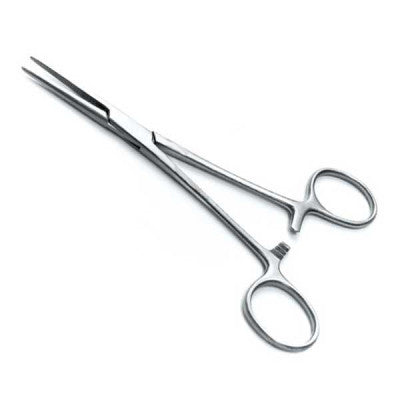
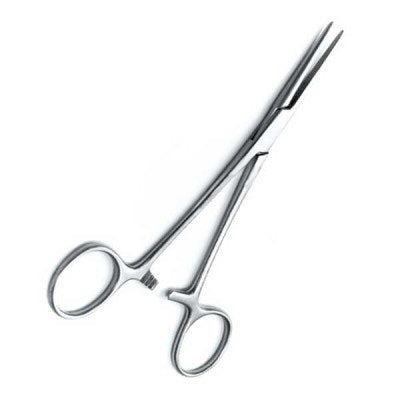
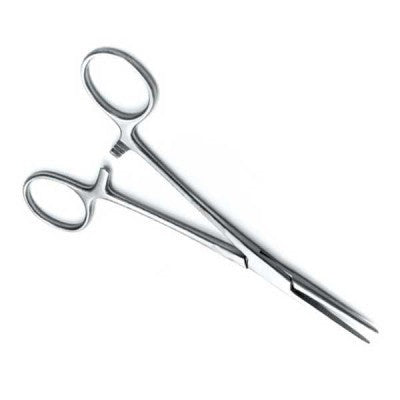
The industry-standard solution for dependable blood vessel clamping and mid-range hemostasis. The Crile Hemostatic Forceps are foundational surgical instruments engineered to solve the problem of controlling hemorrhage in medium-sized vessels and securing subcutaneous tissues during dissection. Characterized by their fully serrated jaws and precision-locking ratchet, these forceps act as a mechanical necessity for surgeons who require a more robust grip than a delicate mosquito clamp, yet need a slimmer profile than a heavy Kelly forceps. Its design is specifically optimized to provide a "total-jaw" grip, ensuring that vascular structures are managed with mathematical accuracy and steady-state pressure.
The Crile Hemostatic Forceps represent the pinnacle of versatile surgical ergonomics and dependable vessel stabilization. In any professional environment—from busy emergency departments to elective general surgery theaters—the ability to rapidly and securely clamp bleeding vessels is a critical success factor. These forceps act as a high-durability mechanical extension of the surgeon's hand, offering a level of reliability and "universal-grip" strength that is essential for modern procedural workflows.
At its core, the instrument is built for professional-grade longevity. The full-length serrations are diamond-milled to ensure they provide a secure purchase on slippery serosal surfaces or delicate vascular adventitia. The "Crile" pattern is the most frequently requested hemostat for general surgery because it offers the perfect balance between the delicacy of a Halsted Mosquito and the power of a Rochester-Pean.
Built to exceed international standards for medical hardware, Crile Forceps are fully reusable and intended for high-frequency professional use. Their robust construction and specialized "Total-Serration" profile make them an indispensable asset for ensuring safe, organized, and high-precision results in patient care across all surgical disciplines.
Feature Details
Serration Type Full-Length Transverse
Closure Type Multi-Position Ratchet Lock
Joint Type High-Stability Box Joint
Material Core Premium Surgical-Grade Stainless Steel
Maintenance Fully Autoclavable / Reusable
Standard ISO Surgical Grade
Primary Use Cases:
Q: What is the difference between Crile and Kelly forceps?
A: The primary difference is the serrations. Crile forceps are serrated the full length of the jaw, whereas Kelly forceps are typically only serrated on the distal half of the jaw.
Q: Are these available in both straight and curved versions?
A: Yes. Straight Criles are generally used for superficial vessels or as "tagging" forceps, while Curved Criles are preferred for reaching around anatomical structures to clamp deeper vessels.
Q: Can Crile forceps be used to hold heavy fascia or bone?
A: No. Crile forceps are designed for vessels and soft tissue. Using them on dense structures like bone or heavy ligaments can spring the jaws and ruin the alignment.
Q: How should I care for the ratchet mechanism?
A: Ensure the ratchet teeth are free of debris before autoclaving. Use a water-soluble surgical lubricant on the box joint and ratchet to maintain smooth operation.
Q: Are these suitable for microsurgery?
A: They are generally too large for true microsurgery. For very fine work, a Halsted Mosquito or specialized micro-hemostats are recommended.
