
Featured Collection
Your cart
Featured Collection

PEAK SURGICAL
SKU:PS-6905
Couldn't load pickup availability
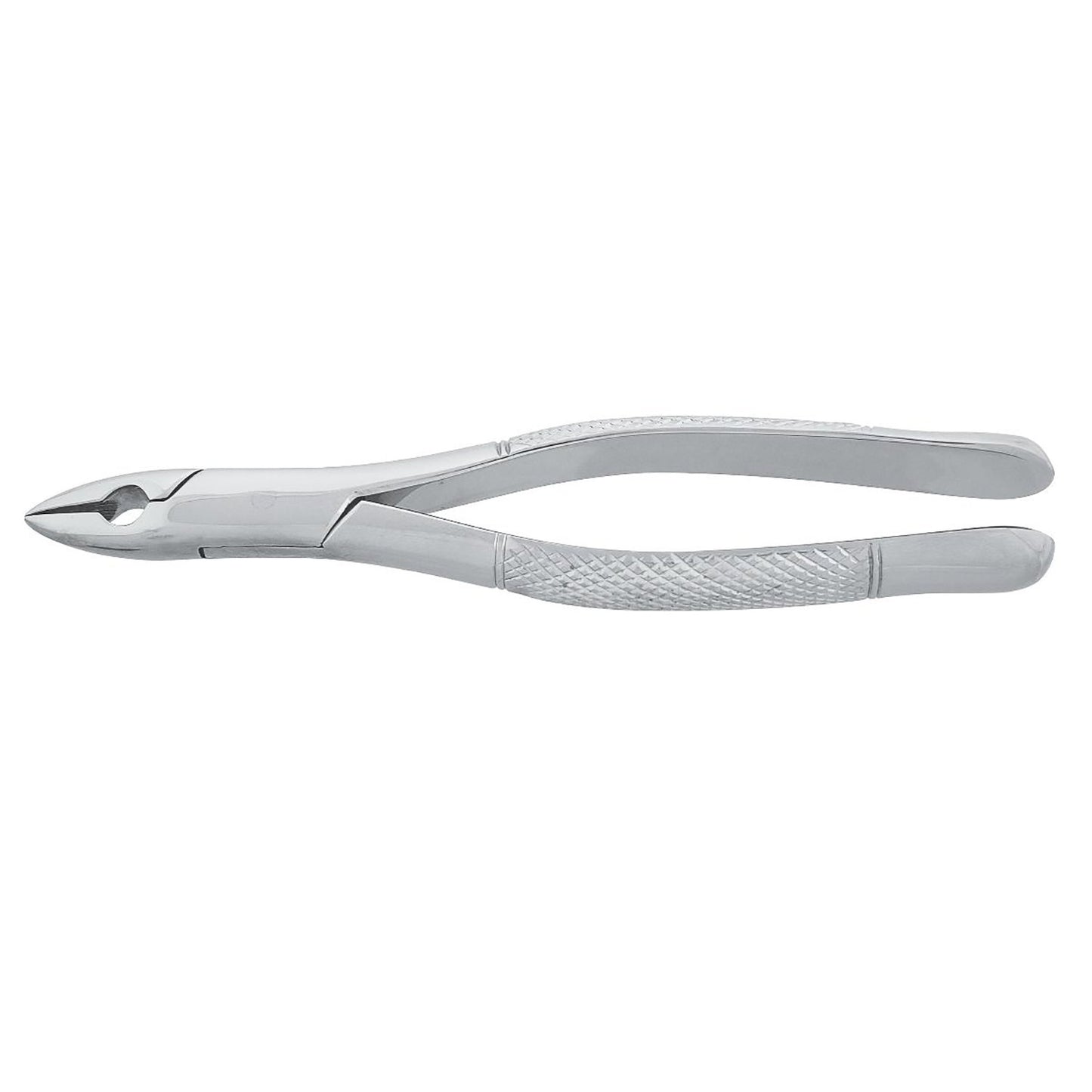


Upper Root Forceps, SKU PS-6905, is a 125mm (5”) dental extraction instrument manufactured from German stainless steel for controlled maxillary retained root delivery and upper-arch exodontia. The available size variant is 125mm (5”), a compact pattern used for upper anterior root removal, maxillary premolar root extraction, crown-fracture cases, retained root delivery after elevator luxation, pre-prosthetic clearance, and surgical extraction after flap reflection when the root segment is accessible. The narrow angled beaks engage exposed radicular structure or the cervical contour after periodontal ligament release, while the pivoted joint transfers handle compression into controlled closure at the working end. Its curved handles and textured gripping area support tactile control during buccopalatal movement, progressive apical seating, repositioning, and final removal from the socket. This forceps is used by dental surgeons, oral and maxillofacial surgeons, general dentists, pediatric dentists, hospital dental departments, outpatient oral surgery units, and procurement teams preparing reusable maxillary extraction trays for routine and surgical dental workflows.
The instrument works through a pivoted lever mechanism that closes two narrow opposing beaks when the handles are compressed. The upper-root beak angle allows the operator to approach maxillary residual roots from a favorable working direction without forcing the hand into a straight occlusal line. The pointed profile helps seat the working end close to the exposed radicular surface after elevator mobilization and periodontal ligament separation. The pivot keeps both arms aligned during closure, maintaining controlled tip approximation as the beaks grip dentin or cervical root contour. The curved handles position the palm and fingers for short movement cycles rather than uncontrolled traction. The textured handle zone improves grip stability during irrigation, suction, and repeated instrument exchange. No ratchet is used, so closure pressure remains under continuous tactile control throughout seating, loosening, release, and final delivery. The 125mm frame reduces excess handle projection and supports close control in confined upper-arch access, especially where the remaining crown is fractured or absent.
In clinical sequence, Upper Root Forceps is introduced after local anesthesia, gingival cuff release, and initial luxation with a straight elevator, Coupland elevator, luxator, or periotome. For maxillary retained roots, the fragment is first exposed and mobilized until resistance is reduced, then the narrow beaks are positioned along the accessible root surface. In upper anterior extraction, the instrument is seated near the cervical line after circumferential ligament release and used for controlled buccopalatal expansion. For upper premolar root delivery, the operator applies it after elevator action has widened the socket enough for secure purchase. In crown-fracture cases, unsupported enamel or restorative fragments are cleared before the forceps engages the remaining tooth structure. During surgical exodontia, it can be used after flap elevation, bone removal, or sectioning when the residual segment is visible and mobile. This workflow supports chairside dentistry, hospital dental services, ambulatory oral surgery, and clinic extraction trays where upper root delivery requires compact handling and precise beak placement.
The 125mm (5”) pattern is selected when maxillary retained root extraction requires short-handle access, close-field control, and narrow beak placement. This length is useful in upper anterior teeth, accessible premolar roots, smaller oral cavities, and procedures where suction, mirror retraction, and soft tissue control share the same limited field. The beaks provide the active gripping surface, contacting exposed dentin, cervical root contour, or residual structure after luxation has created mobility. The angled head supports upper-arch approach around the lip, cheek, and opposing dentition, while the pivot coordinates the motion of both arms during progressive closure. The curved handles deliver controlled buccopalatal movement through the operator’s hand, and the textured grip supports repositioning between movement cycles. In tray organization, Upper Root Forceps occupies the maxillary retained-root role beside elevators, luxators, periosteal elevators, root tip picks, suction tips, socket curettes, and irrigation instruments. Procurement teams can use this compact size for clinic replenishment and distributor stock planning.
German stainless steel provides the rigidity required for repeated compression, beak engagement, and controlled root delivery without deformation at the working end. The reusable construction supports standard dental instrument processing through cleaning, drying, inspection, packaging, and steam autoclave sterilization. Satin, dull, and mirror finish options support different operatory and sterile processing preferences; satin and dull surfaces reduce glare under dental lighting, while mirror finish assists rapid visual inspection after cleaning. Reprocessing focuses on the beaks, angled head, pivot line, shoulder, and textured handle because debris can collect in these areas during extraction. The Class I classification reflects a reusable manual dental instrument with mechanical action. CE marking and ISO 13485 documentation support regulated purchasing records for clinics, hospitals, and distributors. FDA compliance information supports medical device procurement files for healthcare buyers working through regulated channels. The one-year warranty, MOQ of one piece, OEM availability, carton box packing, and return or replacement after-sale service fit clinic replacement orders and distributor inventory workflows.
| SKU | PS-6905 |
|---|---|
| Product Name | Upper Root Forceps |
| Price | $7.15 |
| Size/Gauge Variants | 125mm (5”) |
| Instrument Category | Dental Extracting Forceps |
| Procedure | Maxillary retained root removal, upper anterior extraction, upper premolar extraction, crown-fracture extraction, surgical exodontia |
| Material | German Stainless Steel |
| Finish | Satin, dull, mirror |
| Sterilization | Reusable and autoclavable after cleaning, drying, inspection, and packaging |
| Instrument Classification | Class I |
| Reusable | Yes |
| Certifications | CE, ISO 13485, FDA |
| Warranty | 1 year |
| MOQ | 1 piece |
| OEM / Custom Orders | Available |
| After-Sale Service | Return and replacement support |
How does Upper Root Forceps differ from Upper Root Extracting Forceps with sharply angled beaks?
Upper Root Forceps is designed around narrow upper-root engagement for maxillary retained root delivery. The more sharply angled upper-root pattern is selected when the operator needs a stronger directional offset for difficult access to upper residual roots. This product has a compact 125mm frame and narrow beak profile suited to close-field placement around exposed radicular structure. Both instruments are used after elevator luxation, but their head geometry changes the approach angle and hand position. Upper Root Forceps is appropriate when controlled cervical or radicular purchase is available without requiring a more aggressive offset. The selection depends on maxillary access, remaining tooth structure, and the operator’s preferred line of approach.
When is the 125mm size selected for maxillary root removal?
The 125mm size is selected for compact upper-arch access during retained root removal, upper anterior extraction, and accessible premolar root delivery. Its shorter frame keeps the operator’s hand closer to the field and reduces handle projection near the lips and opposing dentition. In upper anterior work, the beaks are seated near the cervical or exposed radicular surface after periodontal ligament release. In premolar cases, the instrument is used after elevator luxation has produced mobility and socket expansion. For fractured crowns, the size supports direct engagement of residual structure instead of unsupported coronal fragments. Upper Root Forceps is selected when close control and tactile feedback are required during final root delivery.
How do CE, ISO 13485, and FDA documentation support procurement?
CE marking supports product conformity documentation for clinical purchasing and distributor review. ISO 13485 indicates that the manufacturing quality system follows medical device production and traceability requirements. FDA compliance information supports purchasing records for healthcare buyers working in regulated medical supply channels. Hospitals and clinics use these documents during vendor approval, tender review, and extraction tray standardization. Upper Root Forceps can be entered into procurement files with recognized compliance references. This documentation supports international healthcare markets comparing reusable dental extraction instruments across multiple suppliers.
How is the pivot mechanism used during upper root extraction?
The pivot mechanism links the two arms and transfers handle compression into beak closure at the working end. During use, the clinician seats the narrow beaks on the exposed maxillary root surface after luxation has produced mobility. As the handles close, the pivot keeps both tips aligned around the selected structure. Buccopalatal movement is then applied through the handles to expand the socket and reduce resistance. Because there is no ratchet, grip pressure remains under continuous manual control during placement, movement, release, and repositioning. Upper Root Forceps depends on this pivoted action for controlled grasping and final retained root delivery.
What should clinics and distributors know about sterilization and ordering?
This product is reusable and suitable for standard dental instrument reprocessing workflows. Cleaning focuses on the narrow beaks, angled head, pivot line, shoulder, and textured handle before sterilization. The hinge is opened, brushed, dried, and inspected before packaging in a cassette or pouch. Steam autoclave processing follows the facility’s approved cycle for reusable stainless steel dental instruments. Clinics can order one piece for replacement, while OEM availability supports distributor supply programs. Upper Root Forceps is supplied with one-year warranty coverage and return or replacement after-sale support.


