
Featured Collection
Your cart
Featured Collection

PEAK SURGICALS
SKU:PS-000055
Couldn't load pickup availability


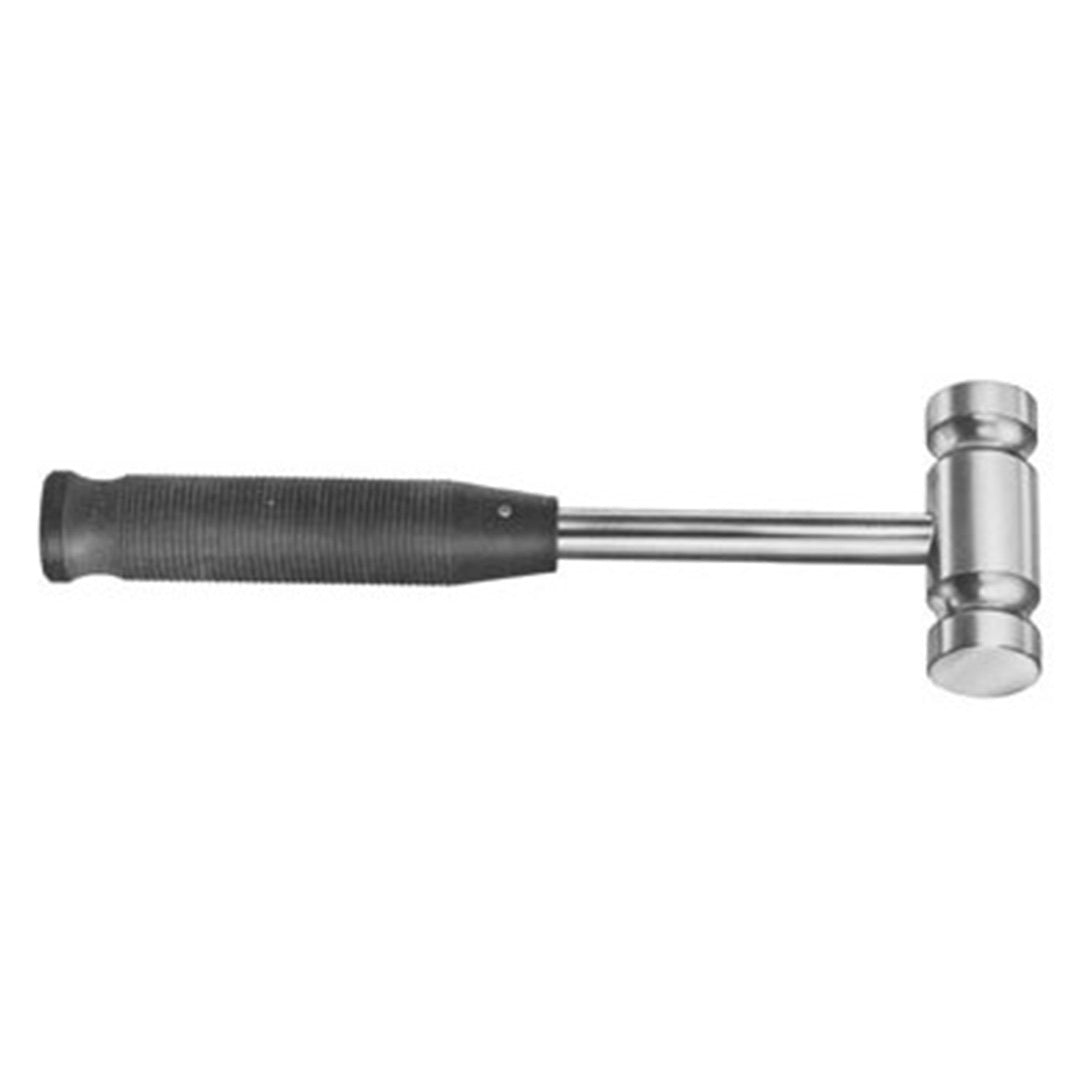
Surgical Mallet, SKU PS-000055 and part number gS 59.7885, is a reusable manual impact instrument manufactured with a German surgical stainless steel head and phenolic handle for controlled force delivery during orthopedic and musculoskeletal procedures. The instrument measures 10 1/2 in overall, weighs 1 lb 8 oz (680 g), and incorporates a 32 mm diameter striking head. Its balanced mass provides sufficient momentum for activating compatible osteotomes, chisels, bone tamps, impactors, elevators, and other instruments designed to receive manual striking force. The pattern is used during osteotomy, fracture reconstruction, bone graft impaction, total hip and knee arthroplasty preparation, spinal bone work, and other open procedures where measured mechanical impact is required. The 32 mm face provides a broader striking surface than narrow-tip mallets, supporting reliable contact with standard orthopedic impact instruments. Orthopedic trauma surgeons, arthroplasty specialists, spine surgeons, reconstructive surgeons, and operating-room teams use this configuration where controlled manual impact must be delivered while maintaining alignment of the driven instrument.
The Surgical Mallet functions by converting controlled hand acceleration into impact energy at its 32 mm stainless steel striking surface. As the surgeon or assistant swings the 680 g instrument toward the proximal impact face of a compatible osteotome, chisel, tamp, or driver, the mass of the head generates momentum that is transferred along the axis of the receiving instrument. The 32 mm diameter provides a substantial contact area, reducing the precision demands associated with very narrow mallet heads while remaining compact enough for routine orthopedic operating-room use. The solid stainless steel construction supports repeated impact against instruments designed for metallic striking. A phenolic handle provides a rigid gripping interface and maintains separation between the operator's hand and the heavy metal head. There is no spring, ratchet, trigger, lock, or powered force regulator. Impact intensity is governed directly by swing distance, acceleration, mallet mass, grip, and contact orientation. The striking face should meet the receiving surface squarely so energy remains aligned with the intended working axis. Oblique blows can redirect an osteotome or impactor and reduce control during bone preparation.
During osteotomy, the Surgical Mallet is used after a compatible osteotome or chisel has been positioned along the planned bone-cutting line. Sequential axial strikes advance the cutting edge through cortical or cancellous bone while the surgeon monitors trajectory and depth. In fracture reconstruction, the mallet may activate bone tamps, elevators, or fixation-system instruments specifically designed for manual impact while reduction and implant positioning are maintained. Bone graft procedures use the same principle when cancellous material must be compacted against a prepared recipient bed through a compatible tamp or impactor. During total hip arthroplasty, mallet-assisted instruments can be used during selected femoral or acetabular preparation and component-handling steps according to the implant system. Total knee arthroplasty and spinal procedures can similarly require measured striking force for bone preparation or instrument advancement. The 680 g mass supplies greater momentum than lightweight hand and foot mallets, making this configuration appropriate for standard orthopedic bone work rather than delicate micro-impact applications. Each strike should follow the longitudinal axis of the receiving tool, with progression reassessed between impacts to prevent unintended advancement.
Part number gS 59.7885 identifies the 10 1/2 in Surgical Mallet with a total weight of 1 lb 8 oz (680 g), 32 mm stainless steel head diameter, and phenolic handle. The overall length provides sufficient lever arm for controlled orthopedic striking while keeping the instrument compact enough for routine use around an open surgical field. Its 680 g mass places the model above lightweight precision mallets but below heavier large-bone patterns, providing a practical balance between maneuverability and delivered momentum. The 32 mm face is suited to standard proximal striking surfaces on compatible osteotomes, chisels, bone tamps, and impactors. Compared with a 7 mm narrow-tip mallet, this broader head provides easier alignment and greater contact coverage. Compared with heavy mallets exceeding one kilogram, gS 59.7885 allows more incremental control when extreme impact force is unnecessary. The phenolic handle provides a defined gripping surface while keeping overall weight concentrated toward the working head. PS-000055 should therefore be selected according to the required impact energy, dimensions of the receiving instrument, operative access, bone density, and procedural stage rather than choosing mallet weight alone.
German surgical stainless steel provides the hardness, corrosion resistance, dimensional stability, and impact durability required for the 32 mm head of a reusable orthopedic mallet. The phenolic handle should remain securely attached and structurally intact because grip stability directly influences striking alignment. Reprocessing should begin promptly after clinical use so blood, marrow, bone residue, and other contamination do not dry on the striking surfaces or around the head-to-handle junction. Cleaning should address the complete stainless steel head and phenolic grip, followed by thorough rinsing and complete drying. Sterile-processing personnel should inspect the striking faces for deformation, mushrooming, cracks, corrosion, or surface damage and confirm that the head remains firmly connected to the handle. The phenolic component should be examined for cracks, looseness, or deterioration that could compromise manual control. The reusable mallet should undergo sterilization according to the healthcare facility's validated process and applicable reprocessing instructions for its stainless steel and phenolic construction. Peak Surgicals supports CE and ISO 13485 procurement documentation, with FDA-related device records maintained within appropriate supplier-qualification and purchasing files.
| SKU | PS-000055 |
|---|---|
| Product Name | Surgical Mallet |
| Price | $47.30 USD |
| Size/Gauge Variants | gS 59.7885: 10 1/2 in overall length, 1 lb 8 oz (680 g), 32 mm head diameter |
| Instrument Category | Orthopedic Surgical Mallet |
| Procedure | Osteotomy, fracture reconstruction, bone graft impaction, total hip and knee arthroplasty preparation, spinal bone work, and mallet-assisted orthopedic instrumentation |
| Material | German Surgical Stainless Steel Head with Phenolic Handle |
| Finish | Premium OR Surgical Finish |
| Sterilization | Reusable; clean and sterilize according to validated healthcare-facility protocols and applicable reprocessing instructions |
| Instrument Classification | Reusable Manual Surgical Mallet |
| Reusable | Yes |
| Certifications | CE, ISO 13485, FDA-related procurement documentation |
| Warranty | 1-Year Limited Warranty for manufacturing defects; 30-Day Money-Back Guarantee on eligible items |
| MOQ | 1 Piece for standard online ordering |
| OEM / Custom Orders | Custom quotations available for bulk and instrument requirements |
| After-Sale Service | Warranty, return, refund, and replacement support under Peak Surgicals policy |
How does the Surgical Mallet differ from a Repercussion-Free Mallet?
The Surgical Mallet uses a conventional 32 mm stainless steel striking head that transfers hand-generated impact directly to the receiving instrument. A Repercussion-Free Mallet incorporates recoil-dampening behavior intended to reduce backward rebound after contact. PS-000055 weighs 680 g and uses a phenolic handle, providing substantial momentum for routine orthopedic bone work. A repercussion-free pattern can be preferable when repeated striking requires additional rebound control. The conventional Surgical Mallet provides direct tactile feedback and a rigid metallic striking interface. Selection should reflect the receiving instrument, required impact energy, available working space, and whether standard or recoil-dampened impact behavior is preferred.
Why select a 32 mm, 680 g Surgical Mallet?
The 32 mm head creates a broad enough contact surface for reliable alignment with standard orthopedic osteotomes, chisels, tamps, and impactors. Its 680 g mass provides substantially more momentum than lightweight small-bone mallets while remaining below the weight of heavy large-bone hammers. This balance supports controlled osteotomy, graft impaction, fracture reconstruction, and routine orthopedic bone preparation. The 10 1/2 in overall length gives the operator sufficient swing leverage without creating excessive instrument bulk. Surgical Mallet PS-000055 is therefore suitable when moderate-to-substantial impact is required but a very heavy mallet would reduce incremental control. Final selection should consider the receiving instrument, bone density, operative depth, and force required at that procedural stage.
What do CE, ISO 13485 and FDA references mean for procurement?
Peak Surgicals displays CE, FDA, and ISO-related information for the Surgical Mallet and supports ISO 13485 procurement documentation. ISO 13485 concerns the quality-management system used for controlled medical-device manufacturing and associated processes. CE documentation supports conformity assessment within applicable medical-device markets. FDA AccessGUDID identifies gS 59.7885 as a commercially distributed surgical mallet with a 10 1/2 in length, 680 g weight, 32 mm stainless steel head, and phenolic handle. A GUDID device record should not be described as individual FDA approval. Hospitals and distributors can retain the product identifier, supplier certificates, regulatory records, and purchasing documentation within their vendor-qualification files.
How is impact force controlled when the Surgical Mallet has no adjustment mechanism?
The Surgical Mallet has no mechanical power setting, spring regulator, ratchet, or locking control. The surgeon determines delivered impact by changing the swing arc, acceleration, grip, and number of strikes. The 680 g mass generates greater momentum as velocity increases, while the 32 mm head transfers that energy to the proximal surface of the receiving instrument. Short measured swings allow gradual advancement, whereas longer or faster movements produce greater force. The striking face should remain square to the osteotome, chisel, tamp, or impactor so energy travels along its longitudinal axis. Procedural depth and progression are therefore controlled through manual technique, tactile feedback, visualization, and reassessment between strikes.
How should hospitals order and reprocess the Surgical Mallet?
Hospitals should order the Surgical Mallet using SKU PS-000055 and part number gS 59.7885 together with the 10 1/2 in length, 680 g weight, and 32 mm head specification. Peak Surgicals currently lists the instrument at $47.30 and provides a 30-day money-back guarantee on eligible items together with a one-year limited warranty for manufacturing defects. Standard online ordering begins with one piece, while custom and bulk quotations are available for hospitals, clinics, distributors, and procurement teams. Following use, blood, marrow, and bone residue should be removed promptly from the head, striking surfaces, handle junction, and phenolic grip. Cleaning should be followed by complete rinsing, drying, and inspection for corrosion, head deformation, handle cracking, or component looseness. Final sterilization should follow the validated healthcare-facility process and applicable reprocessing instructions before PS-000055 returns to the orthopedic instrument tray.


