
Featured Collection
Your cart
Featured Collection

PEAK SURGICAL
SKU:PS-1238
Couldn't load pickup availability
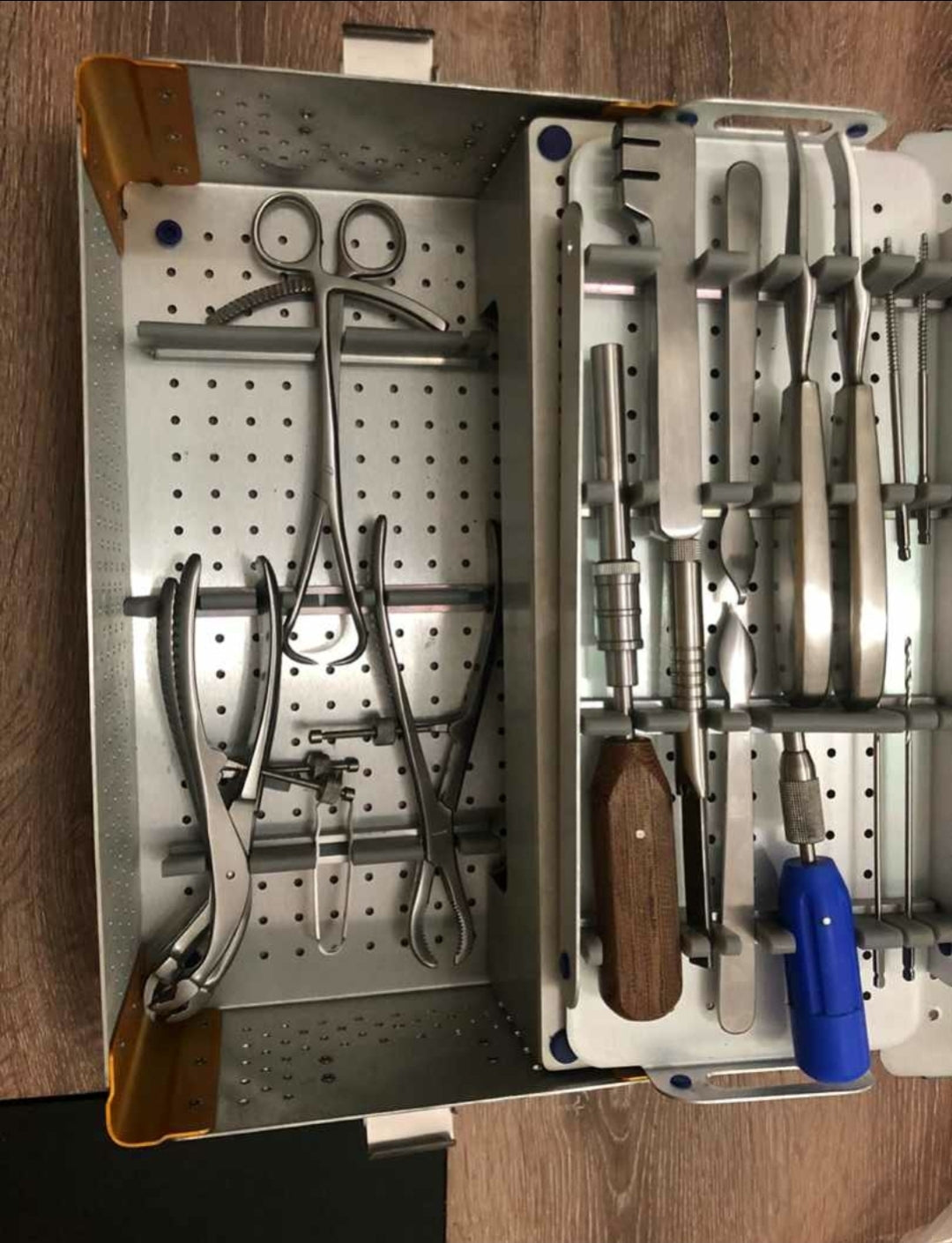


The comprehensive surgical system for precision fracture fixation and reconstruction. The Small Fragment Instrument Set is an engineered solution that addresses the critical requirements of internal bone fixation. Featuring a highly organized, modular tray system and a full suite of precision-calibrated trauma instruments, this set acts as a mechanical necessity for orthopedic trauma surgeons who demand absolute reliability when managing fractures of the distal radius, malleolus, and other small-bone anatomical sites.
The Small Fragment Instrument Set is the primary toolset for any orthopedic trauma unit. In fracture fixation, the mechanical interface between the implant and the bone is the fundamental determinant of success; this set acts as the mechanical necessity that creates this interface, providing the surgeon with the specific tools required to reduce fractures, place screws with absolute accuracy, and ensure secure plate fixation.
At its core, the system is designed for dependability. When dealing with comminuted fractures or complex reconstructions, instrument failure is not an option; the set’s heavy-duty stainless steel construction acts as a mechanical necessity for surgical confidence, ensuring that the forceps, drills, and drivers perform predictably even in the most demanding operative scenarios.
Built to exceed international benchmarks for orthopedic surgical hardware, this system is a fully reusable, durable asset. It is an indispensable component for any hospital, trauma center, or surgical facility aiming to provide the highest standard of fracture care.
Component Type Function
Reduction & Holding: Bone reduction, fragment stabilization, and plate holding.
Drilling & Tapping: Precision canal preparation and screw-thread creation.
Depth Measurement Calibrated gauging for accurate screw-length selection.
Insertion Tools: Hexagonal and specialized screw drivers for secure seating.
Countersinking Bone-cortex preparation for flush screw-head seating.
Tray Management Compartmentalized, high-vacuum steam-safe case.
Metallurgy Premium high-tensile surgical stainless steel.
Q: Why is “Small Fragment” terminology important in trauma?
A: Anatomical fit is a mechanical necessity. Small fragment systems are engineered specifically for the size and density of bones in the distal radius, ankle, and forearm, a mechanical necessity for achieving secure fixation without overcompromising bone integrity.
Q: Can this system be used with different plating brands?
A: This system is generally optimized for universal small fragment standards. Verifying specific plate-hole compatibility is a mechanical necessity for ensuring procedural safety.
Q: How does this set improve fracture reduction?
A: Precise reduction is a mechanical necessity. The inclusion of specialized reduction and bone-holding forceps is a mechanical necessity for achieving anatomical fracture alignment before hardware is introduced.
Q: Why is the sterilization tray system critical?
A: Accountability is a mechanical necessity. A tray-based system is a mechanical necessity to ensure that all components are sterile, present, and organized before the skin is incised.
Q: What is the recommended sterilization protocol?
A: The high-grade metallurgy is a mechanical necessity for repeated autoclave use; it is fully rated to undergo standard high-vacuum steam cycles at 134°C (273°F).


