
Featured Collection
Your cart
Featured Collection

PEAK SURGICALS
SKU:
Couldn't load pickup availability
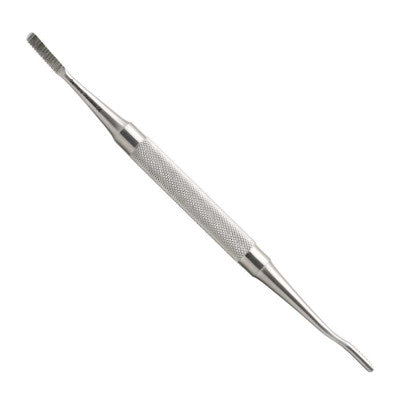
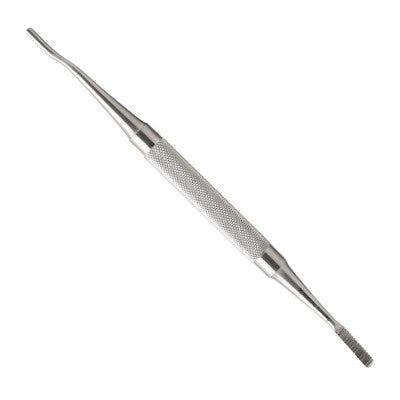
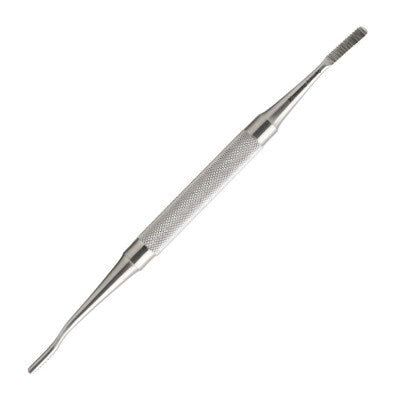
The Polokoff Bone File Double Ended is a reusable surgical bone file designed for controlled scraping, smoothing, and contouring of bone surfaces. Its double-ended configuration provides two working ends within a single instrument, allowing the surgeon to reposition the file according to the bone surface and surgical access required.
Peak Surgicals lists this Polokoff pattern within its veterinary orthopedic bone-file range and identifies horizontal rasping serrations at both ends. The instrument is relevant to orthopedic, spinal, and veterinary surgical sets where a dedicated bone file is required for controlled surface refinement.
The defining feature of this instrument is its double-ended construction. Both ends function as working surfaces, allowing the user to access different bone surfaces without changing to a separate instrument.
This configuration is useful in procedures where repeated bone smoothing or contouring is required from different working angles.
Peak Surgicals' current bone-file collection identifies the Polokoff Double Ended Bone File as having horizontal rasping serrations at both working ends. These serrated surfaces provide the mechanical filing action used to scrape and refine bone.
The current product page does not provide exact tooth pitch, serration depth, working-end width, or separate coarse/fine specifications. These details should therefore be confirmed before ordering when a specific rasping profile is required.
The Polokoff pattern is designed for controlled bone scraping and smoothing. A bone file may be used after cutting or other bone-manipulation steps when irregular or rough areas require further surface refinement.
The extent of filing and the specific bone surface being treated should be determined by the operating surgeon according to the procedure and anatomy.
The double-ended rasping configuration also makes the instrument suitable for bone contouring where gradual surface adjustment is required.
The file removes material through repeated controlled strokes rather than functioning as a bone-cutting forceps, osteotome, or powered cutting instrument.
Peak Surgicals specifically describes the Polokoff pattern within its bone-file collection as suitable for precise bone scraping in orthopedic and spinal work.
The current product page does not identify a specific fracture procedure, spinal level, osteotomy technique, or implant system, so those procedure-specific claims should not be assigned to this exact product without additional documentation.
The product is also listed within Peak Surgicals' Veterinary Orthopedic Instruments – Bone Files collection. This makes the Polokoff Double Ended Bone File relevant for veterinary orthopedic instrument inventories where a reusable bone-file pattern is required.
The current listing does not specify animal species or procedure-specific veterinary applications, so selection should be based on the surgeon's requirements and the intended procedure.
Peak Surgicals identifies the bone-file range containing this Polokoff pattern as manufactured from German stainless steel. The rigid metallic construction provides the structure required for a reusable manual rasping instrument.
The exact stainless-steel alloy grade is not provided for this product. Hospitals, veterinary facilities, distributors, and procurement teams requiring a particular material designation or certificate should confirm that specification before ordering.
The live product page includes a Size selector, indicating that a selectable configuration is associated with the product.
However, the exact selectable size value is not exposed in the currently accessible product information. Buyers should therefore confirm the required overall length and working-end dimensions before purchase rather than applying specifications from another Polokoff listing.
Following use, the bone file should be cleaned, inspected, and reprocessed according to applicable manufacturer instructions and the healthcare facility's validated procedures.
Particular attention should be given to the serrated working surfaces, where biological material can remain between the rasping teeth. Before reuse, inspect both working ends and the central handle for corrosion, deformation, damaged serrations, or other visible deterioration.
| Product Name | Polokoff Bone File Double Ended |
| Instrument Type | Surgical Bone File / Rasp |
| Pattern | Polokoff |
| Working Ends | Double Ended |
| Working Surface | Horizontal Rasping Serrations |
| Material | German Stainless Steel Range |
| Primary Functions | Bone Scraping, Smoothing and Contouring |
| Referenced Surgical Context | Orthopedic, Spinal and Veterinary Orthopedic Work |
| Peak Collection | Veterinary Orthopedic Instruments – Bone Files |
| Size | Selectable – Exact Value Not Exposed on Current Product Page |
| SKU | Not Visible on Current Product Page |
| Exact Working-End Dimensions | Not Specified on Current Product Page |
The Polokoff Bone File Double Ended is relevant for orthopedic departments, spine surgery services, veterinary orthopedic facilities, hospitals, surgical instrument distributors, and procurement teams sourcing reusable manual bone files.
For accurate purchasing, buyers should reference the Polokoff Double Ended pattern and confirm the required Size configuration. Buyers requiring an exact overall length, working-end width, serration dimensions, stainless-steel alloy grade, or SKU should confirm those details before ordering because they are not displayed on the current product page.
It is a surgical bone file designed for controlled scraping, smoothing, and contouring of bone surfaces.
Yes. The current Peak Surgicals product description specifically confirms double working ends.
Peak Surgicals' bone-file collection identifies the Polokoff pattern as having horizontal rasping serrations at both ends.
Peak Surgicals identifies this bone-file range as German stainless steel. The exact stainless-steel alloy grade for this product is not stated.
The current product page provides a Size selector but does not expose the exact selectable measurement in the accessible listing.
The current product page does not display a verifiable SKU, so a code should not be assigned without checking the Shopify product record.
