
Featured Collection
Your cart
Featured Collection

PEAK SURGICALS
SKU:
Couldn't load pickup availability
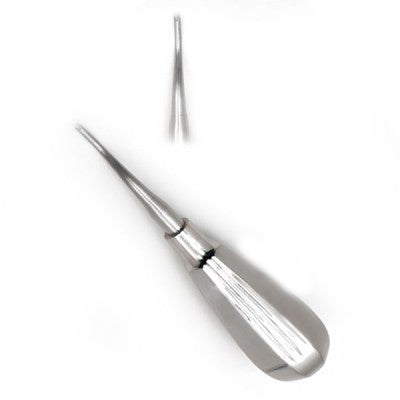
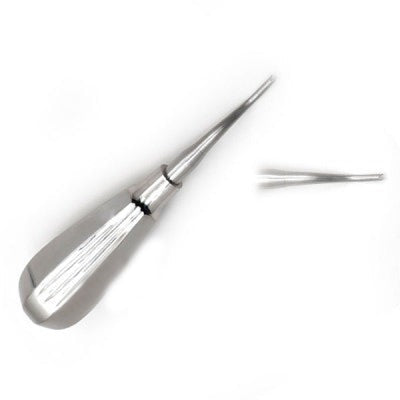
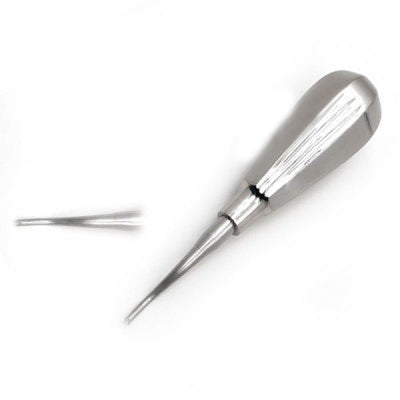
Secure the hold that makes the difference. The Notched Elevator Backward is a highly specialized veterinary surgical instrument engineered to tackle the unique challenges of extracting large canine teeth and molars in small animals. By combining a proprietary notched tip for mechanical "bite" with a backward-angled shaft, this elevator provides the grip and vector control required to navigate the distal surfaces of teeth where standard elevators often slip.
[Add to Cart – Professional Veterinary Grade]
The Notched Elevator Backward is a game-changer for practitioners who frequently deal with the robust periodontal attachments of canine teeth. The primary challenge in veterinary extractions is maintaining a consistent grip on the smooth, tapered surface of the root. The notched tip of this instrument effectively "bites" into the root structure, ensuring that the force applied is used entirely for luxation rather than fighting against instrument slippage.
The backward-angled configuration is a mechanical necessity for posterior surgery. It allows the surgeon to position the instrument behind the tooth—a feat often impossible with straight elevators due to the constraints of the jaw and cheek. This access enables the clean separation of the distal periodontal ligament, which is a frequent site of root fractures if not properly loosened.
Manufactured to meet the most rigorous clinical standards, this elevator is fully autoclavable. Its balanced weight and specialized design make it an essential addition to any veterinary dental tray, providing the rugged reliability and finesse needed for complex oral surgeries.
Feature Details
Material Premium Surgical Stainless Steel
Tip Design Notched / High-Grip Contour
Shaft Angle Backward / Distal Approach
Application Canine and Molar Elevation
Maintenance Fully Autoclavable / Reusable
Primary Use Cases:
Q: When should I choose the "Backward" angle over a standard angle?
A: The backward angle is specifically designed for approaching the distal (back) side of a tooth. If you find yourself struggling to get leverage behind a molar or canine using straight tools, the backward angle provides the necessary clearance.
Q: Does the notch damage the root surface?
A: The notch is designed to provide a secure grip for extraction. While it creates a mechanical bite, this is far safer for the patient than a standard elevator slipping and causing iatrogenic trauma to the gingiva or bone.
Q: Is this instrument suitable for feline patients?
A: While primarily designed for the larger roots of dogs, the slim profile allows it to be used in larger feline patients, especially for the lower canine teeth.
Q: How do I clean the notched tip?
A: We recommend using a soft-bristled surgical brush during the cleaning process to ensure no biological debris is trapped within the notch before autoclaving.
