Skip to product information
1 of 2

PEAK SURGICALS

Mini Ryder Needle Holder – Tungsten Carbide Insert Jaws Surgical Instrument

Mini Ryder Needle Holder – Tungsten Carbide Insert Jaws Surgical Instrument

SKU:

Regular price $22.00 USD
Regular price Sale price $22.00 USD
Sale Sold out
Taxes included. Shipping calculated at checkout.
Quantity
Secure Checkout Protected payment flow
Quality Inspected Checked before dispatch
Worldwide Supply International buyer support
Shipping, Returns & Payments Clear buyer information before checkout.
Shipping
Free shipping on orders over $99. See shipping details
Returns
Returns and exchanges are handled according to our return policy. See return policy
Payments
American Express Apple Pay Diners Club Discover Google Pay JCB Mastercard
View full details

Mini Ryder Needle Holder – Microsurgical Precision & Fingertip Control

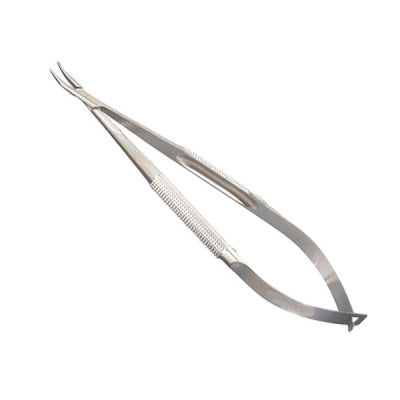
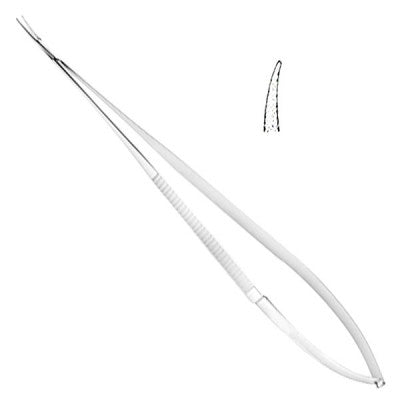
The clinical standard for high-stakes, delicate suturing. The Mini Ryder Needle Holder is an elite microsurgical instrument meticulously engineered for procedures requiring the highest degree of accuracy and tactile sensitivity. Featuring Tungsten Carbide (TC) insert jaws and a responsive spring-handle chassis, this tool acts as a mechanical necessity for surgeons working with micro-needles in ophthalmic, vascular, and plastic surgery. Its compact, lightweight design allows for a "pencil-grip" orientation, enabling the clinician to execute fluid, precise needle passages in the most confined anatomical spaces with minimal effort.

[Add to Cart – Professional Microsurgery Series]

Key Features for Refined Microsurgical Control

  • Tungsten Carbide (TC) Insert Jaws: The inner gripping surfaces are reinforced with high-density tungsten carbide. This diamond-hard material provides a non-slip, textured "bite" that prevents micro-needles from rotating or slipping, ensuring stable orientation even during high-precision maneuvers.
  • Responsive Spring-Handle Mechanism: Designed for fingertip operation, the spring-loaded handles automatically return the instrument to the open position. This facilitates rapid, repetitive suturing and allows the surgeon to modulate pressure with extreme delicacy.
  • Ultra-Fine "Micro-Point" Tips: The distal ends of the jaws are precision-ground to a slim, narrow profile. This architecture is essential for navigating restricted operative fields and handling the smallest gauge needles (typically 7-0 to 10-0) without obstructing the surgeon's view.
  • Lightweight "Fatigue-Free" Construction: Forged from high-tensile, lightweight surgical steel. This minimizes hand strain during prolonged microscopic procedures and ensures the instrument remains perfectly balanced in the hand.
  • Textured Stability Grip: The exterior of the handles features a cross-hatched or fluted texture, providing a secure, anti-slip surface for gloved fingers. This enhances handling stability during intricate "fine-motor" movements.
  • Surgical-Grade Stainless Steel Body: Beyond the TC inserts, the instrument is forged from premium medical steel, providing total resistance to corrosion and maintaining perfect tip alignment through thousands of sterilization cycles.

Product Overview: Mastery in Delicate Tissue Approximation

The Mini Ryder Needle Holder (TC) is a foundational asset for any ophthalmic, micro-vascular, or pediatric surgical tray. Its primary utility lies in its "finesse-first" ergonomics; by utilizing a spring-handle rather than traditional finger rings, the surgeon can achieve 360-degree needle rotation using only the fingers, rather than full wrist rotations. This significantly reduces the risk of tremors and allows for much smoother, more consistent stitch placement in sensitive tissues like the cornea or small-diameter vessels.

Built to exceed the rigorous hygiene standards of modern microsurgery, this instrument is fully autoclavable. Its seamless construction and high-polish finish support the highest levels of infection control and procedural efficiency.

Specifications & Clinical Applications

FeatureDetails

Material Stainless Steel with Tungsten Carbide Inserts

Handle Style Spring-Action / Pencil Grip

Jaw Profile Fine-Point / Micro-Serrated

Locking Type Non-Ratchet (Spring Tension)

Maintenance Fully Autoclavable / Reusable

Export to Sheets

Primary Use Cases:

  • Ophthalmic Surgery: Corneal repair, cataract surgery, and delicate intraocular procedures.
  • Micro-Vascular Surgery: Performing precise anastomoses on micro-vessels.
  • Plastic & Reconstructive Surgery: Managing fine-gauge needles for aesthetic nerve and skin repair.
  • Neurosurgery: Assisting in the closure of delicate neural sheaths or small vessels.
  • Laboratory & Research: High-precision handling of biological materials in micro-dissection.

Why Professionals Choose the Mini Ryder TC Holder?

  • Unmatched Gripping Security: TC inserts protect micro-needles from slipping and "snapping."
  • Superior Ergonomics: The pencil-grip design is optimized for use under a surgical microscope.
  • High Tactile Sensitivity: Transmits minute vibrations from the tissue directly to the surgeon’s fingertips.
  • Clinical Reliability: Forged to maintain its precision and "bite" over a long professional lifespan.

Frequently Asked Questions (FAQ)

Q: Why doesn't the Mini Ryder have a ratchet locking mechanism? A: In microsurgery, a ratchet can sometimes cause a slight "jump" or vibration when it is engaged or released. The Mini Ryder uses a spring-handle design to allow the surgeon to maintain constant, fluid control without the mechanical interference of a locking catch, which is vital when working with very fragile tissues.

Q: What range of needle sizes is this holder suitable for?A: The Mini Ryder is specifically optimized for micro-needles, typically ranging from 7-0 down to 11-0. Using it for larger, heavier needles (like those used in general abdominal surgery) can over-stress the delicate jaws and cause permanent misalignment.

Q: What is the specific advantage of Tungsten Carbide in a mini holder? A: Because micro-needles are so thin, they are very prone to rotating inside standard steel jaws. Tungsten Carbide is much harder and features a finer texture that "locks" the needle in place, ensuring it enters the tissue at the exact angle the surgeon intended.

Q: How should I clean the spring mechanism and TC jaws?

A: Clean immediately after use with an enzymatic detergent and a soft-bristle brush. It is critical to ensure no biological debris is trapped in the spring joint or the textured TC serrations. We recommend applying a drop of surgical-grade lubricant to the spring pivot point before autoclaving to maintain a smooth, responsive action.