Featured Collection
Your cart
Featured Collection

PEAK SURGICAL
SKU:PS-9325-1
Couldn't load pickup availability
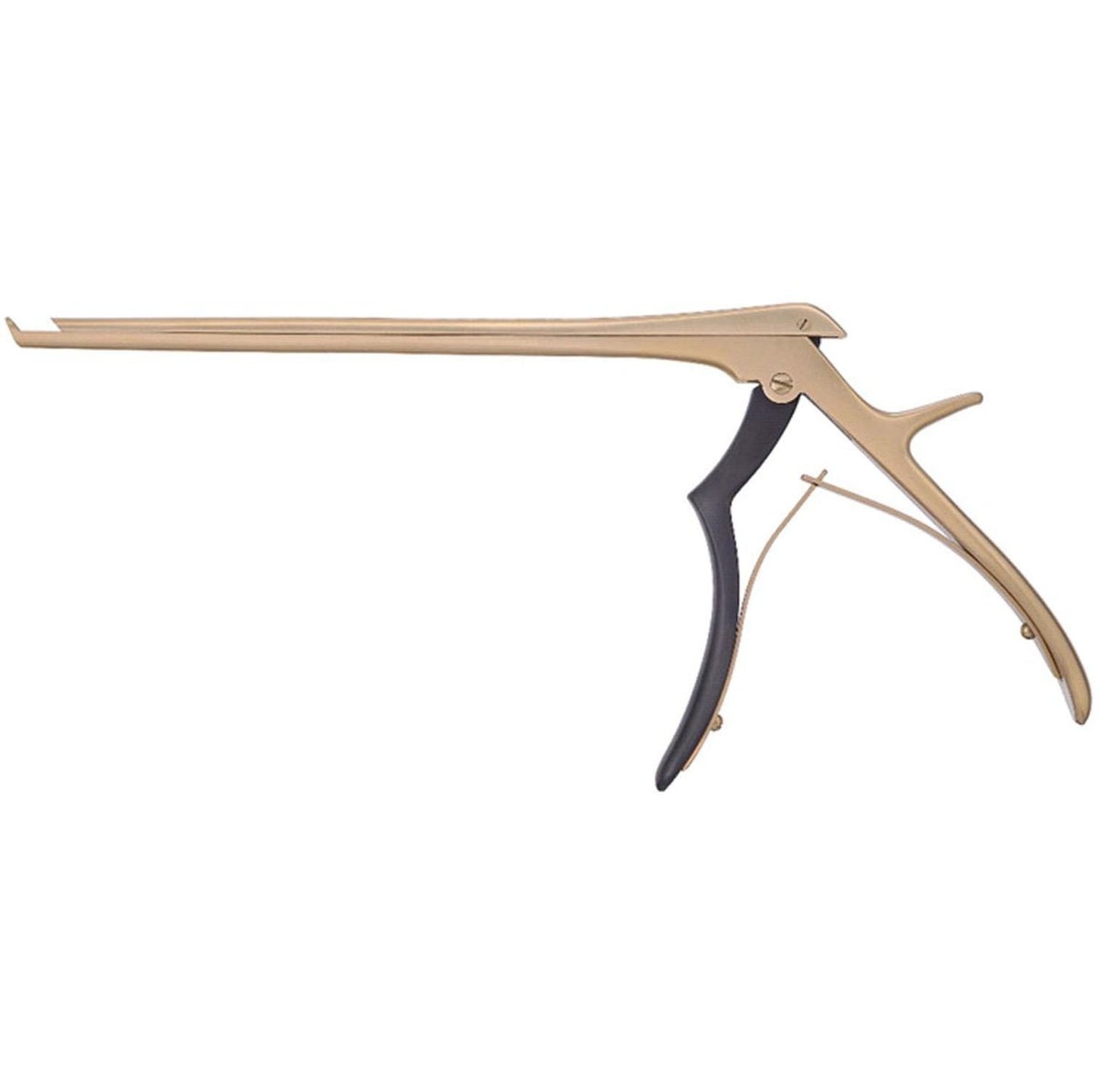
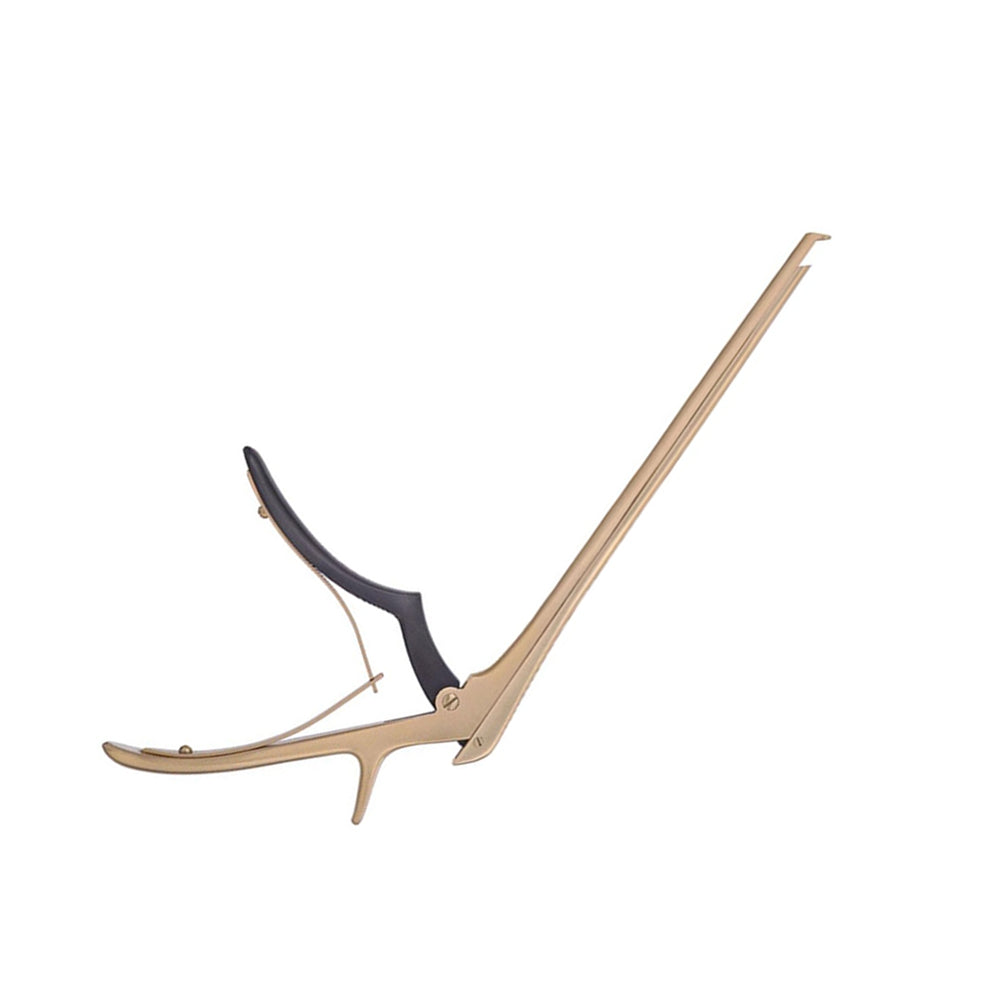
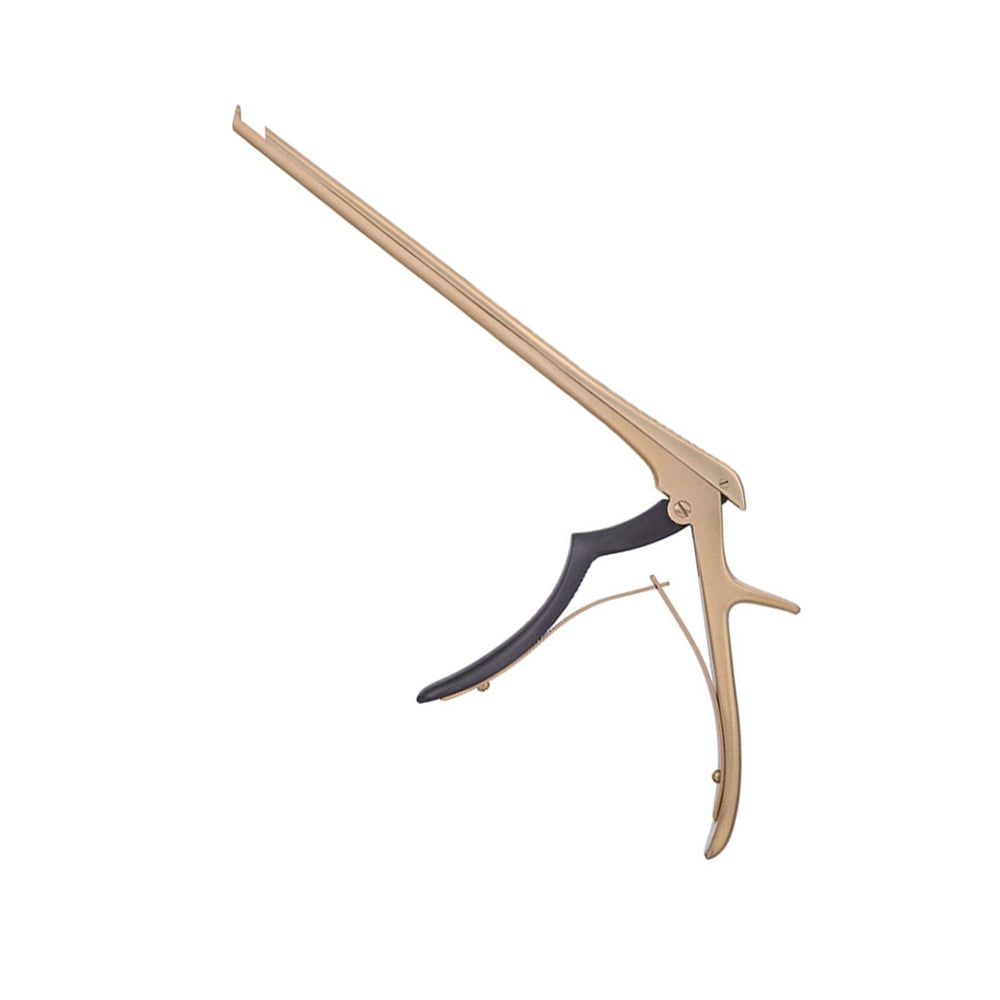
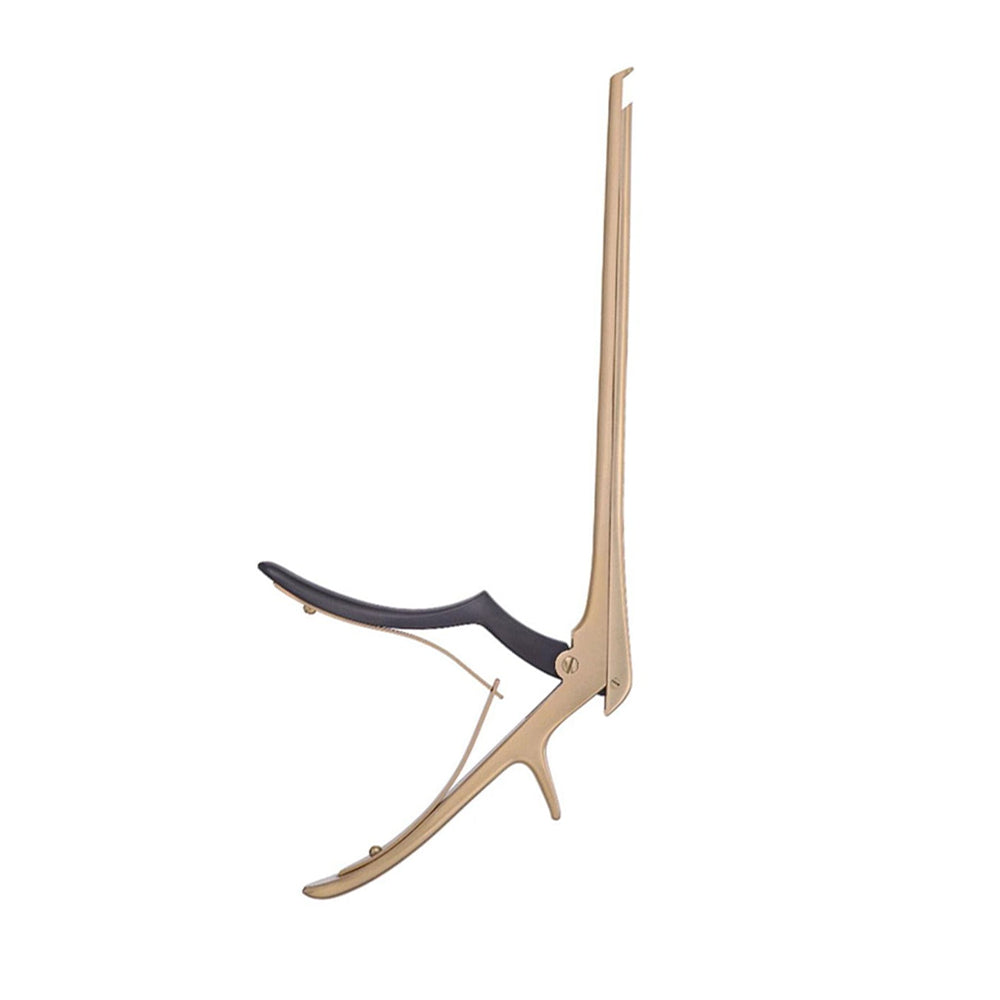
Micro Handle Kerrison Rongeurs Gold Coated, SKU PS-9325-1, Model PS-9325, is a spinal punch rongeur manufactured from German stainless steel for controlled lamina removal, ligamentum flavum resection, foraminal enlargement, and posterior decompression work in confined operative corridors. The available variants are PS-9325 Shaft Length 8" (20.3cm) 1mm to 10mm, PS-9326 Shaft Length 9" (22.9cm) 1mm to 10mm, PS-9327 Shaft Length 10" (25.4cm) 1mm to 10mm, and PS-9328 Shaft Length 12" (30.5cm) 1mm to 10mm. The instrument has a long shaft, distal footplate, sliding punch jaw, gold-coated body, micro-handle trigger control, pivoted linkage, spring return, and angled distal working profile. It is used in laminectomy, laminotomy, foraminotomy, posterior spinal decompression, microdiscectomy exposure, interlaminar window enlargement, and controlled trimming of laminar or facet margins. This rongeur supports neurosurgeons, spine surgeons, orthopedic surgeons, hospital operating rooms, ambulatory surgical centers, and procurement teams maintaining reusable spinal decompression trays.
The instrument works through a sliding punch mechanism that advances the cutting jaw against a fixed distal footplate when the micro handle is compressed. The footplate is positioned beneath the laminar edge, foraminal margin, ligamentum flavum border, or bony window selected for removal, while the sliding jaw closes over the target from above. This punch geometry allows controlled removal from a narrow spinal corridor without requiring a broad open bite. The long shaft keeps the surgeon’s hand away from the deep field and preserves space for retractors, suction, microscope use, nerve root protection, and assistant instrumentation. The angled distal working end supports approach to posterior elements while maintaining a stable hand position outside the wound. The trigger-style handle transfers compression through the pivoted linkage into shaft movement, and the spring return reopens the working end after each bite. The 1mm to 10mm jaw range supports fine decompression near protected neural tissue and broader removal when exposure allows increased bite volume.
In operative workflow, Micro Handle Kerrison Rongeurs Gold Coated is introduced after exposure, retraction, hemostasis, and identification of the laminar, interlaminar, or foraminal margin requiring decompression. During laminectomy, the footplate is advanced beneath an exposed lamina edge and the punch removes bone in sequential passes until the intended window is created. In laminotomy, narrower jaw selections support controlled enlargement while preserving adjacent posterior elements. During foraminotomy, the instrument removes hypertrophic bone around the neural foramen after root protection and visualization are established. In microdiscectomy exposure, the rongeur can enlarge the laminotomy window before disc fragment retrieval with pituitary forceps or intervertebral disc rongeurs. For ligamentum flavum resection, the footplate is positioned under the ligament margin and the punch removes tissue along a controlled decompression line. The instrument is used with Penfield dissectors, nerve root retractors, curettes, pituitary forceps, suction, irrigation, bipolar forceps, hemostats, and spine exposure instruments.
PS-9325 Shaft Length 8" (20.3cm) is selected when the surgeon needs shorter working distance for lumbar laminotomy, limited posterior exposure, and direct access with close hand control. PS-9326 Shaft Length 9" (22.9cm) provides additional reach while keeping the handle close enough for routine decompression work. PS-9327 Shaft Length 10" (25.4cm) is selected for deeper operative fields, larger patients, and spinal levels where retractors or microscope positioning require more distance from the wound. PS-9328 Shaft Length 12" (30.5cm) supports extended access during deep exposure where hand clearance is required away from the operative corridor. Across all shaft lengths, the 1mm jaw width supports fine bone or ligament bites, while the 10mm end of the range supports broader removal when anatomy permits. The shaft preserves access, the footplate defines the bite plane, the sliding jaw performs the punch action, and the spring handle returns the instrument to an open position for repeated decompression cycles.
German stainless steel provides the rigidity required for repeated punch closure, shaft alignment, footplate engagement, and operating room reprocessing. The reusable construction supports surgical workflows involving manual cleaning, ultrasonic cleaning where used, drying, inspection, packaging, and steam autoclave sterilization between procedures. Satin, dull, and mirror finish options support operating room and sterile processing preferences; reduced-glare surfaces assist visibility under surgical lighting, while mirror surfaces support visual inspection after cleaning. The gold-coated presentation supports visual differentiation inside spine trays and instrument sets. Reprocessing focuses on the footplate, sliding punch jaw, shaft channel, distal tip, pivot recesses, handle spring, and trigger surfaces because bone dust, ligament fragments, blood, saline, and surgical debris can collect around these areas. The Class I classification reflects a reusable manual surgical instrument with mechanical cutting action. CE marking and ISO 13485 documentation support regulated purchasing records for hospitals, surgical centers, and distributors. FDA compliance information supports medical device procurement files for regulated healthcare markets.
| SKU | PS-9325-1 |
|---|---|
| Product Name | Micro Handle Kerrison Rongeurs Gold Coated |
| Price | $44.00 |
| Size/Gauge Variants | PS-9325 Shaft Length 8" (20.3cm) 1mm to 10mm; PS-9326 Shaft Length 9" (22.9cm) 1mm to 10mm; PS-9327 Shaft Length 10" (25.4cm) 1mm to 10mm; PS-9328 Shaft Length 12" (30.5cm) 1mm to 10mm |
| Instrument Category | Spinal Rongeur / Kerrison Punch Rongeur |
| Procedure | Laminectomy, laminotomy, foraminotomy, posterior spinal decompression, microdiscectomy exposure, ligamentum flavum resection, interlaminar window enlargement |
| Material | German Stainless Steel |
| Finish | Satin, dull, mirror; gold-coated body |
| Sterilization | Reusable and autoclavable after cleaning, drying, inspection, and packaging |
| Instrument Classification | Class I |
| Reusable | Yes |
| Certifications | CE, ISO 13485, FDA |
| Warranty | 1 year |
| MOQ | 1 piece |
| OEM / Custom Orders | Available |
| After-Sale Service | Return and replacement support |
How does Micro Handle Kerrison Rongeurs Gold Coated differ from a standard Kerrison rongeur?
Micro Handle Kerrison Rongeurs Gold Coated uses the same footplate and sliding punch principle as a standard Kerrison rongeur, but its handle geometry is designed for compact trigger-style control. A standard Kerrison pattern often uses a larger palm handle with broader hand movement. The micro-handle design supports controlled compression when working through microscope-assisted or restricted posterior spinal corridors. The gold-coated body also helps visual identification inside a spine tray. Micro Handle Kerrison Rongeurs Gold Coated is selected when the surgeon needs spinal punch action with reduced handle bulk. Both patterns are used for laminectomy, laminotomy, foraminotomy, and ligamentum flavum resection.
How are the 8", 9", 10", and 12" shaft variants selected?
The 8" shaft is selected for shorter working distance, limited posterior exposure, and direct lumbar access. The 9" shaft supports routine decompression where moderate reach and close handle control are required. The 10" shaft is selected for deeper operative fields, larger patients, and microscope-assisted cases requiring additional working distance. The 12" shaft supports extended access when retractors, suction, or adjacent instrumentation require greater hand clearance. Micro Handle Kerrison Rongeurs Gold Coated is also selected by jaw width from 1mm to 10mm according to bite volume and proximity to neural structures. Smaller jaw widths favor precise removal, while broader jaws support faster enlargement when exposure allows.
How do CE, ISO 13485, and FDA documentation support procurement?
CE marking supports product conformity documentation for hospital purchasing and distributor review. ISO 13485 indicates that the manufacturing system follows medical device quality management and traceability requirements. FDA compliance information supports procurement records for regulated healthcare supply channels. Hospitals, surgical centers, and spine instrument distributors use these records during vendor approval, tender documentation, and tray standardization. Micro Handle Kerrison Rongeurs Gold Coated can be entered into purchasing systems with recognized compliance references. This documentation supports international healthcare buyers comparing reusable spinal rongeurs across multiple suppliers.
How is the footplate and spring handle used intraoperatively?
The footplate is advanced beneath the laminar edge, ligament margin, foraminal border, or interlaminar window selected for removal. After the footplate is positioned, the surgeon compresses the micro handle to advance the sliding punch jaw over the target. The punch removes a controlled section of bone or ligament while the footplate defines the bite plane. The spring handle reopens the mechanism after each compression, allowing repositioning for the next bite. This return action supports repeated decompression passes without disrupting hand posture. Micro Handle Kerrison Rongeurs Gold Coated depends on the footplate, sliding jaw, pivot, and spring system for controlled spinal bone removal.
What should operating room teams know about sterilization and ordering?
This instrument is reusable and suitable for standard surgical instrument reprocessing workflows. Cleaning focuses on the footplate, sliding punch jaw, shaft channel, distal tip, pivot recesses, spring mechanism, and handle surfaces before sterilization. The working end is opened, brushed, rinsed, dried, and inspected for alignment before packaging. Steam autoclave processing follows the facility’s approved cycle for reusable stainless steel surgical instruments. Clinics and hospitals can order one piece because the MOQ is one piece. Micro Handle Kerrison Rongeurs Gold Coated is supplied with OEM availability, one-year warranty coverage, and return or replacement after-sale support.