
Featured Collection
Your cart
Featured Collection

PEAK SURGICAL
SKU:AQ-7849
Couldn't load pickup availability
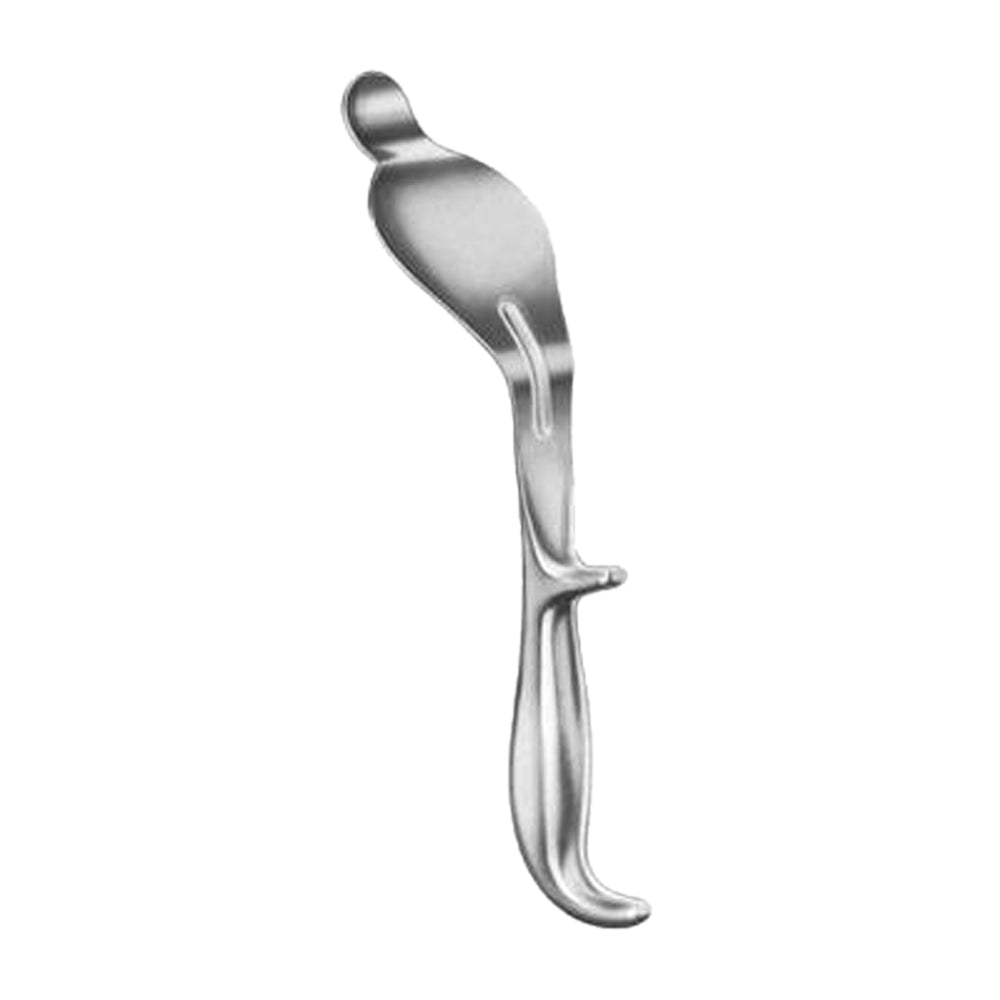
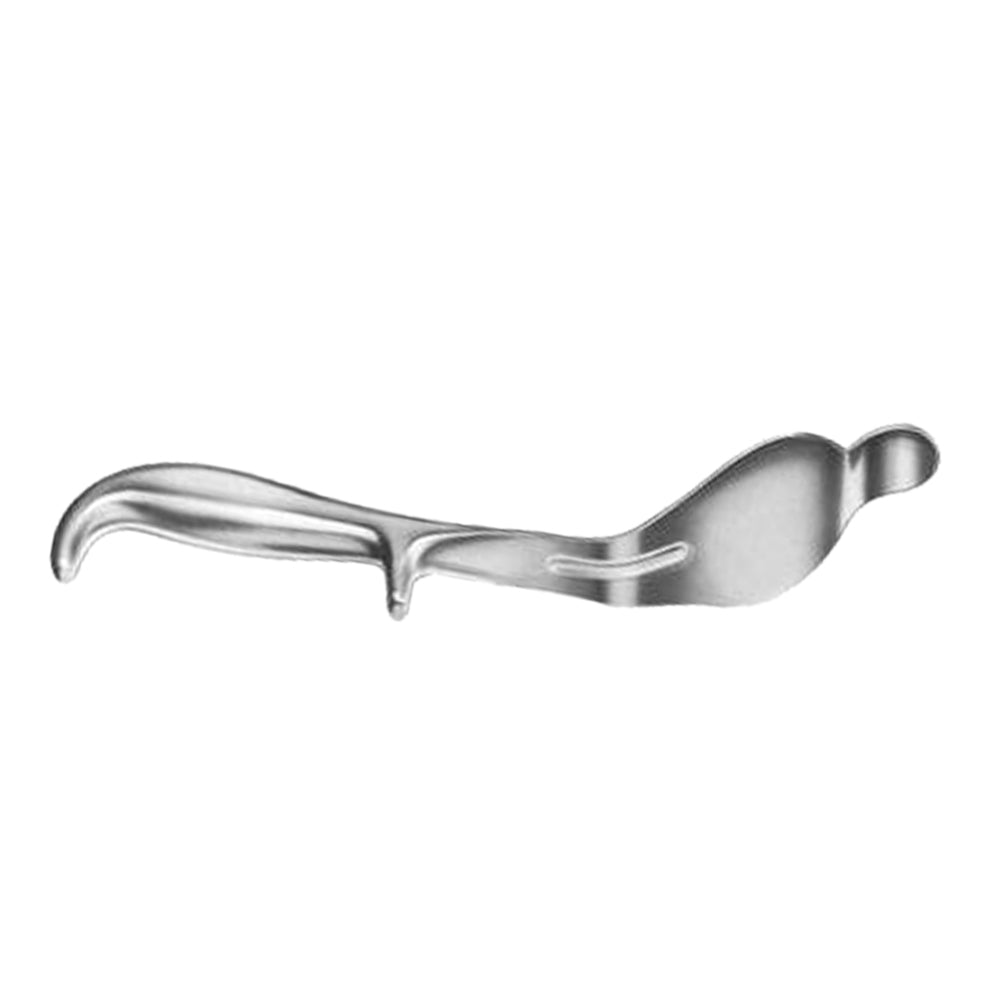
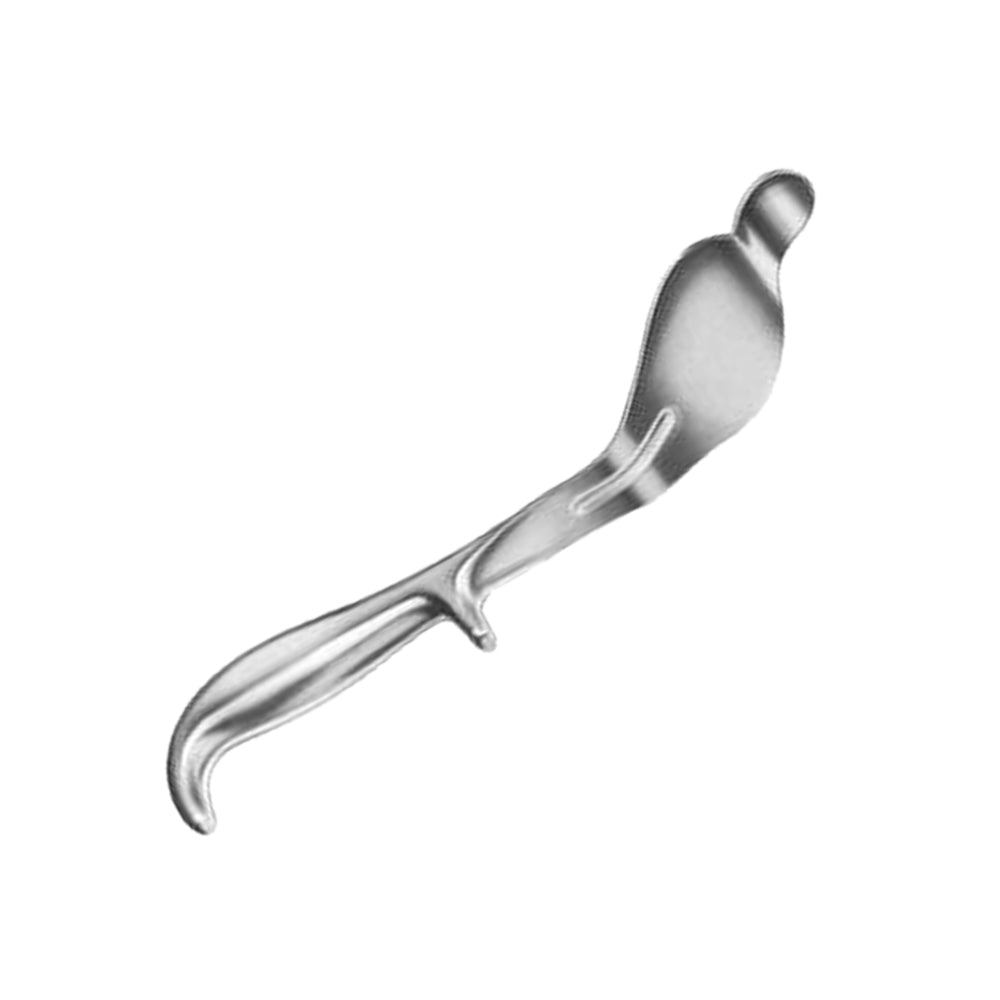
The premier orthopedic instrument for high-leverage bone retraction and unblocked visualization during tibial and major long-bone reconstructions. The Meisterhand Bennett Tibia Retractor 9 1/2” is a heavy-duty, self-retaining bone lever engineered to solve the clinical challenge of safely pulling back thick muscle masses and large soft-tissue groups away from the tibial shaft. Featuring a flared 1 3/4” wide small blade paired with a curved, ergonomic leverage handle, this retractor acts as a mechanical necessity for surgical teams needing steady, static exposure during fracture platings, intramedullary nailing, and total knee arthroplasties. Its optimized geometry anchors firmly to bone margins, evenly distributing pulling force to prevent localized tissue bruising or slippage.
The Meisterhand Bennett Tibia Retractor (9 1/2” with 1 3/4” Small Blade) represents the standard for robust, high-stability exposure in lower extremity orthopedic surgery. During high-impact open reduction and internal fixation (ORIF) procedures on the tibia, managing the heavy, overlapping muscle compartments requires significant, sustained mechanical force. Using small handheld or delicate rake retractors can tear muscle linings or exhaust the surgical assistant within minutes. This specialized bone lever acts as a high-capacity mechanical tool, transferring high manual leverage into safe, locked-in bone and tissue displacement.
At its core, the tool is engineered for maximum workflow safety and structural endurance. The wide, dished blade face spreads the retraction load over a larger surface area than a narrow Hohmann bone lever. This structural modification is a mechanical necessity to prevent focal ischemia or muscle crushing during extended surgical procedures. By smoothly sliding around the tibial shaft and securely anchoring against the posterior cortex, the Bennett retractor creates a safe, steady working window, providing clear sightlines for precise plate contouring, guide-pin tracking, and hardware placement.
Built to exceed international quality standards for medical hardware, this heavy-duty retractor is fully reusable and easy to decontaminate. Its resilient profile and specialized “Hook-Anchor” tips make it an indispensable asset for ensuring safe, organized, and high-precision results in all lower extremity trauma, knee replacement, and reconstructive surgery sets.
Feature Details
Total Overall Length 9 1/2 Inches (241mm / 24cm)
Blade Width 1 3/4 Inches (43mm / 4.3cm)
Blade Class Small Flared / Bennett Pattern
Tip Profile Smooth, Backward-Curving Bone Hook
Handle Styling Ergonomic Tapered Hook Lever
Material Base Premium Bio-Inert Surgical Stainless Steel
Reprocessing Limits Fully Autoclavable / High-Vacuum Steam-Safe
Primary Clinical Applications:
Q: What is the main difference between a Bennett Retractor and a Hohmann Retractor?
A: While both serve as bone levers, the Bennett features a wider, dished, flared blade ($1\ \frac{3}{4}\text{“”}$) that excels at holding back large, heavy muscle masses. The Hohmann retractor is typically narrower, with a pointed tip, and is reserved for tighter bone corridors or smaller muscle groups.
Q: Can this tool be held in place with weights instead of an assistant’s hand?
A: Yes. The curved hook design of the handle is a mechanical necessity that accommodates standard surgical s-hooks and hanging weights. This allows for stable, hands-free muscle retraction once the tip is safely anchored behind the bone.
Q: Is there a risk of breaking the retractor if a surgeon applies full-body weight leverage?
A: No. The premium, solid-state, forged-steel unibody is a mechanical necessity, designed specifically to withstand extreme vertical and rotational forces without flexing, bending, or structural failure under normal surgical operating parameters.
Q: How do you prevent bone or periosteal scraping when positioning the hook?
A: It is a professional standard to slide the retractor tip closely along the bony cortex, keeping continuous tactile contact until it drops behind the posterior margin. This technique ensures the tool remains beneath the muscle layer, serving as a mechanical necessity to avoid soft-tissue pinning.
Q: What is the approved sterilization protocol for this unibody retractor?
A: The premium surgical steel construction is a mechanical necessity built for rigorous hospital reuse. It is fully rated to undergo standard high-vacuum steam autoclave cycles at 134°C (273°F) with zero risk of structural breakdown, finish clouding, or corrosion.
