
Featured Collection
Your cart
Featured Collection

PEAK SURGICALS
SKU:PS-M-138
Couldn't load pickup availability


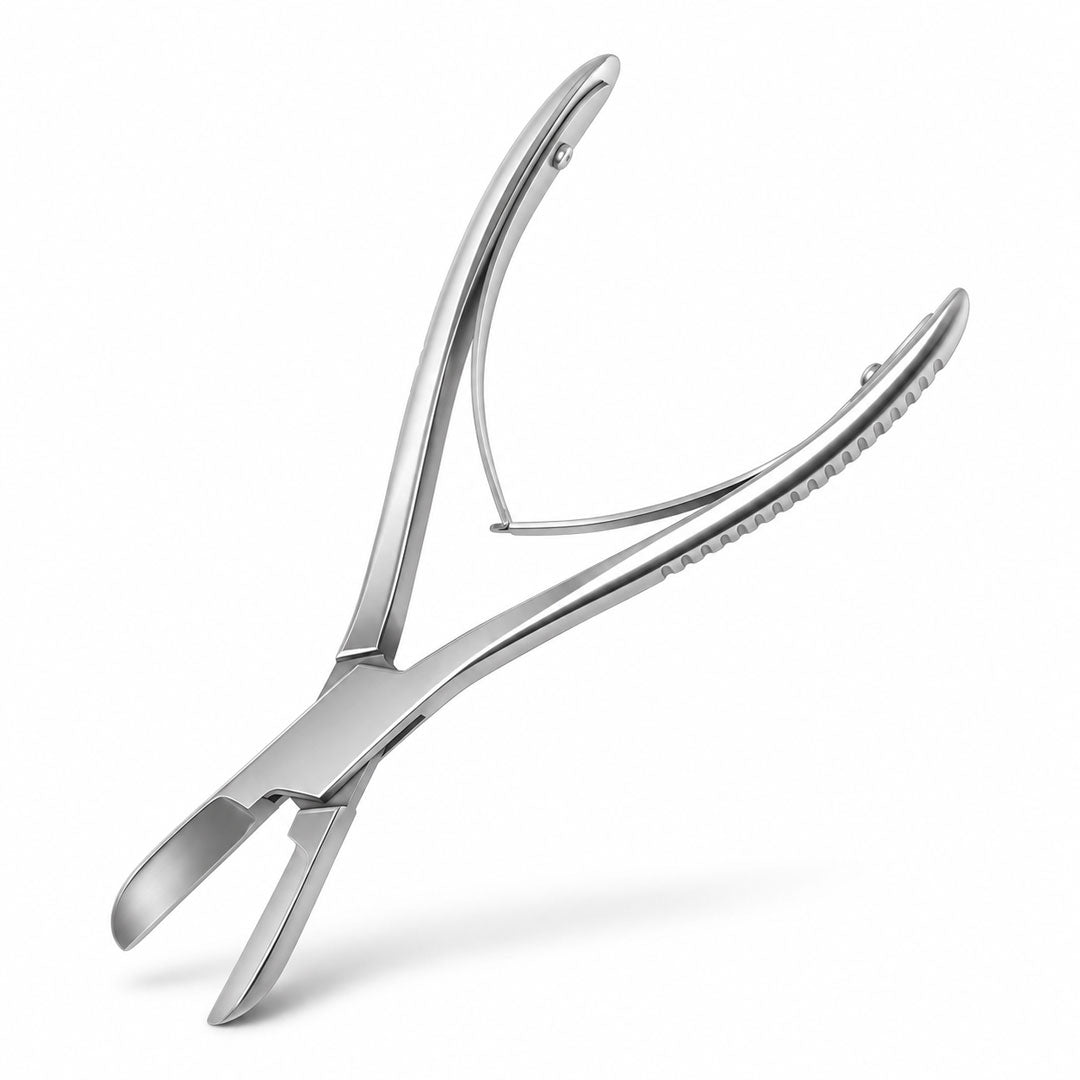
The Liston Bone Cutting Forceps are heavy-duty surgical cutting instruments designed for controlled sectioning, trimming and contouring of bone. The traditional Liston pattern combines robust cutting jaws with a single-action mechanism and double-spring handle design, providing direct manual control during orthopedic and other bone-related procedures.
Available Liston patterns may include straight or angled working configurations, allowing the surgeon to select an instrument according to surgical access and the direction of the required cut. The instrument is particularly suited to procedures involving smaller bones and exposed osseous margins where a dedicated manual bone cutter is required.
The Liston pattern uses a direct single-action cutting mechanism. Pressure applied through the handles is transferred directly to the opposing cutting jaws, creating a controlled shearing action across the bone.
This design distinguishes conventional Liston Forceps from larger Liston-Stille patterns that use compound or double-action leverage for heavier bone cutting. The conventional Liston configuration is therefore particularly appropriate for small-bone cutting, trimming and contouring tasks.
The handles incorporate a double-spring mechanism that assists with reopening the jaws after pressure is released. This provides responsive jaw movement during repeated cutting and trimming procedures.
The long plier-style handles give the operator direct control over jaw closure while providing the leverage required for manual bone cutting. The spring mechanism should move smoothly and return the jaws consistently without binding.
Liston Bone Cutting Forceps are available in different working-end configurations. Straight jaws provide direct inline access to exposed bone, while angled patterns provide an alternative approach when the operative angle or surrounding anatomy makes direct access less convenient.
Angled patterns may be selected where an offset cutting trajectory provides better working access. The appropriate configuration should be chosen according to the procedure, bone location and surgeon preference.
The opposed cutting edges are intended to shear through appropriate bone structures rather than grasp tissue or remove bone in small bites like a rongeur. This makes Liston Forceps useful when a defined bone cut, edge reduction or sectioning action is required.
Common professional applications include orthopedic bone trimming, small-bone sectioning, preparation of exposed bone margins and other procedures where manual cutting forceps are appropriate.
Liston Bone Cutting Forceps are suitable for orthopedic surgeons, trauma teams, podiatric surgeons, veterinary surgeons, surgical training facilities and other professional settings requiring reusable manual bone-cutting instrumentation.
The instrument may also be included in specialized post-mortem or anatomical instrument sets when bone sectioning is required, depending on the specific pattern and intended facility use.
| Product Name | Liston Bone Cutting Forceps |
|---|---|
| Instrument Type | Bone Cutting Forceps |
| Pattern | Liston |
| Mechanism | Single Action |
| Spring Design | Double Spring |
| Available Working Patterns | Straight and Angled Configurations |
| Primary Application | Controlled Bone Cutting, Sectioning and Trimming |
| Primary Specialty | Orthopedic Surgery |
| Brand | Peak Surgicals |
Clean and process the forceps according to the healthcare facility's validated instrument-processing procedures and applicable product-specific instructions. Before each use, inspect the cutting edges for chips, deformation, dullness or misalignment. Check the joint and double-spring mechanism for smooth movement and ensure that the jaws open and close correctly. Do not use bone cutting forceps for cutting metal wire, pins or other materials unless the specific instrument is expressly designed for that purpose.
They are used for controlled cutting, sectioning and trimming of appropriate bone structures during surgical procedures.
The conventional Liston pattern uses a single-action cutting mechanism with double-spring handles.
Yes. Liston Bone Cutting Forceps are available in straight and angled working configurations.
Conventional Liston Forceps use single-action cutting, while Liston-Stille patterns typically use compound or double-action leverage for heavier bone cutting.
No. Liston Forceps use opposing cutting edges to shear bone, while rongeurs are designed to remove bone progressively in bites.
They are suitable for orthopedic, trauma, podiatric, veterinary and other trained surgical professionals requiring manual bone-cutting instruments.


