
Featured Collection
Your cart
Featured Collection

PEAK SURGICALS
SKU:
Couldn't load pickup availability


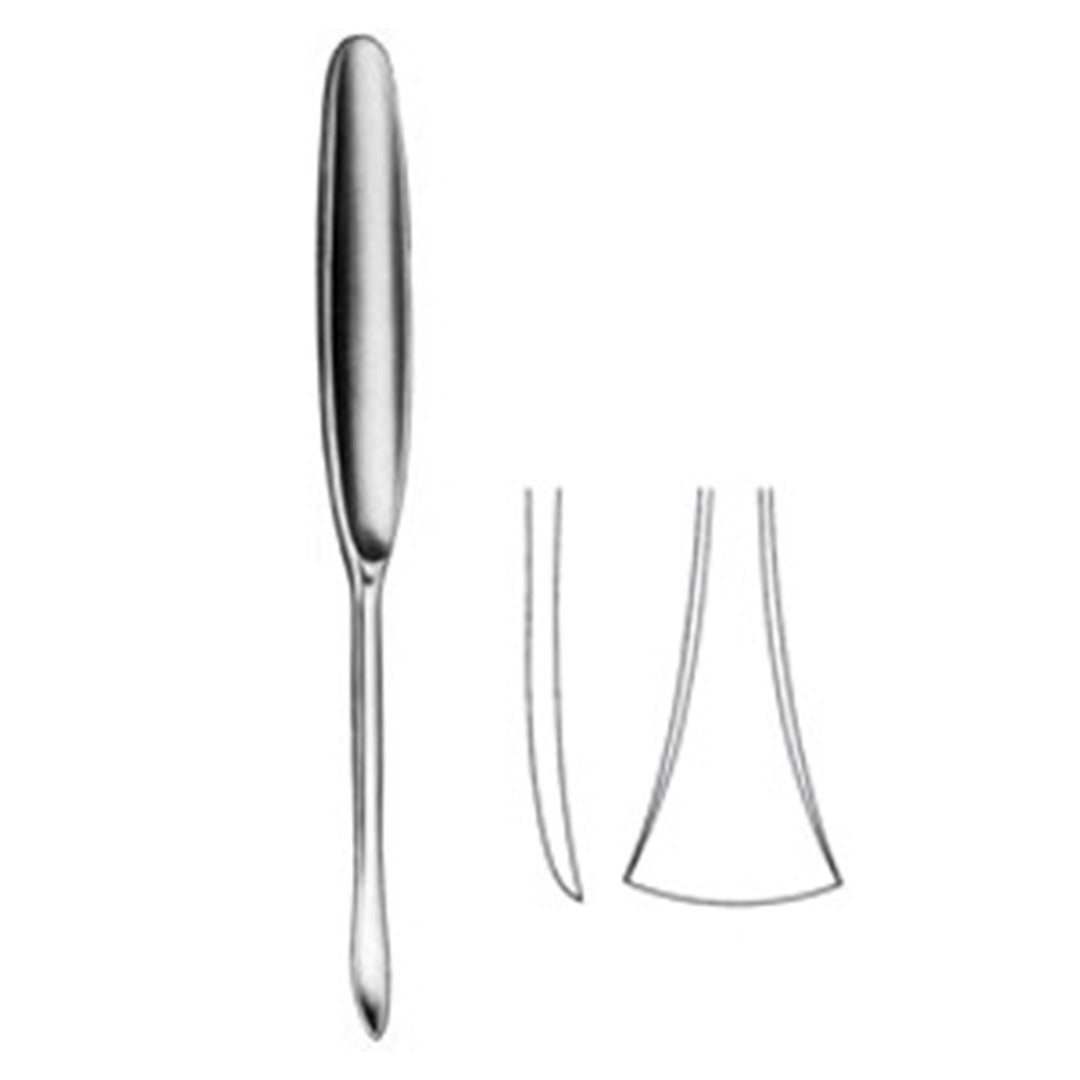
Langenbeck Elevator is a reusable surgical elevator manufactured from premium German stainless steel for controlled elevation and separation of periosteum and attached soft tissue from exposed bone surfaces. The instrument combines a broad curved working profile, smooth edges, rigid shaft, and balanced ergonomic handle to provide direct tactile control during orthopedic, spine, reconstructive, and general bone-exposure procedures. Rather than relying on a mechanical joint or powered system, the Langenbeck pattern allows the surgeon to develop the tissue-bone plane through controlled lifting, pushing, and sweeping movements. Its curved working geometry helps maintain contact with the osseous surface while the handle remains positioned for effective leverage and visualization. Langenbeck elevators are used when periosteum or adjacent tissue must be reflected before osteotomy, fixation, bone contouring, graft preparation, spinal exposure, or other reconstructive steps. The instrument is designed for repeated professional use and sterilization. Peak Surgicals currently lists this Langenbeck Elevator at $24.20 and supplies it as a reusable medical-grade steel instrument for clinical and institutional procurement.
The Langenbeck Elevator functions through direct manual leverage applied at the tissue-bone interface. Its working end follows a curved profile that allows the blade to approach an exposed osseous surface while the shaft and handle remain positioned away from the immediate dissection plane. After the surgeon identifies an appropriate periosteal margin, the working surface is introduced against bone and advanced through controlled lifting or sweeping movements. Maintaining the blade close to the cortex helps separate attached periosteum and soft tissue while limiting unnecessary entry into adjacent structures. The smooth edges documented on the Peak Surgicals listing are intended to support controlled tissue handling rather than uncontrolled penetration. A rigid one-piece configuration transmits tactile resistance directly to the surgeon's hand, allowing changes in tissue attachment and bone contour to be recognized as the elevator advances. There is no ratchet, spring, hinge, or powered mechanism. Working depth and direction are therefore determined entirely by blade position, applied pressure, handle angle, visualization, and tactile feedback. When resistance or anatomy changes, the instrument should be repositioned instead of being used as an uncontrolled lever against unseen structures.
During orthopedic bone exposure, the Langenbeck Elevator can be introduced after the incision and initial soft-tissue dissection have provided access to the periosteal plane. The surgeon positions the working end against the exposed cortex and progressively elevates attached tissue until sufficient bone surface is available for the next procedural step. This can support fracture fixation, osteotomy, plate application, bone graft preparation, corrective reconstruction, or other open orthopedic workflows requiring clear visualization of osseous landmarks. In spinal procedures, established Langenbeck elevator patterns are used within spine instrument families for controlled bone and tissue dissection where a compact elevator is required around exposed vertebral structures. During reconstructive surgery, the instrument can assist development of a controlled periosteal plane before bone contouring, grafting, or fixation. The curved working profile is particularly useful where a straight blade would place the handle in an inconvenient operating position. Tissue elevation should proceed incrementally and under direct control, with the working end kept close to bone. Protected neural, vascular, muscular, and other soft-tissue structures should remain outside the active elevation plane throughout use.
The current Peak Surgicals Langenbeck Elevator page presents a single product without publishing an exact overall length or working-tip width in the storefront description. This distinction is important because the established Langenbeck family is manufactured in several separate configurations rather than one universal size. Documented models include 7 3/4 in instruments with 6 mm blunt, 8 mm blunt, 10 mm blunt, and 17 mm sharp working ends. Narrow blunt tips provide more localized contact and can be advantageous where the operative corridor is restricted, while broader patterns engage a larger periosteal surface during each elevation movement. A sharp 17 mm pattern provides different tissue-separation characteristics from the smaller blunt configurations and should not be substituted without confirming the intended instrument specification. The current Peak product image demonstrates a broad curved Langenbeck-style working profile, but a precise millimeter dimension should be assigned only when the Shopify product record establishes that configuration. Hospitals should therefore retain the exact internal SKU and any confirmed dimensional information when adding the instrument to orthopedic or spine tray inventories.
Premium German stainless steel provides the rigidity, corrosion resistance, and dimensional stability required for a reusable periosteal elevator subjected to repeated dissection, cleaning, and sterilization cycles. Peak Surgicals identifies the Langenbeck Elevator as medical-grade steel, durable, reusable, and designed for controlled tissue elevation. Reprocessing should begin promptly after clinical use so blood, tissue, marrow, and other residue do not dry along the working blade, curved transition, shaft, or ergonomic handle. Thorough cleaning should be followed by rinsing and complete drying before visual inspection under suitable lighting. Sterile-processing personnel should examine the working end for bending, nicks, corrosion, surface defects, or unintended changes in its profile and confirm that the shaft remains structurally aligned. The handle should remain free from retained contamination and defects that could interfere with secure manual control. Terminal sterilization should follow the healthcare facility's validated process for reusable stainless steel surgical instrumentation. Peak Surgicals displays CE, FDA, and ISO-related certification information and supports ISO 13485 procurement documentation, with specific regulatory records retained according to institutional supplier-qualification requirements.
| SKU | Retain existing Shopify SKU; current storefront does not expose the SKU in the public product text |
|---|---|
| Product Name | Langenbeck Elevator |
| Price | $24.20 USD |
| Size/Gauge Variants | Current Peak listing presents one configuration without a published dimension; established Langenbeck patterns include 7 3/4 in models with 6 mm blunt, 8 mm blunt, 10 mm blunt, and 17 mm sharp working ends |
| Instrument Category | Orthopedic / Spine Periosteal Elevator |
| Procedure | Periosteal elevation, orthopedic bone exposure, spinal exposure, osteotomy preparation, fracture fixation exposure, and reconstructive bone surgery |
| Material | Premium German Stainless Steel |
| Finish | Smooth Surgical Finish |
| Sterilization | Reusable; sterilize following validated healthcare-facility cleaning and reprocessing protocols |
| Instrument Classification | Reusable Manual Periosteal / Bone Elevator |
| Reusable | Yes |
| Certifications | CE, ISO 13485, FDA-related procurement documentation |
| Warranty | 30-Day Money-Back Guarantee on eligible purchases |
| MOQ | 1 Piece for standard online ordering |
| OEM / Custom Orders | Available for institutional, distributor, and custom procurement requirements |
| After-Sale Service | Return and replacement support under Peak Surgicals policy |
How does the Langenbeck Elevator differ from a Williger Periosteal Elevator?
The Langenbeck Elevator is commonly produced with a broader curved working profile for controlled periosteal and soft-tissue elevation along exposed bone. Williger patterns generally use a finer working end and are useful where more localized periosteal separation is required within a restricted field. The Langenbeck configuration can therefore provide greater surface contact during bone exposure, depending on the exact selected tip width. Both instruments operate through direct hand-controlled leverage and tactile feedback rather than a locking mechanism. Neither instrument should be selected by name alone because working-end dimensions materially affect handling. Selection should reflect bone contour, tissue attachment, operative depth, required exposure width, and the surrounding anatomical structures.
Which Langenbeck Elevator tip size should be selected?
Langenbeck elevators are available in multiple separate configurations, including documented 6 mm, 8 mm, 10 mm, and 17 mm working ends. Smaller blunt tips provide more localized contact and can be advantageous where surgical access is narrow or controlled focal elevation is required. A broader working end contacts a larger tissue surface and can support wider periosteal reflection when the anatomy permits. The 17 mm sharp pattern has a different edge profile from the smaller blunt versions and should be selected according to the required dissection characteristics. The current Peak Langenbeck Elevator page does not publicly assign one exact width to this listing. Hospitals should therefore match the confirmed Shopify specification to the intended orthopedic or spine tray before final procurement.
What do CE, ISO 13485 and FDA references mean for procurement?
Peak Surgicals displays CE, FDA, and ISO-related certification information for the Langenbeck Elevator. ISO 13485 concerns the quality-management system used for controlled medical-device manufacturing and related processes. CE documentation supports applicable conformity-assessment requirements for medical-device markets. Established reusable Langenbeck elevator models are also represented within regulated medical-device catalogs as periosteal or bone elevators. These references should not be converted into an unsupported statement that the current Peak product is individually FDA approved. Hospitals and distributors should retain the exact product identifier, supplier certificates, applicable regulatory documents, and purchasing records within their vendor-qualification files.
How is the Langenbeck Elevator controlled during periosteal elevation?
The Langenbeck Elevator has no mechanical locking or powered mechanism, so the surgeon controls the instrument entirely through handle position and hand pressure. The working end is placed at an appropriate visible tissue-bone interface and maintained close to the cortical surface. Controlled lifting, pushing, or sweeping movements then develop the periosteal plane while the handle provides leverage. The rigid construction transmits tactile resistance back to the surgeon as tissue attachment or bone contour changes. If resistance increases unexpectedly, the blade should be withdrawn or repositioned rather than forced deeper. This direct manual control is particularly important around neural, vascular, muscular, or other protected soft-tissue structures.
How should hospitals order and reprocess the Langenbeck Elevator?
Hospitals should order the Langenbeck Elevator using the existing Peak Surgicals Shopify product identifier together with any confirmed tip-width and length specification maintained in the product record. Peak Surgicals currently lists the instrument at $24.20 and displays a 30-day money-back guarantee. The separate Peak Langenbeck Periosteal Elevator Instruments page should not automatically be treated as the same configuration because it carries its own PS-6753 identifier and 8-inch 17 mm specification. Following surgery, blood, marrow, and tissue residue should be removed promptly from the working end, curved blade, shaft, and handle. Cleaning should be followed by thorough rinsing, complete drying, and inspection for corrosion, tip damage, bending, or surface defects. Final sterilization should follow the healthcare facility's validated reusable stainless steel instrument process before the Langenbeck Elevator returns to the orthopedic, spine, or periosteal elevator tray.


