
Featured Collection
Your cart
Featured Collection

PEAK SURGICALS
SKU:PS-5211
Couldn't load pickup availability


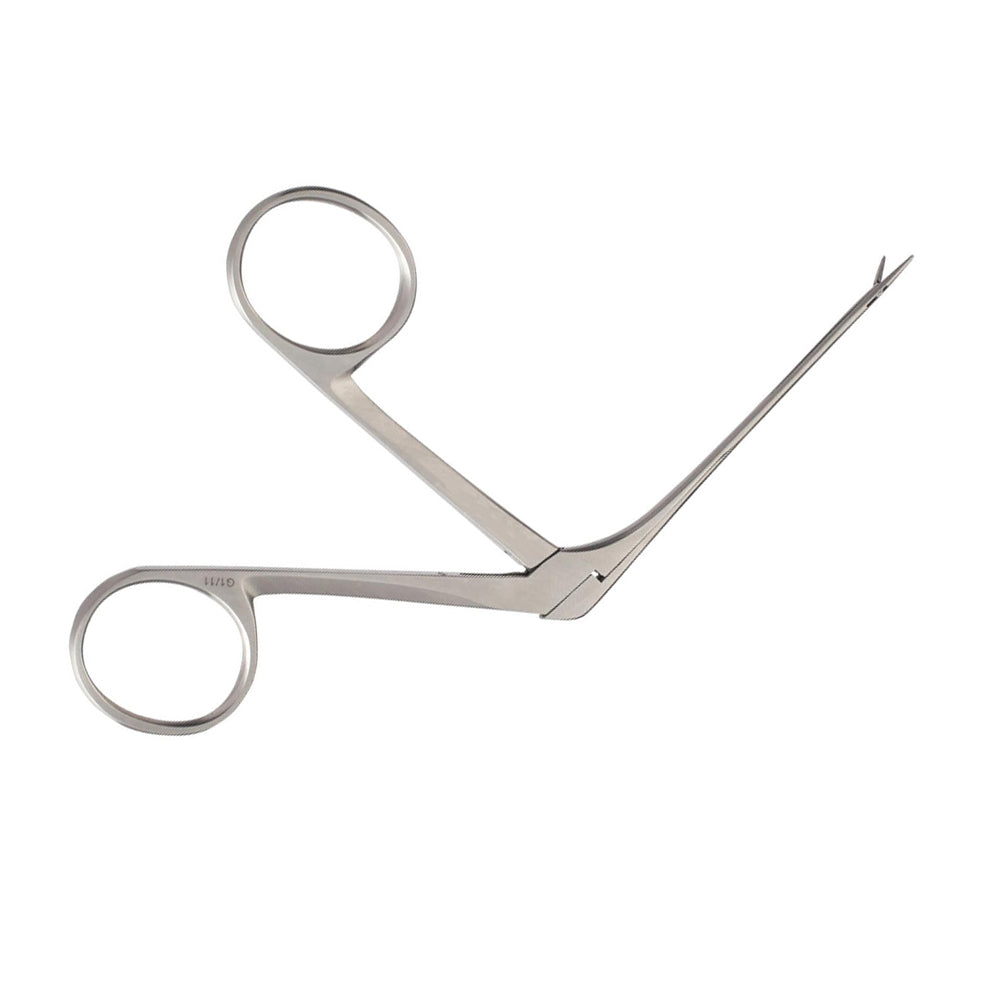
House Alligator Forceps, SKU PS-5211, is a reusable ENT alligator forceps made from German stainless steel for controlled otologic grasping, dressing placement, foreign body retrieval, and fine canal handling. The model number is PS-5211, with 0.9mm Straight Working Length 3-1/8", 0.9mm Up-Angled Working Length 3-1/8", 0.9mm Down Angled Working Length 3-1/8", and 0.9mm Left Curved Working Length 3-1/8" variants. The long slender shaft and distal alligator jaw profile allow access through the external auditory canal while keeping the hand outside the auricle, microscope field, and ear speculum corridor. It is used during otomicroscopy, tympanoplasty preparation, myringoplasty support, external auditory canal foreign body removal, cotton pledget placement, dressing retrieval, cerumen fragment handling, postoperative ear canal cleaning, and mastoid cavity care. Otologists, neurotologists, ENT surgeons, outpatient otology clinics, hospital operating rooms, ambulatory surgery centers, emergency ENT units, and medical distributors use this instrument when precise 0.9mm distal grasping is required inside narrow otologic access.
The instrument works through ring handles connected to a pivoted transmission mechanism that carries finger pressure along the shaft to the distal alligator jaws. The 0.9mm working tip creates a narrow grasping footprint for small objects, cotton fibers, dressing ends, wax fragments, packing material, and fine otologic debris. The long shaft keeps the surgeon’s hand away from the ear speculum and optical path while the distal tip enters the canal under microscopic or endoscopic visualization. Alligator-style motion concentrates movement at the terminal jaw, allowing the operator to reach into confined space without opening a wide forceps profile inside the canal. The straight pattern follows the axis of the shaft, while the up-angled, down-angled, and left curved variants redirect the grasping point toward offset canal walls or recesses. The pivot gives tactile feedback during closure, allowing gradual grip and controlled release. This handling profile is suited to short, deliberate retrieval movements where broad thumb forceps would obstruct visibility.
During otomicroscopy, House Alligator Forceps are introduced after the canal is exposed through a speculum and the target is identified under magnification. In external auditory canal foreign body removal, the 0.9mm jaws grasp the visible edge of paper, cotton, small bead fragments, or loose material before withdrawal along the canal axis. During tympanoplasty preparation, the instrument places cotton pledgets, adjusts canal packing, and retrieves dressing ends while maintaining room for suction, Rosen needles, fine ear hooks, and graft handling instruments. In myringoplasty support, the slim distal jaw helps manipulate small dressing material close to the tympanic membrane margin without using a cutting punch. During postoperative canal cleaning, the same profile removes residual packing fibers, wax fragments, or debris from the canal wall and mastoid cavity lining. The forceps are used for grasping, placement, and retrieval, not tissue punch excision or bone removal. Selection depends on target orientation, canal diameter, speculum size, visualization angle, and the working side of the ear.
The 0.9mm Straight Working Length 3-1/8" variant is selected when the target lies directly in line with the canal axis, such as a visible cotton pledget, loose dressing end, or centrally positioned foreign body. The 0.9mm Up-Angled Working Length 3-1/8" pattern redirects the jaw toward superior canal positions, tympanic membrane margin work, or material sitting above the shaft line. The 0.9mm Down Angled Working Length 3-1/8" option supports inferior canal access and retrieval from lower wall recesses without rotating the handle into the visual field. The 0.9mm Left Curved Working Length 3-1/8" variant improves approach to lateralized or offset targets where a straight bite would push material away. All variants share the same model reference, ring-handle control, slender shaft, and alligator jaw width. Surgeons select the direction according to ear side, microscope angle, patient head position, suction placement, and the exact location of dressing, debris, packing, or foreign material.
German stainless steel construction provides rigidity, corrosion resistance, and dimensional stability for repeated ENT tray use. Satin, dull, and mirror finish options support different operating room preferences; lower-reflection surfaces reduce glare under microscope or endoscope illumination, while polished surfaces allow rapid visual inspection after cleaning. Reusable construction fits central sterile workflows involving point-of-use soil removal, manual cleaning, decontamination, jaw function inspection, packaging, and steam autoclave sterilization. Cleaning attention should focus on the distal alligator jaws, hinge region, shaft channel, pivot joint, and handle rings because wax residue, cotton fibers, and biological material can restrict smooth jaw motion. CE marking supports European procurement documentation, ISO 13485 alignment reflects medical device manufacturing controls, and FDA-compliant purchasing language assists hospitals, clinics, and distributors serving regulated healthcare markets. Class I classification fits a non-powered reusable manual forceps for otologic grasping and retrieval. MOQ 1 piece, OEM availability, 1-year warranty, and return or replacement support give clear purchasing terms for ENT departments and distributor inventory planning.
| SKU | PS-5211 |
|---|---|
| Product Name | House Alligator Forceps |
| Price | $28.60 |
| Size/Gauge Variants | 0.9mm Straight Working Length 3-1/8"; 0.9mm Up-Angled Working Length 3-1/8"; 0.9mm Down Angled Working Length 3-1/8"; 0.9mm Left Curved Working Length 3-1/8" |
| Instrument Category | ENT alligator ear forceps |
| Procedure | Otomicroscopy, tympanoplasty preparation, myringoplasty support, external auditory canal foreign body removal, dressing retrieval, postoperative ear canal cleaning, mastoid cavity care |
| Material | German stainless steel |
| Finish | Satin, dull, and mirror finish options |
| Sterilization | Reusable instrument for validated cleaning, decontamination, inspection, and steam autoclave processing |
| Instrument Classification | Class I manual surgical instrument |
| Reusable | Yes |
| Certifications | CE, ISO 13485, FDA |
| Warranty | 1 year |
| MOQ | 1 piece |
| OEM / Custom Orders | Available for eligible procurement and distributor requirements |
| After-Sale Service | Return and replacement support |
How is this different from Heermann Alligator Ear Forceps?
House Alligator Forceps are supplied with 0.9mm straight, up-angled, down-angled, and left curved working patterns for directional otologic access. Heermann Alligator Ear Forceps are commonly used as compact spring-handle instruments for short canal retrieval. The House pattern uses ring-handle control and multiple jaw directions, allowing the surgeon to align the working tip with superior, inferior, central, or offset targets. This is useful when dressing material, wax fragments, or foreign bodies sit against a canal wall. Heermann forceps are selected when spring-lever handling is preferred for quick clinic grasping. House Alligator Forceps are selected when 0.9mm directional jaw access and controlled ring-handle closure are required.
Which 0.9mm pattern should be selected for ear canal work?
House Alligator Forceps in the straight pattern are selected when the target lies directly in the canal axis. The up-angled pattern is used when material sits superior to the shaft line or near an upper canal recess. The down angled pattern supports inferior wall retrieval and lower canal dressing adjustment. The left curved pattern is selected when the target is offset laterally or positioned against a side wall where a straight bite would not align cleanly. Selection depends on ear side, patient head position, microscope angle, speculum size, and suction placement. House Alligator Forceps give the surgeon multiple directional options with the same 0.9mm working jaw.
What does CE, ISO 13485, and FDA context support in procurement?
House Alligator Forceps are supplied with CE, ISO 13485, and FDA procurement context for regulated surgical instrument purchasing. CE marking supports documentation for European medical device supply channels. ISO 13485 alignment relates to manufacturing under a medical device management system. FDA-compliant purchasing language assists hospitals, clinics, and distributors serving United States healthcare markets. These references support vendor review, product file documentation, and reusable ENT tray purchasing. The product is listed as a Class I manual surgical instrument with MOQ 1 piece and 1-year warranty support.
How does the pivot mechanism control the alligator jaws?
The ring handles close around a pivot that transmits finger pressure through the shaft to the distal alligator jaw assembly. As the surgeon compresses the handles, the narrow 0.9mm tip captures the selected dressing, cotton, wax fragment, packing end, or foreign body. The pivot gives tactile feedback, allowing controlled grip without crushing delicate material or losing purchase during withdrawal. This mechanism is useful during otomicroscopy, tympanoplasty preparation, postoperative canal cleaning, and clinic-based foreign body removal. House Alligator Forceps do not require a ratchet because grasping pressure is maintained by continuous hand control. The long shaft preserves the microscope field while the distal jaws work through the speculum corridor.
How should ENT teams manage sterilization and stocking?
House Alligator Forceps should be cleaned after use with attention to the distal jaws, hinge, shaft channel, pivot, and ring handles. The jaw mechanism should be opened and closed during cleaning so wax residue, cotton fibers, and biological material are removed from moving surfaces. After decontamination and inspection, the instrument can be packaged for steam autoclave sterilization under the facility’s validated protocol. ENT departments can stock straight, up-angled, down angled, and left curved variants in otology, foreign body removal, tympanoplasty, postoperative ear care, and outpatient procedure trays. Distributors can order MOQ 1 piece for replacement supply or catalog stocking. Return and replacement support plus 1-year warranty terms help procurement teams manage reusable aural forceps inventory.


