
Featured Collection
Your cart
Featured Collection

PEAK SURGICALS
SKU:PS-000062
Couldn't load pickup availability


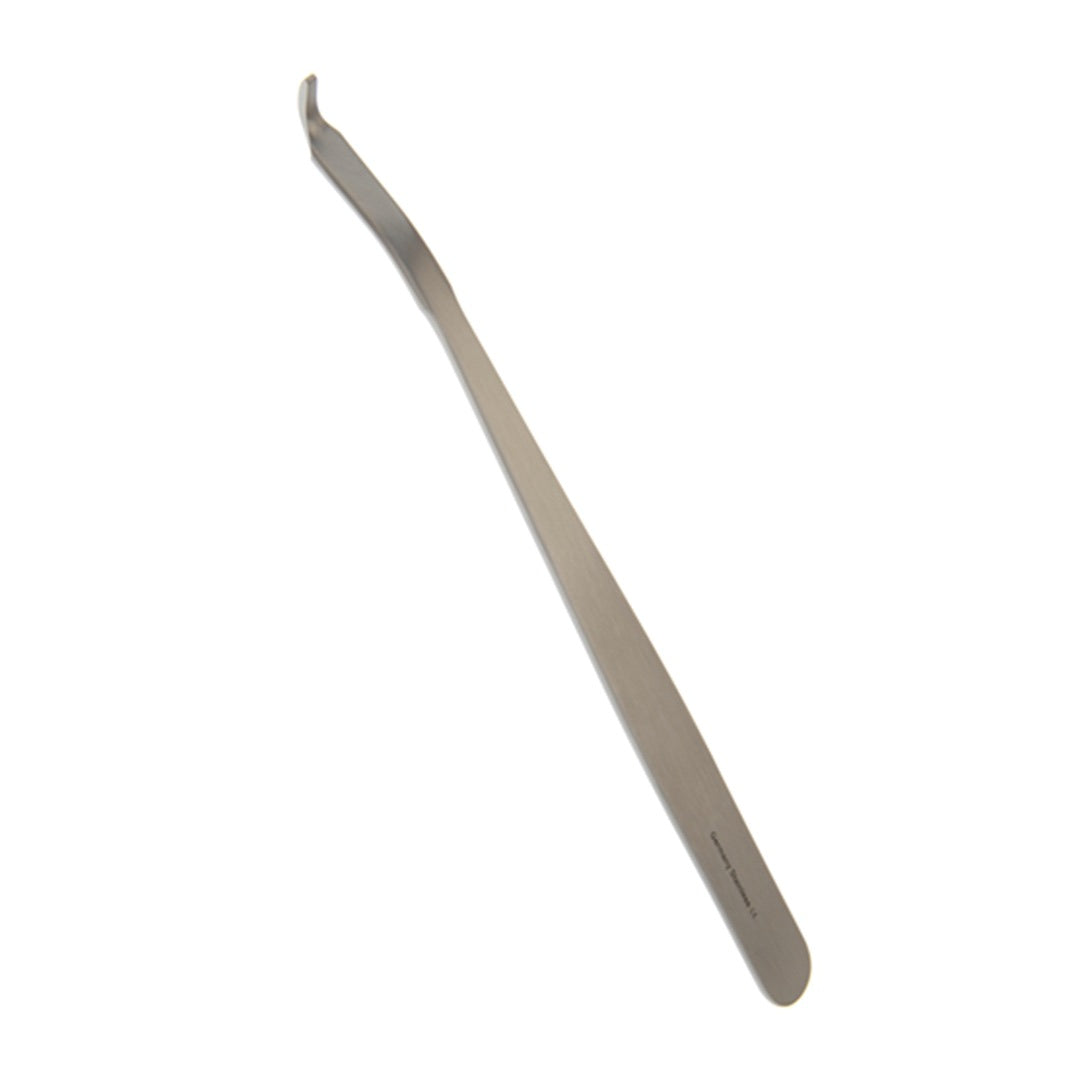
Hohmann Mini Retractor, SKU PS-000062 and part number gS 36.9300, is a reusable orthopedic hand-held retractor manufactured from German surgical stainless steel for focused soft-tissue displacement and exposure of small bone surfaces. The instrument measures 6 1/2 in overall and incorporates a narrow 6 mm distal working end, an offset curved blade transition, a rigid flat shaft, and an elongated manual handle. Its compact geometry allows the working tip to be positioned against a defined osseous margin while preserving space for reduction forceps, drills, screws, plates, osteotomes, and other fixation instruments within a restricted operative field. The Hohmann Mini pattern is used during hand and foot fracture fixation, metatarsal and phalangeal osteotomies, small-joint arthrodesis, hallux valgus correction, and other limited-exposure orthopedic procedures. The 6 mm working width provides localized retraction where a conventional broad Hohmann blade would occupy excessive space. Hand surgeons, foot and ankle surgeons, orthopedic trauma specialists, and podiatric surgical teams use this configuration in hospital operating rooms, ambulatory orthopedic centers, and specialist extremity surgery settings.
The Hohmann Mini design functions through direct manual leverage rather than a ratchet, pivot, spring, or self-retaining mechanism. Its 6 mm distal working end creates a narrow contact point along an exposed bone margin while the short curved transition redirects surrounding soft tissue away from the operative surface. The compact blade width minimizes obstruction in small anatomical fields and allows the surgeon or assistant to maintain exposure beside fixation hardware or other instruments. The rigid stainless steel shaft transfers hand-applied force directly to the working end without an articulated joint that could introduce unwanted movement. Its flat elongated handle provides rotational control and allows subtle adjustment of the direction of traction as the procedure progresses. The offset geometry keeps the operator's hand away from the immediate bone surface and leaves a central corridor available for drilling, reduction, osteotomy, or implant placement. Because the device does not lock, retraction pressure responds immediately to movement of the operator's hand. The blade should be seated against an appropriate visible osseous boundary before sustained force is applied, reducing the likelihood that traction is transmitted through unsupported soft tissue or toward structures outside the exposed field.
During hand fracture fixation, the Hohmann Mini Retractor can be positioned along an exposed metacarpal or phalangeal margin after the surgical approach has provided direct visualization of the fracture. Its narrow blade holds adjacent soft tissue outside the reduction and fixation corridor while clamps, drills, screws, or small plates are introduced. In foot and ankle surgery, the same configuration supports exposure during metatarsal osteotomy, hallux valgus correction, phalangeal procedures, and selected small-bone fracture repairs. During small-joint arthrodesis, the instrument can maintain access around prepared fusion surfaces while cartilage removal, bone preparation, graft placement, and fixation proceed. The 6 mm working end is particularly useful where tendons, neurovascular bundles, skin margins, and fixation components leave limited room for a wider retractor. The distal blade is positioned under direct control against a stable bone edge and traction is applied only to the degree required for visualization. As the surgical stage changes, the operator can alter the retraction vector immediately or remove the device to provide clearance for another instrument. Deep blind insertion should be avoided because small-bone procedures frequently occur close to tendons, digital nerves, vessels, and other structures requiring protection.
Part number gS 36.9300 identifies the 6 1/2 in Mini Hohmann Retractor with a 6 mm working width. The overall length provides sufficient reach for hand, foot, ankle, and other small-bone approaches while remaining shorter and more maneuverable than full-size Hohmann patterns designed for the hip or knee. Its 6 mm blade creates a focused retraction footprint that is appropriate for narrow bone margins and confined operative windows. The curved distal transition offsets the shaft from the working surface so the handle does not occupy the same path as drills, screwdrivers, reduction instruments, or osteotomes. A long flat handle gives the assistant a defined lever for maintaining exposure and permits small rotational adjustments without changing the original contact point unnecessarily. This model should be distinguished from established 8 mm Mini Hohmann configurations, which provide a slightly broader tissue-contact surface while retaining similar compact orthopedic geometry. Selection between mini blade widths should reflect bone dimensions, incision size, soft-tissue thickness, required exposure, and available clearance around fixation hardware. PS-000062 is best suited to procedures where the 6 mm working end provides sufficient tissue displacement without the additional footprint of a larger blade.
German surgical stainless steel provides the rigidity, corrosion resistance, and dimensional stability required for a reusable hand-held orthopedic retractor exposed to repeated leverage against bone margins. The instrument's smooth surgical finish allows direct inspection of the blade, shaft, curved transition, and handle after cleaning. Reprocessing should begin promptly following use because blood, marrow, and tissue residue can remain around the distal working end and along the offset blade transition. Thorough cleaning should be followed by rinsing and complete drying before the device is inspected for corrosion, bending, surface defects, or alteration of the 6 mm blade geometry. The shaft should retain its original alignment outside the intended distal curvature, and the working end should remain structurally intact before returning to an orthopedic instrument tray. The reusable device can undergo steam sterilization according to the healthcare facility's validated process and applicable reprocessing instructions for stainless steel instrumentation. Peak Surgicals lists CE, FDA, and ISO certification information on the product page and supports ISO 13485 procurement requirements. Institutional buyers should retain applicable regulatory records within their supplier-qualification system rather than converting those references into an unsupported individual FDA approval claim.
| SKU | PS-000062 |
|---|---|
| Product Name | Hohmann Mini Retractor |
| Price | $38.50 USD |
| Size/Gauge Variants | gS 36.9300: 6 1/2 in overall length with 6 mm working tip |
| Instrument Category | Mini Orthopedic Bone Retractor |
| Procedure | Hand fracture fixation, foot surgery, metatarsal osteotomy, phalangeal procedures, small-joint arthrodesis, and hallux valgus reconstruction |
| Material | German Surgical Stainless Steel |
| Finish | Satin Surgical Finish |
| Sterilization | Reusable; steam sterilization following validated healthcare-facility cleaning and reprocessing protocols |
| Instrument Classification | Reusable Hand-Held Surgical Retractor |
| Reusable | Yes |
| Certifications | CE, ISO 13485, FDA-related procurement documentation |
| Warranty | 30-Day Money-Back Guarantee |
| MOQ | 1 Piece |
| OEM / Custom Orders | Available for bulk and custom procurement |
| After-Sale Service | Return and replacement support under Peak Surgicals policy |
How does the Hohmann Mini Retractor differ from a standard Hohmann Retractor?
The Hohmann Mini Retractor uses a substantially narrower 6 mm working end and a shorter 6 1/2 in overall configuration for confined small-bone surgical fields. Standard Hohmann Retractors commonly use wider blades and longer shafts suited to larger joints, long bones, and broader soft-tissue exposure. The mini pattern occupies less space beside small plates, drills, reduction clamps, and other fixation instrumentation. Its narrow blade is particularly useful around metacarpals, phalanges, metatarsals, and other compact osseous structures. Both instruments rely on direct manual bone-edge retraction rather than a self-retaining mechanism. Selection should therefore reflect anatomy, incision size, working depth, and the amount of soft tissue that must be displaced.
When should the 6 mm Hohmann Mini Retractor be selected?
The 6 mm Hohmann Mini Retractor is selected when the operative corridor requires highly focused retraction around a small bone margin. It is well suited to hand and foot procedures where a wider blade could obstruct visualization or interfere with fixation instruments. During metatarsal osteotomy or phalangeal fixation, the compact working end can maintain exposure while leaving space for drilling and screw insertion. A wider 8 mm Mini Hohmann can provide additional tissue contact when the anatomy and incision permit a larger footprint. The 6 1/2 in length maintains useful reach without introducing the bulk of a full-size orthopedic retractor. Final selection should account for bone dimensions, surrounding tendons and neurovascular structures, soft-tissue bulk, and the instruments required in the same field.
What do CE, ISO 13485 and FDA references mean for procurement?
Peak Surgicals displays CE, FDA, and ISO certification information for the Hohmann Mini Retractor and supports ISO 13485 procurement documentation. ISO 13485 concerns the quality-management system used for controlled medical-device manufacturing and associated processes. CE documentation supports conformity assessment requirements within applicable medical-device markets. FDA AccessGUDID independently identifies gS 36.9300 as a commercially distributed reusable hand-held surgical retractor. This regulatory information should not be rewritten as an unsupported statement that PS-000062 is individually FDA approved. Hospitals and distributors can retain certificates, product identifiers, supplier records, and purchasing documentation within their quality and vendor-qualification files.
How is retraction controlled when the Hohmann Mini Retractor has no locking mechanism?
The Hohmann Mini Retractor is completely hand controlled and contains no ratchet, pivot, spring, or self-retaining lock. The surgeon or assistant places the 6 mm working end against a visible and appropriate bone margin before applying sustained traction. Force transmitted through the flat rigid shaft moves adjacent soft tissue away from the surgical surface. The curved distal section redirects the retraction vector while keeping the proximal handle outside the narrow working corridor. Increasing or reducing hand pressure immediately changes the amount of exposure, which is useful as drilling, reduction, osteotomy, or fixation progresses. The blade should be repositioned rather than levered blindly when the required line of exposure changes.
How should hospitals order and reprocess the Hohmann Mini Retractor?
Hospitals should order the Hohmann Mini Retractor using SKU PS-000062 and part number gS 36.9300 together with the 6 1/2 in length and 6 mm working-tip specification. Peak Surgicals currently lists the instrument at $38.50 and provides a 30-day money-back guarantee. Standard online procurement begins with one piece, while bulk and custom purchasing can be coordinated for institutional or distributor requirements. Following surgery, blood, marrow, and tissue residue should be removed promptly from the distal blade, curved transition, shaft, and handle. Cleaning should be followed by complete rinsing, drying, and inspection for corrosion, blade deformation, unintended shaft bending, or surface defects. Final sterilization should follow the healthcare facility's validated reusable stainless steel instrument process before PS-000062 returns to the hand, foot, trauma, or small-bone orthopedic tray.


