
Featured Collection
Your cart
Featured Collection

PEAK SURGICAL
SKU:
Couldn't load pickup availability
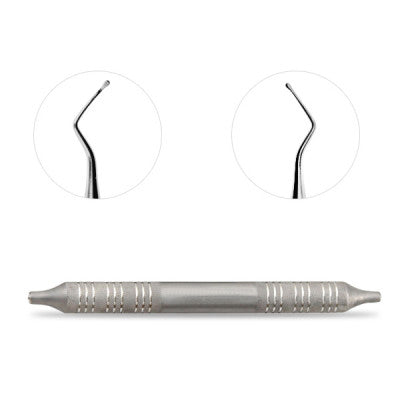
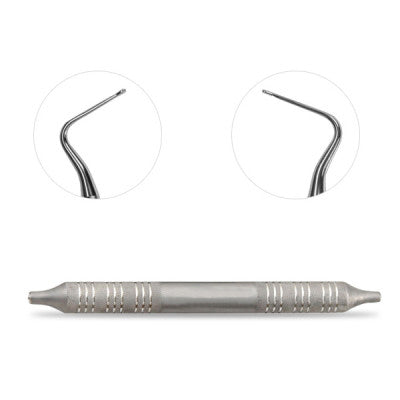
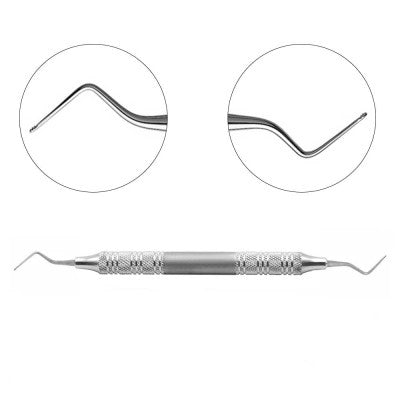
Overview of Hirschfeld File for Tartar Removal
Hirschfeld File Tartar Removal Multiple Sizes Hirschfeld File Tartar Removal Multiple Sizes is a dental instrument specifically designed to assist in the effective removal of large calculus (tartar) deposits on the surfaces of teeth. Most commonly, it is used in periodontal or cleaning procedures. This device is especially efficient in the removal of tenacious supragingival as well as subgingival calculus, which cannot be easily removed using traditional scalers on their own.
Hirschfeld files are renowned for their sturdy serrated working edges, which permit dental professionals to break up and remove massive calculus deposits effectively. Available in various sizes and designs, they are able to be used for treating different dental surfaces and anatomical variations. When it comes to treating posterior or anterior teeth or posterior teeth, they are a great choice. The Hirschfeld file is a great accessory to any dental office with a focus on complete periodontal care.
Made from premium stainless steel They are tough and corrosion-resistant. They're also designed to be used over and over again without damaging performance.
Design and Structural Features
Hirschfeld File Hirschfeld File is engineered for long-lasting durability and efficient removal of calculus. Its key design features include:
Multiple sizes to accommodate various tooth surfaces
A strong serrated filing surface to break up hard calculus
Design of the angle shank for easier access to the posterior regions
Handle ergonomic for improved grip and control
Construction of stainless steel for durability over time
A serrated blade can be described as the primary characteristic that distinguishes this Hirschfeld file. Contrary to smooth scalers, serrations permit the instrument to break down tartar that has hardened by applying controlled pressure. This is especially beneficial when there is a significant periodontal buildup.
The angled shank facilitates access to the posterior and interproximal regions, making sure that even those with difficult access are treated efficiently. The handle was designed to provide ease of use, which helps reduce fatigue when performing long-term treatments.
Clinical Applications in Dental Practice
It is a Hirschfeld File tool is widely used in:
Periodontal therapy
Deep scaling and root planning methods
Removal of supragingival calculus, heavy and subgingival
Debridement for the first time in advanced periodontal conditions
In periodontal treatments, typically, the dental file is employed prior to fine-scaling instruments, which are used to break up large deposits. This initial step will make subsequent cleaning easier and time-saving. The strong serrated surface allows practitioners to handle the buildup effectively, which improves the effectiveness of their treatment overall.
The wide range of sizes allows clinicians to choose the best instrument for the specific region in the mouth.
Advantages of Hirschfeld File Multiple Sizes
Hirschfeld File Hirschfeld File offers several key advantages:
Absorbs effectively heavy tartar deposits
Flexibility due to multiple sizes
Access to more difficult areas
Sturdy stainless steel structure
Improved efficiency in periodontal treatment
By separating large deposits of calculus into smaller pieces The instrument can reduce the duration of the procedure and enhance satisfaction during deep cleaning sessions.
Sterilization and Maintenance
Since it is a dental instrument that can be reused The Hirschfeld File must be properly cleaned and sterilized following every use. It can be used with standard autoclave sterilization methods. After sterilization, the serrated end of the working part is required to be meticulously cleaned to eliminate any debris and checked for dulling or wear.
Regular maintenance helps ensure sharpness efficient performance, as well as conformity with the standards of infection control in the dental practice.
