
Featured Collection
Your cart
Featured Collection

PEAK SURGICALS
SKU:PS-DI-006113
Couldn't load pickup availability
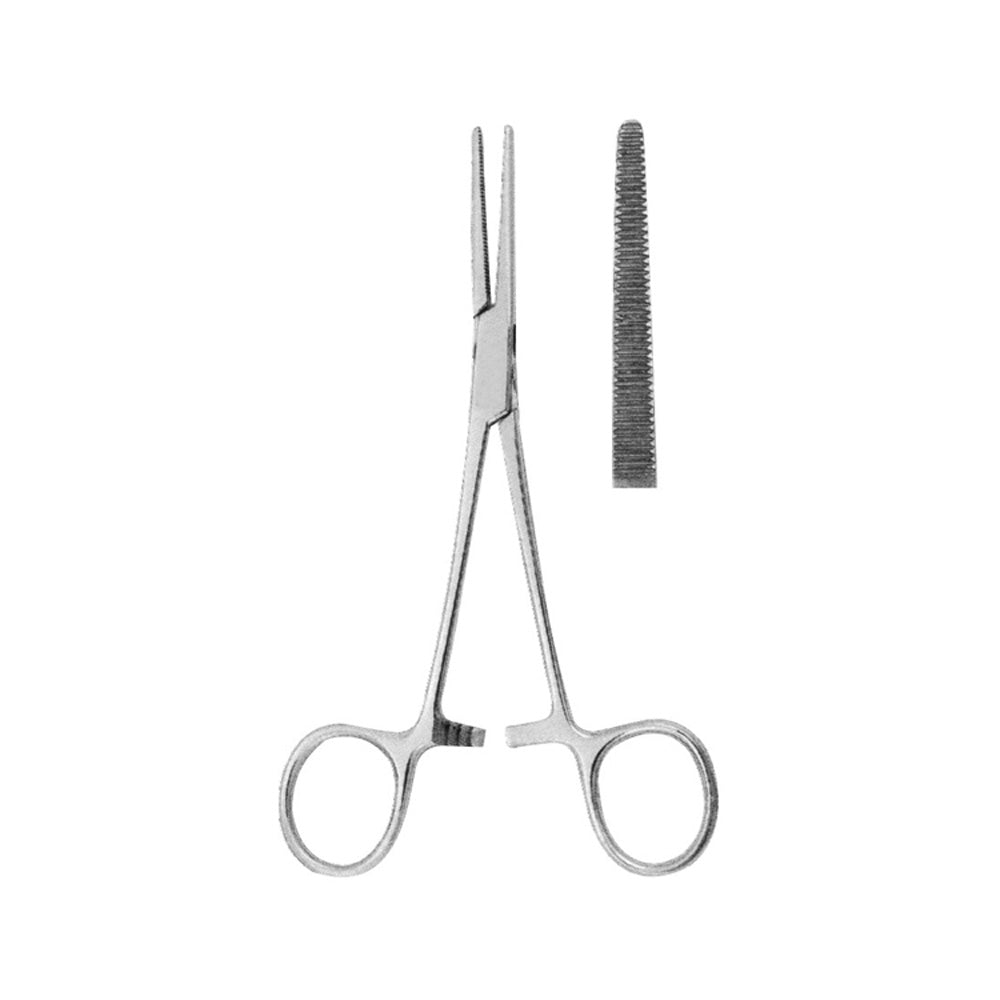
In the world of clinical and surgical instruments, the Crile Forceps (14cm Straight in Fig. 1) stands as a quintessential mid-sized clamp. Sometimes described as"the Goldilocks" of hemostats, it is bigger and more durable than a mosquito forcep and much more sophisticated than the heavier Pean. For those who need a tool that is able to handle delicate tissue as well as moderate-sized vessels, the Straight Crile is the ideal option.
The Crile Distinction: Full-Length Serrations
The most important characteristic of Crile Fig. 1 is the jaw structure. Contrary to the Kelly forcep, which has serrations only at the point The Crile is equipped with all-length transverse serrations that extend from the top of the forcep up to the joint in the box.
This design offers distinct advantages:
Material Excellence: Premium Stainless Steel
The performance of an operating area is determined by the high-quality of the instrument's design. The Crile forceps are manufactured from premium Stainless Steel to ensure they can meet the stringent requirements of modern medicine.
Technical Specifications
Feature Specification Clinical Benefit
Material: High-Grade Stainless Steel. Durability for a long time and hygiene security.
Length 14cm (5.5 inches). The ideal tool for all surgical procedures.
Jaw Pattern Straight, Fully Serrated. Gives a steady grip, with no slips across the jaw.
The closure multi-step ratchet lock allows users to set the pressure of their hands.
Common Clinical Applications
Crile 14cm Straight Crile Straight 14cm Straight is a multi-faceted "all-rounder" utilized in:
Ergonomics and Hand-Feel
The 14cm length has been made to comfortably fit into the palm of your hand, supplying the surgeon with superior tactile feedback. 4 The rings with smooth handles and precision-machined box joints ensure that closing and opening the instrument is effortless, which reduces the fatigue of hands during lengthy, repetitive procedures.
Order Processing: We strive to serve you promptly! Orders placed before the cut-off time of 5:00 PM (GMT -05:00) (Eastern Standard Time) will be processed the same business day. Orders placed after this time will be processed the next business day.
Handling Time: Our standard handling time is 2-4 business days (Monday through Friday). This includes order verification, quality checks, packaging, and dispatch. Please note that orders placed on weekends or holidays will be processed on the following business day.
Transit Time: Once dispatched, the estimated transit time is 7-10 business days (Monday through Friday). However, transit times may vary depending on your location and any unforeseen circumstances.
Shipping Fee: Enjoy free worldwide shipping on all orders over $99! At Peak Surgical Instruments, we cover all import charges for your convenience ( T & C Apply)
Purchase below 99$ we have flat rate of 31.99$ for the worldwide shipping.
Customers will receive a tracking ID as soon as their order is dispatched via FedEx or DHL.
We proudly offer worldwide shipping, ensuring that our premium surgical instruments are accessible to healthcare professionals across the globe. No matter where you are, you can count on us to deliver quality tools right to your doorstep!
To provide you with confidence in your purchase, we offer a 1-year warranty as well as a 30-day money-back guarantee on all non-personalized orders.
We understand that delays can be frustrating. Transit times are estimates based on recent orders and may change. If your package is delayed, we will do everything possible to expedite delivery. In case of significant delays or missing packages, we will reship your order at no extra cost to you
