
Featured Collection
Your cart
Featured Collection

PEAK SURGICALS
SKU:PS-000052
Couldn't load pickup availability


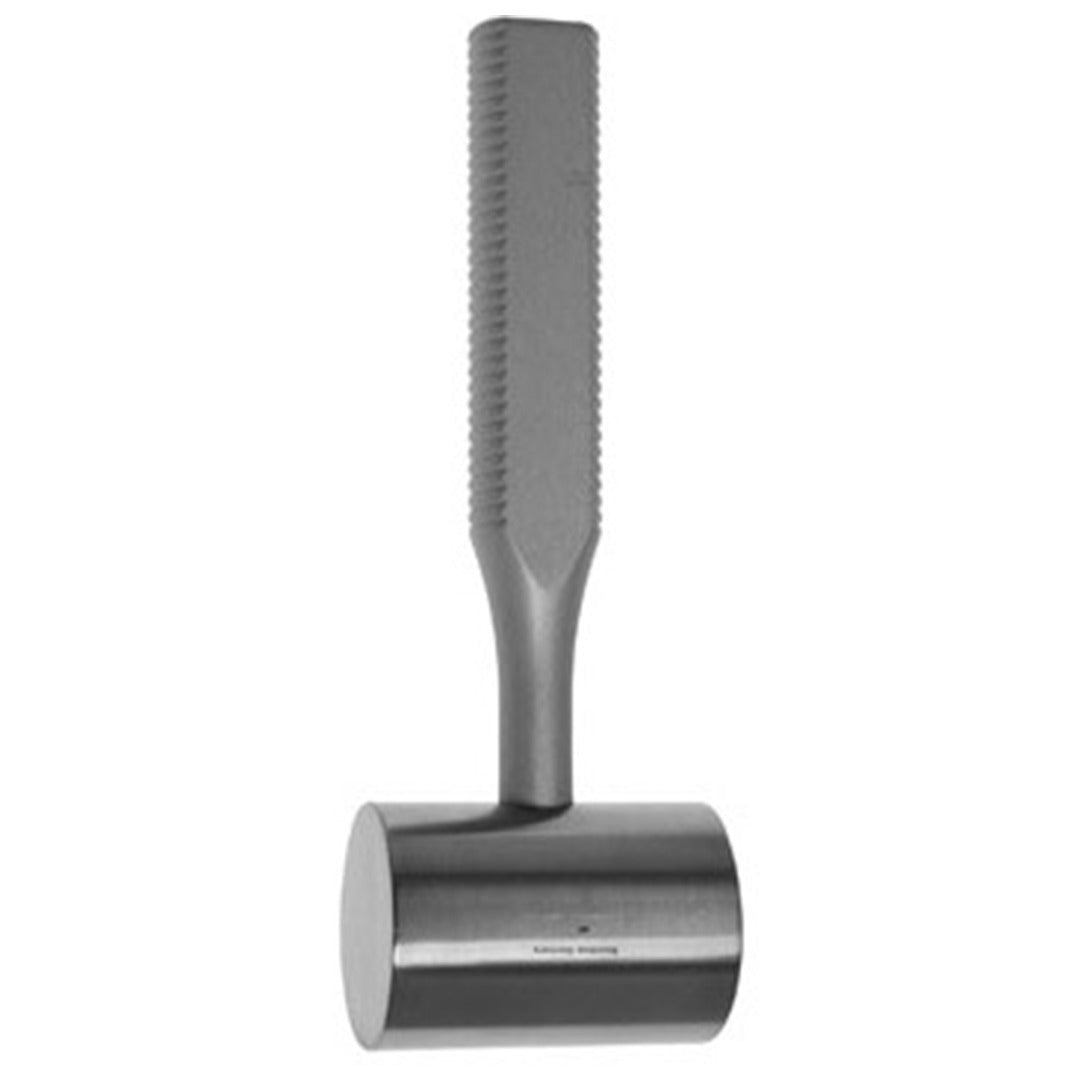
Heath Mallet, SKU PS-000052 and part number gS 59.7628, is a reusable heavy surgical mallet manufactured from German surgical stainless steel for controlled high-force impact during orthopedic bone preparation. The instrument measures 7 1/4 in overall, weighs 2 lb (907 g), and incorporates a 40 mm stainless steel striking head with a solid metal handle. Its concentrated mass provides substantial momentum for driving compatible osteotomes, chisels, gouges, bone tamps, and other instruments specifically designed to receive manual striking force. The Heath pattern is used during major osteotomy, fracture reconstruction, cortical bone preparation, joint reconstruction, revision orthopedic surgery, bone graft impaction, and other procedures where heavier impact is required than lightweight surgical mallets can provide. The 40 mm cylindrical head creates a broad contact surface for stable engagement with standard orthopedic striking platforms. Orthopedic trauma surgeons, arthroplasty specialists, reconstructive surgeons, and spine teams use this configuration in hospital operating rooms and specialist musculoskeletal surgical centers.
The Heath Mallet works by converting controlled hand acceleration into high-momentum impact through its 907 g stainless steel construction. The 40 mm cylindrical head provides a broad striking surface that can be aligned with the proximal end of a compatible osteotome, chisel, gouge, or bone tamp. As the operator swings the mallet, the concentrated mass of the head and body transfers energy through the receiving instrument toward the intended osseous target. The 2 lb total weight produces greater momentum than lighter mallets used for small-bone or delicate facial procedures, allowing the surgeon to advance heavy bone-working instruments with shorter controlled strikes. A solid stainless steel handle maintains a rigid connection with the head and provides direct tactile feedback throughout impact. There is no spring, ratchet, trigger, lock, or powered force regulator. Delivered force depends on swing distance, acceleration, mallet mass, grip, and the angle at which the head contacts the receiving instrument. The striking surface should meet the osteotome or chisel squarely because oblique contact can redirect the working end and compromise the planned bone-cutting trajectory.
During orthopedic osteotomy, the Heath Mallet is used after the surgeon has positioned a compatible osteotome or heavy chisel along the predetermined bone-cutting line. Controlled axial blows progressively advance the cutting edge through cortical or cancellous bone while trajectory and depth are reassessed between strike sequences. In fracture reconstruction, the mallet can activate compatible gouges, elevators, tamps, or fixation-system instruments during exposure, reduction, defect preparation, or graft seating. During total hip or knee reconstruction, heavy mallet impact may be required for selected bone-preparation instruments or system-specific drivers when the operative technique calls for manual striking. Revision procedures can also require greater force where dense cortical bone, existing implant interfaces, or established reconstruction planes must be addressed with compatible instruments. The 907 g configuration provides substantial impact and should therefore be used deliberately around osteoporotic cortex, thin bone, or implants. The surgeon should maintain the driven instrument along its intended axis and evaluate advancement after each series of strikes rather than relying on uninterrupted heavy percussion.
Part number gS 59.7628 identifies the Heath Mallet with a 7 1/4 in overall length, 2 lb (907 g) total weight, 40 mm stainless steel head, and stainless steel handle. The relatively short overall length keeps the instrument compact despite its substantial mass, allowing the operator to generate powerful impact without requiring a long swing arc. The 40 mm head provides broader contact than narrow-tip or precision mallets and is suited to compatible heavy osteotomes, chisels, gouges, and bone tamp striking platforms. The solid steel handle places the entire instrument within a rigid impact pathway and contributes to the heavier balance of the pattern. Within the established Heath family, a separate gS 59.7629 configuration uses a 45 mm head and aluminum handle, but that specification does not belong to this PS-000052 listing. The 40 mm gS 59.7628 model should therefore be selected when substantial impact force, broad striking contact, and a solid stainless steel handle are required. Selection should reflect bone density, receiving-instrument dimensions, operative clearance, and the amount of force required during the specific stage of surgery.
German surgical stainless steel provides the hardness, corrosion resistance, structural rigidity, and impact durability required for a reusable heavy orthopedic mallet exposed to repeated striking and sterilization cycles. The solid construction eliminates polymer caps or articulated components, but the head, neck transition, striking surfaces, and handle still require complete cleaning after clinical use. Reprocessing should begin promptly so blood, marrow, bone debris, and other contamination do not dry on the instrument. Cleaning should be followed by thorough rinsing and complete drying before visual and functional inspection. Sterile-processing personnel should assess the 40 mm head for cracks, mushrooming, deformation, corrosion, surface damage, or loosening and confirm that the handle remains structurally aligned. The reusable instrument can undergo steam sterilization through a validated healthcare-facility process compatible with stainless steel surgical instrumentation and applicable reprocessing instructions. Peak Surgicals displays CE, ISO, and FDA-related information and supports ISO 13485 procurement documentation. Regulatory records should be retained within hospital or distributor supplier-qualification files rather than presented as an unsupported individual FDA approval claim.
| SKU | PS-000052 |
|---|---|
| Product Name | Heath Mallet |
| Price | $68.20 USD |
| Size/Gauge Variants | gS 59.7628: 7 1/4 in overall length, 2 lb (907 g), 40 mm head diameter |
| Instrument Category | Heavy Orthopedic Surgical Mallet |
| Procedure | Major osteotomy, fracture reconstruction, cortical bone preparation, joint reconstruction, revision orthopedic surgery, and bone graft impaction |
| Material | German Surgical Stainless Steel |
| Finish | Premium OR Surgical Finish |
| Sterilization | Reusable; steam sterilization following validated healthcare-facility cleaning and reprocessing protocols |
| Instrument Classification | Reusable Manual Surgical Mallet |
| Reusable | Yes |
| Certifications | CE, ISO 13485, FDA-related procurement documentation |
| Warranty | 30-Day Money-Back Guarantee on eligible purchases |
| MOQ | 1 Piece for standard online ordering |
| OEM / Custom Orders | Available for institutional, distributor, and custom procurement requirements |
| After-Sale Service | Return and replacement support under Peak Surgicals policy |
How does the Heath Mallet differ from a standard Surgical Mallet?
The Heath Mallet weighs 2 lb (907 g) and uses a 40 mm stainless steel head, making it substantially heavier than many standard orthopedic mallets. A standard Surgical Mallet may use a smaller head and lower overall mass for routine osteotome, tamp, or chisel activation. The Heath pattern is selected when denser cortical bone or larger orthopedic instruments require greater momentum. Its 40 mm head also provides a broad striking surface for compatible heavy instruments. Both patterns rely on direct manual impact and contain no powered mechanism. Selection should therefore reflect required force, bone density, receiving-instrument size, and the degree of incremental control needed.
Why select the 40 mm, 2 lb Heath Mallet?
The 40 mm head creates a broad contact surface for stable alignment with heavy osteotomes, chisels, gouges, and compatible bone tamps. Its 2 lb mass produces greater momentum than lightweight precision mallets and supports demanding orthopedic bone work. The 7 1/4 in length keeps the heavy instrument relatively compact around the operative field. This configuration can be useful during cortical osteotomy, major fracture reconstruction, revision procedures, and other stages requiring substantial manual impact. A lighter mallet may be preferable where smaller instruments or fragile bone require lower delivered energy. The Heath Mallet should therefore be selected according to the receiving tool, bone quality, operative depth, and required impact force.
What do CE, ISO 13485 and FDA references mean for procurement?
Peak Surgicals displays CE, ISO, and FDA-related information for the Heath Mallet and supports ISO 13485 procurement documentation. ISO 13485 concerns the quality-management system used for controlled medical-device manufacturing and associated processes. CE documentation supports conformity assessment within applicable medical-device markets. FDA AccessGUDID identifies gS 59.7628 as a commercially distributed surgical mallet with a 7 1/4 in length, 907 g weight, 40 mm stainless steel head, and stainless steel handle. A GUDID device record should not be described as individual FDA approval. Hospitals and distributors can retain the SKU, catalog number, supplier certificates, regulatory records, and purchasing documentation within their vendor-qualification files.
How is impact force controlled when the Heath Mallet has no adjustment mechanism?
The Heath Mallet contains no mechanical power setting, spring, trigger, ratchet, or locking control. The surgeon regulates impact by changing swing distance, acceleration, grip, and the number of strikes delivered. Because the instrument weighs 907 g, even short movements can produce substantial momentum compared with lighter mallets. The 40 mm head should remain centered and square over the proximal striking surface of the receiving instrument. Short measured blows permit gradual advancement, while longer or faster swings deliver greater energy. Surgical depth and instrument progression therefore remain controlled through manual technique, direct visualization, tactile feedback, and reassessment after each strike sequence.
How should hospitals order and reprocess the Heath Mallet?
Hospitals should order this Heath Mallet using Shopify SKU PS-000052 and part number gS 59.7628 together with the 7 1/4 in length, 2 lb weight, and 40 mm head specification. Peak Surgicals currently lists the product at $68.20 and displays a 30-day money-back guarantee. Standard online ordering begins with one piece, while institutional and distributor requirements can be coordinated through Peak Surgicals. Following surgery, blood, marrow, and bone residue should be removed promptly from both striking surfaces, the cylindrical head, neck, and stainless steel handle. Cleaning should be followed by thorough rinsing, complete drying, and inspection for corrosion, head deformation, cracks, impact damage, or structural looseness. Final steam sterilization should follow the healthcare facility's validated reusable stainless steel instrument process before PS-000052 returns to the orthopedic mallet and osteotome tray.


