
Featured Collection
Your cart
Featured Collection

PEAK SURGICAL
SKU:PS-1050
Couldn't load pickup availability
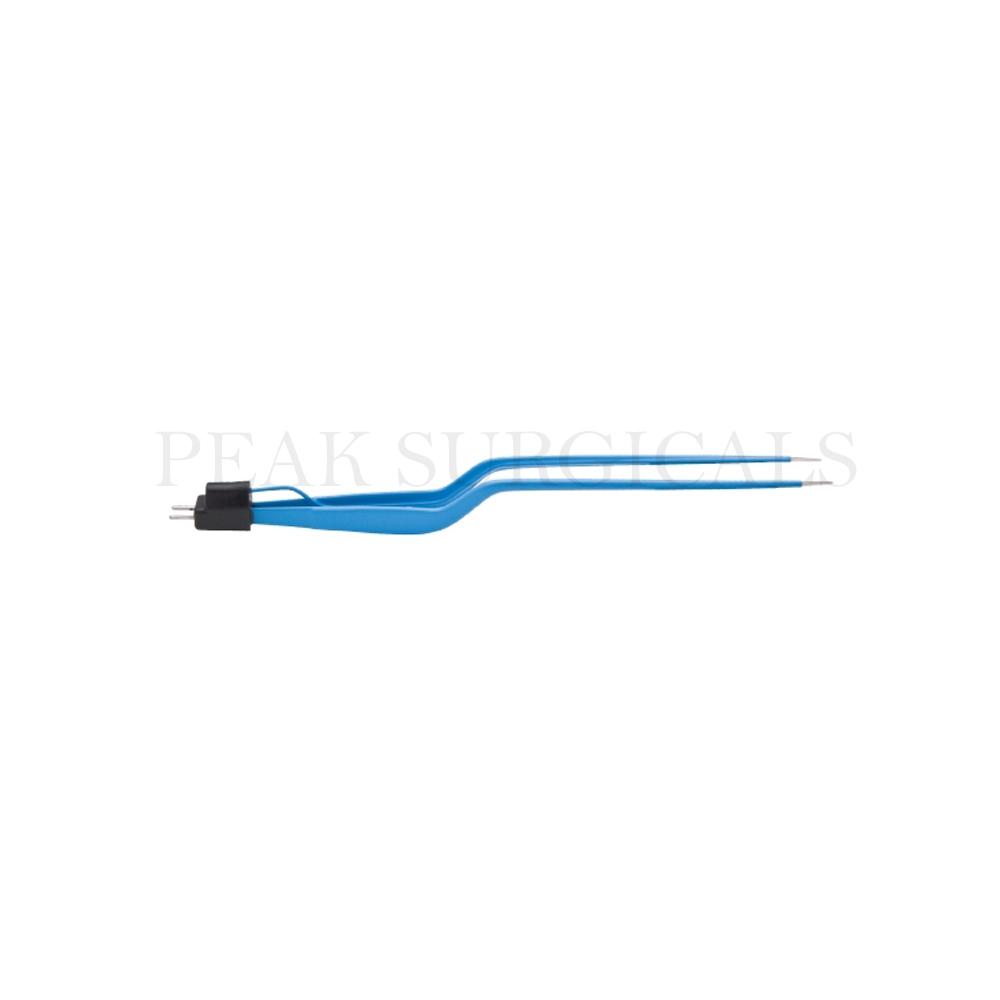
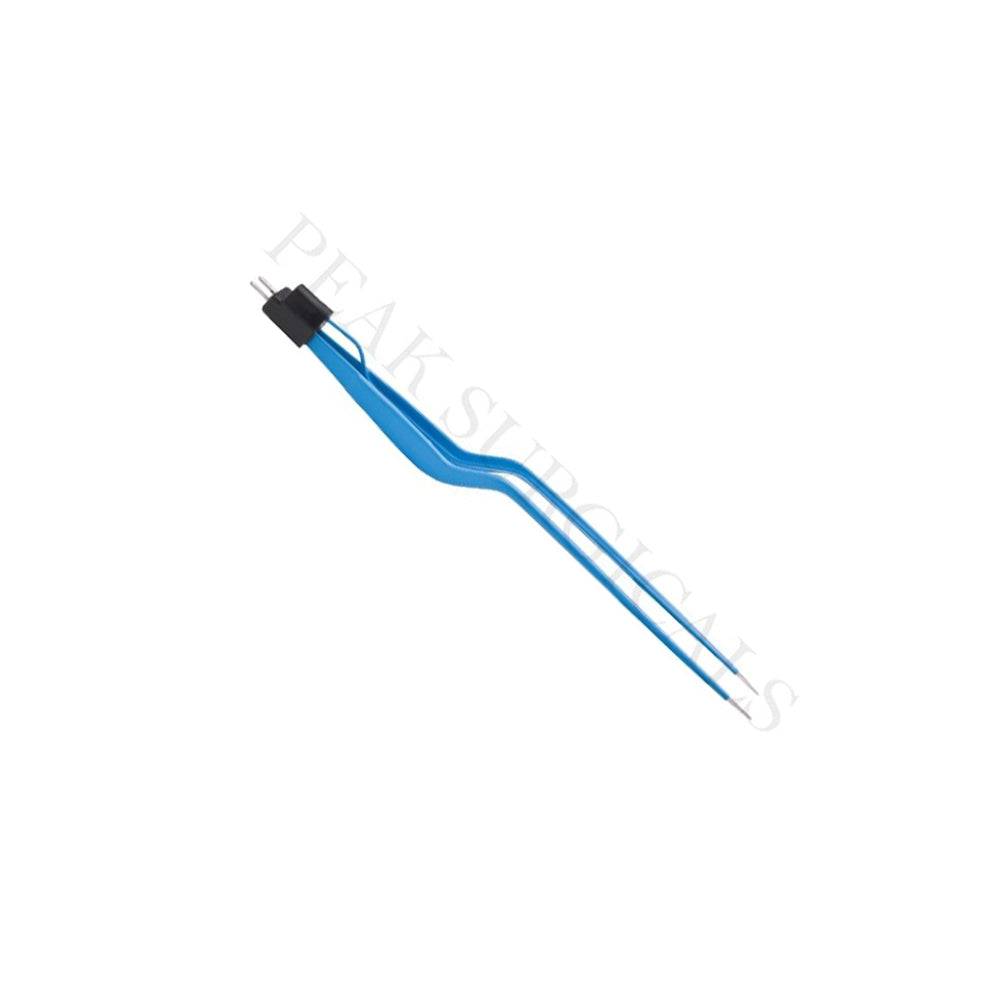
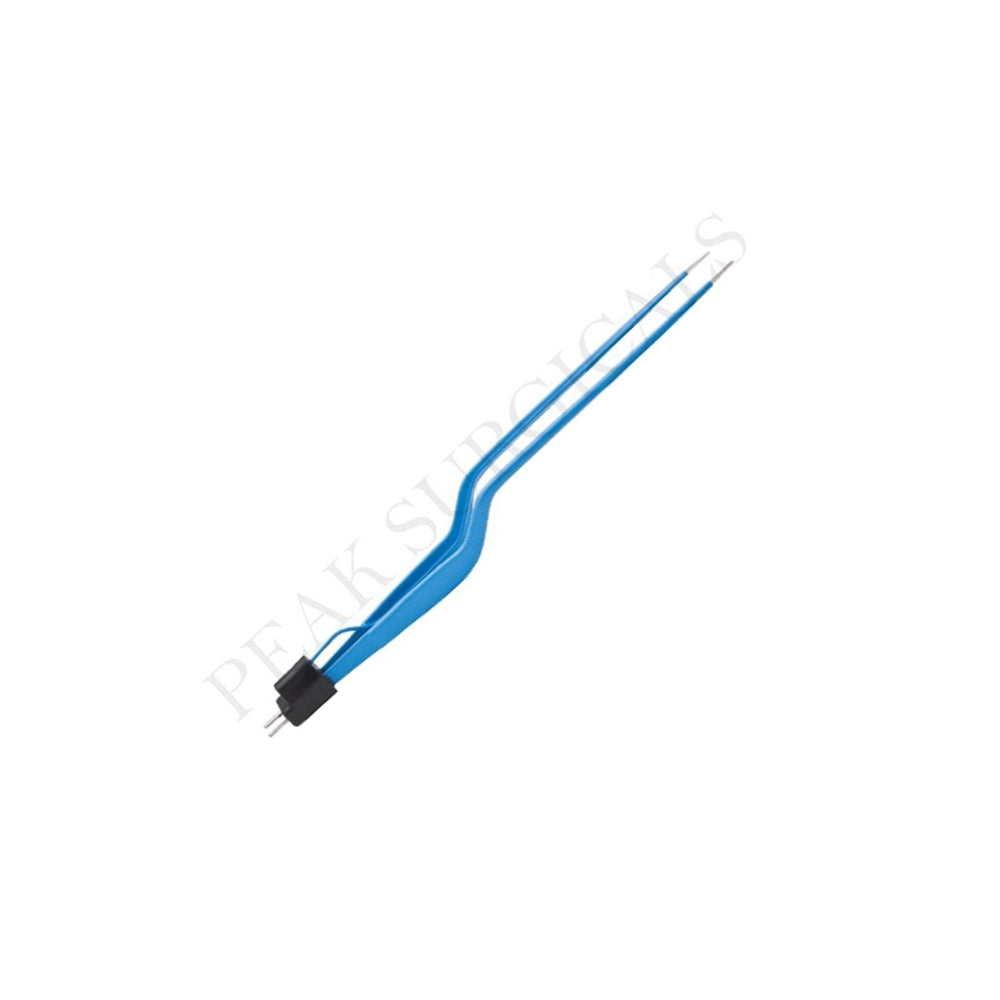
Hardy Bayonet Irrigation Bipolar Forceps, SKU PS-1050, are reusable irrigating bipolar electrosurgical forceps manufactured from German stainless steel with insulated bayonet arms for controlled coagulation and fluid-assisted visibility in deep operating room procedures. The available size is 10 inch or 25.4 cm under model PS-1050, configured with fine opposing bipolar tips, an offset bayonet shaft, blue insulated working arms, proximal connector interface, irrigation pathway, spring-action tweezer control, reusable Class I construction, and extended distal geometry for localized hemostasis around delicate tissue and small vessels. These forceps are used during neurosurgical hemostasis, spinal microsurgery, ENT mucosal coagulation, skull base access, plastic reconstructive work, dermatologic lesion bed control, oral and maxillofacial soft tissue procedures, gynecology fine bleeding-point management, and veterinary microsurgical workflows. Neurosurgeons, ENT surgeons, plastic surgeons, dermatologic surgeons, oral surgeons, gynecologic surgeons, veterinary surgeons, hospitals, clinics, ambulatory surgery centers, distributors, and procurement departments use this instrument where long bayonet access, irrigation support, bipolar energy delivery, and sterile tray compatibility are required.
The Hardy Bayonet Irrigation Bipolar Forceps pattern works through two insulated arms that deliver bipolar current between fine opposing distal tips while an irrigation pathway supplies fluid to the active contact area. The bayonet shaft offsets the surgeon’s hand from the visual axis, helping maintain a clear microscope, loupe, or direct operative view during deep-field procedures. Spring-action tweezer control keeps the arms open at rest and allows the surgeon to close the tips with measured thumb and finger pressure before activation. Bipolar current passes between the distal contacts, concentrating coagulation at the grasped or contacted tissue segment. The irrigation pathway helps keep the contact area moist, supports visibility, and reduces tissue adherence at the tips during repeated coagulation. The blue insulated body separates the handling zone from the conductive distal region and supports quick identification in electrosurgical trays. The proximal connector interface links the forceps to a compatible bipolar cable and generator setup. German stainless steel working components provide tip alignment, spring response, connector reliability, and reusable handling durability through repeated clinical cycles.
During neurosurgical procedures, Hardy Bayonet Irrigation Bipolar Forceps support fine hemostasis around small vessels, dural margins, tumor-bed surfaces, cottonoids, and delicate tissue planes where visibility must remain controlled. In spinal microsurgery, the 10 inch bayonet profile helps reach epidural bleeding points, ligamentous margins, paraspinal tissue planes, and deeper wound corridors without placing the hand directly over the field. ENT surgeons use the irrigating bayonet format during nasal mucosal work, otologic access, skull base exposure, tonsillar bed support, and head and neck procedures requiring fine bipolar contact. Plastic and reconstructive teams use the opposing tips for flap edge control, graft bed preparation, scar revision, facial soft tissue refinement, and microvascular-adjacent hemostasis. Dermatologic teams use the instrument for lesion bed coagulation and margin control after excision. Oral and maxillofacial units can use the forceps for gingival hemostasis, mucosal contact, and localized coagulation in compatible bipolar setups. Gynecology and veterinary teams select the same irrigating bipolar principle for fine bleeding-point control in restricted soft tissue fields.
The 10 inch or 25.4 cm Hardy Bayonet Irrigation Bipolar Forceps size is selected when the surgeon requires extended reach with offset visualization and fine distal bipolar control. This length provides additional hand clearance when retractors, suction, gauze, cottonoids, microscope positioning, or wound depth increase the working distance to the coagulation point. In neurosurgery and spinal microsurgery, the 25.4 cm profile supports access through deeper corridors while maintaining controlled bipolar contact. In ENT procedures, the bayonet alignment helps position the distal tips around mucosal and skull base fields while keeping the hand outside the direct visual line. Plastic surgery, dermatology, oral surgery, gynecology, and veterinary teams select the same length when the distal tips must reach beyond a narrow access corridor. The fine tips support localized hemostasis, while the irrigation pathway helps maintain a clear operative contact surface. Selection depends on field depth, target vessel size, tissue thickness, irrigation need, generator compatibility, and surgeon preference for extended bayonet working distance.
German stainless steel working components provide corrosion resistance, dimensional stability, spring response, connector reliability, and fine-tip alignment for reusable irrigating bipolar forceps exposed to repeated clinical handling and reprocessing. The insulated blue body supports electrosurgical workflow by separating the handling area from the conductive distal contact region and helping tray teams identify the instrument quickly during sterile setup. Satin, dull, or mirror finish procurement options support facility documentation and surgical instrument standardization across specialty sets. Reprocessing requires focused attention to the bipolar tips, irrigation pathway, insulation surface, spring arms, shaft transitions, and connector interface because coagulum, tissue residue, fluid deposits, and insulation wear can affect clinical handling. Cleaning follows facility protocols for reusable electrosurgical and irrigation accessories, including point-of-use preparation, residue removal, channel flushing, manual cleaning, drying, insulation inspection, connector review, packaging, and sterilization before use. CE marking and ISO 13485 alignment support regulated purchasing documentation for hospitals, clinics, distributors, dental centers, veterinary practices, and international healthcare buyers. FDA-compliant procurement support helps United States channels maintain reusable electrosurgical accessory records, while OEM availability and one-piece ordering support institutional replacement purchasing.
| SKU | PS-1050 |
|---|---|
| Product Name | Hardy Bayonet Irrigation Bipolar Forceps |
| Price | $38.50 |
| Size/Gauge Variants | 10 inch or 25.4 cm under model PS-1050 |
| Instrument Category | Reusable irrigating bayonet bipolar electrosurgical forceps |
| Procedure | Neurosurgical hemostasis, spinal microsurgery, ENT mucosal coagulation, skull base access, plastic reconstructive work, dermatologic lesion bed control, oral soft tissue management, gynecology fine bleeding-point control, veterinary electrosurgical procedures |
| Material | German stainless steel working components with insulated reusable forceps body |
| Finish | Satin, dull, or mirror finish procurement options with blue insulated body |
| Sterilization | Reusable; clean, flush irrigation pathway, dry, inspect insulation, bipolar tips, spring arms, shaft transitions, and connector interface, then sterilize through validated facility protocol before sterile use |
| Instrument Classification | Class I reusable irrigating bayonet bipolar forceps electrosurgical accessory |
| Reusable | Yes |
| Certifications | CE & ISO 13485 with FDA-compliant procurement support |
| Warranty | 1-year warranty with return and replacement after-sale support |
| MOQ | 1 piece |
| OEM / Custom Orders | Available for distributor, hospital, clinic, dental, veterinary, and institutional purchasing programs |
| After-Sale Service | Return and replacement support, order tracking assistance, and procurement documentation support |
How do Hardy Bayonet Irrigation Bipolar Forceps differ from Gerald Bayonet Irrigation Bipolar Forceps?
Hardy Bayonet Irrigation Bipolar Forceps use a longer 10 inch working profile for extended access in deep operative corridors. Gerald Bayonet Irrigation Bipolar Forceps use a shorter 7 1/2 inch profile for bayonet access where less reach is required. Both instruments combine bipolar coagulation with irrigation support. The Hardy pattern is selected when wound depth, microscope positioning, cottonoids, retractors, or surgical exposure require additional hand clearance. The Gerald pattern is selected when bayonet visualization is required but a shorter instrument gives better hand-to-tip feedback. The main clinical difference is working length, while both designs support localized bipolar coagulation with fluid-assisted tip control.
When should the 10 inch Hardy Bayonet Irrigation Bipolar Forceps size be selected?
The 10 inch Hardy Bayonet Irrigation Bipolar Forceps size is selected when the operative field requires extended reach with offset bayonet visualization. In neurosurgery and spinal microsurgery, this length supports access around deeper corridors, cottonoids, retractors, and wound margins. In ENT procedures, it helps position the tips in mucosal and skull base fields while keeping the hand outside the direct visual line. Plastic surgery, oral surgery, gynecology, dermatology, and veterinary teams select the same length when additional hand clearance improves approach. The fine tips are used for localized bleeding-point control. Selection depends on field depth, vessel size, tissue thickness, irrigation requirement, generator compatibility, and surgeon preference.
What do CE, ISO 13485, and FDA-compliant procurement mean for this product?
Hardy Bayonet Irrigation Bipolar Forceps are supplied for healthcare purchasing workflows that require traceable instrument documentation. CE marking supports regulated distribution where European conformity documentation is required. ISO 13485 alignment indicates that the manufacturing quality system follows a recognized medical device framework. FDA-compliant procurement support helps buyers serving United States healthcare channels maintain records for reusable surgical instruments and electrosurgical accessories. Hospitals and clinics can use these references during vendor onboarding, internal product review, and recurring supply approval. Distributors can include PS-1050 in neurosurgery, ENT, spinal surgery, plastic surgery, dermatology, oral surgery, gynecology support, and veterinary procurement programs.
How are the irrigation pathway, bayonet shaft, and bipolar tips used intraoperatively?
The connector interface links Hardy Bayonet Irrigation Bipolar Forceps to a compatible bipolar cable and electrosurgical generator setup. The irrigation pathway supports fluid delivery to the working end during repeated coagulation. The surgeon positions the bayonet shaft so the hand remains outside the visual corridor. The fine tips are placed around the selected bleeding point or tissue contact area before activation. Irrigation helps clear the contact point and maintain a moist working surface. After the procedure, the tips, irrigation pathway, insulation surface, spring arms, shaft transitions, and connector interface require inspection before reprocessing and reuse.
How should hospitals, clinics, and distributors manage sterilization and supply?
Hardy Bayonet Irrigation Bipolar Forceps are intended for reusable electrosurgical tray management under validated facility protocols. After the procedure, the bipolar tips, irrigation pathway, insulated arms, connector end, shaft transitions, and transition areas require prompt cleaning preparation. The forceps should be flushed, dried, inspected for insulation integrity, checked for connector condition, packaged, and sterilized according to the facility’s reusable electrosurgical accessory workflow. Hospitals can stock PS-1050 for neurosurgery, ENT, spinal surgery, plastic surgery, dermatology, oral surgery, gynecology, and veterinary trays. Clinics and distributors can order single units or include the forceps in custom irrigating bipolar sets. Procurement teams receive return and replacement support, order tracking assistance, and documentation support for institutional purchasing.
