
Featured Collection
Your cart
Featured Collection

PEAK SURGICALS
SKU:PS-DI-00692
Couldn't load pickup availability
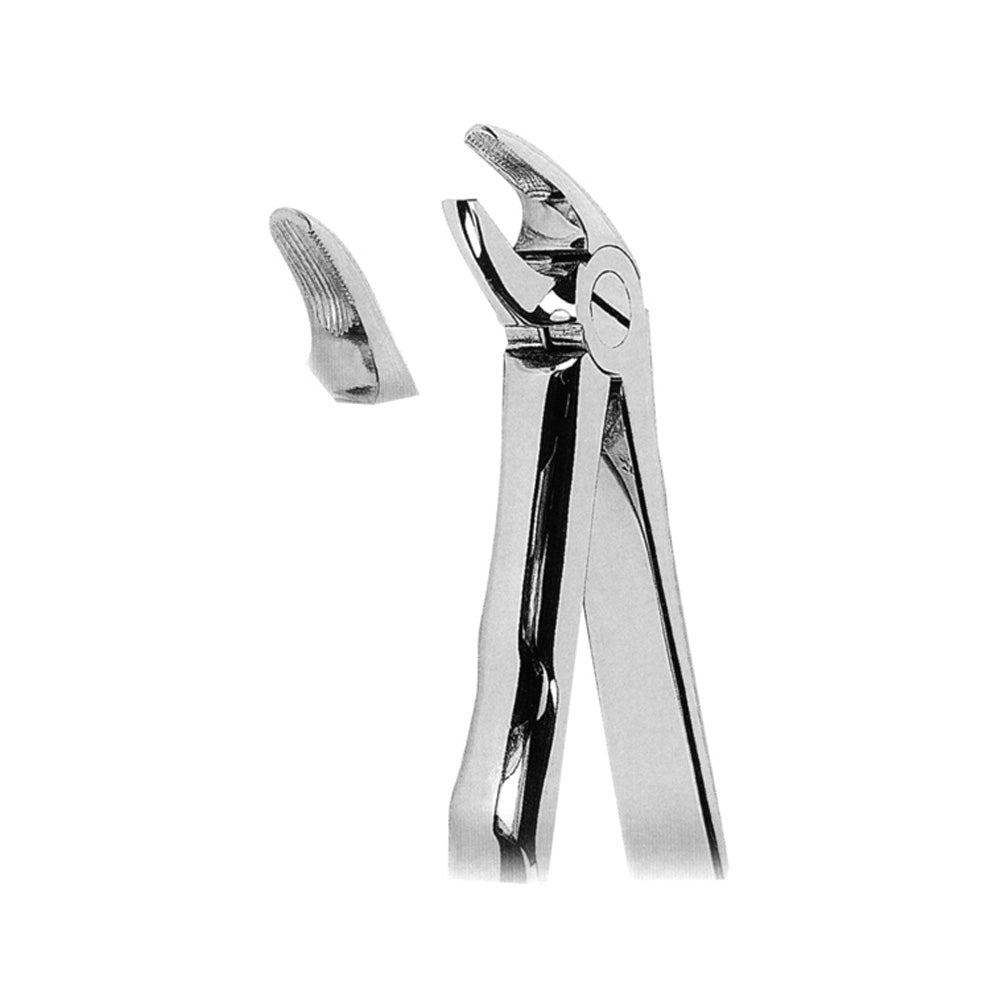
In the highly specialized area of exodontia, lower anterior teeth, namely the canines and incisors, require a distinct mechanical method of treatment. The teeth of these are usually narrow, single-rooted, and slim, requiring an instrument that can provide horizontal access without blocking the surgical view. The Extracting Forceps Fig. 3, which has the Anatomically Shaped Handle, is the most commonly used method for traumatic extractions within the mandible's anterior region.
Fig. 3 is the most well-known illustration of an English pattern forcep, which is distinguished by an elongated hinge. Medical professionals favor this style due to several reasons:
Lower anterior extractions usually require repetitive, fine movements. Handles that are standard are often difficult to maintain during these precise actions. The Anatomically Formed Handle offers:
For the demanding demands of clinical work that is high-volume, Forceps made using the highest-tensile Stainless Steel:
Feature Detail
Model Fig. 3 (English Pattern)
Indication Mandibular (Lower) Incisors and Canines
Head Angle 90 Degrees (Vertical Hinge)
Handle Anatomically Shaped (Ergonomic)
Material : Surgical Grade Stainless Steel
The Fig. 3 Anatomical Forceps are the perfect blend of traditional vertical-hinge geometry as well as modern ergonomic innovations. For dentists, this means increased satisfaction and improved visibility for patients. For the dentist, it means the most efficient and least painful surgical experience.
Order Processing: We strive to serve you promptly! Orders placed before the cut-off time of 5:00 PM (GMT -05:00) (Eastern Standard Time) will be processed the same business day. Orders placed after this time will be processed the next business day.
Handling Time: Our standard handling time is 2-4 business days (Monday through Friday). This includes order verification, quality checks, packaging, and dispatch. Please note that orders placed on weekends or holidays will be processed on the following business day.
Transit Time: Once dispatched, the estimated transit time is 7-10 business days (Monday through Friday). However, transit times may vary depending on your location and any unforeseen circumstances.
Shipping Fee: Enjoy free worldwide shipping on all orders over $99! At Peak Surgical Instruments, we cover all import charges for your convenience ( T & C Apply)
Purchase below 99$ we have flat rate of 31.99$ for the worldwide shipping.
Customers will receive a tracking ID as soon as their order is dispatched via FedEx or DHL.
We proudly offer worldwide shipping, ensuring that our premium surgical instruments are accessible to healthcare professionals across the globe. No matter where you are, you can count on us to deliver quality tools right to your doorstep!
To provide you with confidence in your purchase, we offer a 1-year warranty as well as a 30-day money-back guarantee on all non-personalized orders.
We understand that delays can be frustrating. Transit times are estimates based on recent orders and may change. If your package is delayed, we will do everything possible to expedite delivery. In case of significant delays or missing packages, we will reship your order at no extra cost to you
