
Featured Collection
Your cart
Featured Collection

PEAK SURGICAL
SKU:PS-OT-0531
Couldn't load pickup availability
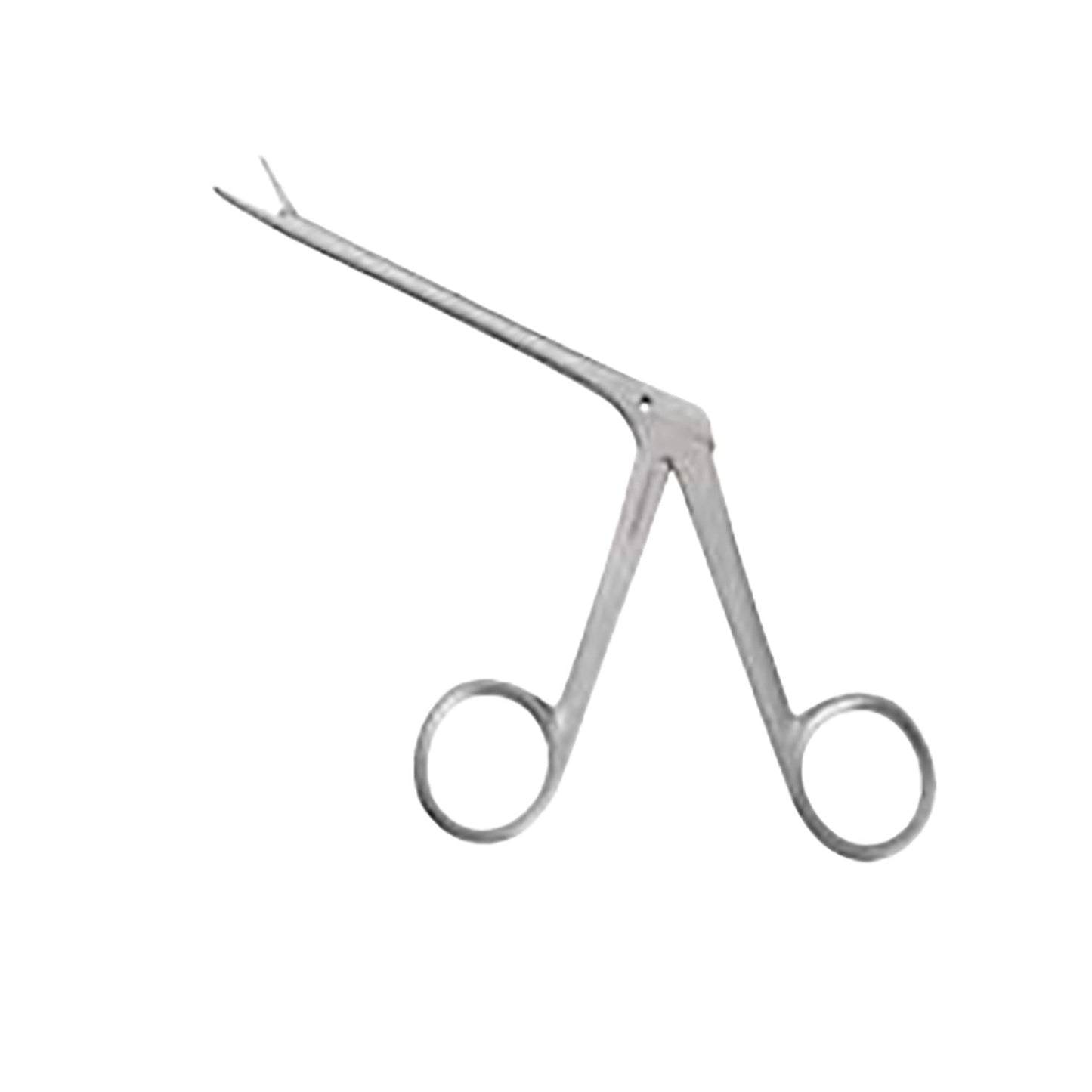


Fenestrated Cup, SKU PS-OT-0531, is a reusable orthopedic forceps made from German stainless steel for controlled tissue capture, biopsy sampling, and small fragment retrieval in deep operative corridors. The product is supplied under model number PS-5243 with Straight and Angled up 45º variants. The long slender shaft reaches into spinal, hand, foot, and small joint exposures, while the fenestrated distal cup jaws enclose tissue and allow fluid escape during withdrawal. The straight pattern supports coaxial entry into a disc space, laminectomy window, synovial recess, or narrow biopsy channel. The 45º angled pattern redirects the bite toward recessed tissue on an offset plane without widening the access route. It is used during lumbar discectomy, cervical discectomy, laminectomy-assisted decompression, intervertebral disc fragment retrieval, synovial biopsy, spinal lesion sampling, and orthopedic soft tissue removal. Orthopedic spine surgeons, neurosurgeons, hand surgeons, podiatric surgeons, hospital operating rooms, ambulatory surgery centers, and distributor supply teams use this pattern when precise fenestrated grasping is needed through a restricted surgical approach.
The instrument works through a ring-handle pivot that converts finger compression into distal jaw closure. The long shaft keeps the hand outside the incision while the tip works at depth, preserving space for retractors, suction, and visualization. At the working end, opposed cup jaws surround a small tissue segment instead of flattening it between broad blades. Fenestration reduces closed-jaw bulk, allows fluid and fine debris to escape, and supports stable capture of soft fragments during withdrawal from a disc cavity or biopsy channel. The straight variant aligns the bite with the entry tract, which is useful when the target sits directly in front of the approach. The 45º angled version changes the attack angle so the jaw can reach tissue hidden behind a laminar edge, joint rim, or offset soft tissue recess. The pivot gives tactile resistance as the cups close, allowing controlled pressure on friable samples while maintaining enough grip for removal from the operative field. This geometry is useful when the surgeon needs specimen capture without converting the exposure to a larger rongeur pathway.
During lumbar discectomy, the forceps are introduced after exposure, decompression, or annulotomy has created a direct route to loose nucleus pulposus and fibrous disc material. In cervical discectomy, the slender shaft supports tissue capture within a smaller disc space while the surgeon maintains controlled hand position outside the wound. After laminectomy or laminotomy, the angled option helps reach soft fragments at the margin of the decompression window without changing the bony exposure. For spinal biopsy, the cup end captures a defined tissue sample from an accessible lesion margin, synovial surface, or fibrous mass for laboratory handling. In small joint procedures of the hand or foot, the same mechanism retrieves synovial fragments and loose soft tissue through limited incisions. The instrument is used after visualization and access are established, before final irrigation, inspection, and closure. Its role is controlled capture and removal, not bone cutting, ligament punching, or broad dissection. The fenestrated bite also helps preserve small specimen volume during transfer from the wound to the back table.
The Straight PS-5243 option is selected when the target lies in line with the operative tract. It is suitable for direct disc fragment retrieval, central biopsy sampling, and small joint access where a straight shaft keeps the bite predictable under direct or endoscopic visualization. The Angled up 45º PS-5243 option is selected when tissue sits superior, posterior, lateral, or under an edge that cannot be reached cleanly with a linear approach. The angled jaw helps the surgeon engage tissue at the far wall of a disc space, behind a laminar margin, or inside an offset synovial recess while keeping the shaft stable in the original channel. Selection depends on the direction of the target, the depth of the field, and the available room for hand movement outside the incision. Keeping both versions in a spine or orthopedic tray gives the operator one instrument family for direct bites and redirected sampling during the same procedural sequence. The same handle style supports consistent tactile feedback when the working direction changes.
German stainless steel construction provides the strength, corrosion resistance, and dimensional stability needed for repeated manual forceps use in orthopedic and spine trays. Satin, dull, and mirror finish options support different operating room preferences: satin and dull surfaces reduce glare under surgical lighting, while mirror-polished surfaces allow rapid visual inspection after processing. Reusable construction fits central sterile workflows involving point-of-use soil removal, decontamination, inspection of jaw movement, packaging, and steam autoclave sterilization. Cleaning attention should focus on the fenestrated jaw windows, distal hinge, long shaft, pivot area, and handle junctions because retained biological material can restrict closure. CE marking supports European procurement documentation, ISO 13485 alignment reflects medical device manufacturing system controls, and FDA-compliant purchasing language assists regulated hospital, clinic, and distributor channels. The Class I manual surgical instrument category fits non-powered tissue grasping and retrieval. MOQ 1 piece, OEM availability, 1-year warranty, and return or replacement support create clear commercial terms for tray replacement and stocking. These terms help procurement teams manage single-unit replenishment without ordering complete orthopedic sets.
| SKU | PS-OT-0531 |
|---|---|
| Product Name | Fenestrated Cup |
| Price | $25.85 |
| Size/Gauge Variants | PS-5243 Straight; PS-5243 Angled up 45º |
| Instrument Category | Orthopedic fenestrated cup forceps |
| Procedure | Lumbar discectomy, cervical discectomy, laminectomy-assisted decompression, intervertebral disc fragment retrieval, synovial biopsy, spinal lesion sampling |
| Material | German stainless steel |
| Finish | Satin, dull, and mirror finish options |
| Sterilization | Reusable instrument for cleaning, decontamination, inspection, and steam autoclave processing |
| Instrument Classification | Class I manual surgical instrument |
| Reusable | Yes |
| Certifications | CE, ISO 13485, FDA |
| Warranty | 1 year |
| MOQ | 1 piece |
| OEM / Custom Orders | Available for eligible procurement and distributor requirements |
| After-Sale Service | Return and replacement support |
How is this different from a Pituitary Rongeur?
Fenestrated Cup forceps are built for grasping and retrieving small tissue fragments through a narrow shaft. A Pituitary Rongeur has a stronger cup-biting profile commonly used for broader disc material removal. The fenestrated pattern includes windowed distal cups that reduce closed-jaw mass and support controlled specimen capture. A Pituitary Rongeur is selected when the surgeon needs a more aggressive bite within a prepared disc space. Fenestrated Cup forceps are selected when tissue sampling, delicate retrieval, or access around an offset recess requires a slimmer working end. The Straight and 45º options also give different approach angles without changing to a heavier rongeur.
When should Straight or Angled up 45º be selected?
Fenestrated Cup Straight is selected when the target lies directly in line with the incision, annulotomy, biopsy path, or joint opening. It supports coaxial work in lumbar disc retrieval, central tissue sampling, and small joint exposure. Angled up 45º is selected when the target lies behind a laminar margin, along a far wall, under a superior recess, or lateral to the main tract. The angle redirects the bite while the shaft remains stable in the access channel. This is useful in spinal decompression, synovial biopsy, and offset soft tissue retrieval. The surgeon selects the pattern according to target direction, depth, visualization, and available hand clearance.
What does CE, ISO 13485, and FDA context mean for procurement?
Fenestrated Cup is supplied with CE, ISO 13485, and FDA procurement context for healthcare purchasing teams. CE marking supports documentation for European medical device supply channels. ISO 13485 alignment relates to manufacturing under a medical device management system. FDA-compliant purchasing language assists hospitals, clinics, and distributors serving United States healthcare markets. These references support vendor review, instrument file documentation, and reusable tray purchasing. The product is listed as a Class I manual surgical instrument with MOQ 1 piece and 1-year warranty support.
How does the pivot mechanism control the fenestrated jaw?
The ring handles close around a pivot that transfers hand pressure along the shaft to the distal cups. As the handles approximate, the jaws close around the selected tissue fragment. The pivot allows gradual closure, tactile feedback, and controlled release after retrieval. This matters during biopsy sampling because excessive compression can distort small specimens. The same control helps during disc fragment removal, where the surgeon needs a secure hold during withdrawal through the operative tract. Fenestrated Cup handling does not require a ratchet lock because the operator controls grip continuously through the ring handles.
How should hospitals and distributors manage sterilization and stocking?
Fenestrated Cup instruments should be cleaned after use with attention to the cup windows, hinge, shaft, pivot, and handle junctions. The jaws should be opened and closed during cleaning so retained tissue is removed from moving surfaces. After decontamination and inspection, the instrument can be packaged for steam autoclave sterilization under the facility’s validated protocol. Hospitals can stock Straight and Angled up 45º versions in spine, orthopedic, hand, foot, and biopsy trays. Distributors can order the SKU with MOQ 1 piece for replacement or catalog stocking. Return and replacement support plus 1-year warranty terms assist operating room supply teams managing reusable instrument inventories.


