
Featured Collection
Your cart
Featured Collection

PEAK SURGICAL
SKU:PS-FINIS-00123
Couldn't load pickup availability
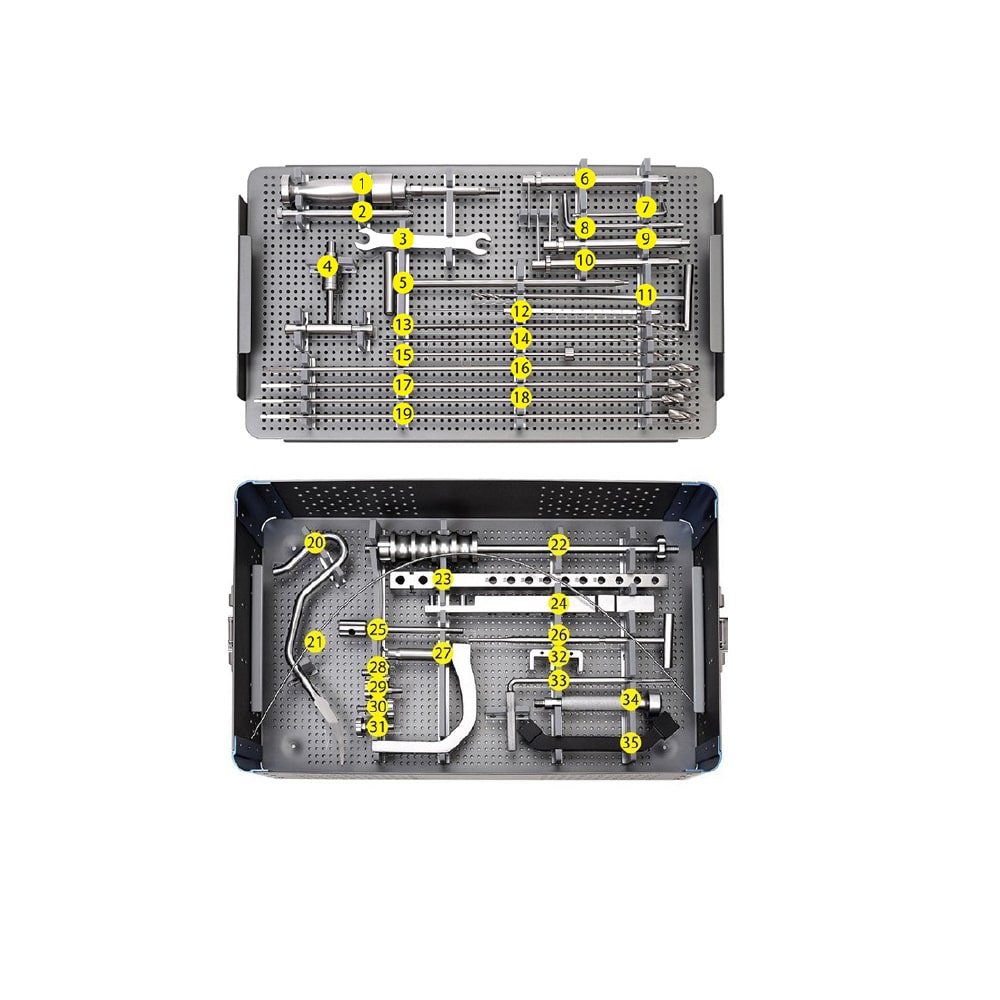
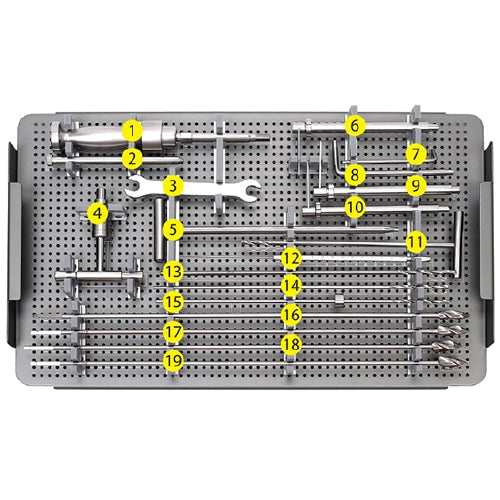
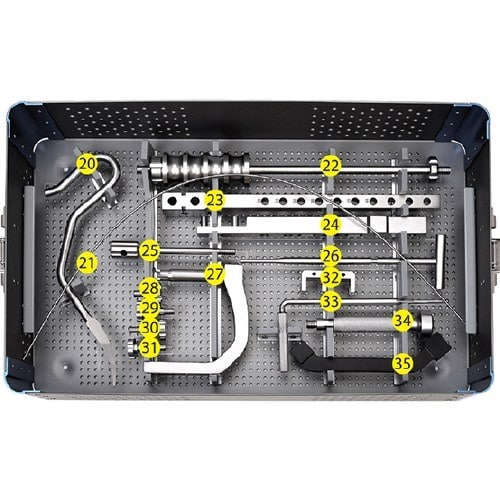
The Femur Intramedullary Nail Instrument Set from Peak Surgicals is a 35-piece orthopedic instrument set designed to support the complete intraoperative workflow of femoral intramedullary nailing — covering femoral canal entry, guide wire placement, canal reaming, nail insertion, proximal and distal interlocking screw fixation, and nail assembly. The set includes reamers in four diameters (10mm to 13mm), multiple drill bits, a sighting device for distal locking, a depth gauge, a hammer, and all connectors and targeting components required for nail introduction and screw fixation, and is supplied in a dedicated aluminium box. It is used by orthopedic and trauma surgeons in hospital operating theatres performing femoral shaft fracture fixation, peritrochanteric fracture fixation, and pathological fracture stabilization worldwide.
Intramedullary nailing of the femur is the surgical standard of care for displaced femoral shaft fractures and many peritrochanteric fractures. The operative sequence begins with patient positioning, followed by a small proximal entry incision, femoral canal entry with an AWL at the piriformis fossa or greater trochanteric tip depending on the nail design, guide wire placement down the femoral canal to the fracture site and across to the distal fragment under fluoroscopic guidance, sequential reaming of the femoral canal to the desired nail diameter, nail introduction over the guide wire with a nail connector and guide rod, proximal locking screw fixation through the targeting arm, and distal locking screw fixation using a freehand or sighting device technique. Each of these steps requires dedicated instruments — a complete instrument set eliminates the need to source individual components from multiple sources and ensures dimensional compatibility between guide wires, drill bits, reamers, and the nail being used.
The set includes the AWL for initial femoral canal entry at the nail insertion point, establishing the cortical breach through which the guide wire is passed. The Guide Wire and Guide Rod provide the central axis for canal reaming and nail introduction — the guide wire passes across the fracture site into the distal fragment under fluoroscopy to establish the nail trajectory before reaming begins, and the guide rod is used to introduce the nail over the established intramedullary axis. The Reamers in four diameters — 10mm, 11mm, 12mm, and 13mm — progressively enlarge the femoral medullary canal to the diameter needed to accept the femoral nail with appropriate cortical contact for primary rotational and axial stability. The Drill Bit 5.2×300mm and Drill Bit φ4.0×300mm provide the axial length required for reaming and drilling within the femoral canal, which averages 38–45cm in adults. The Drill Bit with Limitator φ4.0×300mm prevents over-drilling beyond the intended depth during interlocking screw preparation. The Quick Coupling T-Handle provides the driven connection between the reamer/drill shafts and the power or manual drive.
The Nail Connector engages the proximal end of the femoral nail to the targeting arm assembly, allowing the nail to be introduced into the canal with controlled orientation relative to the proximal targeting device. The Connector Rod and Connector provide the structural link between the nail connector and the sighting device handle. The Sighting Device Handle (item 27) is the proximal targeting arm — it maintains a fixed geometric relationship to the proximal nail holes, allowing proximal interlocking screws to be drilled and inserted through the targeting arm holes in exact alignment with the nail's proximal screw holes without requiring freehand technique. The Bolts (×4) secure the components of the targeting assembly together. The Fixed Connector and Location Rod stabilise the assembly against rotation and translation during nail introduction and proximal screw fixation. The Screwdriver, Open Wrench, Hex Wrenches (×2), and Drill Sleeves (×4) provide the torque application and soft tissue protection tools needed for screw insertion and wrench tightening at the proximal assembly.
Distal interlocking screw fixation is the most technically demanding step in femoral nailing, requiring drill and screw placement through distal nail holes using either a freehand technique under fluoroscopic guidance or a distal targeting device. The Depth Gauge (10–100mm range) measures the appropriate distal locking screw length after drilling through both cortices of the distal femur, preventing the use of a screw that is too short (inadequate purchase) or too long (soft tissue prominence or neurovascular proximity). The Distal Guider provides a targeting reference for the distal locking holes. The Location Forcep assists in stabilising the distal segment during distal locking. The Hammer provides the controlled impaction needed for nail advancement in the final seating stage when manual advancement with the guide rod is insufficient. The Universal Joint allows angular accommodation between driving components and the nail axis in malaligned or antegrade nailing situations.
The Femur Intramedullary Nail Instrument Set is manufactured under CE Mark, ISO 13485, and FDA compliant quality standards. ISO 13485 certification confirms Peak Surgicals operates a documented quality management system covering design control, material traceability, and production consistency for orthopedic surgical instruments. CE Mark confirms conformity with European medical device regulations, and FDA compliance supports procurement for US-based hospitals, trauma centers, and orthopedic departments requiring verified regulatory documentation for capital instrument set purchases.
| SKU | — (verify in Shopify admin) |
|---|---|
| Product Name | Femur Intramedullary Nail Instrument Set |
| Price | $2,365.00 USD |
| Total Pieces | 35 instruments + Aluminium Box |
| Instrument Category | Orthopedic — Femoral Intramedullary Nailing |
| Procedure | Femoral shaft and peritrochanteric fracture fixation by intramedullary nailing |
| Reamer Sizes | 10mm, 11mm, 12mm, 13mm |
| Drill Bits | 5.2×300mm; φ4.0×300mm; φ4.0×300mm with Limitator |
| Depth Gauge Range | 10–100mm |
| Key Instruments | AWL, Guide Wire, Guide Rod, Nail Connector, Connector Rod, Sighting Device Handle, Location Forcep, Distal Guider, Hammer, Universal Joint, Open Wrench, Hex Wrenches ×2, Screwdriver, Drill Sleeves ×4, Bolts ×4, Fixed Connector, Location Rod, Connector, T-handle Drill Bits ×2, Quick Coupling T-Handle |
| Container | Aluminium Box (included) |
| Certifications | CE Mark, ISO 13485, FDA |
| Warranty | 1 Year |
| MOQ | 1 Set |
| OEM / Custom Orders | Available |
| After-Sale Service | Return and Replacement |
What fractures is femoral intramedullary nailing used to treat?
Femoral intramedullary nailing is the primary surgical treatment for displaced femoral shaft fractures (AO/OTA classification 32A, 32B, 32C) across all fracture patterns — transverse, oblique, spiral, comminuted, and segmental. It is also used for peritrochanteric femoral fractures (intertrochanteric and subtrochanteric) when a cephalomedullary nail is used rather than a standard femoral shaft nail. Additional indications include pathological femoral fractures from metastatic bone disease requiring prophylactic or therapeutic stabilization, and delayed or nonunited femoral shaft fractures where exchange nailing is being performed. The Femur Intramedullary Nail Instrument Set from Peak Surgicals provides the complete instrument complement for the femoral nailing procedure regardless of fracture pattern or nail design.
What reamer sizes are included and how is the correct reaming diameter selected?
The set includes reamers in four diameters — 10mm, 11mm, 12mm, and 13mm — covering the range of canal diameters encountered in adult femoral nailing. The canal is reamed in 0.5mm or 1mm increments using a flexible reaming system from the initial guide wire diameter up to 1–2mm larger than the intended nail diameter to allow the nail to pass without excessive impaction force. The target reaming diameter is determined by preoperative templating on fluoroscopic or CT imaging of the femur, measuring the isthmic (narrowest) diameter of the medullary canal and selecting a nail diameter that achieves cortical contact at the isthmus for rotational and axial stability. The reaming sequence ensures the canal is progressively and evenly enlarged without eccentric cortical damage.
How does the sighting device enable proximal locking screw placement?
The sighting device handle (item 27) attaches to the nail connector and targeting arm assembly before the nail is introduced into the femoral canal. The geometry of the targeting arm is calibrated to the specific nail being used — the screw holes in the targeting arm are positioned in fixed geometric relationship to the proximal screw holes of the nail, ensuring that a drill passed through a targeting arm hole will emerge exactly at the nail's proximal screw hole. Proximal locking screws can therefore be drilled and inserted through the targeting arm using standard technique without requiring intraoperative fluoroscopy beyond confirming nail depth and rotation. The bolts and connectors in the set secure the targeting arm to the nail connector during this step, preventing any movement between the arm and the nail that would cause mislocation of the proximal screw holes.
What does the Depth Gauge (10–100mm) measure in femoral nailing?
The Depth Gauge measures the bicortical distance of the femoral cortex at each interlocking screw hole after the drill has passed through both cortices. This measurement is used to select the correct interlocking screw length — a screw that is the same length as the bicortical distance will engage both cortices fully without protruding through the far cortex into the surrounding soft tissue. In the distal femur, where the lateral soft tissue envelope is thin and the sciatic nerve and popliteal vessels are relatively close, over-long screws pose a real clinical risk that the depth gauge measurement directly addresses. The 10–100mm range covers the full span of adult bicortical femoral diameters at both proximal and distal interlocking screw levels.
What certifications does this set carry?
The Femur Intramedullary Nail Instrument Set is manufactured under CE Mark, ISO 13485, and FDA compliant quality standards. ISO 13485 certification confirms Peak Surgicals operates a documented quality management system covering design control, material traceability, and manufacturing consistency for orthopedic surgical instruments. CE Mark confirms conformity with European medical device regulations, and FDA compliance supports procurement for US hospitals, trauma centers, and orthopedic departments requiring verified regulatory documentation for capital instrument set purchases.
Can individual instruments be ordered as replacements?
Individual instruments from the Femur Intramedullary Nail Instrument Set — including specific reamers, drill bits, the depth gauge, guide wire, guide rod, and sighting device components — are available from Peak Surgicals as replacement items. OEM manufacturing and custom set configurations are available for hospital procurement departments and orthopedic distributors requiring modified tray layouts, extended reamer size ranges, or custom packaging formats. Contact Peak Surgicals directly for replacement instrument pricing, OEM specifications, or institutional procurement arrangements.
