
Featured Collection
Your cart
Featured Collection

PEAK SURGICALS
SKU:PS-VS-002013
Couldn't load pickup availability
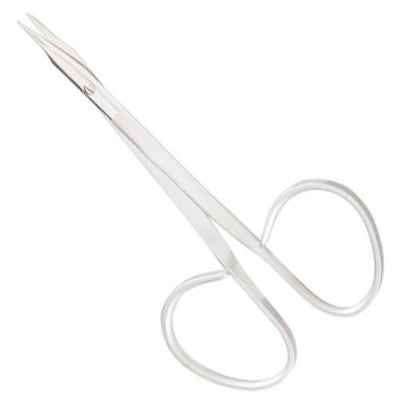
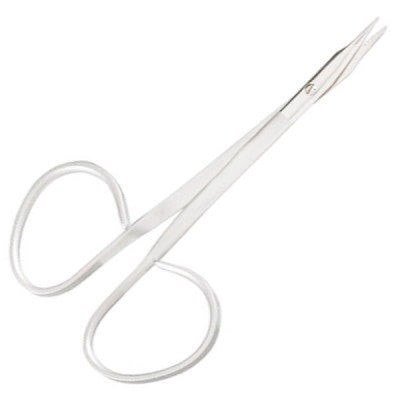
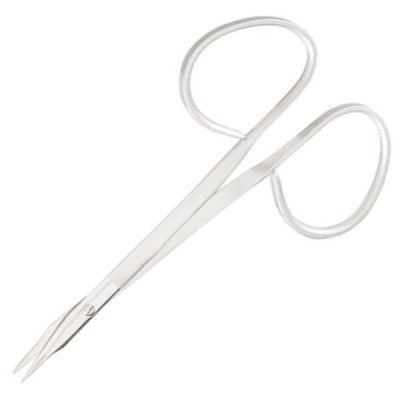
The clinical standard for ultra-fine suture management and delicate tissue dissection. The Eye Suture Scissors with Curved Pointed Blades are specialized microsurgical instruments meticulously engineered for the absolute precision required in ophthalmology. Characterized by their miniature curved profile and needle-sharp tips, these scissors act as a mechanical necessity for surgeons who must navigate the confined anatomy of the ocular field. Their design is specifically optimized to provide a clear line of sight and high-finesse cutting action, ensuring that even the finest monofilament sutures are trimmed with mathematical accuracy.
The Curved Pointed Eye Suture Scissors represent a pinnacle of microsurgical ergonomics, designed to solve the problem of "macro-interference" in ophthalmic procedures. In any eye surgery—from corneal transplants and glaucoma filtration to specialized veterinary lens repairs—the ability to trim sutures without obstructing the surgical view is a critical success factor. These scissors act as a high-sensitivity extension of the surgeon’s fingers, providing a level of control that standard utility scissors cannot match.
At its core, the instrument is built for professional-grade longevity. The blades are engineered to maintain their alignment and sharpness even when cutting modern, high-strength synthetic sutures. This mechanical reliability is essential for maintaining workflow efficiency in ophthalmic clinics, microsurgery centers, and specialized veterinary practices.
Built to exceed the most rigorous hygiene standards of modern medicine, these scissors are fully autoclavable and reusable. Their robust construction and specialized fine-tip design make them an indispensable asset for ensuring safe, organized, and high-precision results in ocular surgery.
Feature Details
Material Premium Surgical-Grade Stainless Steel
Blade Style Curved / Extra Fine Pointed
Action Smooth Manual Pivot
Maintenance Fully Autoclavable / Reusable
Application Human & Veterinary Ophthalmology
Finish Anti-Glare Satin
Primary Use Cases:
Q: Can these scissors be used for 10-0 or 11-0 sutures?
A: Yes, these scissors are specifically designed for the ultra-fine sutures used in ophthalmology and microsurgery, providing a clean cut without fraying the material.
Q: How do I maintain the sharpness of the fine tips?
A: To protect the precision edge, these scissors should only be used for sutures and fine tissue. Never use them to cut heavy gauze, tape, or thick plastic tubing.
Q: Are these suitable for veterinary use?
A: Absolutely. They are a staple in veterinary ophthalmology for procedures involving cats, dogs, and exotic pets due to their delicate scale and precision.
Q: How should I clean the blades before sterilization?
A: Use an enzymatic soak and a soft-bristled brush to remove bioburden gently. Avoid abrasive pads, and always inspect the tips for alignment after cleaning.
Q: Is the curved design better than a straight one for eye surgery?
A: Curved blades are generally preferred in ophthalmic surgery because they follow the natural roundness of the eye, providing better access and visibility than straight blades.
