
Featured Collection
Your cart
Featured Collection

PEAK SURGICAL
SKU:PS-D-057
Couldn't load pickup availability
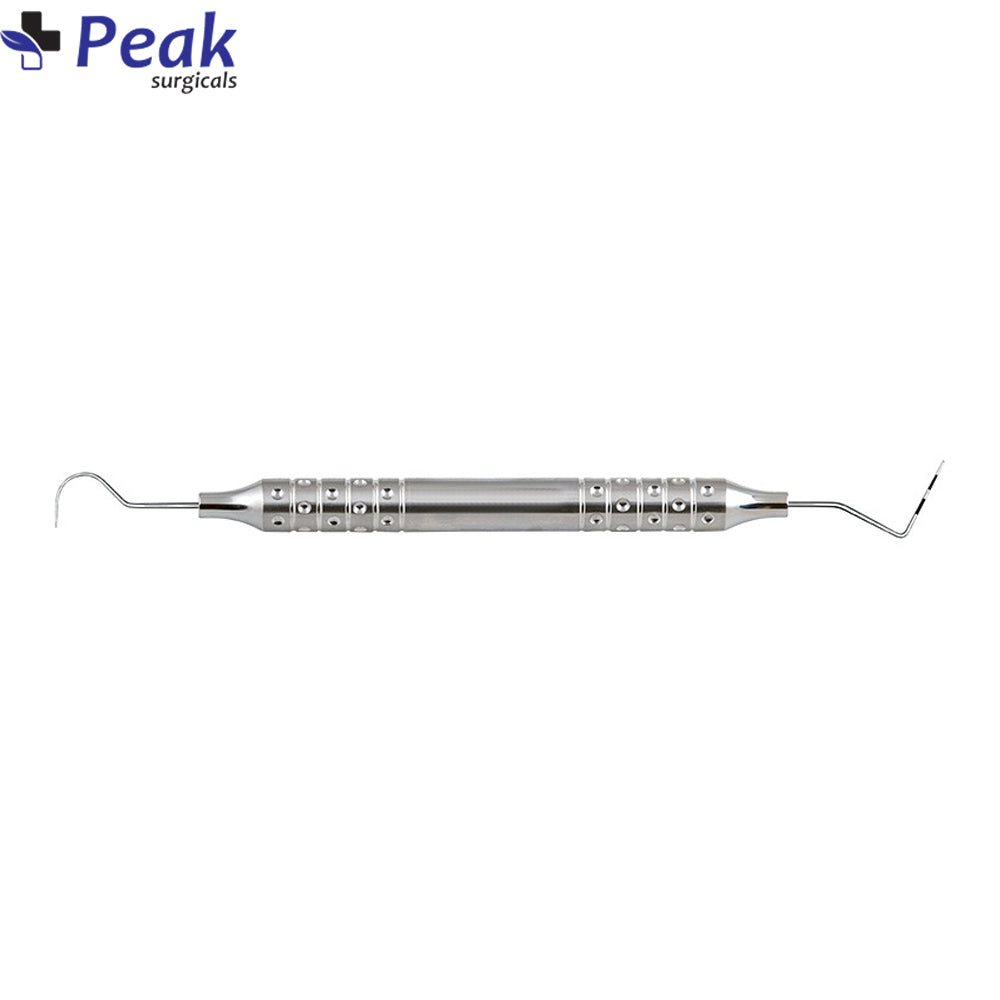
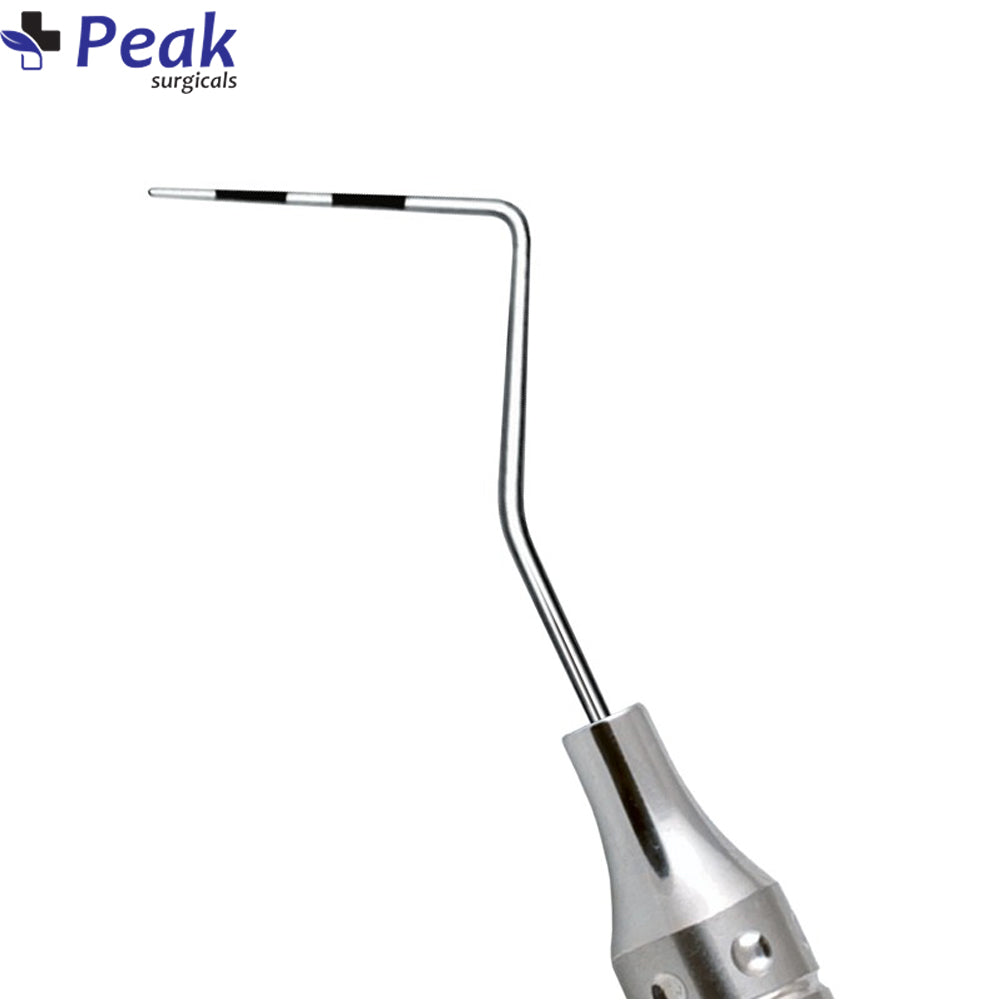
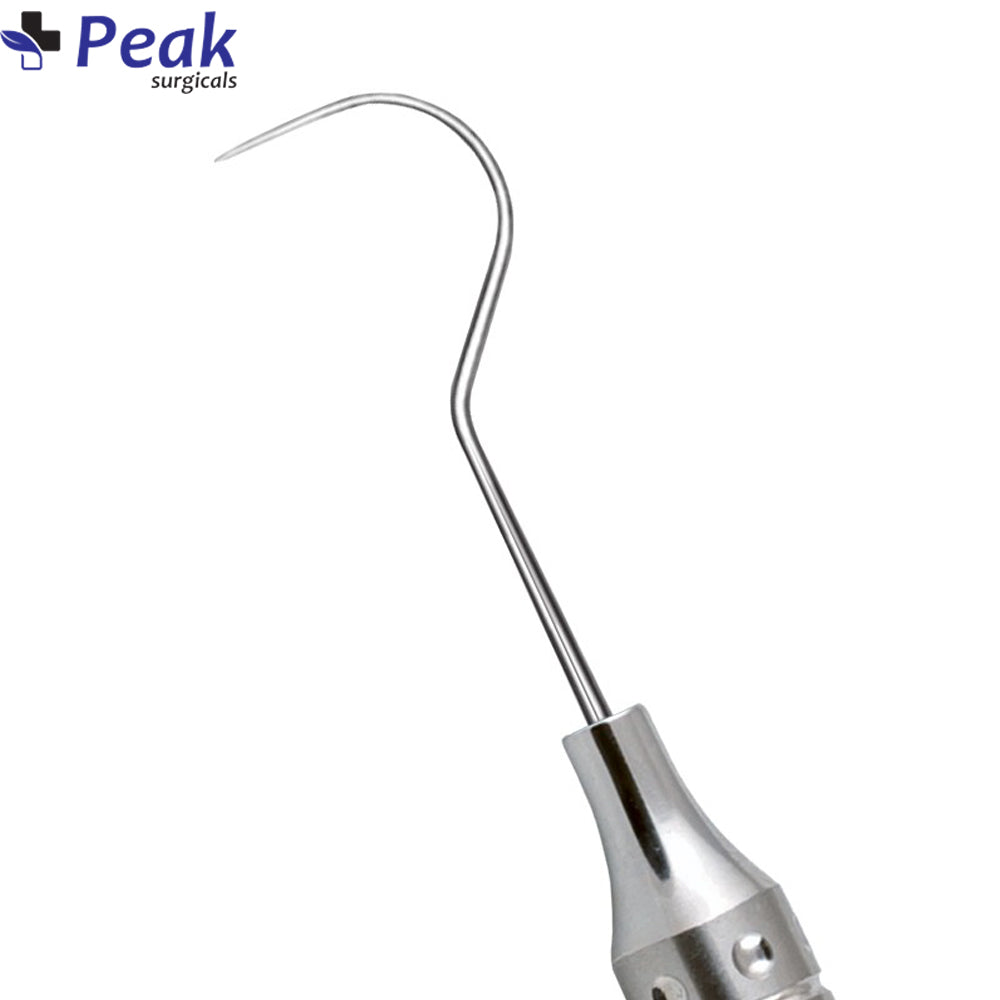
Expros 23/QOW Thin Williams, SKU PS-D-058, is a double-ended dental diagnostic instrument made from German stainless steel for periodontal examination, restorative assessment, and operative dentistry screening. The Explorer 23 working end has a shepherd’s-hook profile used to trace occlusal fissures, inspect marginal integrity, detect calculus deposits, and examine restorative overhangs during chairside diagnosis. The opposite Thin Williams end carries 1 mm, 2 mm, 3 mm, 5 mm, 7 mm, 8 mm, 9 mm, and 10 mm depth markings for sulcus evaluation, periodontal pocket charting, attachment-level measurement, bleeding-point documentation, and furcation screening. Its slender shank supports controlled tactile feedback in interproximal and subgingival zones without obstructing the clinician’s line of sight. The knurled handle improves rotational control between mirror-guided inspection and probing strokes. This pattern is used by periodontists, general dentists, endodontists, restorative clinicians, oral surgery teams, dental hygienists, and teaching clinics in private practices, hospital dental departments, periodontal programs, procurement facilities, and distributor inventories.
The working layout places two diagnostic ends on a balanced cylindrical handle, allowing the clinician to move from tactile exploration to calibrated measurement without changing hand position. The Explorer 23 side uses a curved, shepherd’s-hook geometry with a fine terminal point. During a light pull stroke, the bend lets the tip follow pits, fissures, proximal margins, crown edges, and subgingival calculus ledges while the handle remains outside the occlusal plane. The opposite Thin Williams side has a narrow, rounded measuring end shaped for insertion parallel to the long axis of the tooth. Its millimeter bands provide direct visual reference at the gingival margin while probing depth is recorded. The long shanks separate the clinician’s fingers from the field and improve mirror visibility. A textured grip with raised ring sections and recessed dots reduces slippage during wet-glove handling. The central handle supports fingertip rotation, so the operator can adjust angulation across buccal, lingual, mesial, and distal surfaces with controlled pressure and repeatable tactile orientation.
In a comprehensive periodontal charting appointment, the Thin Williams end is introduced after visual inspection and supragingival assessment. The clinician advances the marked tip into the sulcus at six recording points per tooth, reading the band at the free gingival margin to document 1 to 10 mm depths, recession correlation, and bleeding on probing. In maintenance visits, the same end helps compare pocket values around molars, premolars, anterior teeth, implants, fixed prostheses, and furcation areas. During operative dentistry, the Explorer 23 side is used after drying the field to evaluate occlusal caries, enamel defects, marginal ditching, open crown margins, composite flash, amalgam overhangs, and residual cement. In endodontic access planning, the hook assists with locating developmental grooves and checking the pulpal floor under magnification. Oral surgery and hygiene teams use the combined pattern for preoperative dental clearance, periodontal screening before extraction, and post-scaling evaluation of residual calculus. The double-ended format keeps diagnostic sequencing concise when a dentist alternates between visual examination, tactile confirmation, and recorded measurements.
The Explorer 23 end is selected when the diagnostic requirement is tactile discrimination rather than depth recording. Its hook form engages fissures, margins, calculus shelves, cement remnants, and restoration edges with a controlled lateral pull. The Thin Williams scale is selected when a numeric periodontal reading is required. The 1 mm and 2 mm references support healthy sulcus documentation and post-prophylaxis comparison. The 3 mm marking is used for routine periodontal baseline recording and maintenance visits. The 5 mm line identifies a deeper periodontal pocket requiring chart notation, debridement planning, and follow-up comparison. The 7 mm and 8 mm references assist in advanced periodontitis assessment around molars, furcations, and prosthetic abutments. The 9 mm and 10 mm markings support documentation of severe pocketing, periodontal surgery planning, or referral records. The thin shank permits access around crowded anterior teeth, interproximal surfaces, distal molar zones, fixed bridge margins, and implant-adjacent soft tissue while maintaining a measurable contact path inside the gingival sulcus.
German stainless steel construction provides the rigidity needed for fine dental tactile feedback while resisting deformation at the explorer and calibrated ends. The polished satin surface supports visibility under operatory lighting, reduces glare from overhead illumination, and allows rapid inspection after cleaning. The reusable design fits standard dental reprocessing workflows that include chairside removal of gross debris, ultrasonic cleaning, rinsing, drying, pouching, and steam autoclave sterilization according to facility protocol. A solid metal handle tolerates repeated sterilization cycles and routine clinical handling without disposable waste streams. CE marking supports medical device procurement for international clinical buyers, while ISO 13485 alignment reflects manufacturing controls used in regulated instrument supply. FDA-compliant procurement language helps hospitals, clinics, dental schools, and distributors align purchase records with United States market expectations. For multi-chair departments, the same pattern can be stocked across hygiene, periodontal, restorative, and examination rooms to standardize charting style and reduce variation in handpiece-free diagnostic trays. Its one-piece metal construction also simplifies tray auditing after sterilization.
| SKU | PS-D-058 |
|---|---|
| Product Name | Expros 23/QOW Thin Williams |
| Price | $11.00 USD |
| Size/Gauge Variants | Thin Williams 1 mm, 2 mm, 3 mm, 5 mm, 7 mm, 8 mm, 9 mm, and 10 mm periodontal markings |
| Instrument Category | Dental diagnostic explorer and periodontal probe |
| Procedure | Periodontal charting, caries inspection, calculus detection, restorative margin assessment, and dental examination |
| Material | German stainless steel |
| Finish | Satin handle with polished working ends |
| Sterilization | Reusable and steam autoclave compatible |
| Instrument Classification | Non-powered reusable dental diagnostic hand instrument |
| Reusable | Yes |
| Certifications | CE marked, ISO 13485 aligned, FDA-compliant procurement support |
| Warranty | 30 days money back guarantee |
| MOQ | 1 piece |
| OEM / Custom Orders | Available for clinics, distributors, and procurement programs |
| After-Sale Service | Product support and replacement assistance through Peak Surgicals |
How does this differ from a UNC-15 periodontal probe?
The Expros 23/QOW Thin Williams combines a hooked Explorer 23 end with a Thin Williams periodontal scale, while a UNC-15 probe is a single-purpose 1 to 15 mm measuring probe. The UNC-15 provides a longer continuous scale for advanced pocket documentation but does not include a caries and calculus exploration tip. This pattern is more efficient for examinations that require both tactile margin inspection and routine periodontal charting in one hand instrument. The Williams marking sequence emphasizes 1, 2, 3, 5, 7, 8, 9, and 10 mm readings commonly used during baseline periodontal screening. The Explorer 23 side is better suited for occlusal fissures, restorative margins, overhangs, and calculus ledges than a straight periodontal probe. The Thin Williams side remains appropriate for routine sulcus readings, bleeding assessment, and maintenance charting.
How are the 1 mm to 10 mm Thin Williams markings selected clinically?
The Expros 23/QOW Thin Williams uses its lower 1 mm, 2 mm, and 3 mm markings for healthy sulcus readings, maintenance comparison, and routine screening around anterior and posterior teeth. The 5 mm reference is used when pocket depth enters a range requiring periodontal notation and debridement planning. The 7 mm and 8 mm levels are selected during advanced pocket assessment around molars, furcation entrances, fixed prostheses, and implant-adjacent tissue. The 9 mm and 10 mm marks support documentation of severe periodontal breakdown before surgical planning, referral, or therapy review. The thin working end allows the operator to maintain axial alignment along the root surface during six-point charting. The Explorer 23 side remains available during the same visit for calculus, crown margin, and occlusal surface evaluation.
How do CE, ISO 13485, and FDA procurement requirements apply?
The Expros 23/QOW Thin Williams is positioned for clinical procurement where documentation, repeatable supply, and regulated device purchasing are important. CE marking supports purchasing teams that require recognized medical device conformity for international markets. ISO 13485 alignment indicates that manufacturing and supply controls follow a medical device management system framework. FDA-compliant procurement context helps United States clinics, dental schools, hospitals, and distributors maintain device records for reusable hand instruments. These references are relevant for tender files, vendor onboarding, distributor catalogs, and multi-location dental purchasing. The product remains a non-powered reusable dental diagnostic hand instrument intended for professional clinical use.
How is the textured handle used during intraoral control?
The handle has raised ring sections and recessed dot areas that give the clinician a stable grip during wet-glove examination. During probing, the operator rolls the handle lightly between the thumb and index finger to keep the Thin Williams end parallel with the tooth surface. This rotation helps the marked tip pass from mesial to distal surfaces without excessive lateral pressure. When using the Explorer 23 end, the same grip allows a controlled pull stroke through fissures and along restorative margins. The double-ended layout also lets the clinician reverse the working end quickly while maintaining mirror position and field isolation. There is no ratchet or locking mechanism because diagnostic probing depends on fingertip pressure, tactile feedback, and controlled angulation rather than clamping force.
Can hospitals and dental clinics reprocess this instrument for repeated use?
The Expros 23/QOW Thin Williams is a reusable German stainless steel dental hand instrument suitable for standard clinic sterilization workflows. After use, staff should remove debris promptly, clean the working ends, process the instrument through ultrasonic cleaning when used by the facility, rinse, dry, package, and steam autoclave according to local protocol. The metal handle and working ends are designed for repeated reprocessing cycles in hygiene, periodontal, restorative, and examination trays. Procurement teams can stock the same pattern across multiple operatories to standardize charting and diagnostic tray setup. Distributors can list the product as a CE and ISO 13485 aligned reusable dental diagnostic instrument. The $11.00 USD price point supports single-clinic purchasing, dental school replenishment, and broader supply ordering.
